Kirjojen hintavertailu – 12 859 827 kirjaa ja 27 kauppaa

Kirjailija

Terence Ball

Kirjat ja teokset yhdessä paikassa: 6 kirjaa, julkaisuja vuosilta 1984–2024, suosituimpiin kuuluu Reappraising Political Theory. Vertaile teosten hintoja ja tarkista saatavuus suomalaisista kirjakaupoista.

6 kirjaa

Kirjojen julkaisuvuodet: 1984–2024.

Political Ideologies and the Democratic Ideal

Political Ideologies and the Democratic Ideal

Terence Ball; Richard Dagger; Daniel I. O'Neill; Jennet Kirkpatrick

TAYLOR FRANCIS LTD
2024
nidottu

Halvin toimitettuna 105,90 €

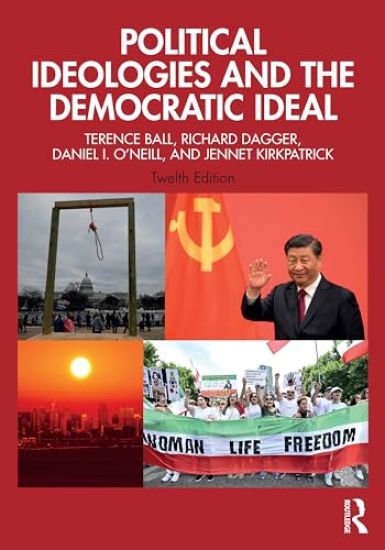
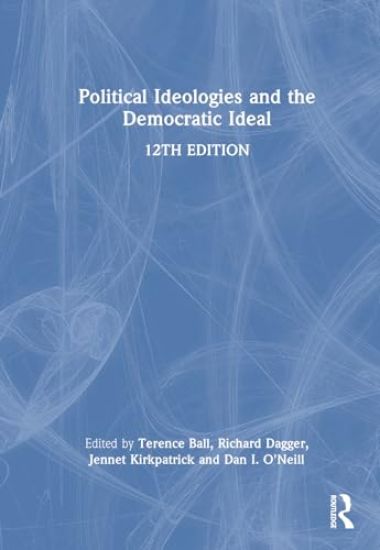
Now in its twelfth edition, Political Ideologies and the Democratic Ideal continues the book's tradition of offering a clear, concise, and comprehensive introduction to the ideas and ideals that shake and shape our political world. The text outlines a framework defining each ideology in terms of the four functions ideologies performs — explanation, evaluation, orientation, and political program — allowing students to compare, contrast, and analyze the various ideologies, developing their own unique views and critical thinking skills. New to this EditionA new co-author, Jennet Kirkpatrick, recognized for her teaching and scholarship in political theory, feminist theory, and resistance. Chapter 2; updated material on voter suppression and populism. Chapter 3; expanded discussion of the relationship between Adam Smith’s moral and economic theories; how John Stuart Mill’s views on free speech might apply to contemporary controversies; differences between John Rawls and Robert Nozick, and between neoclassical and welfare liberals more generally. Updated; discussion of the “Great Recession” and broader issues of economic inequality. Chapter 4; extended discussion of Edmund Burke’s place within the conservative tradition. Updated; assessment of contemporary conservatism in light of Donald Trump’s presidency; new section on Christian Nationalism. Chapter 5; extended discussion of Marx’s theory of history. Chapter 6; updated the status of the socialist and communist traditions in China, Russia, and the United States. Chapter 7; charted the resurgence of far right and neo-fascist politics in Europe. Discussion of the “Alt-Right” in the United States has been expanded, including new sections on QAnon and the “Great Replacement” theory. Also expanded upon; discussion of whether fascism could gain serious traction in the United States, and a new section on the reasons why some critics say Donald Trump is either a fascist, or dangerously close to becoming one. Chapter 8; updated sections on Black liberation and feminism, including reference to George Floyd’s murder and the Dobbs decision that overturned Roe v. Wade. Also, new material on settler colonialism and on the issues for all liberation ideologies raised by the case of undocumented immigrants, and extended discussion of liberation theology. Chapter 9; updated material on the severity of the climate crisis, and the variety of responses that have emerged to address it. Chapter 10; a new section on Hamas, and extended discussion of protests against Islamist rule in Iran focusing on the responses to Mahsa Amini’s death in police custody. Also updated; sections on ISIS and the Taliban in light of the former’s erosion and the latter’s return to power, in addition to references to internecine conflicts among radical Islamists. Chapter 11; updated reasons for the conclusion that there will be no end of ideological conflicts soon, especially with the continued power of religious worldviews, globalization, and---perhaps most especially---the return of fascism worldwide.
Political Ideologies and the Democratic Ideal

Political Ideologies and the Democratic Ideal

Terence Ball; Richard Dagger; Daniel I. O'Neill; Jennet Kirkpatrick

TAYLOR FRANCIS LTD
2024
sidottu
Now in its twelfth edition, Political Ideologies and the Democratic Ideal continues the book's tradition of offering a clear, concise, and comprehensive introduction to the ideas and ideals that shake and shape our political world. The text outlines a framework defining each ideology in terms of the four functions ideologies performs — explanation, evaluation, orientation, and political program — allowing students to compare, contrast, and analyze the various ideologies, developing their own unique views and critical thinking skills. New to this EditionA new co-author, Jennet Kirkpatrick, recognized for her teaching and scholarship in political theory, feminist theory, and resistance. Chapter 2; updated material on voter suppression and populism. Chapter 3; expanded discussion of the relationship between Adam Smith’s moral and economic theories; how John Stuart Mill’s views on free speech might apply to contemporary controversies; differences between John Rawls and Robert Nozick, and between neoclassical and welfare liberals more generally. Updated; discussion of the “Great Recession” and broader issues of economic inequality. Chapter 4; extended discussion of Edmund Burke’s place within the conservative tradition. Updated; assessment of contemporary conservatism in light of Donald Trump’s presidency; new section on Christian Nationalism. Chapter 5; extended discussion of Marx’s theory of history. Chapter 6; updated the status of the socialist and communist traditions in China, Russia, and the United States. Chapter 7; charted the resurgence of far right and neo-fascist politics in Europe. Discussion of the “Alt-Right” in the United States has been expanded, including new sections on QAnon and the “Great Replacement” theory. Also expanded upon; discussion of whether fascism could gain serious traction in the United States, and a new section on the reasons why some critics say Donald Trump is either a fascist, or dangerously close to becoming one. Chapter 8; updated sections on Black liberation and feminism, including reference to George Floyd’s murder and the Dobbs decision that overturned Roe v. Wade. Also, new material on settler colonialism and on the issues for all liberation ideologies raised by the case of undocumented immigrants, and extended discussion of liberation theology. Chapter 9; updated material on the severity of the climate crisis, and the variety of responses that have emerged to address it. Chapter 10; a new section on Hamas, and extended discussion of protests against Islamist rule in Iran focusing on the responses to Mahsa Amini’s death in police custody. Also updated; sections on ISIS and the Taliban in light of the former’s erosion and the latter’s return to power, in addition to references to internecine conflicts among radical Islamists. Chapter 11; updated reasons for the conclusion that there will be no end of ideological conflicts soon, especially with the continued power of religious worldviews, globalization, and---perhaps most especially---the return of fascism worldwide.
Reappraising Political Theory

Reappraising Political Theory

Terence Ball

Oxford University Press
1994
sidottu
Machiavelli, Hobbes, Rousseay, Mill and Marx, and Foucault - what really links these and other `classic' political theorists? Not, argues Terence Ball, their common status as `dead, white, European males', but instead the exciting and compelling way in which they can speak to us today. Professor Ball begins by setting out his liberating view of the way we should approach `classic' texts. Using an approach that is both `problem-driven' and methodologically `pluralist', Ball offers new readings - and reappraisals - of key authors and classic works in political theory. Throughout he argues that the importance of the great texts lies in their repeated reinterpretation in the light of problems that arise for present-day readers. This tour de force, always entertaining and eclectic, focuses on the core problems surrounding many of the major thinkers. Was Machiavelli really amoral? Why did language matter so much to Hobbes - and why should it matter to us? Are the roots of the totalitarian state to be found in Rousseau? Were the utilitarians sexist in their view of the franchise? Written in a lively and accessible style, the book will provoke debate among students and scholars alike. Throughout, Terence Ball shows just how exciting and important political theory can be.
Reappraising Political Theory

Reappraising Political Theory

Terence Ball

Oxford University Press
1994
nidottu
Machiavelli, Hobbes, Rousseau, Mill, and Marx, and Foucault - what really links these and other `classic' political theorists? Not, argues Terence Ball, their common status as `dead, white, European males', but instead the exciting and compelling way in which they can speak to us today. Professor Ball begins by setting out his liberating view of the way we should approach `classic' texts. Using an approach that is both `problem-driven' and methodologically `pluralist', Ball offers new readings - and reappraisals - of key authors and classic works in political theory. Throughout he argues that the importance of the great texts lies in their repeated reinterpretation in the light of problems that arise for present-day readers. This tour-de-force, always entertaining and eclectic, focuses on the core problems surrounding many of the major thinkers. Was Machiavelli really amoral? Why did language matter so much to Hobbes - and why should it matter to us? Are the roots of the totalitarian state to be found in Rousseau? Were the utilitarians sexist in their view of the franchise? Written in lively and accessible styly, the book will provoke debate among students and scholars alike. Throughout, Terence Ball shows just how exciting and important political theory can be.
After Marx

After Marx

Terence Ball; James Farr

Cambridge University Press
1984
pokkari
These twelve original essays are 'after' Marx in several senses. The first and most obvious is the purely chronological sense: They are written one hundred years after Marx's death. The authors are therefore able to see more clearly what Marx did not or could not see and to see more clearly that which he foresaw only dimly. The second sense in which they are after Marx is political: In this century virtually all revolutionaries call themselves Marxists and purport to apply Marx's precepts to political practice. Armed with their different interpretations of a nineteenth-century theory, they have altered - and continue to reshape - the political contours of the twentieth century. Marx raised more questions than he, or anyone else, could ever reasonably hope to answer. To raise anew some of these questions and to approach them in the critical spirit of Marx's own thinking, are the common themes running through and uniting these essays.