Kirjojen hintavertailu – 12 903 735 kirjaa ja 27 kauppaa
Kirjailija
Terence C. Halliday
Kirjat ja teokset yhdessä paikassa: 8 kirjaa, julkaisuja vuosilta 1998–2022, suosituimpiin kuuluu Conectar Con La Universidad. Vertaile teosten hintoja ja tarkista saatavuus suomalaisista kirjakaupoista.
Los cinco ensayos reunidos en este libro explican -desde diferentes ngulos y experiencias de servicio en el mbito acad mico- el significado de conectarse con toda la universidad para los movimientos nacionales que forman la Comunidad Internacional de Estudiantes Evang licos (IFES) en Am rica Latina. Los autores entienden que conectar con la universidad es el testimonio cristiano integral, encarnacional e intelectualmente cre ble. Es decir, que el se or o de Jesucristo se manifieste en todos los aspectos de la vida universitaria; que el testimonio implica identificaci n plena con la cultura universitaria incluyendo sus problemas y agitaciones y afirmaci n del potencial dado por Dios para el desarrollo humano; y que el testimonio sea intelectualmente cre ble en la universidad por su arraigo profundo en la Biblia y en la tradici n intelectual cristiana y por su contribuci n al desarrollo del conocimiento y di logo acad mico. Es un valioso recurso para el di logo, el testimonio y la misi n de los movimientos
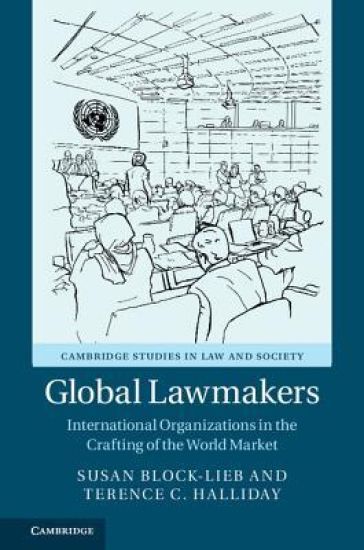
Global lawmaking by international organizations holds the potential for enormous influence over world trade and national economies. Representatives from states, industries, and professions produce laws for worldwide adoption in an effort to alter state lawmaking and commercial behaviors, whether of giant multi-national corporations or micro, small and medium-sized businesses. Who makes that law and who benefits affects all states and all market players. Global Lawmakers offers the first extensive empirical study of commercial lawmaking within the United Nations. It shows who makes law for the world, how they make it, and who comes out ahead. Using extensive and unique data, the book investigates three episodes of lawmaking between the late 1990s and 2012. Through its original socio-legal orientation, it reveals dynamics of competition, cooperation and competitive cooperation within and between international organizations, including the UN, World Bank, IMF and UNIDROIT, as these IOs craft international laws. Global Lawmakers proposes an original theory of international organizations that seek to construct transnational legal orders within social ecologies of lawmaking. The book concludes with an appraisal of creative global governance by the UN in international commerce over the past fifty years and examines prospective challenges for the twenty-first century.
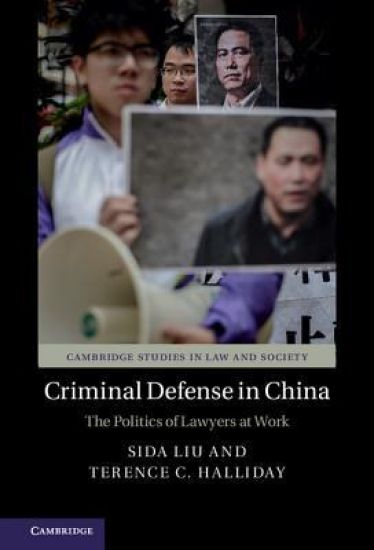
Criminal Defense in China studies empirically the everyday work and political mobilization of defense lawyers in China. It builds upon 329 interviews across China, and other social science methods, to investigate and analyze the interweaving of politics and practice in five segments of the practicing criminal defense bar in China from 2005 to 2015. This book is the first to examine everyday criminal defense work in China as a political project. The authors engage extensive scholarship on lawyers and political liberalism across the world, from seventeenth-century Europe to late twentieth-century Korea and Taiwan, drawing on theoretical propositions from this body of theory to examine the strategies and constraints of lawyer mobilization in China. The book brings a fresh perspective through its focus on everyday work and ordinary lawyering in an authoritarian context and raises searching questions about law and lawyers, politics and society, in China's uncertain future.
The Asian Financial Crisis dramatically illustrated the vulnerability of financial markets in emerging, transitional, and advanced economies. In response, international organizations insisted that legal reforms could help protect markets from financial breakdowns. Sitting at the nexus between the legal system and the market, corporate bankruptcy law ensures that the casualties of capitalism are treated in an orderly way. Halliday and Carruthers show how global actors—including the IMF, World Bank, UN, and international professional associations—developed comprehensive norms for corporate bankruptcy laws and how national policymakers responded in turn. Drawing on extensive fieldwork in China, Indonesia and Korea, the authors reveal how national policymakers contested and negotiated domestic laws in the context of global pressures. The first study of its kind, this book offers a theory of legal change to explain why global/local tensions produce implementation gaps. Through its analysis of globalization, this book has lessons for international organizations and developing and transition economies the world over.
Corporate bankruptcy is a defining characteristic of the market economy. It encapsulates the fundamental conflicts between capital and labour, owners and managers, debtors and creditors, the state and the market. Yet, with one or two notable exceptions, the political and social dynamics of bankruptcy law and practice have been overlooked by serious socio-legal scholars. This book remedies that neglect. Adopting an approach that compares English and American law, the authors identify the underlying political forces that established corporate bankruptcy law on both sides of the Atlantic. The book demonstrates how, by a recursive loop of professional self-interest, corporate insovency regulation is the creation of the lawyers who interpret and administer it. This book will be welcomed as an important sociological study and advances our understanding of how substantive law results from conflicts among the professionals who help to create it.