Kirjojen hintavertailu – 12 903 724 kirjaa ja 27 kauppaa
Kirjailija
Terence Lovat
Kirjat ja teokset yhdessä paikassa: 9 kirjaa, julkaisuja vuosilta 2011–2019, suosituimpiin kuuluu The Art and Heart of Good Teaching. Vertaile teosten hintoja ja tarkista saatavuus suomalaisista kirjakaupoista.
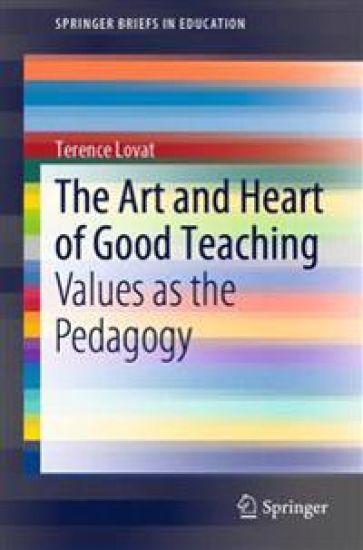
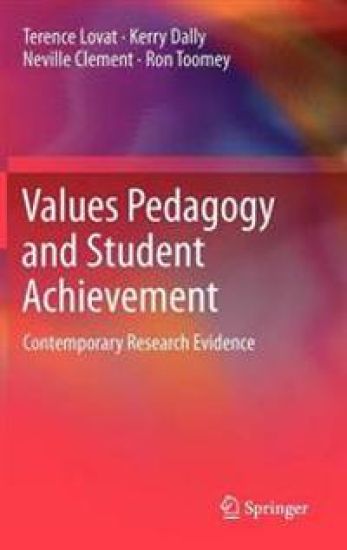
This book summarizes and updates findings from the Australian Values Education Program with a focus on the latest international research in the field, both theoretical and practice-based. Further, it provides a theoretical and practical basis for understanding the disenchantment with low-level accountability approaches to learning (e.g. NAPLAN in Australia). In turn, the book demonstrates the effectiveness of Values Education as a holistic pedagogy with the potential to enhance students’ learning effects in terms of their personal, social, emotional and academic development. It offers well-tested alternative pedagogical approaches, based on research insights largely originating from actual classroom-based practice.
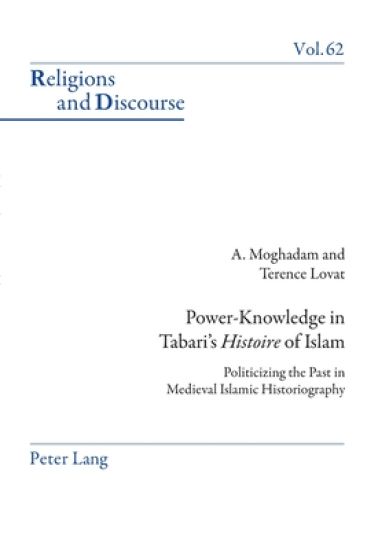
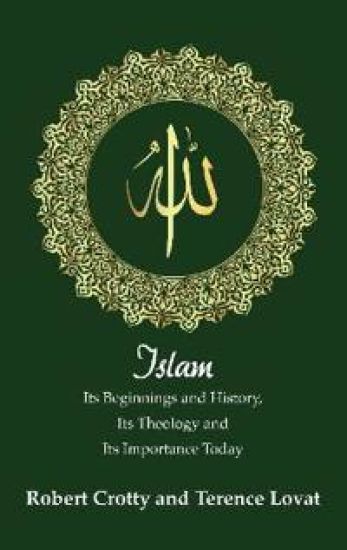
Muhammad al-Tabari’s History, written about 300 years after the establishment of Islam, is one of the religion’s most important commentaries. It offers important insights into the early development of Islam, not so much for its history as for the ways it was interpreted and understood. Through application of modern historiographical analysis and scriptural exegesis, the book explores the space between factual history and interpretive history, or histoire. The focus is especially on the ways in which al-Tabari himself understood and interpreted Qur’anic evidence, employing it not so much for literal as for political purposes. In this sense, his work is best understood not as a reliable history in the modern sense but as a politically-inspired commentary. Granted that his work has often been relied on for Islam’s historical claims, this book offers important new insights into the ways in which power and politics were shaping interpretations in its first three hundred years.
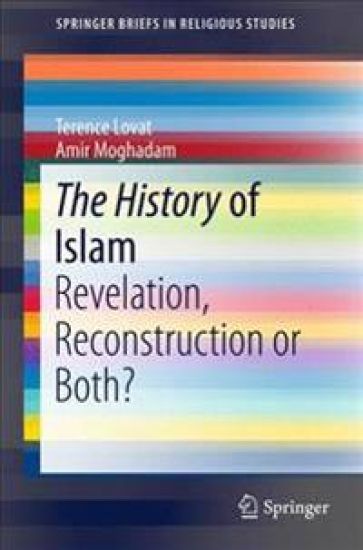
This book applies philosophical and critical textual scholarship to the traditional Islamic narrative in an attempt to distinguish between its historical and interpretive elements. It allows the narrative to be preserved with due respect for its significance and distinctiveness, but in a way that frees it from the ease with which it can slip into the hands of literalists and fundamentalists in order to serve a purpose which is at odds with its original spirit and intention. When radical Islamists use social media to try and convert young followers to a Jihadist cause, they refer often to the narrative about the Prophet, the original Islamic community (Ummah), and the holy book (Qur’an). The references usually imply that these are under threat by infidels, either non-Muslim Westerners or Muslims themselves who follow allegedly errant forms of Islam. The narrative itself is, however, never questioned; it is taken as merely factual with every word to be taken literally, including words that appear intolerant of difference and given to violence. As such, it can serve well the forms of fundamentalism that lie at the heart of radical Islamism and Jihadism. Because of a shortage of critical scholarship about Islam’s central narrative, the radical Islamist understanding of it differs too little from that of mainstream Muslims. Neither tends to take sufficient account of the context of the writing, its original purpose or the many interpretive elements that have been overlain. This makes it difficult for mainstream Islamic authorities to counter effectively the radical Islamist discourse or to distinguish moderate and liberal forms of religious practice from radical breakaway forms. In turn, this causes confusion among Muslims, who know the radical Islamists are in error but find it hard to say just why, and even greater confusion and angst among non-Muslims, for whom the allegation that all of Islam is inherently violent and to be feared is clearly being heard by an increasing number. This book sets out to address this problem by applying forms of scholarship that can preserve the best of the Islamic narrative while, at the same time, illustrating just how errant is the radical Islamist understanding of it.
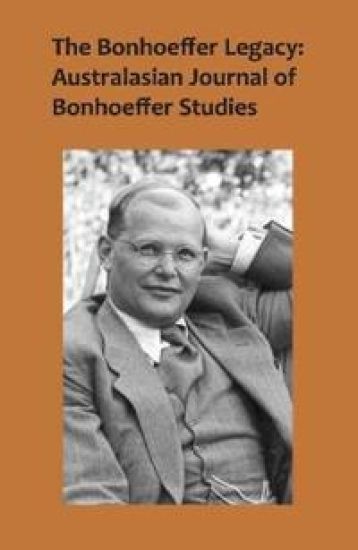
The Bonhoeffer Legacy: Australasian Journal of Bonhoeffer Studies is a fully refereed academic journal aimed principally at providing an outlet for an ever expanding Bonhoeffer scholarship in Australia, New Zealand and the South Pacific region, as well as being open to article submissions from Bonhoeffer scholars throughout the world. It also aims to elicit and encourage future and ongoing scholarship in the field. The focus of the journal, captured in the notion of Legacy', is on any aspect of Bonhoeffer's life, theology and political action that is relevant to his immense contribution to twentieth century events and scholarship. Legacy' can be understood as including those events and ideas that contributed to Bonhoeffer's own development, those that constituted his own context or those that have developed since his time as a result of his work. The editors encourage and welcome any scholarship that contributes to the journal's aims. The journal also has book reviews."
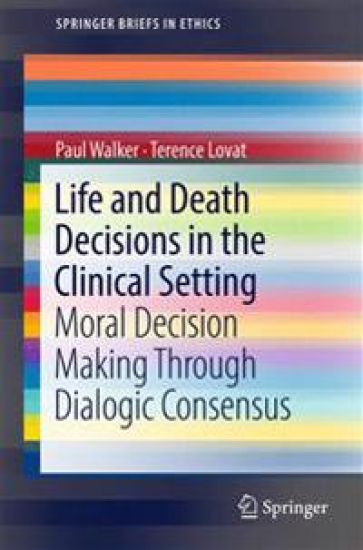
This book moves away from the frameworks that have traditionally guided ethical decision-making in the Western clinical setting, towards an inclusive, non-coercive and, reflective dialogic approach to moral decision-making. Inspired in part by Jürgen Habermas’s discourse theory of morality and principles of communicative action, the book offers a proportionist approach as a way of balancing out the wisdom in traditional frameworks, set in the actual reality of the clinical situation at hand. Putting this approach into practice requires having a conversation, a dialogue or a discourse, with collaboration amongst all the stakeholders. The aim of the dialogue is to reach consensus in the decision, via mutual understanding of the values held by the patient and others whom they see as significant. This book aims to underscore the moral philosophical foundations for having a meaningful conversation. Life and Death Decision in the Clinical Setting is especially relevant in our contemporary era, characterised medically by an ever-increasing armamentarium of life-sustaining technology, but also by increasing multiculturalism, a multiplicity of faiths, and increasing value pluralism.
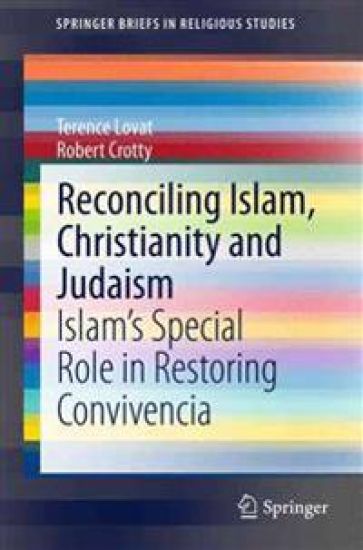
At the present time, when so-called Islamic radicalism, terrorism and Jihadism occupy major media space, with Islam often depicted as the main culprit, the book attempts a tour de force. It proposes that Islam is as much victim as culprit in the history that has led to the current hostility. This is because the common claims of both mainstream and radical Islam that Islam represents the high point of the Abrahamic tradition, and therefore a purification of Judaism and Christianity, have been largely ignored, misunderstood or blatantly rejected by these faiths and therefore by ‘the West’ in general. This rejection has effectively rendered Islam as the poor cousin, if not the illegitimate sibling, of the tradition. In turn, this has created long-term resentment and hostility within Islam as well as robbed the ‘Judaeo-Christian West’ of a rich, inter-faith understanding of the wider Abrahamic tradition. The book explores these claims through textual, historical and theological analyses, proposing that many of them stand up better to critical scrutiny than has been commonly acknowledged. It further proposes that seeing Islam in this way has potential to re-awaken its self-understanding as a leader of accord among the Abrahamic faiths, of the kind that characterized the era of Convivencia when, in medieval Spain, Islam constructed and contributed to advanced civilizations characterized by relatively harmonious co-existence between Muslims, Christians and Jews. The book focuses on the role that a more respected and self-confident Islam could play in forging enhanced inter-faith relations in a world that desperately needs them as it struggles to understand and deal with modern and particularly vicious forms of radical Islamism.
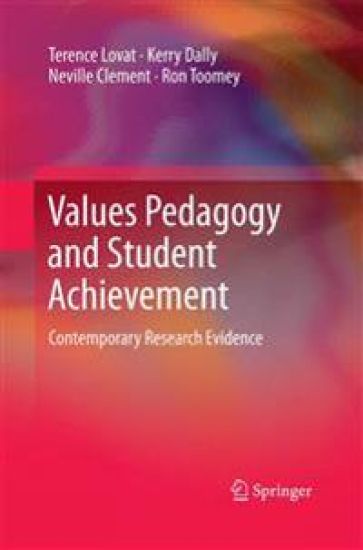
Under the weight of a combination of forces, many of the older paradigms of learning are being questioned in our time. Among the updated research that elicits such critique is that which deals directly with effective pedagogy, clearly illustrating the enhanced effects on learning when it is dealt with as a holistic developmental enterprise rather than one concerned solely with content, technique and measurable outcomes. This research includes volumes of empirical evidence and conceptual analysis from across the globe that point to the inextricability of values as lying at the heart of those forms of good practice pedagogy that support and facilitate the species of student achievement that truly does transform the life chances of students. This research indicates that the combination of values rich learning environments and values discourse (that is, the holism of implicit and explicit pedagogy) has potential for positive influence on learning outcomes, most markedly for those deemed likely to fail without such pedagogical intervention. Values Pedagogy and Student Achievement - Contemporary Research Evidence uncovers, explores and appraises those volumes of evidence and analysis, illustrating their pertinence to student achievement, the vexed issue that lies at the heart of all for which education stands.
Under the weight of a combination of forces, many of the older paradigms of learning are being questioned in our time. Among the updated research that elicits such critique is that which deals directly with effective pedagogy, clearly illustrating the enhanced effects on learning when it is dealt with as a holistic developmental enterprise rather than one concerned solely with content, technique and measurable outcomes. This research includes volumes of empirical evidence and conceptual analysis from across the globe that point to the inextricability of values as lying at the heart of those forms of good practice pedagogy that support and facilitate the species of student achievement that truly does transform the life chances of students. This research indicates that the combination of values rich learning environments and values discourse (that is, the holism of implicit and explicit pedagogy) has potential for positive influence on learning outcomes, most markedly for those deemed likely to fail without such pedagogical intervention. Values Pedagogy and Student Achievement - Contemporary Research Evidence uncovers, explores and appraises those volumes of evidence and analysis, illustrating their pertinence to student achievement, the vexed issue that lies at the heart of all for which education stands.