Kirjojen hintavertailu – 12 903 724 kirjaa ja 27 kauppaa

Kirjailija

Terence

Kirjat ja teokset yhdessä paikassa: 77 kirjaa, julkaisuja vuosilta 1976–2026, suosituimpiin kuuluu Les Comédies de Térence, Traduites En François, Avec Des Remarques, (Éd.1688). Vertaile teosten hintoja ja tarkista saatavuus suomalaisista kirjakaupoista.

Nimi esiintyy myös muodoissa: Térence

77 kirjaa

Kirjojen julkaisuvuodet: 1976–2026.

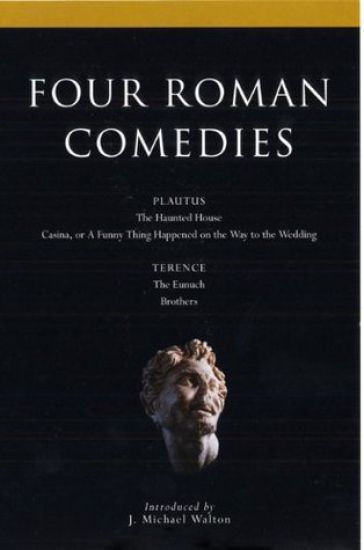
Four Roman Comedies

Four Roman Comedies

Titus Maccius Plautus; Terence

Methuen Drama
2003
nidottu
Four essential classic plays with an introduction by the editor The comedies of Plautus and Terence are all that survive to us of a great age of Roman comedy theatre. Collected here are four important plays that offer a unique insight into everyday life in ancient Rome, whilst maintaining a pivotal influence over the theatre of the present day. In The Haunted House the intrigues of a clever slave are played out in a virtuoso comic role; Plautus's Casina is a fast-moving romp through the sexual mores of the Roman upper classes; Terence's more sophisticated The Eunuch, and The Brothers are perhaps closer in sentiment to the attitudes of modern comedy and reflect situations with universal appeal. The volume is edited and introduced by J. Michael Walton, Professor of Drama at the University of Hull.
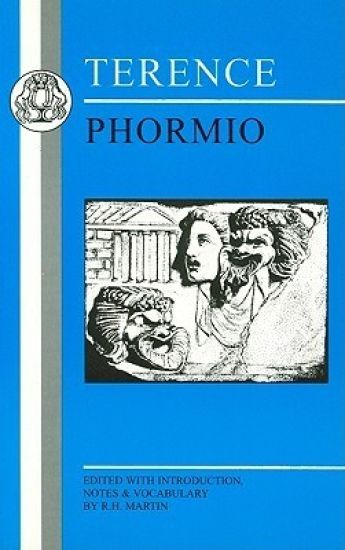
Phormio

Phormio

Terence

Bristol Classical Press
2002
nidottu
The lively action and well-constructed plot of the "Phormio" make it an ideal introduction to Terence and to the Roman comic genre. It well illustrates Terence's subtle handling of plot and character - two fathers, two wayward sons in love, the latter abetted by the scheming slave and by the parasite who gives his name to the play. This edition, recognising that the simplicity of Terence's Latin can be obscured by initial unfamiliarity with his colloquial (and early) poetic idiom, includes a great deal of linguistic help in the annotation. There is a full vocabulary and the introduction deals with genre and plot, as well as prosody and metre.
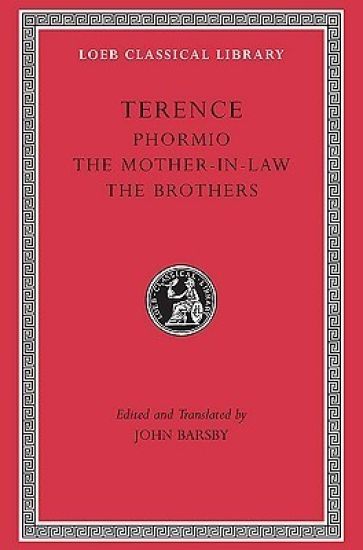
Phormio. The Mother-in-Law. The Brothers

Phormio. The Mother-in-Law. The Brothers

Terence

LOEB
2001
sidottu

Halvin toimitettuna 37,20 €

The Roman comic playwright “whose every word delights.” Terence brought to the Roman stage a bright comic voice and a refined sense of style. His six comedies—first produced in the half dozen years before his premature death in 159 BC—imaginatively reformulated in Latin plays that were originally written by Greek playwrights, especially Menander. For this new Loeb Classical Library edition of Terence, John Barsby gives us a faithful and lively translation with full explanatory notes, facing a freshly edited Latin text. Volume I contains a substantial introduction and three plays: The Woman of Andros, a romantic comedy; The Self-Tormentor, which looks at contrasting father-son relationships; and The Eunuch, whose characters include the most sympathetically drawn courtesan in Roman comedy. The other three plays are in Volume II: Phormio, a comedy of intrigue with an engaging trickster; The Mother-in-Law, unique among Terence’s plays in that the female characters are the admirable ones; and The Brothers, which explores contrasting approaches to parental education of sons. The Romans highly praised Terence—“whose speech can charm, whose every word delights,” in Cicero’s words. This new edition of his plays, which replaces the now outdated Loeb translation by John Sargeaunt (first published in 1912), succeeds in capturing his polished style and appeal.

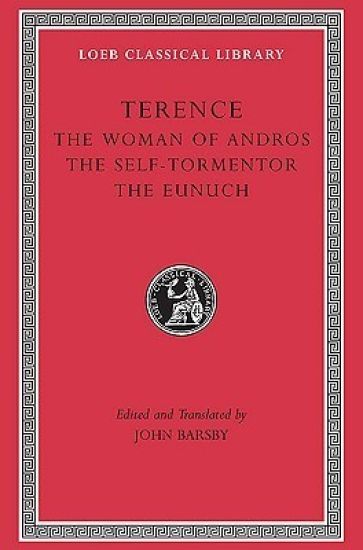
The Woman of Andros. The Self-Tormentor. The Eunuch

The Woman of Andros. The Self-Tormentor. The Eunuch

Terence

LOEB
2001
sidottu

Halvin toimitettuna 36,30 €

The Roman comic playwright “whose every word delights.” Terence brought to the Roman stage a bright comic voice and a refined sense of style. His six comedies—first produced in the half dozen years before his premature death in 159 BC—imaginatively reformulated in Latin plays that were originally written by Greek playwrights, especially Menander. For this new Loeb Classical Library edition of Terence, John Barsby gives us a faithful and lively translation with full explanatory notes, facing a freshly edited Latin text. Volume I contains a substantial introduction and three plays: The Woman of Andros, a romantic comedy; The Self-Tormentor, which looks at contrasting father-son relationships; and The Eunuch, whose characters include the most sympathetically drawn courtesan in Roman comedy. The other three plays are in Volume II: Phormio, a comedy of intrigue with an engaging trickster; The Mother-in-Law, unique among Terence’s plays in that the female characters are the admirable ones; and The Brothers, which explores contrasting approaches to parental education of sons. The Romans highly praised Terence—“whose speech can charm, whose every word delights,” in Cicero’s words. This new edition of his plays, which replaces the now outdated Loeb translation by John Sargeaunt (first published in 1912), succeeds in capturing his polished style and appeal.
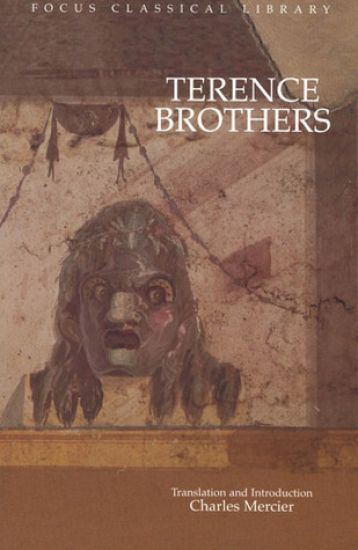
Brothers

Brothers

Terence

Focus Publishing/R Pullins Co
1998
nidottu
This is an English translation of Terence's Roman comedy that deals with questions of perennial interest: "How best to raise children?" and "How to give self-disinterested moral advice?." Focus Classical Library provides close translations with notes and essays. Focus Classical Library provides close translations with notes and essays to provide access to understanding Roman culture. A video of performance of the play "The Terence Project, Vassar 1996" is available.
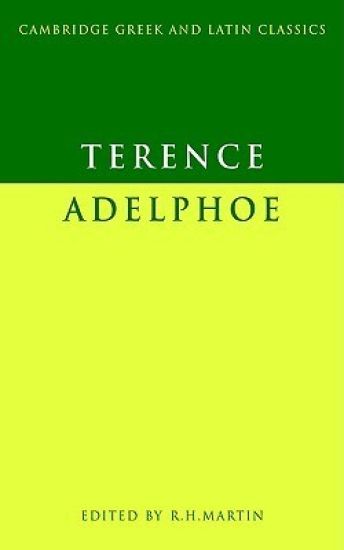
Terence: Adelphoe

Terence: Adelphoe

Terence

Cambridge University Press
1976
pokkari
The Adelphoe (The Brothers) of Terence is a Latin adaptation of a comedy of the same name by the Greek comic playwright Menander. The theme of the play is the perennially interesting question of the relationship between the generations and the proper way to bring up a son. In the introduction Mr Martin considers Terence in the context of Roman comedy generally and discusses the background of the Adelphoe. There is also a section on metre and scansion and a short analysis of the textual tradition. The full and detailed commentary, besides elucidating the text, seeks at all times to help the reader to understand the work as a play to be enjoyed. The edition is intended for use by students at school and university and for anyone wishing to read and appreciate the play in the original.