Kirjojen hintavertailu – 12 872 013 kirjaa ja 27 kauppaa

Kirjailija

Teresa of Jesus

Kirjat ja teokset yhdessä paikassa: 9 kirjaa, julkaisuja vuosilta 2011–2014, suosituimpiin kuuluu The Book of the Foundations of S Teresa of Jesus: With the Visitation of Nunneries, the Rule and Constitutions. Vertaile teosten hintoja ja tarkista saatavuus suomalaisista kirjakaupoista.

9 kirjaa

Kirjojen julkaisuvuodet: 2011–2014.

The Book of the Foundations of S Teresa of Jesus: With the Visitation of Nunneries, the Rule and Constitutions
WHEN S. Teresa had taken possession and founded the first monastery of her nuns in Avila, 24th August 1562, she was summoned back to the monastery of the Incarnation, where she had made her profession, for that monastery was thrown into trouble by the act of the Saint, and the nuns were very angry with her. She was made to give an account of her conduct, and the provincial was sent for, before whom she had to make what defence she could: that defence she made in the prescncc of the nuns her sister's, and so successfully that no one was found to blame her. When she had appeased her sisters, she had to meet other troubles: the people of Avila had been also disturbed, and a new house of religion seemed for the moment to be an offence to them. The magistrates of the city resolved to suppress the monastery, but on finding that it was lawfully established with the consent of the bishop they had recourse to the courts of law. But out of all their efforts nothing came, and the Saint, with the consent of the provincial, left the monastery of the Incarnation, and joined her sisters in the new house of S. Joseph. She went to that house, according to the chronicle of the order, before the end of the year; but Ribera says, and his account is more likely to be true, that she did not return before the middle of Lent 1563. Fray Francisco de Santa Maria, the chronicle", rests his statement that she went back in December on the expression in the Prologue to the Foundations, In the year 1562-the very year in which this house of S. Joseph in Avila was founded. "I was ordered, when in that house, by my confessor, the Dominican friar, father Garcia of Toledo, to write the history of the foundation of the monastery. He says that Fray Garcia could not have given her the commandment to' write before she returned to the Incarnation, he: cause she was summoned thither at once, and was not allowed to remain the whole day in S, Joseph's: she would therefore, he says, have left the Incarnation after the summons, and returned to S, Joseph's before the end of the year.
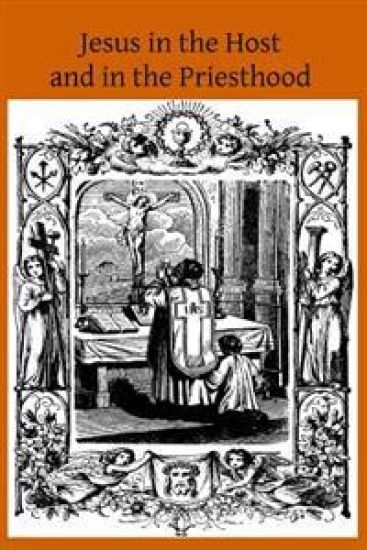
Jesus in the Host and in the Priesthood: Chapters Excerpted from the Life of the Reverend Mother St. Teresa of Jesus, Abbess of the Convent of the Poo
THE Contemplations on the Priesthood, here offered for the meditation of priests, are extracts from the life of a holy and humble Abbess of Poor Clares, who died March 26, 1884, in the odour of sanctity, at Lavaur. The Reverend Mother, St. Teresa, who was born January 2, 1828, wrote, by order of her directors, her wonderful life. She had, especially during her last years, most exalted Contemplations on the Priesthood. From these, necessarily abridged in the history of her life, it has been thought useful to draw up this selection. Herny Edward Cardnial Manning says this in the preface: It has been well said that one of the internal evidences of the truth of the New Testament - especially of the Apostolic Epistles-is to be found in its "unanxious language" Everyone who has had to deal with the controversies of Arians, Unitarians, Sacramentarians, and Calvinists will know how even the inspired writings can be interpreted in erroneous senses, and how true is the axiom of St. Augustine, that no language is sufficiently perfect to express adequately the conception of the mind. There is, however, no doubt that the verbal over-statement of certain passages in these pages is amply balanced by accurate statements in other parts. The equilibrium is thereby restored. But overstatement is always a danger. In the inspired writings there is a calmness and a self-restraint, a measure and proportion which results from "the analogy of faith". Nevertheless, there are passages of a divine intensity, which some men count to be over-statement, and others explain away. For example- "That Christ may dwell by faith in your heart; that being rooted and founded in charity, you may be able to comprehend with all the saints what is the breadth and length, and height and depth; to know also the charity of Christ, which surpasseth all knowledge, that you may be filled unto all the fulness of God" (Ephesians iii. 17- 19). Here are three expressions which peremptorily refuse the glib hermeneutic "that they only mean this". The indwelling of Christ is not hypostatic, but everything short of it. The knowing that which surpasseth all knowledge is. nothing less than the totum non totaliter; and the being filled unto all the fulness of God can only be understood when we shall know even as we are known. "The charity of Christ presseth us (urget nos), judging this, that if one died for all, then all were dead; and Christ died for all, that they who live may not now live to themselves, but unto Him who died for them and rose again" (2 Cor. v. 14, 15). This is not less than to be alter Christus. "Know ye not that your members are the temple of the Holy Ghost who is in you" (I Cor. vi. 19). Here is inhabitatio in every sense, except hypostatical. Again, "he who is joined to the Lord is one spirit" (ibid. 17). The interpreters whom Aristotle calls "straw-splitters" would surely affirm that this is a hypostatic unity in which the human personality ceases to exist.
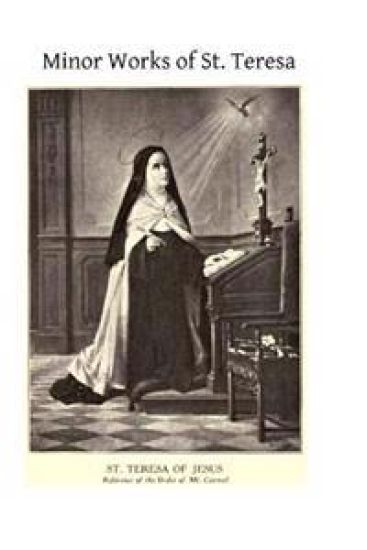
Minor Works of St. Teresa: Exclamations on the Love of God, Exclamations, Maxims and Poems of Saint Teresa of Jesus
THE Minor Writings of St. Teresa, -: Minor because they occupy but little space in print, although as a revelation of the beauty and grandeur of her soul they equal the Life and the Interior Castle, comprise the Poems, the Conceptions of the Love of God, the Exclamations and certain Maxims. While the Exclamations and the Maxims are fairly well known to English readers, the Poems and the Conceptions will probably come as a surprise to many of them. It is necessary to say a few words by way of Introduction. " I know one," says the Saint in her Life, evidently speaking of herself, "who, though she was not a poet, yet composed, without any preparation, certain stanzas, full of feeling, most expressive of her pain they were not the work of her own understanding; but in order to have a greater fruition of that bliss which so sweet a pain occasioned her, she complained of it in that way to God." This was when she had reached what she describes as the "third water" or the third state of prayer, which leads to "spiritual inebriation." It is an overflowing of the heart which can no longer contain the abundance of bliss infused into it. Alluding to the verse of the psalmist, Cum dilatasti cor meum, -When Thou didst dilate my heart. St. Teresa considers that such graces, even of a less high order, cause, or require a widening of the heart, because they do not follow the narrow measure of poor humanity. l What, then, must it be when grace comes in a mighty stream, a perfect torrent? Like a river it precipitates itself down the sheer rock into a narrow basin which cannot hold it, but casts it up again with double vehemence, though not in the form of a solid mass, but dissolved into a myriad of atoms which break up and reflect the sunlight in the delicate hues of the rainbow. Thus the vehemence of the spirit seeks an outlet, not by bursting its prison walls with elemental force, but by converting itself into sweet song. In moments of emotion the sober word is incapable of following the rush of thought. The love-stricken swain sings in verse the praises of the object of his passion. The ardent patriot rouses inert multitudes with mighty song; the prisoner in his dungeon, the sufferer on his pallet, finds solace and revives hope in accents that vibrate in countless hearts. Thus, in a higher order of things, the soul yearning for the Supreme Good bursts into verse; the prophet's words become a war song; the wailing of the downtrodden, of him that is humbled by his fellow men, or all but crushed under the heavy hand of God, is turned into lyrics. More than that Is there not a song reserved for those who are purchased from the earth, a new canticle which no man can say but the hundred and forty-four thousand ?" Who could tell the song when the morning stars praised Me together, and all the sons of God made a joyful melody?" Above all, is not God himself the first and the greatest of poets ? For, what is the universe but one great poem? Are not the Incarnation and the work of Redemption as it were the setting to music of the Word of Go
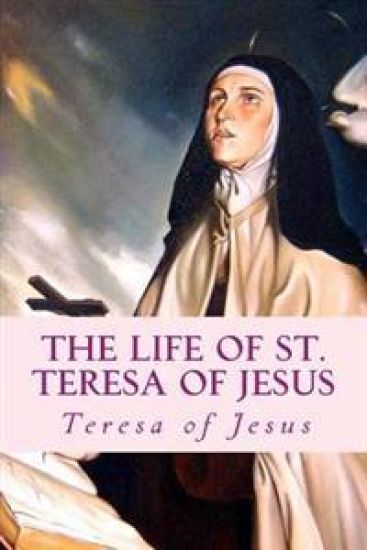
The Life of St. Teresa of Jesus: Autobiography
Teresa of vila, also called Saint Teresa of Jesus, baptized as Teresa S nchez de Cepeda y Ahumada, (March 28, 1515 - October 4, 1582) was a prominent Spanish mystic, Roman Catholic saint, Carmelite nun, writer of the Counter Reformation, and theologian of contemplative life through mental prayer. She was a reformer of the Carmelite Order and is considered to be a founder of the Discalced Carmelites along with John of the Cross. In 1622, forty years after her death, she was canonized by Pope Gregory XV and was in 1970 named a Doctor of the Church by Pope Paul VI. Her books, which include her autobiography (The Life of Teresa of Jesus) and her seminal work El Castillo Interior (The Interior Castle) are an integral part of Spanish Renaissance literature as well as Christian mysticism and Christian meditation practices as she entails in her other important work, Camino de Perfecci n (The Way of Perfection). Readers interested in basic Christian mysticism need look no further than Saint Teresa of Avila. Theresa expresses in beautiful language her deep relationship with God, and her words of wisdom and ever-hopeful outlook have inspired Christians everywhere for centuries. The Spanish Carmelite nun's autobiography provides a perfect entrance point to the world of mental prayer. She begins her story with tales of her childhood in the early 1500s--the death of her mother, how she became a nun, and the hardships of her life including illness and a period of "lukewarmness" during which she ceased to pray. St. Teresa also relates the visiosn and instructions she recieved form God later in her life. This book also contains St. Teresa's writings on the four states of mental prayer. In the first stage, believers learn to pray. In the second, they experience the supernatural aspect of prayer. In the third, the soul is bathed inthe pleasure of God's presence, and in the fourth, senses are abandonded in a sort of out-of-body experience where the sould feels only divine union. This book also contains a series of "relations," letters she send to colleagues giving further thoughts of her beliefs. St. Teresa's warm and personal descriptions of union with God provide a wonderful and accessible starting point for engagement in her life and theology of mysticism.
The Way Of Perfection

The Way Of Perfection

Teresa of Jesus

Createspace Independent Publishing Platform
2012
nidottu
St. Alphonsus writes: "a single bad book will be sufficient to cause the destruction of a monastery." Pope Pius XII wrote in 1947 at the beatification of Blessed Maria Goretti: "There rises to Our lips the cry of the Saviour: 'Woe to the world because of scandals ' (Matthew 18:7). Woe to those who consciously and deliberately spread corruption-in novels, newspapers, magazines, theaters, films, in a world of immodesty " We at St. Pius X Press are calling for a crusade of good books. We want to restore 1,000 old Catholic books to the market. We ask for your assistance and prayers. This book is a photographic reprint of the original. The original has been inspected and some imperfections may remain. At Saint Pius X Press our goal is to remain faithful to the original in both photographic reproductions and in textual reproductions that are reprinted. Photographic reproductions are given a page by page inspection, whereas textual reproductions are proofread to correct any errors in reproduction.