Kirjojen hintavertailu – 12 859 828 kirjaa ja 27 kauppaa

Kirjailija

Terje Aven

Kirjat ja teokset yhdessä paikassa: 33 kirjaa, julkaisuja vuosilta 2007–2025, suosituimpiin kuuluu Risk and risk science. Vertaile teosten hintoja ja tarkista saatavuus suomalaisista kirjakaupoista.

33 kirjaa

Kirjojen julkaisuvuodet: 2007–2025.

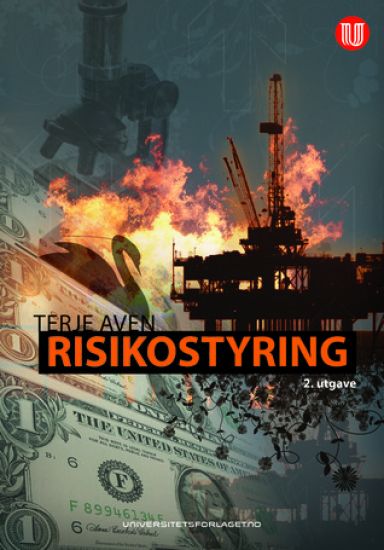
Risikostyring

Risikostyring

Terje Aven

Universitetsforlaget
2015
nidottu
Vi ønsker ikke ulykker, skader og tap, men all aktivitet medfører risiko. Taper bedriften store summer fordi ledelsen ikke har oversikt over risikoene og vet hvordan disse bør håndteres? Hvordan skal ulike hensyn balanseres? Risikostyring er viktig for så vidt forskjellige områder som mattrygghet, helse, transport, IKT, kraftforsyning, olje- og gassproduksjon, rasfare og terrorfare. Denne boken gir svar på hva risiko er, og hvordan vi kan uttrykke og kommunisere risiko. Leseren får vite hvordan vi skal bestemme hva som er akseptabel risiko, hvordan vi skal forstå og forholde oss til føre-var-prinsippet, og hvordan vi skal forstå og bruke kost-nytte-analyser. Denne reviderte utgaven er oppdatert på utviklingen i risikofaget de senere årene. Nytt stoff om risiko og overraskelser, såkalte sorte svaner, er også lagt til. Boken er rettet mot studenter og kursdeltakere innen risiko- og sikkerhetsfag som trenger å forstå de grunnleggende prinsippene for styring av risiko. Den er også nyttig for personer som arbeider med risikostyring og som trenger oppdatering.
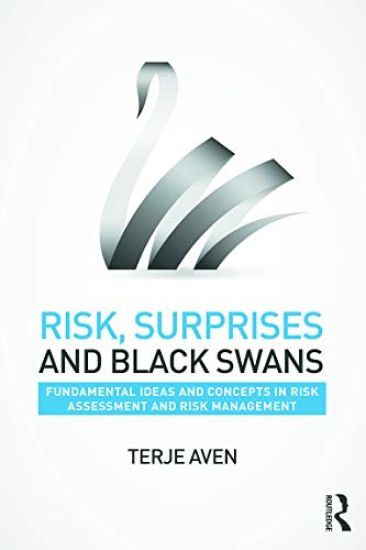
Risk, Surprises and Black Swans
Risk, Surprises and Black Swans provides an in depth analysis of the risk concept with a focus on the critical link to knowledge; and the lack of knowledge, that risk and probability judgements are based on. Based on technical scientific research, this book presents a new perspective to help you understand how to assess and manage surprising, extreme events, known as ‘Black Swans’. This approach looks beyond the traditional probability-based principles to offer a broader insight into the important aspects of uncertain events and in doing so explores the ways to manage them. This book recognises the fundamental issues surrounding risk assessment and risk management to help you to understand and prepare for black swan events. Complete with international examples to illustrate ideas and concepts Integrates risk management and resilience based thinking Suitable for a variety of applications including engineering, finance and security.
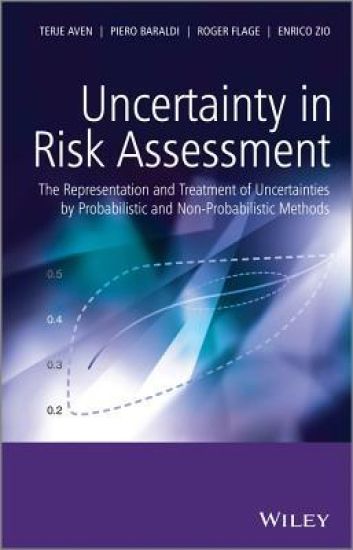
Uncertainty in Risk Assessment

Uncertainty in Risk Assessment

Terje Aven; Piero Baraldi; Roger Flage; Enrico Zio

John Wiley Sons Inc
2014
sidottu
Explores methods for the representation and treatment of uncertainty in risk assessment In providing guidance for practical decision-making situations concerning high-consequence technologies (e.g., nuclear, oil and gas, transport, etc.), the theories and methods studied in Uncertainty in Risk Assessment have wide-ranging applications from engineering and medicine to environmental impacts and natural disasters, security, and financial risk management. The main focus, however, is on engineering applications. While requiring some fundamental background in risk assessment, as well as a basic knowledge of probability theory and statistics, Uncertainty in Risk Assessment can be read profitably by a broad audience of professionals in the field, including researchers and graduate students on courses within risk analysis, statistics, engineering, and the physical sciences. Uncertainty in Risk Assessment: Illustrates the need for seeing beyond probability to represent uncertainties in risk assessment contexts. Provides simple explanations (supported by straightforward numerical examples) of the meaning of different types of probabilities, including interval probabilities, and the fundamentals of possibility theory and evidence theory. Offers guidance on when to use probability and when to use an alternative representation of uncertainty. Presents and discusses methods for the representation and characterization of uncertainty in risk assessment. Uses examples to clearly illustrate ideas and concepts.
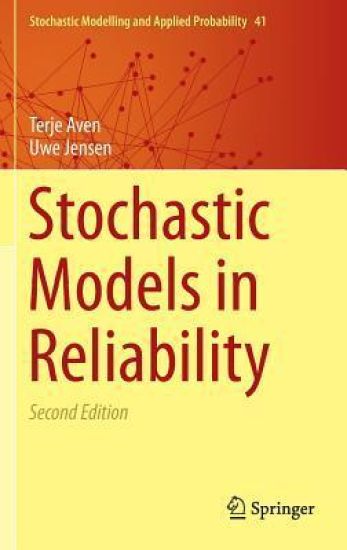
Stochastic Models in Reliability

Stochastic Models in Reliability

Terje Aven; Uwe Jensen

Springer-Verlag New York Inc.
2013
sidottu
This book provides a comprehensive up-to-date presentation of some of the classical areas of reliability, based on a more advanced probabilistic framework using the modern theory of stochastic processes. This framework allows analysts to formulate general failure models, establish formulae for computing various performance measures, as well as determine how to identify optimal replacement policies in complex situations. In this second edition of the book, two major topics have been added to the original version: copula models which are used to study the effect of structural dependencies on the system reliability; and maintenance optimization which highlights delay time models under safety constraints. Terje Aven is Professor of Reliability and Risk Analysis at University of Stavanger, Norway. Uwe Jensen is working as a Professor at the Institute of Applied Mathematics and Statistics of the University of Hohenheim in Stuttgart, Germany. Review of first edition: "This is an excellent book on mathematical, statistical and stochastic models in reliability. The authors have done an excellent job of unifying some of the stochastic models in reliability. The book is a good reference book but may not be suitable as a textbook for students in professional fields such as engineering. This book may be used for graduate level seminar courses for students who have had at least the first course in stochastic processes and some knowledge of reliability mathematics. It should be a good reference book for researchers in reliability mathematics." --Mathematical Reviews (2000)
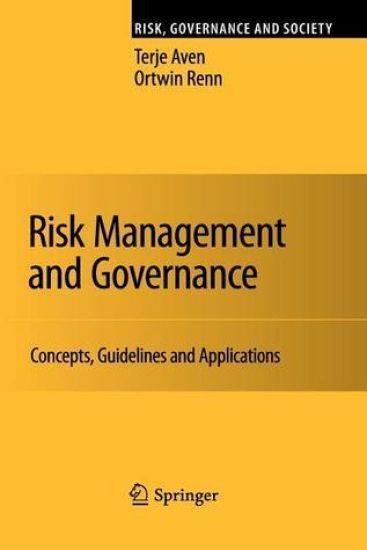
Risk Management and Governance

Risk Management and Governance

Terje Aven; Ortwin Renn

Springer-Verlag Berlin and Heidelberg GmbH Co. K
2012
nidottu
Risk is a popular topic in many sciences - in natural, medical, statistical, engineering, social, economic and legal disciplines. Yet, no single discipline can grasp the full meaning of risk. Investigating risk requires a multidisciplinary approach. The authors, coming from two very different disciplinary traditions, meet this challenge by building bridges between the engineering, the statistical and the social science perspectives. The book provides a comprehensive, accessible and concise guide to risk assessment, management and governance. A basic pillar for the book is the risk governance framework proposed by the International Risk Governance Council (IRGC). This framework offers a comprehensive means of integrating risk identification, assessment, management and communication. The authors develop and explain new insights and add substance to the various elements of the framework. The theoretical analysis is illustrated by several examples from different areas of applications.
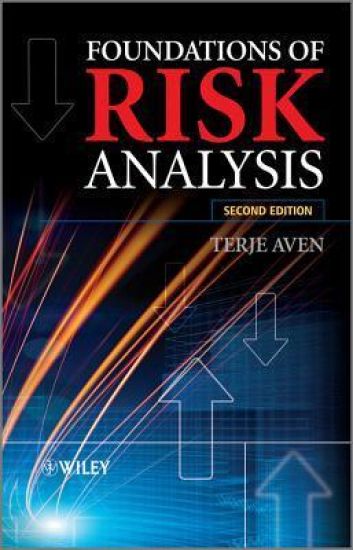
Foundations of Risk Analysis

Foundations of Risk Analysis

Terje Aven

Wiley-Blackwell
2012
sidottu

Halvin toimitettuna 83,70 €

Foundations of Risk Analysis presents the issues core to risk analysis – understanding what risk means, expressing risk, building risk models, addressing uncertainty, and applying probability models to real problems. The author provides the readers with the knowledge and basic thinking they require to successfully manage risk and uncertainty to support decision making. This updated edition reflects recent developments on risk and uncertainty concepts, representations and treatment. New material in Foundations of Risk Analysis includes: An up to date presentation of how to understand, define and describe risk based on research carried out in recent years. A new definition of the concept of vulnerability consistent with the understanding of risk. Reflections on the need for seeing beyond probabilities to measure/describe uncertainties. A presentation and discussion of a method for assessing the importance of assumptions (uncertainty factors) in the background knowledge that the subjective probabilities are based onA brief introduction to approaches that produce interval (imprecise) probabilities instead of exact probabilities. In addition the new version provides a number of other improvements, for example, concerning the use of cost-benefit analyses and the As Low As Reasonably Practicable (ALARP) principle. Foundations of Risk Analysis provides a framework for understanding, conducting and using risk analysis suitable for advanced undergraduates, graduates, analysts and researchers from statistics, engineering, finance, medicine and the physical sciences, as well as for managers facing decision making problems involving risk and uncertainty.
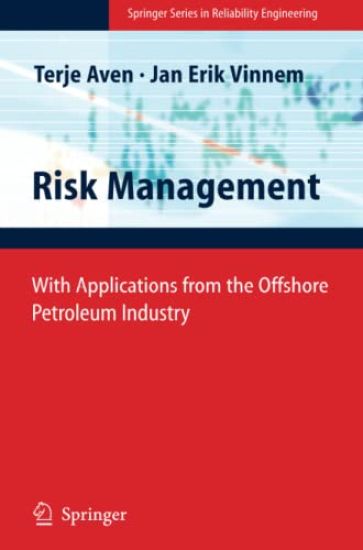
Risk Management

Risk Management

Terje Aven; Jan-Erik Vinnem

Springer London Ltd
2010
nidottu
Risk management is a decision-making process which considers various factors with risk assessments relating to a potential hazard, in order to develop regulatory response options. Technological developments, organisational changes and increased demand for efficiency have influenced the vulnerability of our society. Thus, safety and risk management is becoming an important field. This book discusses some fundamental principles of risk management, related to the use of expected values, uncertainty handling and risk acceptance criteria. A decision framework for risk management is developed that provides a structure for the classification of risk decision problems and a procedure for the execution of the related decision-making processes. Examples from the offshore petroleum industry are included to illustrate the use of the framework. This book is a valuable resource for graduate students and researchers in risk management, practitioners in the industry, engineering managers and regulatory authorities.
Risk Management and Governance

Risk Management and Governance

Terje Aven; Ortwin Renn

Springer-Verlag Berlin and Heidelberg GmbH Co. K
2010
sidottu
Risk is a popular topic in many sciences - in natural, medical, statistical, engineering, social, economic and legal disciplines. Yet, no single discipline can grasp the full meaning of risk. Investigating risk requires a multidisciplinary approach. The authors, coming from two very different disciplinary traditions, meet this challenge by building bridges between the engineering, the statistical and the social science perspectives. The book provides a comprehensive, accessible and concise guide to risk assessment, management and governance. A basic pillar for the book is the risk governance framework proposed by the International Risk Governance Council (IRGC). This framework offers a comprehensive means of integrating risk identification, assessment, management and communication. The authors develop and explain new insights and add substance to the various elements of the framework. The theoretical analysis is illustrated by several examples from different areas of applications.
Misconceptions of Risk

Misconceptions of Risk

Terje Aven

John Wiley Sons Inc
2010
sidottu
We all face risks in a variety of ways, as individuals, businesses and societies. The discipline of risk assessment and risk management is growing rapidly and there is an enormous drive for the implementation of risk assessment methods and risk management in organizations. There are great expectations that these tools provide suitable frameworks for obtaining high levels of performance and balance different concerns such as safety and costs. The analysis and management of risk are not straightforward. There are many challenges. The risk discipline is young and there area a number of ideas, perspectives and conceptions of risk out there. For example many analysts and researchers consider it appropriate to base their risk management policies on the use of expected values, which basically means that potential losses are multiplied with their associated consequences. However, the rationale for such a policy is questionable. A number of such common conceptions of risk are examined in the book, related to the risk concept, risk assessments, uncertainty analyses, risk perception, the precautionary principle, risk management and decision making under uncertainty. The Author discusses these concepts, their strenghts and weaknesses, and concludes that they are often better judged as misconceptions of risk than conceptions of risk. Key Features: Discusses common conceptions of risk with supporting examples. Provides recommendations and guidance to risk analysis and risk management. Relevant for all types of applications, including engineering and business. Presents the Author’s overall conclusions on the issues addressed throughout the book. All those working with risk-related problems need to understand the fundamental ideas and concepts of risk. Professionals in the field of risk, as well as researchers and graduate sutdents will benefit from this book. Policy makers and business people will also find this book of interest.
Risk Analysis

Risk Analysis

Terje Aven

John Wiley Sons Inc
2008
sidottu
Everyday we face decisions that carry an element of risk and uncertainty. The ability to analyze, predict, and prepare for the level of risk entailed by these decisions is, therefore, one of the most constant and vital skills needed for analysts, scientists and managers. Risk analysis can be defined as a systematic use of information to identify hazards, threats and opportunities, as well as their causes and consequences, and then express risk. In order to successfully develop such a systematic use of information, those analyzing the risk need to understand the fundamental concepts of risk analysis and be proficient in a variety of methods and techniques. Risk Analysis adopts a practical, predictive approach and guides the reader through a number of applications. Risk Analysis: Provides an accessible and concise guide to performing risk analysis in a wide variety of fields, with minimal prior knowledge required. Adopts a broad perspective on risk, with focus on predictions and highlighting uncertainties beyond expected values and probabilities, allowing a more flexible approach than traditional statistical analysis. Acknowledges that expected values and probabilities could produce poor predictions - surprises may occur. Emphasizes the planning and use of risk analyses, rather than just the risk analysis methods and techniques, including the statistical analysis tools. Features many real-life case studies from a variety of applications and practical industry problems, including areas such as security, business and economy, transport, oil & gas and ICT (Information and Communication Technology). Forms an ideal companion volume to Aven’s previous Wiley text Foundations of Risk Analysis. Professor Aven’s previous book Foundations of Risk Analysis presented and discussed several risk analysis approaches and recommended a predictive approach. This new text expands upon this predictive approach, exploring further the risk analysis principles, concepts, methods and models in an applied format. This book provides a useful and practical guide to decision-making, aimed at professionals within the risk analysis and risk management field.

Risk Management

Risk Management

Terje Aven; Jan-Erik Vinnem

Springer London Ltd
2007
sidottu
Risk management is a decision-making process which considers various factors with risk assessments relating to a potential hazard, in order to develop regulatory response options. Technological developments, organisational changes and increased demand for efficiency have influenced the vulnerability of our society. Thus, safety and risk management is becoming an important field. This book discusses some fundamental principles of risk management, related to the use of expected values, uncertainty handling and risk acceptance criteria. A decision framework for risk management is developed that provides a structure for the classification of risk decision problems and a procedure for the execution of the related decision-making processes. Examples from the offshore petroleum industry are included to illustrate the use of the framework. This book is a valuable resource for graduate students and researchers in risk management, practitioners in the industry, engineering managers and regulatory authorities.
Pålitelighets- og risikoanalyse

Pålitelighets- og risikoanalyse

Terje Aven

Universitetsforlaget
2007
nidottu
Det er et betydelig fokus på sikkerhetsspørsmål i dagens samfunn. Av den grunn er det et stort behov for egnede metoder og modeller for å kunne analysere og vurdere risiko og pålitelighet. I denne boken presenteres de viktigste av disse metodene og modellene. Boken tar for seg pålitelighets- og risikoanalyser som et ledd i bedrifters satsing på og styring av sikkerhet, pålitelighet og kvalitet. Hovedformålet med analysene er å gi underlag for beslutninger angående valg av løsninger og tiltak, samt å være et redskap for å finne de beste løsninger mht. sikkerhet og økonomi.
Samfunnssikkerhet

Samfunnssikkerhet

Terje Aven; Marit Boyesen; Ove Njå; Kjell Harald Olsen; Kjell Sandve

Universitetsforlaget
2007
nidottu
Samfunnssikkerhet presenterer og diskuterer en systematisk tilnærming til planlegging og beslutningstaking. Naturkatastrofer og større ulykkeshendelser preger samfunnet med jevne mellomrom. Fokus i boken er hvordan planlegging, risikoanalyser og styring av sikkerhet kan bidra i utviklingen av et mer robust samfunn. Hvordan skal vi få kunnskap om de farer og trusler vi står ovenfor og alvorligheten av disse? Problemstillinger som belyses er bla.: Hvordan kan vi unngå at uønskede hendelser skjer? Hvordan kan vi minimalisere konsekvensene av slike hendelser når de skjer? Hvordan skal vi formulere mål og krav til sikkerhet og beredskap, hva slags metoder og modeller kan vi bruke, hvordan balanserer vi sikkerhet og økonomi, hvordan skal vi gå fram for å kunne prioritere riktig? Målgruppen for boken er de som er opptatt av sikkerhet og beredskap i samfunnet, spesielt ledere, saksutredere i offentlig og privat virksomhet, risikoanalytikere, personell med beredskapsansvar og studenter ved studier innen sikkerhet og samfunnssikkerhet.