Kirjojen hintavertailu – 12 903 725 kirjaa ja 27 kauppaa

Kirjailija

Terje Oestigaard

Kirjat ja teokset yhdessä paikassa: 11 kirjaa, julkaisuja vuosilta 2000–2022, suosituimpiin kuuluu Bronze age Håga and the Viking King Björn : a history of interpretation and documentation from AD 818 to 2018. Vertaile teosten hintoja ja tarkista saatavuus suomalaisista kirjakaupoista.

11 kirjaa

Kirjojen julkaisuvuodet: 2000–2022.

Indo-European Fire Rituals

Indo-European Fire Rituals

Anders Kaliff; Terje Oestigaard

TAYLOR FRANCIS LTD
2022
sidottu
Indo-European Fire Rituals is a comparative study of Indo-European fire rituals from modern folklore and ethnography in Scandinavia and archaeological material in Europe from the Bronze Age onwards to the Vedic origins of cosmos in India and today’s cremations on open pyres in Hinduism. Exploring Indo-European fire rituals and sacrifices throughout history and fire in its fundamental role in rites and religious practices, this book analyses fire rituals as the unifying structure in time and space in Indo-European cultures from the Bronze Age onwards. It asks the question how and why was fire the ultimate power in culture and cosmology? Fire as an agent and divinity was fundamental in all major sacrifices. In Europe, ritual fires in relation to agriculture and fertility may also explain the enigma of cremation. Cremated remains were ground and used in fertility rituals, and ancestral fires played an essential role in metallurgy and the creation of cosmos. Thus, the role of fire rituals in culture and cosmology enables a unique understanding of historic developmental processes. For students and academics studying Indo-European culture history from the Bronze Age onwards, this book has a broad interdisciplinary audience including archaeology, ethnography, folklore, religious and Indo-European studies.
Indo-European Fire Rituals

Indo-European Fire Rituals

Anders Kaliff; Terje Oestigaard

TAYLOR FRANCIS LTD
2022
nidottu

Halvin toimitettuna 55,60 €

Indo-European Fire Rituals is a comparative study of Indo-European fire rituals from modern folklore and ethnography in Scandinavia and archaeological material in Europe from the Bronze Age onwards to the Vedic origins of cosmos in India and today’s cremations on open pyres in Hinduism. Exploring Indo-European fire rituals and sacrifices throughout history and fire in its fundamental role in rites and religious practices, this book analyses fire rituals as the unifying structure in time and space in Indo-European cultures from the Bronze Age onwards. It asks the question how and why was fire the ultimate power in culture and cosmology? Fire as an agent and divinity was fundamental in all major sacrifices. In Europe, ritual fires in relation to agriculture and fertility may also explain the enigma of cremation. Cremated remains were ground and used in fertility rituals, and ancestral fires played an essential role in metallurgy and the creation of cosmos. Thus, the role of fire rituals in culture and cosmology enables a unique understanding of historic developmental processes. For students and academics studying Indo-European culture history from the Bronze Age onwards, this book has a broad interdisciplinary audience including archaeology, ethnography, folklore, religious and Indo-European studies.
The Magic of Death

The Magic of Death

Terje Oestigaard

Institutionen för arkeologi och antik historia, Uppsala universitet
2022
nidottu

Halvin toimitettuna 34,00 €

This theoretical analysis of ritual, religion and processes of holiness and Indo-Europeanisation examines how celestial and terrestrial perspectives are united in functional and substantive approaches. Scandinavian Bronze Age religion was firmly rooted in an agricultural cosmology that integrated the seasonality of the sun into changing water worlds throughout the winter. Through a study of the enigmatic Late Bronze Age sites Håga and Nibble in Sweden, the concept of corpsepower is developed. Life had its origin in death and the corpse was the most powerful source oflife. In Indo-European and agricultural traditions, the cosmological power inherent in the dead body was the ultimate cosmological force that ensured future fertility and successful harvests. Death was a ritual and a cosmological intensification aimed at creating continuity between the agricultural seasons and inciting the life-giving forces in nature. Death was not merely an end or a form of closure; the corpse was a means of acquiring wealth and health. Death was doing and magic was the work of the ancestors.
Rainbows, pythons and waterfalls

Rainbows, pythons and waterfalls

Terje Oestigaard

Nordic Africa Institute
2019
pokkari
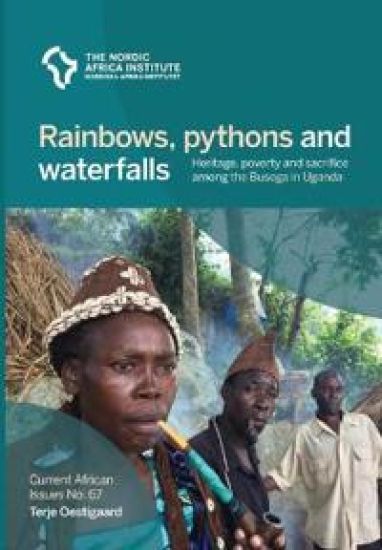
Because of the complexity, it has proved difficult to incorporate culture and tradition in actual policy practice. This book explores the heritage of the Busoga and the water cosmology at the Itanda Falls in Uganda, with an emphasis on rainmaking ritual and sacrifice to the rain-god during drought.
Bronze age Håga and the Viking King Björn : a history of interpretation and documentation from AD 818 to 2018

Bronze age Håga and the Viking King Björn : a history of interpretation and documentation from AD 818 to 2018

Anders Kaliff; Terje Oestigaard

Institutionen för arkeologi och antik historia, Uppsala universitet
2018
nidottu
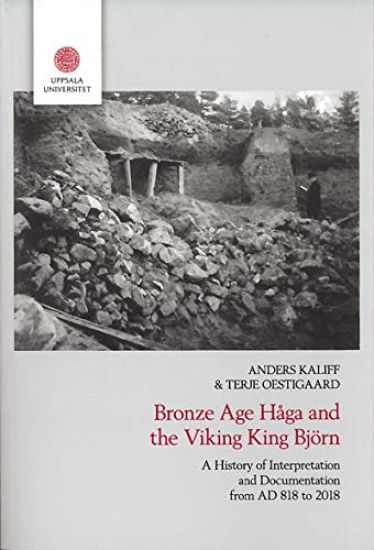
Famous yet forgotten, the monumental site of Haga just outside Uppsala is mainly associated with the Viking King Bjorn, though it is in fact the richest Bronze-Age grave in Sweden. The deceased was cremated and buried in an oak-log coffin, together with almost a third of all of Sweden's Bronze Age gold and gold fragments. This book presents 1200 years of interpretation and documentation of Haga, a site that will continue to fascinate and inspire archaeologists and the public at large for many years to come.
Horus' Eye and Osiris' Efflux: The Egyptian Civilisation of Inundation c. 3000-2000 BCE
The principal objective of this study is to develop a synthetic perspective for enhancing the understanding of the religious roles water had in the rise and constitution of the Egyptian civilisation during the Early Dynastic Period and the Old Kingdom. By comparing the development of funerary monuments and practices with the emergence of the Osiris cult in relation to climatic changes and fluctuations in the Niles yearly inundation, Ancient Egyptian religion and the rise of the civilisation is analyzed according to a water perspective. It is noted that the Blue Nile was not blue, but red-brownish during the flood. When the flood started, the White Nile was not white, but green. The author argues that these fundamental characteristics of the Nile water formed the basis for the Osiris mythology. The red floodwaters in particular represented the blood of the slain Osiris.
Death and Life-Giving Waters

Death and Life-Giving Waters

Terje Oestigaard

BAR Publishing
2005
nidottu
In this original work, the author aims to develop a synthetic perspective for enhancing the understanding of the roles that death and life-giving waters have in the constitution of society and cosmos in karmic traditions. This is achieved through a material culture study of death and funeral practices as cultural, ritual, and religious processes in parts of Nepal, Bangladesh, India, and the Indus Valley.
The Deceased's Life Cycle Rituals in Nepal

The Deceased's Life Cycle Rituals in Nepal

Terje Oestigaard

BAR Publishing
2000
nidottu
This study forms an ethnoarchaeological analysis of the life cycle rituals from the funeral practice and its manifestation in the mortuary remains of Brahmans and Magars in Central Dhaulagiri zone of Nepal'. It is largely based on first-hand experience of funerals and explores the religious and cosmological ideas surrounding death and the afterlife, what death represents for the living and the rites and rituals performed to the deceased. In the final chapter, Oestigaard considers how this evidence can help us interpret the burials of the past and re-appraise our Christianised views of death.