Kirjojen hintavertailu – 12 903 725 kirjaa ja 27 kauppaa

Kirjailija

Terrence J. Sejnowski

Kirjat ja teokset yhdessä paikassa: 7 kirjaa, julkaisuja vuosilta 2003–2026, suosituimpiin kuuluu The Computational Brain. Vertaile teosten hintoja ja tarkista saatavuus suomalaisista kirjakaupoista.

7 kirjaa

Kirjojen julkaisuvuodet: 2003–2026.

The Computational Brain

The Computational Brain

Patricia S. Churchland; Terrence J. Sejnowski

Bradford Books
2016
pokkari
An anniversary edition of the classic work that influenced a generation of neuroscientists and cognitive neuroscientists. Before The Computational Brain was published in 1992, conceptual frameworks for brain function were based on the behavior of single neurons, applied globally. In The Computational Brain, Patricia Churchland and Terrence Sejnowski developed a different conceptual framework, based on large populations of neurons. They did this by showing that patterns of activities among the units in trained artificial neural network models had properties that resembled those recorded from populations of neurons recorded one at a time. It is one of the first books to bring together computational concepts and behavioral data within a neurobiological framework. Aimed at a broad audience of neuroscientists, computer scientists, cognitive scientists, and philosophers, The Computational Brain is written for both expert and novice. This anniversary edition offers a new preface by the authors that puts the book in the context of current research. This approach influenced a generation of researchers. Even today, when neuroscientists can routinely record from hundreds of neurons using optics rather than electricity, and the 2013 White House BRAIN initiative heralded a new era in innovative neurotechnologies, the main message of The Computational Brain is still relevant.
The Deep Learning Revolution

The Deep Learning Revolution

Terrence J. Sejnowski

MIT PRESS LTD
2026
nidottu
How deep learning from Google Translate to driverless cars to personal cognitive assistants is changing our lives and transforming every sector of the economy. The deep learning revolution has brought us driverless cars, the greatly improved Google Translate, fluent conversations with Siri and Alexa, and enormous profits from automated trading on the New York Stock Exchange. Deep learning networks can play poker better than professional poker players and defeat a world champion at Go. In this book, Terry Sejnowski explains how deep learning went from being an arcane academic field to a disruptive technology in the information economy. Sejnowski played an important role in the founding of deep learning, as one of a small group of researchers in the 1980s who challenged the prevailing logic-and-symbol based version of AI. The new version of AI Sejnowski and others developed, which became deep learning, is fueled instead by data. Deep networks learn from data in the same way that babies experience the world, starting with fresh eyes and gradually acquiring the skills needed to navigate novel environments. Learning algorithms extract information from raw data; information can be used to create knowledge; knowledge underlies understanding; understanding leads to wisdom. Someday a driverless car will know the road better than you do and drive with more skill; a deep learning network will diagnose your illness; a personal cognitive assistant will augment your puny human brain. It took nature many millions of years to evolve human intelligence; AI is on a trajectory measured in decades. Sejnowski prepares us for a deep learning future.
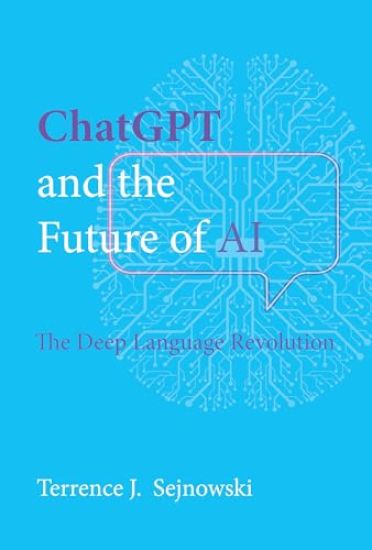
ChatGPT and the Future of AI

ChatGPT and the Future of AI

Terrence J. Sejnowski

MIT PRESS LTD
2024
nidottu

Halvin toimitettuna 25,20 €

An insightful exploration of Chat GPT and other advanced AI systems—how we got here, where we’re headed, and what it all means for how we interact with the world. In ChatGPT and the Future of AI, the sequel to The Deep Learning Revolution, Terrence Sejnowski offers a nuanced exploration of large language models (LLMs) like ChatGPT and what their future holds. How should we go about understanding LLMs? Do these language models truly understand what they are saying? Or is it possible that what appears to be intelligence in LLMs may be a mirror that merely reflects the intelligence of the interviewer? In this book, Sejnowski, a pioneer in computational approaches to understanding brain function, answers all our urgent questions about this astonishing new technology. Sejnowski begins by describing the debates surrounding LLMs’ comprehension of language and exploring the notions of “thinking” and “intelligence.” He then takes a deep dive into the historical evolution of language models, focusing on the role of transformers, the correlation between computing power and model size, and the intricate mathematics shaping LLMs. Sejnowski also provides insight into the historical roots of LLMs and discusses the potential future of AI, focusing on next-generation LLMs inspired by nature and the importance of developing energy-efficient technologies. Grounded in Sejnowski’s dual expertise in AI and neuroscience, ChatGPT and the Future of AI is the definitive guide to understanding the intersection of AI and human intelligence.
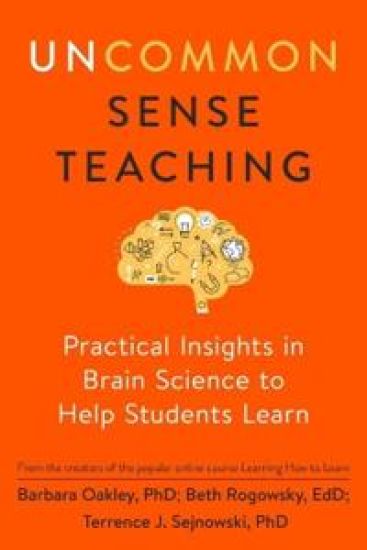
Uncommon Sense Teaching

Uncommon Sense Teaching

Barbara Oakley; Beth Rogowsky; Terrence J. Sejnowski

TarcherPerigee
2021
nidottu

Halvin toimitettuna 22,10 €

A groundbreaking guide to improve teaching based on the latest research in neuroscience, from the bestselling author of A Mind for Numbers. Neuroscientists and cognitive scientists have made enormous strides in understanding the brain and how we learn, but little of that insight has filtered down to the way teachers teach. Uncommon Sense Teaching applies this research to the classroom for teachers, parents, and anyone interested in improving education. Topics include: - keeping students motivated and engaged, especially with online learning - helping students remember information long-term, so it isn't immediately forgotten after a test - how to teach inclusively in a diverse classroom where students have a wide range of abilities Drawing on research findings as well as the authors' combined decades of experience in the classroom, Uncommon Sense Teaching equips readers with the tools to enhance their teaching, whether they're seasoned professionals or parents trying to offer extra support for their children's education.
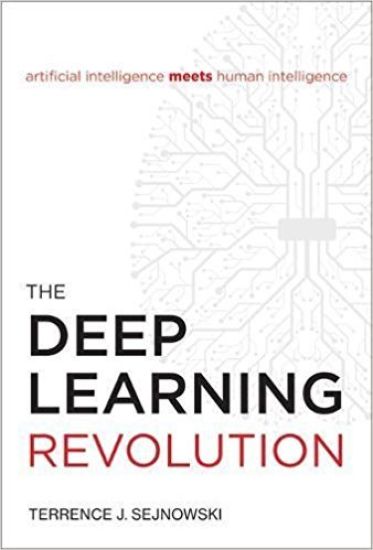
The Deep Learning Revolution

The Deep Learning Revolution

Terrence J. Sejnowski

MIT Press
2018
sidottu
How deep learning—from Google Translate to driverless cars to personal cognitive assistants—is changing our lives and transforming every sector of the economy. The deep learning revolution has brought us driverless cars, the greatly improved Google Translate, fluent conversations with Siri and Alexa, and enormous profits from automated trading on the New York Stock Exchange. Deep learning networks can play poker better than professional poker players and defeat a world champion at Go. In this book, Terry Sejnowski explains how deep learning went from being an arcane academic field to a disruptive technology in the information economy. Sejnowski played an important role in the founding of deep learning, as one of a small group of researchers in the 1980s who challenged the prevailing logic-and-symbol based version of AI. The new version of AI Sejnowski and others developed, which became deep learning, is fueled instead by data. Deep networks learn from data in the same way that babies experience the world, starting with fresh eyes and gradually acquiring the skills needed to navigate novel environments. Learning algorithms extract information from raw data; information can be used to create knowledge; knowledge underlies understanding; understanding leads to wisdom. Someday a driverless car will know the road better than you do and drive with more skill; a deep learning network will diagnose your illness; a personal cognitive assistant will augment your puny human brain. It took nature many millions of years to evolve human intelligence; AI is on a trajectory measured in decades. Sejnowski prepares us for a deep learning future.
Grundlagen zur Neuroinformatik und Neurobiologie

Grundlagen zur Neuroinformatik und Neurobiologie

Patricia S. Churchland; Terrence J. Sejnowski

Springer Vieweg
2012
nidottu
The Computational Brain, das aussergewohnliche Buch uber vergleichende Forschung in den Bereichen von menschlichem Gehirn und neuesten Moglichkeiten der Computertechnologie, liegt hiermit erstmals in deutscher Sprache vor. Geschrieben von einem fuhrenden Forscherteam in den USA, ist es eine Fundgrube fur alle, die wissen wollen, was der Stand der Wissenschaft auf diesem Gebiet ist. Die Autoren fuhren die Bereiche der Neuroinformatik und Neurobiologie mit gut ausgesuchten Beispielen und der gebotenen Hintergrundinformation gekonnt zusammen. Das Buch wird somit nicht nur dem Fachwissenschaftler sondern auch dem interdisziplinaren Interesse des Informatikers und des Biologen auf eine hervorragende Weise gerecht. Ubersetzt wurde das Buch von Prof. Dr. Steffen Holldobler und Dipl.-Biol. Claudia Holldobler, einem Informatiker und einer Biologin. Rezension in Spektrum der Wissenschaft nr. 10, S. 122 f. im Oktober 1997 (...) Die 1992 erschienene amerikanische Originalausgabe des vorliegenden Werkes ist so erfolgreich, dass man bereits von einem Klassiker reden kann. (...) (...) ...ist das Buch sehr zu empfehlen. In Verbindung von Neurobiologie und Neuroinformatik konkurrenzlos, vermittelt es einiges von der Faszination theoretischer Hirnforschung, die auch in Deutschland zunehmend mehr Wissenschaftler in ihren Bann schlagt. Rezension erschienen in: Computer Spektrum 3/1997, S. 2 (...)Das Buch wird somit nicht nur dem Fachwissenschaftler, sondern auch den interdisziplinaren Interesse des Informatikers und des Biologen auf eine hervorragende Weise gerecht(...)
Liars, Lovers, and Heroes: What the New Brain Science Reveals about How We Become Who We Are

Liars, Lovers, and Heroes: What the New Brain Science Reveals about How We Become Who We Are

Steven R. Quartz; Terrence J. Sejnowski

William Morrow Company
2003
nidottu
This book combines cutting-edge findings in neuroscience with examples from history and the headlines to introduce the new science of cultural biology, born of advances in brain imaging, computer modeling, and genetics. Doctors Quartz and Sejnowski show how both our noblest and darkest traits are rooted in brain systems so ancient that we share them with insects. They then demystify the dynamic engagement between brain and world that makes us something far beyond the sum of our parts. The authors show how our humanity unfolds in precise stages as brain and world engage on increasingly complex levels. Their discussion embraces shaping forces as ancient as climate change over millennia and events as recent as the terrorism and heroism of September 11, and offers intriguing answers to some of our most enduring questions, including why we live together, love, kill -- and sometimes lay down our lives for others.