Kirjojen hintavertailu – 12 859 828 kirjaa ja 27 kauppaa

Kirjailija

Terrence Sullivan

Kirjat ja teokset yhdessä paikassa: 6 kirjaa, julkaisuja vuosilta 1992–2012, suosituimpiin kuuluu Sexual Abuse and the Rights of Children: Reforming Canadian Law. Vertaile teosten hintoja ja tarkista saatavuus suomalaisista kirjakaupoista.

6 kirjaa

Kirjojen julkaisuvuodet: 1992–2012.

Améliorer le leadership dans les services de santé au Canada

Améliorer le leadership dans les services de santé au Canada

Terrence Sullivan; Jean-Louis Denis

McGill-Queen's University Press
2012
nidottu
Building Better Health Care Leadership for Canada explains the development and implementation of the Executive Training in Research Application (EXTRA) program. Managed and funded by the Canadian Health Services Research Foundation in partnership with the Canadian Medical Association, the Canadian Nursing Association, and the Canadian College of Health Care executives, EXTRA is a two-year national fellowship program that uses the principles of adult learning theory as well as practical projects to educate senior health care leaders in making more consistent use of research evidence in their management roles. Fellows apply the theory learned in residency sessions and educational activities to projects within their home organizations. The authors identify the imperative for better use of evidence, outline the core elements of the curriculum, and capture the real-world experience of regional leaders and fellows involved in making specific changes informed by research-based evidence within their organization. Contributors include Jean-Louis Denis (Ecole nationale d'administration publique), Terrence Sullivan (Cancer Care Ontario), Owen Adams (Canadian Medical Association), Malcolm Anderson (Queen's University), Lynda Atack, Robert Bell (University Health Network), Sam G Campbell (Queen Elizabeth II Health Sciences Centre), Sylvie Cantin (Regie regionale de la sante et des services sociaux de la Monteregie), Ward Flemons (Calgary Health Region), Dorothy Forbes, J. Sonja Glass (Grey Bruce Health Services), Paula Goering (Centre for Addiction & Mental Health, Toronto), Karen Golden-Biddle (Boston University School of Management), Jeffrey S. Hoch (University of Toronto), Paul Lamarche (Universite de Montreal), Ann Langley (Ecole des hautes etudes commerciales), John N. Lavis (McMaster University), Jonathan Lomas (Canadian Health Services Research Foundation), Margo Orchard (Ministry of Health and Long Term Care, Ontario), Raynald Pineault (University of Montreal), Brian D. Postl (Winnipeg Regional Health Authority), Christine Power (Capital District Health Authority, Halifax), Trish Reay (University of Alberta), Jean Rochon (National Public Health Institute of Quebec), Denis A. Roy (Agence de la sante et des services sociaux de la Monteregie Longueuil), Andrea Seymour (Government of New Brunswick), Samuel B. Sheps (University of British Columbia), Micheline Ste-Marie (McGill University Health Centre), Nina Stipich (Canadian Health Services Research Foundation), David Streiner (Baycrest Centre for Geriatric Care, Toronto), Carl Taillon (Centre hospitalier universitaire de Quebec), and Muriah Umoquit (Cancer Care Ontario).
Building Better Health Care Leadership for Canada

Building Better Health Care Leadership for Canada

Terrence Sullivan; Jean-Louis Denis

McGill-Queen's University Press
2011
sidottu
Building Better Health Care Leadership for Canada explains the development and implementation of the Executive Training in Research Application (EXTRA) program. Managed and funded by the Canadian Medical Association, the Canadian Nurses Association, the Quebec Consortium, and the Canadian College of Health Leaders, EXTRA is a two-year national fellowship program that uses the principles of adult learning theory as well as practical projects to educate senior health care leaders in making more consistent use of research evidence in their management roles. Fellows apply the theory learned in residency sessions and educational activities to projects within their home organizations. The authors identify the imperative for better use of evidence, outline the core elements of the curriculum, and capture the real-world experience of regional leaders and fellows involved in making specific changes informed by research-based evidence within their organization. Contributors include Jean-Louis Denis (Ecole nationale d'administration publique), Terrence Sullivan (Cancer Care Ontario), Owen Adams (Canadian Medical Association), Malcolm Anderson (Queen's University), Lynda Atack, Robert Bell (University Health Network), Sam G Campbell (Queen Elizabeth II Health Sciences Centre), Sylvie Cantin (Regie regionale de la sante et des services sociaux de la Monteregie), Ward Flemons (Calgary Health Region), Dorothy Forbes, J. Sonja Glass (Grey Bruce Health Services), Paula Goering (Centre for Addiction & Mental Health, Toronto), Karen Golden-Biddle (Boston University School of Management), Jeffrey S. Hoch (University of Toronto), Paul Lamarche (Universite de Montreal), Ann Langley (Ecole des hautes etudes commerciales), John N. Lavis (McMaster University), Jonathan Lomas (Canadian Health Services Research Foundation), Margo Orchard (Ministry of Health and Long Term Care, Ontario), Raynald Pineault (University of Montreal), Brian D. Postl (Winnipeg Regional Health Authority), Christine Power (Capital District Health Authority, Halifax), Trish Reay (University of Alberta), Jean Rochon (National Public Health Institute of Quebec), Denis A. Roy (Agence de la sante et des services sociaux de la Monteregie Longueuil), Andrea Seymour (Government of New Brunswick), Samuel B. Sheps (University of British Columbia), Micheline Ste-Marie (McGill University Health Centre), Nina Stipich (Canadian Health Services Research Foundation), David Streiner (Baycrest Centre for Geriatric Care, Toronto), Carl Taillon (Centre hospitalier universitaire de Quebec), and Muriah Umoquit (Cancer Care Ontario).
Building Better Health Care Leadership for Canada

Building Better Health Care Leadership for Canada

Terrence Sullivan; Jean-Louis Denis

McGill-Queen's University Press
2011
nidottu
Building Better Health Care Leadership for Canada explains the development and implementation of the Executive Training in Research Application (EXTRA) program. Managed and funded by the Canadian Medical Association, the Canadian Nurses Association, the Quebec Consortium, and the Canadian College of Health Leaders, EXTRA is a two-year national fellowship program that uses the principles of adult learning theory as well as practical projects to educate senior health care leaders in making more consistent use of research evidence in their management roles. Fellows apply the theory learned in residency sessions and educational activities to projects within their home organizations. The authors identify the imperative for better use of evidence, outline the core elements of the curriculum, and capture the real-world experience of regional leaders and fellows involved in making specific changes informed by research-based evidence within their organization. Contributors include Jean-Louis Denis (Ecole nationale d'administration publique), Terrence Sullivan (Cancer Care Ontario), Owen Adams (Canadian Medical Association), Malcolm Anderson (Queen's University), Lynda Atack, Robert Bell (University Health Network), Sam G Campbell (Queen Elizabeth II Health Sciences Centre), Sylvie Cantin (Regie regionale de la sante et des services sociaux de la Monteregie), Ward Flemons (Calgary Health Region), Dorothy Forbes, J. Sonja Glass (Grey Bruce Health Services), Paula Goering (Centre for Addiction & Mental Health, Toronto), Karen Golden-Biddle (Boston University School of Management), Jeffrey S. Hoch (University of Toronto), Paul Lamarche (Universite de Montreal), Ann Langley (Ecole des hautes etudes commerciales), John N. Lavis (McMaster University), Jonathan Lomas (Canadian Health Services Research Foundation), Margo Orchard (Ministry of Health and Long Term Care, Ontario), Raynald Pineault (University of Montreal), Brian D. Postl (Winnipeg Regional Health Authority), Christine Power (Capital District Health Authority, Halifax), Trish Reay (University of Alberta), Jean Rochon (National Public Health Institute of Quebec), Denis A. Roy (Agence de la sante et des services sociaux de la Monteregie Longueuil), Andrea Seymour (Government of New Brunswick), Samuel B. Sheps (University of British Columbia), Micheline Ste-Marie (McGill University Health Centre), Nina Stipich (Canadian Health Services Research Foundation), David Streiner (Baycrest Centre for Geriatric Care, Toronto), Carl Taillon (Centre hospitalier universitaire de Quebec), and Muriah Umoquit (Cancer Care Ontario).
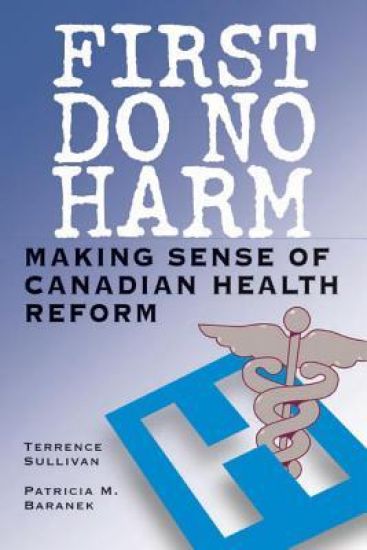
First Do No Harm

First Do No Harm

Terrence Sullivan; Patricia M. Baranek

University of British Columbia Press
2002
pokkari
Is there a crisis in Canadian health care? While the establishment of the Canadian health care system is widely considered a triumph of citizenship, after four decades the national program is in a fragile state marked by declining public confidence. In First Do No Harm, Sullivan and Baranek provide a concise introduction to the fundamentals of health care in Canada and examine various ideas for reforming the system sensibly. Arguing that administrators and policymakers should follow Hippocrates' dictum "first do no harm" when evaluating and reforming the Canadian health care system, the authors discuss health care financing, popular Canadian health care myths, waiting lists and emergency room overcrowding, and home- and community-based health care. This book is an invaluable invitation to Canadians to think carefully and creatively about the present and future of our health care system.
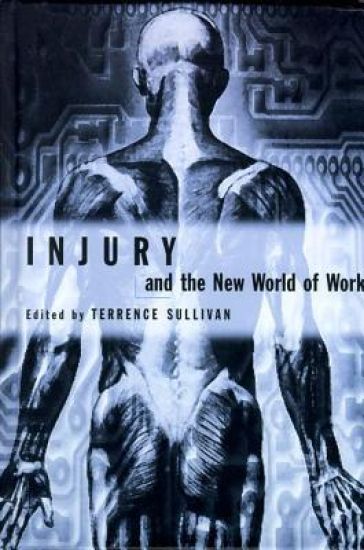
Injury and the New World of Work

Injury and the New World of Work

Terrence Sullivan

University of British Columbia Press
2000
pokkari
Over the last fifty years the nature of work and work injury has changed dramatically. Since the 1980s, workers' compensation claims have grown steadily and insurance institutions are feeling the crunch. In Injury and the New World of Work, Terrence Sullivan emphasizes the precarious line between the expansion of needs-based justice and the preservation of work-based prosperity. The contributors to the book represent the fields of public health, sociology, anthropology, epidemiology, nursing, psychiatry, management, economics, public policy, and labour studies. They explore four general challenges to the workplace and the compensation system: the dramatic rise in disability associated with the changing nature of work; methods of preventing injury and disability; the need for rehabilitation; and the difficulty of reconciling fairness for workers and economic sustainability in a competitive era. Injury and the New World of Work examines a broad range of research solutions and policy options for dealing with the critical state of workers' compensation. The essays draw on recent case studies and original empirical work from Canada, situating the book within a comparative international frame of reference.