
Kirjailija
Terry Eagleton
Kirjat ja teokset yhdessä paikassa: 67 kirjaa, julkaisuja vuosilta 1976–2025, suosituimpiin kuuluu Archipelago. Vertaile teosten hintoja ja tarkista saatavuus suomalaisista kirjakaupoista.
67 kirjaa
Kirjojen julkaisuvuodet: 1976–2025.
This collection of readings on the concept of ideology is brought together by the Marxist critic, Terry Eagleton. His introduction traces the historical evolution of ideology and examines in a more theoretical style the various meanings of the word and their significance. The readings begin with the first English translations of some of the writing of the French founder of the concept in the eighteenth century. They then move from the enlightenment to Hegel and Marxism, with particular emphasis on Marx and Engels themselves. They also look at other eighteenth-century traditions of thought such as Nietzche and Freud. All the readings are theoretical rather than examples of `ideology at work' and will be of interest to undergraduate students of cultural, political and historical studies concerned with ideology, as well as students of English literature.
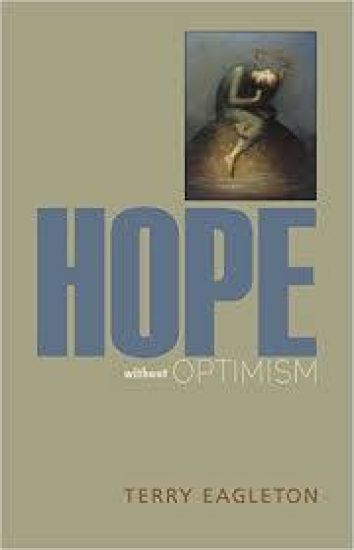
In his latest book, Terry Eagleton, one of the most celebrated intellects of our time, considers the least regarded of the virtues. His compelling meditation on hope begins with a firm rejection of the role of optimism in life's course. Like its close relative, pessimism, it is more a system of rationalization than a reliable lens on reality, reflecting the cast of one's temperament in place of true discernment. Eagleton turns then to hope, probing the meaning of this familiar but elusive word: Is it an emotion? How does it differ from desire? Does it fetishize the future? Finally, Eagleton broaches a new concept of tragic hope, in which this old virtue represents a strength that remains even after devastating loss has been confronted. In a wide-ranging discussion that encompasses Shakespeare's Lear, Kierkegaard on despair, Aquinas, Wittgenstein, St. Augustine, Kant, Walter Benjamin's theory of history, and a long consideration of the prominent philosopher of hope, Ernst Bloch, Eagleton displays his masterful and highly creative fluency in literature, philosophy, theology, and political theory. Hope without Optimism is full of the customary wit and lucidity of this writer whose reputation rests not only on his pathbreaking ideas but on his ability to engage the reader in the urgent issues of life. Page-Barbour Lectures
New observations on the persistence of God in modern times and why “authentic” atheism is so very hard to come by How to live in a supposedly faithless world threatened by religious fundamentalism? Terry Eagleton, formidable thinker and renowned cultural critic, investigates in this thought-provoking book the contradictions, difficulties, and significance of the modern search for a replacement for God. Engaging with a phenomenally wide range of ideas, issues, and thinkers from the Enlightenment to today, Eagleton discusses the state of religion before and after 9/11, the ironies surrounding Western capitalism’s part in spawning not only secularism but also fundamentalism, and the unsatisfactory surrogates for the Almighty invented in the post-Enlightenment era. The author reflects on the unique capacities of religion, the possibilities of culture and art as modern paths to salvation, the so-called war on terror’s impact on atheism, and a host of other topics of concern to those who envision a future in which just and compassionate communities thrive. Lucid, stylish, and entertaining in his usual manner, Eagleton presents a brilliant survey of modern thought that also serves as a timely, urgently needed intervention into our perilous political present.
I Oscar den helige närmar sig Storbritanniens kanske mest kände litteraturteoretiker Terry Eagleton genom dramatikformen Oscar Wilde. Genom rasande kvick, underhållande och smart dialog från rättegången mot Wilde och hans fängelsetid lyfts Wilde här fram som nationell frihetskämpe, socialist och homosexuell särskådare av den engelska borgarklassen. Oscar den helige kombinerar sexual-, national- och klasspolitik med en oemotståndlig humor.
Americans have long been fascinated with the oddness of the British, but the English, says literary critic Terry Eagleton, find their transatlantic neighbors just as strange. Only an alien race would admiringly refer to a colleague as “aggressive,” use superlatives to describe everything from one’s pet dog to one’s rock collection, or speak frequently of being “empowered.” Why, asks Eagleton, must we broadcast our children’s school grades with bumper stickers announcing “My Child Made the Honor Roll”? Why don’t we appreciate the indispensability of the teapot? And why must we remain so irritatingly optimistic, even when all signs point to failure? On his quirky journey through the language, geography, and national character of the United States, Eagleton proves to be at once an informal and utterly idiosyncratic guide to our peculiar race. He answers the questions his compatriots have always had but (being British) dare not ask, like why Americans willingly rise at the crack of dawn, even on Sundays, or why we publicly chastise cigarette smokers as if we’re all spokespeople for the surgeon general. In this pithy, warmhearted, and very funny book, Eagleton melds a good old-fashioned roast with genuine admiration for his neighbors “across the pond.”
A renowned literary theorist reconsiders previous stances and offers his latest thinking on the nature of literature and literary study In this characteristically concise, witty, and lucid book, Terry Eagleton turns his attention to the questions we should ask about literature, but rarely do. What is literature? Can we even speak of "literature" at all? What do different literary theories tell us about what texts mean and do? In throwing new light on these and other questions he has raised in previous best-sellers, Eagleton offers a new theory of what we mean by literature. He also shows what it is that a great many different literary theories have in common. In a highly unusual combination of critical theory and analytic philosophy, the author sees all literary work, from novels to poems, as a strategy to contain a reality that seeks to thwart that containment, and in doing so throws up new problems that the work tries to resolve. The "event" of literature, Eagleton argues, consists in this continual transformative encounter, unique and endlessly repeatable. Freewheeling through centuries of critical ideas, he sheds light on the place of literature in our culture, and in doing so reaffirms the value and validity of literary thought today.
Einführung in die Literaturtheorie
Terry Eagleton
Springer-Verlag Berlin and Heidelberg GmbH Co. KG
2012
nidottu
Was ist Literatur? , fragt das mittlerweile legendäre Einleitungskapitel dieses Bandes. Pointiert und kritisch-souverän zugleich führt Eagleton an erste literaturtheoretische Fragen heran. Ebenso anschaulich erläutert der Autor in den weiteren Kapiteln die Grundlagen und Methoden der zentralen Ansätze der Literaturtheorie. Die 5. Auflage des erfolgreichen Buches enthält ein neues Vorwort Eagletons zur literaturtheoretischen Entwicklung der letzten 25 Jahre. Für die Annäherung an einen komplexen Stoff ohne Scheu und Verständnisschwierigkeiten.
Beckett’s reception was characterised in its early stages by a sustained attention to nothing as a philosophical concept. Theodor Adorno, however, was quick to argue that Beckett’s plays resisted – unlike Sartre’s – having their nothing transformed into something. This Beckettian nothing, moreover, is often invested with the aura of the genius, either for eulogical or dismissive purposes. This volume invites its readership to understand the complex ways in which the Beckett canon both suggests and resists turning nothing into something by looking at specific, sometimes almost invisible ways in which ‘little nothings’ pervade the Beckett canon. The volume has two main functions: on the one hand, it looks at ‘nothing’ not only as a content but also a set of rhetorical strategies to reconsider afresh classic Beckett problems such as Irishness, silence, value, marginality, politics and the relationships between modernism and postmodernism and absence and presence. On the other, it focuses on ‘nothing’ in order to assess how the Beckett oeuvre can help us rethink contemporary preoccupations with materialism, neurology, sculpture, music and television. Both advanced students and scholars of Beckett will find the volume of interest. It comprises jargon-free chapters that analyse Beckett’s prose, drama, film, television, manuscripts and marginalia. It will prove of interest to advanced students and scholars in English, French, Comparative Literature, Drama, Visual Studies, Philosophy, Music, Cinema and TV studies. An electronic edition of this book is freely available under a Creative Commons (CC BY-NC-ND) licence.

I denna konfrontatoriska och djärva bok tar Terry Eagleton strid med föreställningen om att marxismen är död och begraven. Genom att analysera tio vanliga invändningar mot marxismen att den leder till politiskt tyranni, att den reducerar allting till det ekonomiska, etc. visar han steg för steg vilken sorglig förvanskning av Marx tänkande som dessa argument bygger på. I en värld där kapitalismen har skakats i grunden av flera allvarliga kriser är Varför Marx hade rätt lika aktuell och viktig som den är utmanande och rättfram.
An impassioned argument for the existence of evil from one of the most respected and influential critics of our day In this witty, accessible study, the prominent Marxist thinker Terry Eagleton launches a surprising defense of the reality of evil, drawing on literary, theological, and psychoanalytic sources to suggest that evil, no mere medieval artifact, is a real phenomenon with palpable force in our contemporary world. In a book that ranges from St. Augustine to alcoholism, Thomas Aquinas to Thomas Mann, Shakespeare to the Holocaust, Eagleton investigates the frightful plight of those doomed souls who apparently destroy for no reason. In the process, he poses a set of intriguing questions. Is evil really a kind of nothingness? Why should it appear so glamorous and seductive? Why does goodness seem so boring? Is it really possible for human beings to delight in destruction for no reason at all?
Beckett and nothing invites its readership to understand the complex ways in which the Beckett canon both suggests and resists turning nothing into something by looking at specific, sometimes almost invisible ways in which ‘little nothings’ pervade the Beckett canon. The volume has two main functions: on the one hand, it looks at ‘nothing’ not only as a content but also a set of rhetorical strategies to reconsider afresh classic Beckett problems such as Irishness, silence, value, marginality, politics and the relationships between modernism and postmodernism and absence and presence. On the other, it focuses on ‘nothing’ in order to assess how the Beckett oeuvre can help us rethink contemporary preoccupations with materialism, neurology, sculpture, music and television. The volume is a scholarly intervention in the fields of Beckett studies which offers its chapters as case studies to use in the classroom. It will prove of interest to advanced students and scholars in English, French, Comparative Literature, Drama, Visual Studies, Philosophy, Music, Cinema and TV studies.
Reason, Faith, and Revolution
Terry Eagleton
Yale University Press
2010
pokkari
Halvin toimitettuna 24,70 €
One of our most influential literary critics challenges those who too easily dismiss religion and faith Terry Eagleton’s witty and polemical Reason, Faith, and Revolution is bound to cause a stir among scientists, theologians, people of faith and people of no faith, as well as general readers eager to understand the God Debate. On the one hand, Eagleton demolishes what he calls the “superstitious” view of God held by most atheists and agnostics and offers in its place a revolutionary account of the Christian Gospel. On the other hand, he launches a stinging assault on the betrayal of this revolution by institutional Christianity. There is little joy here, then, either for the anti-God brigade—Richard Dawkins and Christopher Hitchens in particular—nor for many conventional believers. Instead, Eagleton offers his own vibrant account of religion and politics in a book that ranges from the Holy Spirit to the recent history of the Middle East, from Thomas Aquinas to the Twin Towers.
Terry Eagleton occupies a unique position in the English-speaking world today. He is not only a productive literary theorist, but also a novelist and playwright. He remains a committed socialist deeply hostile to the zeitgeist. Over the last forty years his public interventions have enlivened an otherwise bland and conformist culture. His pen, as many colleagues in the academy-including Harold Bloom, Gayatri Spivak and Homi Bhabha-have learned, is merciless and unsparing. As a critic Eagleton has not shied away from confronting the high priests of native conformity as highlighted by his coruscating polemic against Martin Amis on the issue of civil liberties and religion. This comprehensive volume of interviews covers both his life and the development of his thought and politics. Lively and insightful, they will appeal not only to those with an interest in Eagleton himself, but to all those interested in the evolution of radical politics, modernism, cultural theory, the history of ideas, sociology, semantic inquiry and the state of Marxist theory.
From our finest radical literary analyst, a classic study of the great philosopher and cultural theorist.
Terry Eagleton er en av Englands fremste litteraturteoretikere og filosofer. "Etter teorien" er hans oppgjør med tilstanden i dagens kulturstudier, som han mener er nedbrytende i sin teoretisering over popkulturelle ubetydeligheter. Alternativet etter teoriens død demonstrerer han gjennom originale lesninger av for eksempel Aristoteles, Marx og Wittgenstein. Han blåser nytt liv i de store temaene som postmodernismen la død, som kjærlighet, ondskap, moral og revolusjon. Terry Eagleton skriver polemisk og tilgjengelig og gjør det tydelig at problemene han tar opp angår den vestlige kultur generelt, og ikke bare litteraturteorien.
Trouble with Strangers
Terry Eagleton
Wiley-Blackwell (an imprint of John Wiley Sons Ltd)
2008
sidottu
TROUBLE WITH STRANGERS ‘Written in Eagleton’s very readable, clear and witty style, this book may achieve the unthinkable: bridging the gap between academic High Thought and popular philosophy manuals.’Slavoj Ži?ek ‘This is a fine book. It is hugely ambitious in its scope, develops an original thesis to illuminating effect and is written with a compelling passion and commitment.’Peter R. Sedgwick, Cardiff University ‘Written with Eagleton’s usual wit, panache and uncanny ability to summarise and criticize otherwise complex philosophical positions ... this is an important book by a hugely important voice.’Simon Critchley, The New School for Social Research In this ambitious new book, Terry Eagleton, one of the world’s greatest cultural theorists, turns his attention to the now much-discussed question of ethics. In a work full of rare insights into tragedy, politics, literature, morality and religion, Eagleton investigates ethical theories from Aristotle to Alain Badiou and Slavoj Ži?ek, weighing the merits and deficiencies of each theory, and measuring them all against the ‘richer’ ethical resources of socialism and the Judaeo-Christian tradition. In a remarkably original move, he assigns each of the theories he examines to one or other of Jacques Lacan’s three psychoanalytical categories of the Imaginary, the Symbolic and the Real, and shows how this can illuminate the strengths and weaknesses of an ethics of personal sympathy, an impersonal morality of obligation, and a morality based on death and transformation.
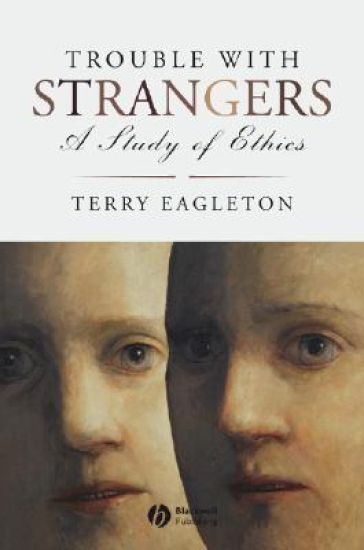
Trouble with Strangers
Terry Eagleton
Wiley-Blackwell (an imprint of John Wiley Sons Ltd)
2008
nidottu
TROUBLE WITH STRANGERS ‘Written in Eagleton’s very readable, clear and witty style, this book may achieve the unthinkable: bridging the gap between academic High Thought and popular philosophy manuals.’Slavoj Ži?ek ‘This is a fine book. It is hugely ambitious in its scope, develops an original thesis to illuminating effect and is written with a compelling passion and commitment.’Peter R. Sedgwick, Cardiff University ‘Written with Eagleton’s usual wit, panache and uncanny ability to summarise and criticize otherwise complex philosophical positions ... this is an important book by a hugely important voice.’Simon Critchley, The New School for Social Research In this ambitious new book, Terry Eagleton, one of the world’s greatest cultural theorists, turns his attention to the now much-discussed question of ethics. In a work full of rare insights into tragedy, politics, literature, morality and religion, Eagleton investigates ethical theories from Aristotle to Alain Badiou and Slavoj Ži?ek, weighing the merits and deficiencies of each theory, and measuring them all against the ‘richer’ ethical resources of socialism and the Judaeo-Christian tradition. In a remarkably original move, he assigns each of the theories he examines to one or other of Jacques Lacan’s three psychoanalytical categories of the Imaginary, the Symbolic and the Real, and shows how this can illuminate the strengths and weaknesses of an ethics of personal sympathy, an impersonal morality of obligation, and a morality based on death and transformation.
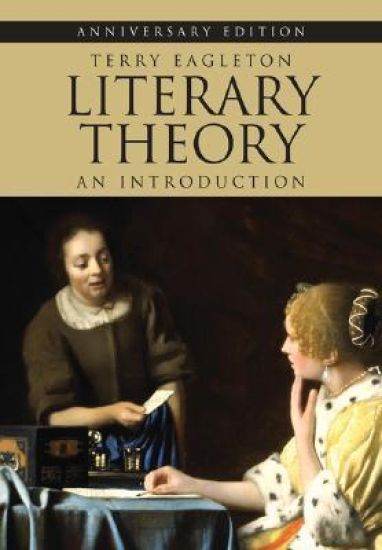
“This concise and lucid volume offers a satisfying survey of all the major theories, from structuralism in the 1960s to deconstruction today, that have made academic criticism both intriguing and off-putting to the outsider.” -New York Times Book Review “Literary Theory has the kind of racy readability that one associates more often with English critics who have set their faces resolutely against theory. It’s not just a brilliant polemical essay; it’s also a remarkable feat of condensation, explication, and synthesis.” -Sunday Times (London) “A concise guide to the most interesting and mystifying trends in the study of literature over the last fifty years.” -The Nation This classic work covers all of the major movements in literary studies in this century. Noted for its clear, engaging style and unpretentious treatment, Literary Theory has become the introduction of choice for anyone interested in learning about the world of contemporary literary thought. On the twenty-fifth anniversary of Literary Theory’s debut, Terry Eagleton reflects on the state of theory in academia today, the growth of antitheory (itself an interesting theoretical subject), its common-if problematic-place among survey coursework, and theory’s continued relevance to scholarly pursuits. In this contemporary, retrospective moment, as scholars critically analyze the incredibly broad impact of the theoretical movement, Literary Theory remains an essential initiation to the intellectually stimulating world of theoretical analysis. Terry Eagleton is John Edward Taylor professor of English literature at the University of Manchester. His numerous books include The Meaning of Life, How to Read a Poem, and After Theory.
'Philosophers have an infuriating habit of analysing questions rather than answering them', writes Terry Eagleton, who, in these pages, asks the most important question any of us ever ask, and attempts to answer it. So what is the meaning of life? In this witty, spirited, and stimulating inquiry, Eagleton shows how centuries of thinkers - from Shakespeare and Schopenhauer to Marx, Sartre and Beckett - have tackled the question. Refusing to settle for the bland and boring, Eagleton reveals with a mixture of humour and intellectual rigour how the question has become particularly problematic in modern times. Instead of addressing it head-on, we take refuge from the feelings of 'meaninglessness' in our lives by filling them with a multitude of different things: from football and sex, to New Age religions and fundamentalism. 'Many of the readers of this book are likely to be as sceptical of the phrase "the meaning of life" as they are of Santa Claus', he writes. But Eagleton contends that in a world where we need to find common meanings, it is important that we set about answering the question of all questions; and, in conclusion, he suggests his own answer. ABOUT THE SERIES: The Very Short Introductions series from Oxford University Press contains hundreds of titles in almost every subject area. These pocket-sized books are the perfect way to get ahead in a new subject quickly. Our expert authors combine facts, analysis, perspective, new ideas, and enthusiasm to make interesting and challenging topics highly readable.