Kirjojen hintavertailu – 12 859 829 kirjaa ja 27 kauppaa

Kirjailija

Terry Marsden

Kirjat ja teokset yhdessä paikassa: 14 kirjaa, julkaisuja vuosilta 1993–2022, suosituimpiin kuuluu Consuming Interests. Vertaile teosten hintoja ja tarkista saatavuus suomalaisista kirjakaupoista.

14 kirjaa

Kirjojen julkaisuvuodet: 1993–2022.

Sustainable Places

Sustainable Places

David Adamson; Lorena Axinte; Mark Lang; Terry Marsden

TAYLOR FRANCIS LTD
2022
sidottu
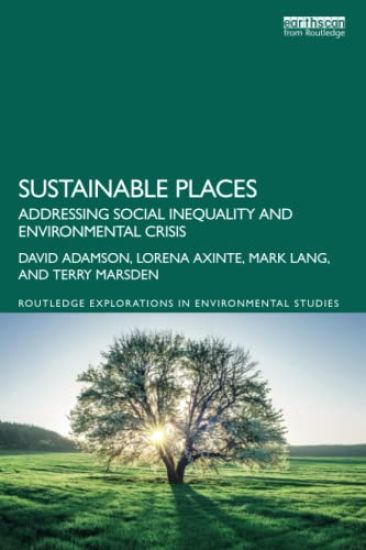
This book calls for more holistic place-based action to address the social and environmental crisis, deploying the Deep Place approach as one contribution to the toolbox of actions that will underpin the UN Decade of Action towards the Sustainable Development Goals. The authors suggest that ‘place’ is a critical window on how to conceive a resolution to the multiple and overlapping crises. As well as diagnosing the problem (the world as it is), this book also offers a normative advocacy (the world as it could/should be and proposed pathways to get there). A series of ‘Deep Place’ case studies from the UK, Australia, and Vanuatu help to illustrate this approach. Ultimately, the book argues for the need for a real and green ‘new deal’ and identifies what this should be like. It suggests that a new economic order, whilst eventually inevitable, requires radical change. This will not be easy but will be essential given the current impasse, caused, not least by the conjunction of carbon-based, neoliberal capitalism in crisis and the multifactorial global ecological crisis. Ultimately, it concludes that there is a need to develop a new model of ‘regenerative collectivism’ to overcome these crises. This book will be of interest to academics, policy practitioners, and social and climate justice advocates/activists.
Sustainable Places

Sustainable Places

David Adamson; Lorena Axinte; Mark Lang; Terry Marsden

TAYLOR FRANCIS LTD
2022
nidottu
This book calls for more holistic place-based action to address the social and environmental crisis, deploying the Deep Place approach as one contribution to the toolbox of actions that will underpin the UN Decade of Action towards the Sustainable Development Goals. The authors suggest that ‘place’ is a critical window on how to conceive a resolution to the multiple and overlapping crises. As well as diagnosing the problem (the world as it is), this book also offers a normative advocacy (the world as it could/should be and proposed pathways to get there). A series of ‘Deep Place’ case studies from the UK, Australia, and Vanuatu help to illustrate this approach. Ultimately, the book argues for the need for a real and green ‘new deal’ and identifies what this should be like. It suggests that a new economic order, whilst eventually inevitable, requires radical change. This will not be easy but will be essential given the current impasse, caused, not least by the conjunction of carbon-based, neoliberal capitalism in crisis and the multifactorial global ecological crisis. Ultimately, it concludes that there is a need to develop a new model of ‘regenerative collectivism’ to overcome these crises. This book will be of interest to academics, policy practitioners, and social and climate justice advocates/activists.
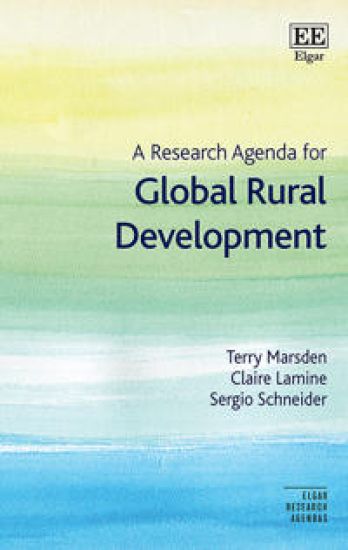
A Research Agenda for Global Rural Development

A Research Agenda for Global Rural Development

Terry Marsden; Claire Lamine; Sergio Schneider

EDWARD ELGAR PUBLISHING LTD
2021
nidottu
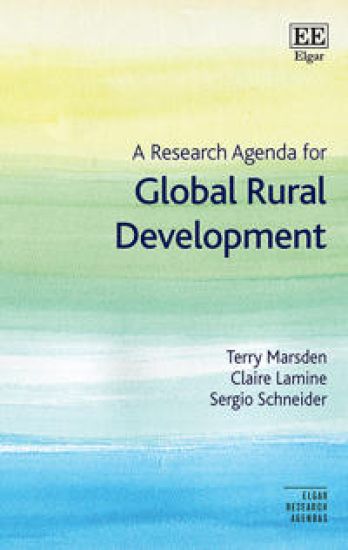
Elgar Research Agendas outline the future of research in a given area. Leading scholars are given the space to explore their subject in provocative ways, and map out the potential directions of travel. They are relevant but also visionary. Setting out a new, path-breaking research agenda for global rural development, this timely book offers an innovative and embedded rural social science capable of both understanding and enacting progress towards diverse and sustainable pathways. It relocates rural development at the heart of global trends associated with widespread but uneven urbanisation, climate change and severe resource depletion, rising population growth, density and inequality, and global political, economic and health crises. Chapters collapse traditional binary notions of development as north-south, rural-urban, global-local and traditional modern, embracing a revised conceptualisation of uneven development as a process dependent upon multiple theoretical and conceptual frameworks. It offers potential routes for substantive, interlinked research agendas, including new ruralities, governance, land rights, agro-ecology, financialisation, power relations, family farming, and the role of markets. Scholars of geography, planning, rural sociology and rural-urban studies looking for a broader understanding of the topic will find this book essential. It will also be beneficial for those engaged in rural development policy and practice.
A Research Agenda for Global Rural Development

A Research Agenda for Global Rural Development

Terry Marsden; Claire Lamine; Sergio Schneider

Edward Elgar Publishing Ltd
2020
sidottu
Elgar Research Agendas outline the future of research in a given area. Leading scholars are given the space to explore their subject in provocative ways, and map out the potential directions of travel. They are relevant but also visionary. Setting out a new, path-breaking research agenda for global rural development, this timely book offers an innovative and embedded rural social science capable of both understanding and enacting progress towards diverse and sustainable pathways. It relocates rural development at the heart of global trends associated with widespread but uneven urbanisation, climate change and severe resource depletion, rising population growth, density and inequality, and global political, economic and health crises. Chapters collapse traditional binary notions of development as north-south, rural-urban, global-local and traditional modern, embracing a revised conceptualisation of uneven development as a process dependent upon multiple theoretical and conceptual frameworks. It offers potential routes for substantive, interlinked research agendas, including new ruralities, governance, land rights, agro-ecology, financialisation, power relations, family farming, and the role of markets. Scholars of geography, planning, rural sociology and rural-urban studies looking for a broader understanding of the topic will find this book essential. It will also be beneficial for those engaged in rural development policy and practice.
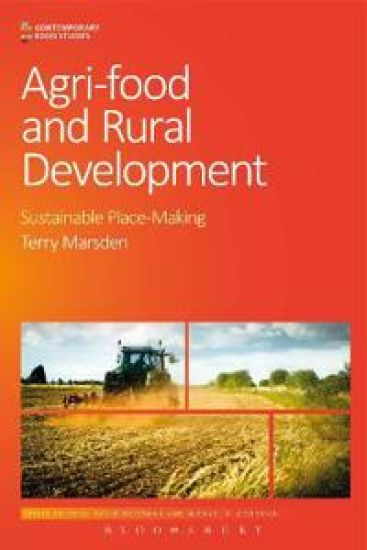
Agri-Food and Rural Development

Agri-Food and Rural Development

Terry Marsden

Bloomsbury Academic
2017
sidottu
The agri-food and rural development world has experienced significant changes in recent years. The evolution towards globalized and highly complex food supply systems has been accompanied by growing competition, reduced state subsidies as well as concerns about quality, output and the environment. At the beginning of the 21st century, the agri-food industry is urgently searching for new solutions. Exploring these recent developments, Agri-Food and Rural Development highlights the latest research on understanding and promoting sustainable food systems. Featuring a range of international case studies, it investigates different models of rural development for food production, examines the implications for a sustainable future, analyzes future challenges, and suggests new strategies for future agri-food development in a world fast exceeding its resources. An ambitious new study written by a leading authority in the field, this book offers a vital new perspective on this important debate and is destined to become a landmark text for students, scholars and policy-makers in food studies, agriculture, rural sociology, and geography.
Agri-Food and Rural Development

Agri-Food and Rural Development

Terry Marsden

Bloomsbury Academic
2017
nidottu
The agri-food and rural development world has experienced significant changes in recent years. The evolution towards globalized and highly complex food supply systems has been accompanied by growing competition, reduced state subsidies as well as concerns about quality, output and the environment. At the beginning of the 21st century, the agri-food industry is urgently searching for new solutions. Exploring these recent developments, Agri-Food and Rural Development highlights the latest research on understanding and promoting sustainable food systems. Featuring a range of international case studies, it investigates different models of rural development for food production, examines the implications for a sustainable future, analyzes future challenges, and suggests new strategies for future agri-food development in a world fast exceeding its resources. An ambitious new study written by a leading authority in the field, this book offers a vital new perspective on this important debate and is destined to become a landmark text for students, scholars and policy-makers in food studies, agriculture, rural sociology, and geography.
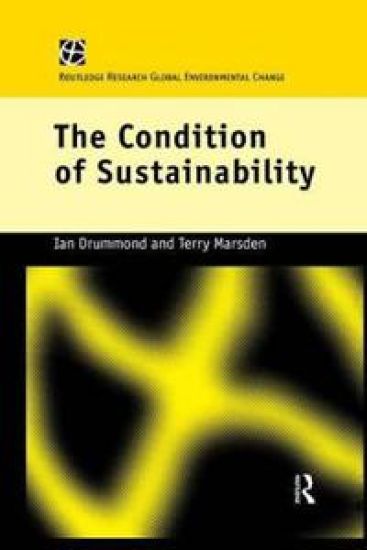
The Condition of Sustainability

The Condition of Sustainability

Ian Drummond; Terry Marsden

Routledge
2014
nidottu
This book examines the political economy of sustainable development. The authors consider why most approaches to sustainable development have proved inadequate. Bringing together key ideas from social theory, food regimes and sustainability debates, the book presents a new and more dynamic way of thinking about sustainable development and a methodology for applying these ideas. Case study material focuses on the food system particularly the sugar industry in Australia and Barbados.
The New Regulation and Governance of Food

The New Regulation and Governance of Food

Terry Marsden; Robert Lee; Andrew Flynn; Samarthia Thankappan

Routledge
2012
nidottu
Major questions surround who, how, and by what means should the interests of government, the private sector, or consumers hold authority and powers over decisions concerning the production and consumption of foods. This book examines the development of food policy and regulation following the BSE (mad cow disease) crisis of the late 1990s, and traces the changing relationships between three key sets of actors: private interests, such as the corporate retailers; public regulators, such as the EU directorates and UK agencies; and consumer groups at EU and national levels. The authors explore how these interests deal with the conundrum of continuing to stimulate a corporately organised and increasingly globalised food system at the same time as creating a public and consumer-based legitimate framework for it. The analysis develops a new model and synthesis of food policy and regulation which reassesses these public/private sector responsibilities with new evidence and theoretical insights.
The New Regulation and Governance of Food

The New Regulation and Governance of Food

Terry Marsden; Robert Lee; Andrew Flynn; Samarthia Thankappan

Routledge
2009
sidottu
Major questions surround who, how, and by what means should the interests of government, the private sector, or consumers hold authority and powers over decisions concerning the production and consumption of foods. This book examines the development of food policy and regulation following the BSE (mad cow disease) crisis of the late 1990s, and traces the changing relationships between three key sets of actors: private interests, such as the corporate retailers; public regulators, such as the EU directorates and UK agencies; and consumer groups at EU and national levels. The authors explore how these interests deal with the conundrum of continuing to stimulate a corporately organised and increasingly globalised food system at the same time as creating a public and consumer-based legitimate framework for it. The analysis develops a new model and synthesis of food policy and regulation which reassesses these public/private sector responsibilities with new evidence and theoretical insights.
Worlds of Food

Worlds of Food

Kevin Morgan; Terry Marsden; Jonathan Murdoch

Oxford University Press
2008
nidottu
From farm to fork, the conventional food chain is under enormous pressure to respond to a whole series of new challenges - food scares in rich countries, food security concerns in poor countries, and a burgeoning problem of obesity in all countries. As more and more people demand to know where their food comes from, and how it is produced, issues of place, power, and provenance assume increasing significance for producers, consumers, and regulators, challenging the corporate forces that shape the 'placeless foodscape'. Far from being confined to niche products, questions about the origins of food are also surfacing in the conventional sector, where labelling has become a major political issue. Drawing on theories of multi-level governance, three leading scholars in the field explore the geo-politics of the food chain in different spatial arenas: the World Trade Organization, where free trade principles clash with fair trade concerns in the debate about agricultural reform; the European Union, where producers are under pressure from environmentalists for a more traceable and sustainable food system; and the US, where there is a striking contradiction between the rhetoric of free markets and the reality of a heavily subsidised farming sector. To understand the local impact of these global trends, the authors explore three different regional worlds of food: the traditional world of localised quality in Tuscany, the peripheral world of commodity production in Wales, and the frontier world of agri-business in California.
Consuming Interests

Consuming Interests

Andrew Flynn; Michelle Harrison; Terry Marsden

Routledge
1999
nidottu
Combining theory, research and policy Consuming Interests provides a topical interdisciplinary exploration into the nature of food provision, policy and regulation. The book provides a detailed examination of corporate retailers, state agencies and consumer organisations involved in the food sector. The analysis explores questions including: * what can the public expect from the state* what limits are there on state action* what are the most appropriate balancesbetween public and private interests in the provision of 'quality' foods.
Consuming Interests

Consuming Interests

Andrew Flynn; Michelle Harrison; Terry Marsden

Routledge
1999
sidottu
Combining theory, research and policy Consuming Interests provides a topical interdisciplinary exploration into the nature of food provision, policy and regulation. The book provides a detailed examination of corporate retailers, state agencies and consumer organisations involved in the food sector. The analysis explores questions including: * what can the public expect from the state* what limits are there on state action* what are the most appropriate balancesbetween public and private interests in the provision of 'quality' foods.
The Condition of Sustainability

The Condition of Sustainability

Ian Drummond; Terry Marsden

Routledge
1998
sidottu
This book examines the political economy of sustainable development. The authors consider why most approaches to sustainable development have proved inadequate. Bringing together key ideas from social theory, food regimes and sustainability debates, the book presents a new and more dynamic way of thinking about sustainable development and a methodology for applying these ideas. Case study material focuses on the food system particularly the sugar industry in Australia and Barbados.
Constructuring The Countryside

Constructuring The Countryside

Terry Marsden; Jonathon Murdoch; Philip Lowe; Richard C Munton; Andrew Flynn

Routledge
1993
nidottu
As the first book in the Restructuring Rural Areas series, "Constructing the countryside" presents a new methodological approach to the analysis of rural change. The authors seek to link wider developments in the global political economy to the behaviour of local actors and, in so doing, they place research into rural studies much more firmly than hitherto in the mainstream of social science enquiry. The outcome is a book that promotes a truly interdisciplinary approach through which the constant "reconstruction" of the countryside can be properly understood. This holistic perspective, sustained by an historical analysis of rural change, has been made possible by the extensive research experience of the authors.; The book is a product of the work done at the London Countryside Research Centre, which was set up in 1989 by the Economic and Social Research Council. The Centre's research has focused upon the social and political forces for change in rural areas and how these relate to rapid alterations in national economic circumstances and to public policies affecting the countryside for example, the Common Agricultural Policy of the EC .; On the one hand, the book provides a set of insights into the trends that will guide rural change in advanced economies into the next century; on the other, it offers a challenging account of how they can be investigated.; "Constructing the countryside" will appeal to both students and staff in a wide range of social science disciplines, including agricultural economics, environmental management, planning, land economy, geography and rural sociology, and to all those concerned with the future development of rural areas.; This book is intended for students and researchers in rural planning and environmental/geographical studies, whether within a geographical or a sociological milieu.