Kirjojen hintavertailu – 12 903 725 kirjaa ja 27 kauppaa
Kirjailija
Terry Nichols Clark
Kirjat ja teokset yhdessä paikassa: 9 kirjaa, julkaisuja vuosilta 1973–2022, suosituimpiin kuuluu The New Political Culture. Vertaile teosten hintoja ja tarkista saatavuus suomalaisista kirjakaupoista.
The New Political culture, which began to take shape in the 1970s, continues to challenge many assumptions of traditional politics, especially on issues of environmentalism, growth management, gay rights, and abortion. Concerned mostly with home, consumption, and lifestyle, the New Politics emerges fully in cities with more highly educated citizens
This volume introduces a new style of politics, the New Political Culture (NPC), which began in many countries in the 1970s. It defines new rules of the game for politics, challenging two older traditions: class politics and clientelism.
The past several decades have seen profound changes in the political landscapes of advanced industrial societies. This volume assesses key political developments and links them to underlying socioeconomic and cultural forces. These forces include the growth of a well-educated middle class, the moderating of bipolar class divisions between wealthy c
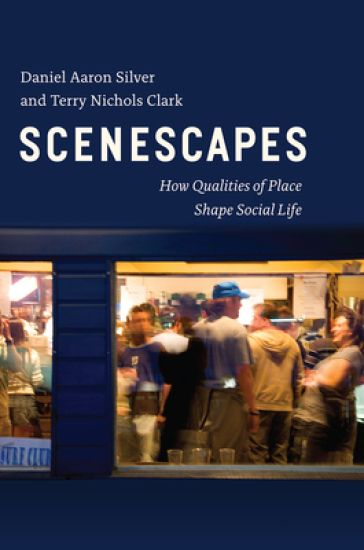
Let’s set the scene: there’s a regular on his barstool, beer in hand. He’s watching a young couple execute a complicated series of moves on the dance floor, while at the table in the corner the DJ adjusts his headphones and slips a new beat into the mix. These are all experiences created by a given scene—one where we feel connected to other people, in places like a bar or a community center, a neighborhood parish or even a train station. Scenes enable experiences, but they also cultivate skills, create ambiances, and nourish communities. In Scenescapes, Daniel Aaron Silver and Terry Nichols Clark examine the patterns and consequences of the amenities that define our streets and strips. They articulate the core dimensions of the theatricality, authenticity, and legitimacy of local scenes—cafes, churches, restaurants, parks, galleries, bowling alleys, and more. Scenescapes not only reimagines cities in cultural terms, it details how scenes shape economic development, residential patterns, and political attitudes and actions. In vivid detail and with wide-angle analyses—encompassing an analysis of 40,000 ZIP codes—Silver and Clark give readers tools for thinking about place; tools that can teach us where to live, work, or relax, and how to organize our communities.
Let’s set the scene: there’s a regular on his barstool, beer in hand. He’s watching a young couple execute a complicated series of moves on the dance floor, while at the table in the corner the DJ adjusts his headphones and slips a new beat into the mix. These are all experiences created by a given scene—one where we feel connected to other people, in places like a bar or a community center, a neighborhood parish or even a train station. Scenes enable experiences, but they also cultivate skills, create ambiances, and nourish communities. In Scenescapes, Daniel Aaron Silver and Terry Nichols Clark examine the patterns and consequences of the amenities that define our streets and strips. They articulate the core dimensions of the theatricality, authenticity, and legitimacy of local scenes—cafes, churches, restaurants, parks, galleries, bowling alleys, and more. Scenescapes not only reimagines cities in cultural terms, it details how scenes shape economic development, residential patterns, and political attitudes and actions. In vivid detail and with wide-angle analyses—encompassing an analysis of 40,000 ZIP codes—Silver and Clark give readers tools for thinking about place; tools that can teach us where to live, work, or relax, and how to organize our communities.
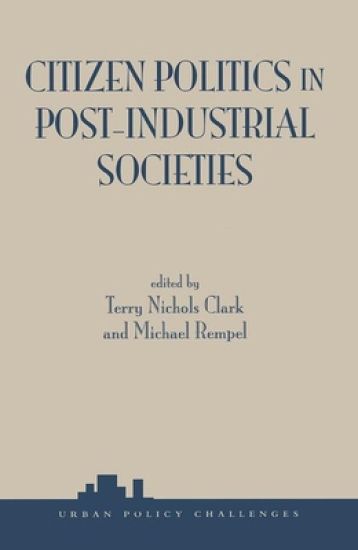
The past several decades have seen profound changes in the political landscapes of advanced industrial societies. This volume assesses key political developments and links them to underlying socioeconomic and cultural forces. These forces include the growth of a well-educated middle class, the moderating of bipolar class divisions between wealthy capitalists and struggling workers, and the accelerated rise of new media technologies (especially television) as potent tools shaping the terms of public discussion. Related political transformations include the spread of new social movements on feminist, environmental, and civil liberties issues; economic concerns focusing more on growth, taxes, and middle class programs than on redistribution; the fracturing of core left and right political ideologies; and the growing centrality of electronic media as carriers of political opinions and rhetoric. In their introduction, Terry Clark and Michael Rempel pull together many seemingly disparate political changes to construct a clear, synthetic framework, identifying eight core components of postindustrial politics. Part Two examines shifts in underlying cultural values. It features a lively exchange between different contributors over whether apolitical, materialistic values have risen or declined since the 1960s. Part Three offers an in-depth look at the political views and party allegiances of the growing middle classes and Part Four examines some of today's most divisive issues. Although primarily adopting a cross-national perspective, Citizen Politics in Post-Industrial Societies includes several case studies of politics in the United States and one in Japan. Unique in its synthetic vision, this volume will stimulate and challenge readers from across the political and theoretical spectrum.
This is the first detailed account of the emergence of sociology and related social sciences in France. It emphasizes three social and intellectual groupings in the period from 1880 to 1914: the social statisticians who grew out of governmental ministries, the Durkheimians who were consistently housed in the university, and the "international sociologists" around Ren Worms, in neither ministries nor the university. Unlike most histories of ideas, it portrays the institutional developments that encouraged, discouraged, and rechanneled different styles of research.