Kirjojen hintavertailu – 12 903 735 kirjaa ja 27 kauppaa
Kirjailija
Terry S Trepper
Kirjat ja teokset yhdessä paikassa: 43 kirjaa, julkaisuja vuosilta 1986–2016, suosituimpiin kuuluu Developing Healthy Stepfamilies. Vertaile teosten hintoja ja tarkista saatavuus suomalaisista kirjakaupoista.
The most interdisciplinary, integrated text on poverty, The Web of Poverty: Psychosocial Perspectives gives you a full understanding of poverty and its consequences, equipping you to affect social change. This unique book examines the social and personal causes of poverty, focusing on the consequences of poverty at the neighborhood and school levels and on families, children, and youth. Ethnic and racial minorities are considered throughout the text, and a chapter is devoted to the interface of poverty, segregation, and discrimination. The Web of Poverty helps you clearly see the effects of poverty by considering the cultural and social contexts of victims’lives. In doing so, it fills a gap in the literature caused by books that overlook personal issues and data related to individual experiences. Chapters address contentious and sensitive issues within a critical psychosocial perspective that informs concepts such as the subculture of poverty, social pathologies, and the “overclass.” Many of the topics and perspectives you'll explore in its pages are rarely considered together in one volume. Specifically, you'll read about:the plight of impoverished mothers and their children a comparison of the poverty of disadvantaged African Americans and poor white Americans health disadvantages of the poor the effects of poverty on school systems and the quality of education students receive the factors of age, race, and ethnicity that can lead to poverty a refutation of the notion of genetic inferiority of the poorPoverty is often the cause of other social ills such as delinquency, which can destroy the social fabric of neighborhoods and limit opportunities to escape impoverished situations. The Web of Poverty will help you accurately see poverty as part of this “big picture.” It contains material from the fields of sociology, developmental psychology, family studies, economics, delinquency, ethnic studies, health, and behavior genetics. This amalgamation gives you a thorough psychosocial perspective.
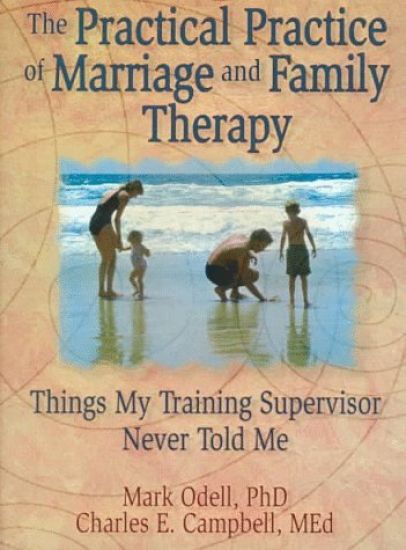
It is a truism among therapists in most mental health disciplines that the most important aspects of clinical practice are learned only after one has left graduate school and entered “the real world.” While many of the basics could be covered in graduate school, supervisors of new therapists often feel that the fundamentals are only addressed in detail after a therapist has been employed. In response to this predicament, Odell and Campbell offer The Practical Practice of Marriage and Family Therapy: Things My Training Supervisor Never Told Me as a useful daily guide for graduate students and beginning marriage and family therapists that will ease the transition from learner to practicing professional in the clinical domain. Written in a refreshing and unpretentious style, much the way a caring seasoned professional would mentor a novice practitioner, The Practical Practice of Marriage and Family Therapy covers the major areas that typical graduate programs don’t have time to address, including how to:integrate theoretical training with pragmatic clinical practice to maximize therapeutic effectiveness face the practical problems involving the financial elements of clinical work become a thoroughly credentialed professional develop an approach to becoming specialized uncover the motivation for being a professional marriage and family therapist increase one’s ability to maintain high-level practice over a lifetime of work by developing coping strategies and methods of safeguarding one’s own mental healthAddressing the unique approach of their book, Odell and Campbell explain, “Whereas most texts are handbooks on the actual theories and techniques used with couples and families, this book is designed to be a guide to the beginning professional as s/he leaves the graduate training environment and enters the mental health field as it exists in contemporary America. Our hope is that this book would be one of those chosen by the novice practicing professional if s/he could only take two or three with them into the field, as it contains material that is most useful for everyday work in clinical settings.”
You often see books on theoretical approaches and new interventions in therapy, but you rarely, if ever, find a book where therapists discuss their personal reactions to and views of the therapy they offer. In this amazing volume, Tales from Family Therapy: Life-Changing Clinical Experiences, psychologists, psychotherapists, and marriage and family counselors come together to share their unique experiences in therapy sessions and how they’ve learned that often the clients know more than they do! As you will see, and as these therapists reveal, sometimes all the top-notch and most innovative theories in the world won’t help a client in distress. Tales from Family Therapy isn’t just about therapists learning a lesson or two from their clients. It’s about compassion, healing, being taken by surprise, thinking on your toes, and encouraging people to believe in their strengths--not just their weaknesses. These stories represent to the authors some of the most special, most rewarding, and most puzzling moments in all their years of therapy. They invite you to share in their recollections and discussions of:the power of speaking accepting, respecting, and working with the realities clients bring the importance of first impressions in counseling how personal narratives develop through relationship coloring outside the lines of the dominant culture helping clients determine when rocking the boat is needed listening to your clients and not just your theories developing the self-of-therapistIn the therapy room anything can happen, and as Tales from Family Therapy shows, anything does. Graduate students, counselors, licensed therapists, family educators, and family sciences professionals, as well as lay readers, will find this insightful book a helpful forum where the struggles, doubts, and triumphs of psychotherapy are revealed to encourage and inspire those who participate in the therapeutic process.
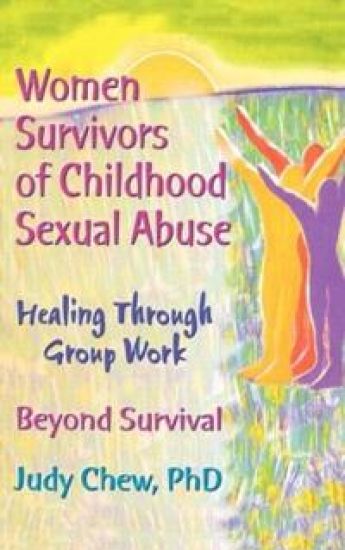
Women Survivors of Childhood Sexual Abuse is a detailed discussion of the theoretical and philosophical underpinnings involved in conducting group psychotherapy with women who have experienced childhood sexual abuse. Offering the practical “how to’s” of conducting a thirteen-session group, this unique book emphasizes the discovery of solutions, strengths, and internal/external resources and highlights the temporal nature of “being a victim” and “being a survivor” at theoretical and clinical levels. The book’s integration of theory and clinical intervention provides a thorough basis for addressing some of the key themes in the resolving of sexual abuse. In Women Survivors of Childhood Sexual Abuse, you’ll uncover topics related to healing such as:the theoretical rationales for group treatment, which include the Ericksonian approach, the feminist perspective, narrative therapy, and the solution-oriented approach resiliency- and resource-based approaches the importance of language in recovery from sexual abuse how to deal with issues such as relationships, telling one’s story of abuse, building safety/boundaries, spirituality, cultivating a future, dealing with flashbacksA practical guide for students in counseling practicums, Women Survivors of Childhood Sexual Abuse provides you with a systematic method with which to conceptualize and conduct group work. Experienced counseling practitioners in psychology, social work, psychiatry, and nursing will also benefit as you gain a session-by-session account of how to conduct group work. In today’s institutional setting, private practice, and professional climate in general, there is growing interest in how to do more with less, how to maximize financial and professional resources, and how to take care of our therapist selves. This book will help you achieve these goals through leading clients to personal empowerment, self-compassion, and resourcefulness.
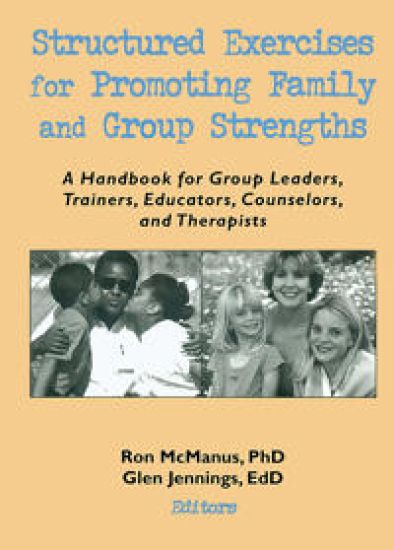
This handbook for professionals presents an array of techniques for teaching and reinforcing social skills for successful relationships. It contains over 70 new structured exercises that can be used to help individuals, dyads, families, and groups become happier in their relationships. The exercises come complete with step-by-step instructions for easy use. Structured Exercises for Promoting Family and Group Strengths is a goldmine of resources for group leaders and counselors. You can use it in planning and conducting workshops and retreats or for working with individuals or families in counseling. The book saves you time and energy as each exercise is accompanied by suggestions for procedures, variations, and trainer's notes. The exercises, which have all been field tested with a variety of audiences, are grouped into six broad categories:Icebreakers introduce people to the subject of group dynamics and to each other in a workshop setting. Assessors help people assess relationships and gain insight for constructive change. Dyad/couple discussion starters facilitate communication and open dialogue for dyads who find themselves in dysfunctional situations. Group/family discussion starters strengthen communication within groups or families and increase understanding of how the group functions. Enhancers aid in the development of positive regard of self and others. Energizers perk up the group or family when fatigue occurs. The exercises provide an experiential approach to learning in which each participant is actively and creatively involved. Readers will find that these relationship-enhancing exercises offer a catalyst for dramatic change in the lives of individuals, dyads, families, and groups. Structured Exercises for Promoting Family and Group Strengths is a valuable sourcebook of ideas for use by persons in the helping professions, including counselors, psychologists, marriage and family therapists, social workers, chaplains, corrections officers, and educators.
Making Families Work and What To Do When They Don't offers specific recommendations for increasing family harmony through more effective parenting practices. This important new book helps parents improve family understanding and relationships by reducing the emotional interference--anger, betrayal, guilt, shame, and fear--that blocks healthier and happier family connections. Each chapter is laced with knowledge and therapeutic humor that examine dimensions to family living in a way that helps parents lighten up a little rather than tighten up a lot. Parents will find that encouraging family members to take one another less seriously increases their opportunities for more constructive interactions. Marital and family counselors, social workers, psychologists, guidance counselors, psychiatrists, and other human service professionals can use the valuable information in this book to help families view their interfamilial relationships more objectively and to take each other less seriously, creating more constructive interactions and happier, stronger relationships. Therapists will learn to encourage clients to question and challenge conventional ideas of the family that often lead to demands, exaggerations, irrational expectations, personalizations, and self- and other judgments, all of which contaminate the family relationship. Using the scientific principles of rational thinking, Author Bill Borcherdt questions the relationship between parents and their children and the degree of influence parents have over their children. He places the focus on a parental advocacy model by which parents are encouraged to give themselves some emotional slack and to develop a sense of humility for what they can and cannot do for their children. This starts the process of family members learning what to realistically expect and accept from one another. Borcherdt shows readers that by taking the sacredness and “golden” rules out of the definitions of family living, emotional upset and oppositional behavioral obstacles can be minimized and more emotional well-being and family fulfillment can be experienced. Each chapter in Making Families Work and What To Do When They Don't is lined with knowledge and therapeutic humor that examines dimensions of family living in a way that assists families in loosening up a little rather than tightening up a lot. This improves family members’understanding of and relationships among one another by reducing the emotional interference--feelings of anger, betrayal, guilt, shame, fear--that blocks healthy, happy family connections and by offering specific practical recommendations for increasing family harmony. Through his analyses of 30 topics of family living, presented under the umbrella of learning what to realistically expect of imperfect parents of imperfect children in an imperfect world, Borcherdt reveals to readers that:individuals are active participants in creating their own emotional problems and disturbances people exaggerate the significance of past family disturbances emotional slack and fewer unrealistic demands of self and others leads to a happier family family members often disturb themselves unnecessarily by escalating family values into sacred demands families don't shape character, they reveal itUnlike other books about family living, Making Families Work and What To Do When They Don't analyzes the dysfunctional ideas that family members hold about themselves and others rather than the dysfunctional relationships that naturally exist between fallible human beings. In this guidebook, readers learn creative, new ways of approaching old family problems,and they gain succinct explanations of how they can help their own and other families do things differently and do different things to improve emotional and behavioral well-being within the family.
Psychotherapy Abbreviation is a field-tested approach designed to train both experienced and student mental health professionals to do brief therapy that is effective and highly satisfactory to clients. This book is unique in that it is the only text that is compatible with almost all approaches to treatment, making it suitable as a primer of brief therapy usable by virtually all psychotherapists. Most other brief therapy books are affiliated with a specific theory of psychopathology, making each limited to those who share the author's theoretical orientation. Pekarik wrote this text based on his own brief therapy training manual because he could not find a text suitable for the wide range of psychotherapy approaches represented by the therapists whom he trains in his research, teaching, and consulting work. By offering a unique approach derived from the “active ingredients” common to all forms of brief therapy and the literature on client treatment preferences, Psychotherapy Abbreviation simplifies the abbreviation process and makes it accessible to all therapists. Pekarik's strategies have been field-tested; he has used them to train hundreds of therapists who have demonstrated success with clients--increased client satisfaction, improved treatment effectiveness, and lowered dropout rates. These same therapists also doubled the proportion of cases they treated with brief therapy. This “how to do it” text is extremely practical. It assumes that the reader already has a theory and set of therapy techniques, true of even most graduate students. The emphasis is then placed on the treatment abbreviation process itself. Because of this highly focused approach, the text will, like the technique it describes, be concise and brief. By avoiding association with any particular school of therapy, Pekarik's approach is usable by all schools of therapy. Therapists and future therapists now in graduate school will benefit from Psychotherapy Abbreviation as it explores these topics:rationale for the abbreviation of psychotherapy practical and ethical issues to consider in client selection a conceptual model for treatment abbreviation rapid assessment and case conceptualization establishing a brief therapy focus goal establishment and negotiation adapting standard psychotherapy techniques to the brief format practice issues in brief therapyPsychotherapy Abbreviation is two-part. Part one is an orientation to this model of brief therapy in which Pekarik emphasizes a research-based rationale for doing brief therapy; presents a general theory of why brief treatments work; and provides guidelines for the identification of appropriate clients for brief therapy. The second part of the text is devoted to technical skills training. It begins with an overview of the techniques common to most schools of brief therapy and describes a “universal model” of brief therapy. Readers are then taken step-by-step through a description of the four most important abbreviation techniques, presented in the typical order of use with clients. To encourage readers to consistently apply the recommended techniques, Pekarik includes one particular training case which he describes in detail and uses it in all of the technical skills chapters in special “Case Application” sections of these chapters. Before describing the detailed applications, Pekarik prompts readers to consider how they would apply the abbreviating technique presented in that chapter to the case. With individual exercises, he gives special attention to how readers can adapt their personal therapy styles and theoretical orientations to brief therapy. As a result, readers develop both a rationale and abbreviation strategy compatible with their values and practical needs as therapists. The exercises are found in each chapter in special “exercise
This handbook for professionals presents an array of techniques for teaching and reinforcing social skills for successful relationships. It contains over 70 new structured exercises that can be used to help individuals, dyads, families, and groups become happier in their relationships. The exercises come complete with step-by-step instructions for easy use. Structured Exercises for Promoting Family and Group Strengths is a goldmine of resources for group leaders and counselors. You can use it in planning and conducting workshops and retreats or for working with individuals or families in counseling. The book saves you time and energy as each exercise is accompanied by suggestions for procedures, variations, and trainer's notes. The exercises, which have all been field tested with a variety of audiences, are grouped into six broad categories:Icebreakers introduce people to the subject of group dynamics and to each other in a workshop setting. Assessors help people assess relationships and gain insight for constructive change. Dyad/couple discussion starters facilitate communication and open dialogue for dyads who find themselves in dysfunctional situations. Group/family discussion starters strengthen communication within groups or families and increase understanding of how the group functions. Enhancers aid in the development of positive regard of self and others. Energizers perk up the group or family when fatigue occurs. The exercises provide an experiential approach to learning in which each participant is actively and creatively involved. Readers will find that these relationship-enhancing exercises offer a catalyst for dramatic change in the lives of individuals, dyads, families, and groups. Structured Exercises for Promoting Family and Group Strengths is a valuable sourcebook of ideas for use by persons in the helping professions, including counselors, psychologists, marriage and family therapists, social workers, chaplains, corrections officers, and educators.
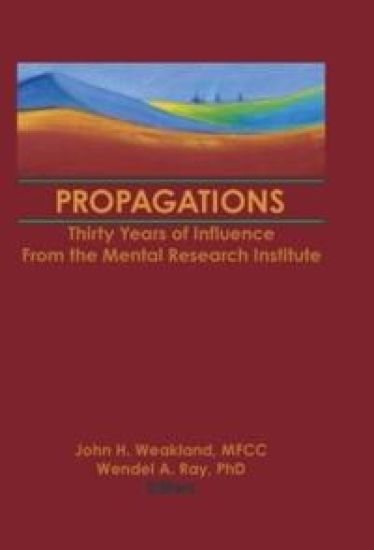
Here is a work of profound clinical scope from some of the foremost leaders in psychology. Propagations: Thirty Years of Influence From the Mental Research Institute, written by alumni and disciples of the Institute (MRI), is not just a compliment to the MRI influence, but also a way for readers to discover and savor the important contributions of those influenced by the MRI. The book contains the cutting edge thinking of some of the most respected clinicians from across the globe. The authors describe their application of ideas pioneered at the MRI, demonstrating its broad influence on present day leaders of family and brief therapy. Chapters range from the theoretical to the case study, tied together by the theme of how this amazing institute has widely impacted therapeutic thought. The book clarifies the depth and power of the MRI influence, which extends to theory, all aspects of psychotherapy practice, other professions, and other lands. Propagations offers outstanding conceptualizations, teaching, writing, and clinical and non-clinical therapy ideas that are immediately useful to clinicians, academic researchers, students, and other individuals interested in how people change. The book’s introduction provides background information on MRI and includes a condensed transcript of a “trialog” which took place between Jules Riskin, Paul Watzlawick, and John Weakland conveying MRI’s origins, traditions, and ethos. Propagations then breaks into four sections. Influencing Fields of Interest and Viewpoints examines MRI influence beyond the specific field of psychotherapy. Influences on Clinical Work looks at MRI’s influence on professional groups and contains clinicians’reflections on how contact with MRI theory and practice has influenced their work. Changes in Venue shows utilization of MRI approaches across cultural and professional borders, while The Outer Reaches looks beyond the specifics of psychotherapy. This inviting book reflects a wide variety of approaches, styles, and subjects, and ranges from preliminary musings to formal reports. This diversity offers a useful example of how new ideas and related practices develop and diversify from a broad common core. Readers can discover how interactional principles are being implemented in different nations, practice settings, and theoretical applications. Family and brief therapists, counselors and counselor educators, and professionals in related fields will find Propagations a source of useful information, thoughtful recollection, and stimulation for future activities.
View the inner workings of healthy stepfamilies through the stories of twenty families as they discuss how their households operate. This enlightening book takes a deeper look at what adults and children in stepfamilies say about such issues as discipline, money, family roles and relationships with ex-spouses, and the development of new traditions and rituals. Incorporating actual words of family members, Developing Healthy Stepfamilies shows many ways in which stepfamilies function well through adapting new and different “rules” to fit their circumstances. The book concentrates on positive rather than negative aspects of stepfamily life to help dim the image of stepfamilies as problematic and also to instill hope in would-be stepfamilies by normalizing their differences from biologically based families. Written with the intention of disseminating information and increasing understanding about stepfamily functioning, this book is useful for stepfamilies, their friends and relatives, and professionals such as teachers, clergy, physicians, and counselors. Developing Healthy Stepfamilies draws a colorful picture of the creativity and flexibility such families have brought to their lives and relationships. Emphasizing what works in stepfamilies instead of what does not, the book illustrates the process of integrating a stepfamily, the value of humor and patience, and the richness that can unfold for all members of the family. The author, a family therapist and educator, has drawn together information direct from stepfamily members themselves, providing readers with first-hand knowledge of the daily workings of this fast growing family form. A showcase of stepfamilies that are functioning well, Developing Healthy Stepfamilies helps show would-be stepfamilies that “it can be done.” This is not a book of instructions; it illuminates the many ways in which stepfamilies can and do function. Some of the topics covered in the book include:definitions of a stepfamily a historical review demographics suggestions for new stepfamilies from established ones genograms of the families participating in the study As a group, stepfamilies are different from biologically based families in form and function. These differences are important for the families, and for those working with them, to recognize and accept as normal. Although intended to be an informative text for professionals and students in fields such as counseling and social work, this book also serves as a source of hope and encouragement for stepfamilies and prospective stepfamilies themselves.
Here is an exciting collection of favorite and successful family therapy interventions from therapists which inspire more creative therapy methods in your own practice. 101 Interventions in Family Therapy features contributions by a diverse group of well-known leaders in the field, “therapists on the street,” and faculty of family therapy training programs. Each clinician presents a creative and useful intervention beginning with a complete description of the method, followed by the specific indications and contraindications for its application, and concludes with a particular case illustration. These engaging and informative stories document helpful interventions that really work, not the exotic and impractical methods of prolific marriage and family authors. Therapists at all levels can learn and incorporate these into their work with families. Practicing clinicians will learn what works for other therapists while graduate-level students and beginning counselors will benefit from the integration of theory and practice exemplified in the practical case examples. The rich and varied writing styles in this enjoyable volume reflect a multitude of personal therapeutic styles. You will find valuable insight and innovative treatment methods on critical family therapy topics such as eating disorders, the adolescent years, marriage counseling, stepfamilies, divorce therapy, communication difficulties, and conflicts with dual career couples. The smorgasbord of interventions found in this book include bibliotherapy, use of touch, creative use of space, ritual enactment, gift-giving, storytelling and countless other interventions, both revolutionary and commonsense, to enhance and improve your therapy with families.
This comprehensive book introduces and integrates adolescent developmental themes and family system theory into a coherent assessment and intervention model. Author Mark Worden views the adolescent as active in shaping the family interactions as much as the family is influential in shaping the adolescent’s behavior. He takes a pragmatic approach to therapy, emphasizing what best explains the clinical phenomena and what works best for change. To this end, a heavy emphasis is placed on the process of evaluation and intervention of adolescents and their families with typical therapeutic dilemmas. This practical book is organized to take the reader through the first evaluation interview, through the planning of intervention strategies, and through the beginning, middle, and termination phases of treatment. Case examples bring Adolescents and Their Families to life, highlighting conceptual discussions. Topics discussed in this important book range from the integration of adolescent and family psychology, to the employment of a contextual-dialectic (“goodness-of-fit”) paradigm to evaluate adolescent-family interface, to matching the intervention with the family. A step-by-step discussion of the first interview and diverse intervention strategies are discussed, as are frequent clinical syndromes--acting-out, underachievement, eating disorders, divorce/single parenthood, depression, and suicide. Graduate students and clinicians will find this appealing book an ideal resource, as will experienced therapists beginning to work with adolescents and families. The book will also serve as an excellent primary or ancillary text for graduate courses in psychotherapy with adolescents and in family therapy courses. High school guidance counselors, social workers, and psychologists will also find many valuable applications in this timely book.
Marriage and Family Therapy: A Sociocognitive Approach is a comprehensive and clearly written introduction to sociocognitive therapy. It is rich with transcripts and case examples, culled from the authors’more than thirty-five years of practice, providing you with valuable background information on helping difficult-to-reach and hard-to-help populations. In practical language, this volume takes you step-by-step through methods of assessment and change that are useful in traditional and nontraditional families and couples. With clear language and taxonomy for family troubles and their resolution, Marriage and Family Therapy provides conceptual handles to guide you in learning intervention strategies, enabling you to work effectively with, most notably, lower working-class and poor inner-city, African-American families. A highlight of the book is the detailed look at terminal and instrumental interaction hypotheses and how they can be applied in actual therapy situations. With Marriage and Family Therapy as a guide, you will develop multiple skills and methods that equip you to better handle the challenging task of helping troubled families and couples. The first two chapters present the theoretical framework of the sociocognitive approach. In the third chapter, the assessment and change concepts central to Dr. Hurvitz's approach are introduced. The last four chapters show how these humanist principles are applied through the phases of opening, change-producing, and termination in therapy, creating an invaluable book for marriage and family therapists, social workers, psychologists, and educators.