

Kirjailija
Tertullian
Kirjat ja teokset yhdessä paikassa: 99 kirjaa, julkaisuja vuosilta 1931–2026, suosituimpiin kuuluu Tertullian: On the Apparel of Women. Vertaile teosten hintoja ja tarkista saatavuus suomalaisista kirjakaupoista.
99 kirjaa
Kirjojen julkaisuvuodet: 1931–2026.
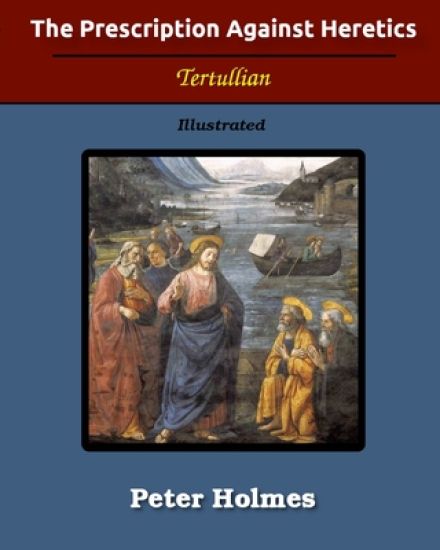
This short treatise was composed by Tertullian (Quintus Septimius Florens Tertullianus; 155 - 240 AD) on how Christians should deal with heresy and heretical arguments, mostly from pagans. He argued that the apostles transmitted the truth down to their approved successors, and that essentially no heresy is new. He also asserted that all heresies are condemned by "the sentence and the silence of Holy Scripture." This material is drawn from: The writings of Quintus Sept. Flor. Tertullianus 2 Edinburgh T. and T. Clark 1884 by Peter Holmes (1815-1878), with the original footnotes and Bible references preserved. The work is also illustrated with artwork of the various figures mentioned in the text.
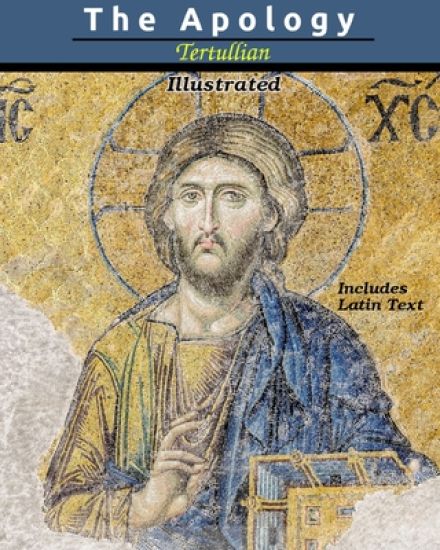
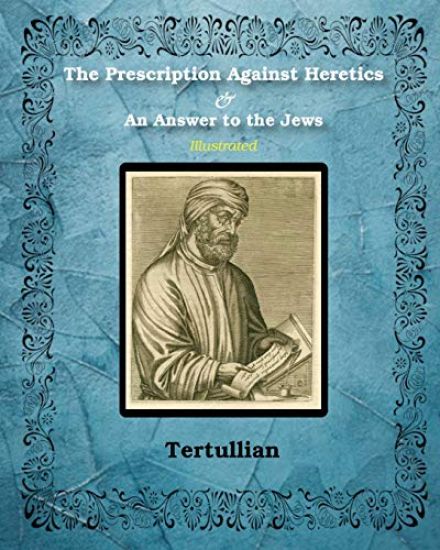
These two short treatises were composed by Tertullian (Quintus Septimius Florens Tertullianus; 155 - 240 AD.) one of the earliest Latin writers of the Christian church, who lived in Carthage, in the Roman province of Africa. The book, "Prescription Against Heretics" deals with how Christians should answer heretical arguments, mostly from the pagans of that time. The other book "Answer to the Jews" discusses how Christ was prefigured in the Torah and how Christianity is a natural consequence of God's divine plan. This material is taken from "The writings of Quintus Sept Flor Tertullianus Edinburgh T and T Clark 1884 by Peter Holmes (1815-1878)." The original footnotes and Bible references are preserved, and the work is illustrated with artwork of the various figures mentioned in the text.

Serien Vitnesbyrd fra kirkefedrene henter fram tekster fra oldkirken med perspektiver som har fått sin renessanse i vår tid. Tertullian var advokat, og hans «Forsvarsskrift for de kristne» fra år 197 e. Kr. består av 50 kapitler der han tilbakeviser angrepene på de kristne og deres tro og forklarer hva kristen tro egentlig består i. Skriftet formidler en bemerkelsesverdig tidlig argumentasjon for fri religionsutøvelse. «Å berøve folk sin religionsfrihet må vel også høre med til dette å krenke religionen. Man forbyr den frie tilbedelsen av guddommen så jeg ikke får tilbe hvem jeg vil. Isteden tvinges jeg til å tilbe dem jeg ikke vil. Men ikke engang et menneske ønsker å bli tilbedt av noen mot deres egen vilje. Vi er altså forenet i sjel og sinn, og vi har ingen betenkeligheter med å ha våre eiendeler felles. Vi har alt felles, unntatt våre koner. På det eneste område der alle deler med hverandre, gjør vi det ikke.» Redaktør for serien, Dagfinn Stærk, presenterer Tertullian og setter hans skrift inn i en større ramme i et innledende kapittel, «Troens forsvarer».
Adversus Valentinianos/de Carne Christi - Gegen Die Valentinianer/Uber Den Leib Christi: Lateinisch - Deutsch
Tertullian
Verlag Herder
2019
sidottu
Die Anhanger und Schuler des Valentin zahlten zu den einflussreichsten Gegnern der katholischen Grosskirche. Der in ihren Reihen kursierende Weltentstehungsmythos weist sie als Gnostiker par excellence aus. Somit wird dieser Mythos von Irenaus programmatisch seinem Werk Gegen die Haresien vorangestellt. Tertullian unternimmt es, die Einlassungen des Irenaus zu latinisieren, sodass im Hauptteil seines Werkes Adversus Valentinianos die Gliederung des Irenaus wieder begegnet: Nach der Schilderung der valentinianisch verstandenen Theogonie wird die Kosmogonie dieser Gnostiker beschrieben und schliesslich auch deren Anthropogenie. All dies erscheint dem Kirchenvater absurd und gefahrlich nahe an irdischer, ja teuflischer Klugheit. Auch das geheimnisumwitterte Gebaren der Valentinianer stelle diese auf eine Stufe mit den Anhangern antiker Mysterienkulte. Seit dem Ende des 1. Jahrhunderts wurde von Schismatikern die wahre Menschennatur Jesu Christi in Zweifel gezogen. Jesu Menschsein sei blosser Schein gewesen - eine Auffassung, die man heute als Doketismus bezeichnet. Somit sah sich Tertullian genotigt, die Lehre von der realen Fleischwerdung des Gottessohnes in einem eigenen Werk zu verteidigen. Der erste Teil von De carne Christi richtet sich gegen Markion. Tertullian unterstreicht hierbei, dass die reale Inkarnation fur Gott weder unmoglich noch unschicklich gewesen ist. In einem zweiten Teil wird gegen den Markionschuler Apelles betont, dass das Fleisch Jesu nicht von den Sternen, sondern aus der Jungfrauengeburt stammte. Hernach wird die Auffassung Valentins und seiner Schuler, Jesus habe ein 'geistiges' beziehungsweise 'seelisches Fleisch' an sich getragen, widerlegt; die Bibel spreche doch von Jesus als einem wahren Menschen bzw. Menschensohn. Die beiden wichtigen Werke Tertullians werden neu ins Deutsche ubersetzt, ausfuhrlich kommentiert und eingeleitet.

These testimonies of the soul are simple as true, commonplace as simple, universal as commonplace, natural as universal, divine as natural. I don't think they can appear frivolous or feeble to any one, if he reflect on the majesty of nature, from which the soul derives its authority. If you acknowledge the authority of the mistress, you will own it also in the disciple. Well, nature is the mistress here, and her disciple is the soul. But everything the one has taught or the other learned, has come from God--the Teacher of the teacher.

The Second Class of Tertullian's works, is that which includes his treatises against the heresies of his times. In these, the genius of our author is brilliantly illustrated. Here, we venture a remark on the ambiguity of the expressions concerning our author's Montanism. In the treatise against Marcion, written late in his career, Tertullian identifies himself with the Church and strenuously defends its faith and its apostolic order. In only rare instances does his weakness for the "new prophecy" crop out, and then, it is only as one identifies himself with a school within the church.

This is a letter to Scapula, Proconsul of Africa, who had begun persecuting Christians, during 212 AD (an eclipse visible in Utica is referred to). Tertullian exhorts the Proconsul to remember the fate that befell other persecutors of the Church, not as a threat, but because Christians love those who persecute them, and do not wish to see the judgment of God be unleashed on even the most devout haters of the faith.

The character of the times in which we live is such as to call forth from us even this admonition, that we ought not to be astonished at the heresies (which abound) neither ought their existence to surprise us, for it was foretold that they should come to pass; nor the fact that they subvert the faith of some, for their final cause is, by affording a trial to faith, to give it also the opportunity of being "approved."
On the Resurrection of the Flesh
Tertullian
Lighthouse Publishing
2018
pokkari
Halvin toimitettuna 19,70 €
The heretics against whom this work is directed, were the same who maintained that the demiurge, or the god who created this world and gave the Mosaic dispensation, was opposed to the supreme God. Hence they attached an idea of inherent corruption and worthlessness to all his works--amongst the rest, to the flesh or body of man; affirming that it could not rise again, and that the soul alone was capable of inheriting immortality.

"It happened very recently a dispute was held between a Christian and a Jewish proselyte. Alternately with contentious cable they each spun out the day until evening. By the opposing din, moreover, of some partisans of the individuals, truth began to be overcast by a sort of cloud. It was therefore our pleasure that that which, owing to the confused noise of disputation, could be less fully elucidated point by point, should be more carefully looked into, and that the pen should determine, for reading purposes, the questions handled." -Tertullian
In this book, Tertullian Defends, in all Essential Points, the Doctrine of the Holy Trinity, stating that Praxeas' beliefs are heresy: "In various ways has the devil rivalled and resisted the truth. Sometimes his aim has been to destroy the truth by defending it. He maintains that there is one only Lord, the Almighty Creator of the world, in order that out of this doctrine of the unity he may fabricate a heresy." Praxeas was a Monarchian from Asia Minor. He believed in the unity of the Godhead and vehemently disagreed with any attempt at division of the personalities or personages of the Father, Son, and Holy Spirit in the Christian Church.

Female habit carries with it a twofold idea--dress and ornament. By "dress" we mean what they call "womanly gracing;" by "ornament," what it is suitable should be called "womanly disgracing." The former is accounted (to consist) in gold, and silver, and gems, and garments; the latter in care of the hair, and of the skin, and of those parts of the body which attract the eye. Against the one we lay the charge of ambition, against the other of prostitution; so that even from this early stage (of our discussion) you may look forward and see what, out of (all) these, is suitable, handmaid of God, to your discipline, inasmuch as you are assessed on different principles (from other women), --those, namely, of humility and chastity.

The doctrine of Hermogenes has this taint of novelty. He is, in short, a man living in the world at the present time; by his very nature a heretic, and turbulent withal, who mistakes loquacity for eloquence, and supposes impudence to be firmness, and judges it to be the duty of a good conscience to speak ill of individuals. Moreover, he despises God's law in his painting, maintaining repeated marriages, alleges the law of God in defense of lust, and yet despises it in respect of his art. He falsifies by a twofold process--with his cautery and his pen. He is a thorough adulterer, both doctrinally and carnally, since he is rank indeed with the contagion of your marriage hacks, and has also failed in cleaving to the rule of faith as much as the apostle's own Hermogenes. However, never mind the man, when it is his doctrine which I question. He does not appear to acknowledge any other Christ as Lord, though he holds Him in a different way; but by this difference in his faith he really makes Him another being, --nay, he takes from Him everything which is God, since he will not have it that He made all things of nothing. For, turning away from Christians to the philosophers, from the Church to the Academy and the Porch, he learned there from the Stoics how to place Matter (on the same level) with the Lord, just as if it too had existed ever both unborn and unmade, having no beginning at all nor end, out of which, according to him, the Lord afterwards created all things.

"We do not indeed forbid the union of man and woman, blest by God as the seminary of the human race, and devised for the replenishment of the earth and the furnishing of the world, and therefore permitted, yet singly. For Adam was the one husband of Eve, and Eve his one wife, one woman, one rib." Tertullian, in "To His Wife," discusses Christian marriage between a man and woman. The need for the institution to procreate and to find comfort. And in support of the apostle Paul that it is better to marry than to burn. He looks at the spiritual significance of marriage and what our eternal relationship is to our spouse. Tertullian provides various recommendations regarding marriage.

This among Christians is a season of persecution. When, therefore, faith is greatly agitated, and the Church burning, as represented by the bush, then the Gnostics break out, then the Valentinians creep forth, then all the opponents of martyrdom bubble up, being themselves also hot to strike, penetrate, kill. For, because they know that many are artless and also inexperienced, and weak moreover, that a very great number in truth are Christians who veer about with the wind and conform to its moods, they perceive that they are never to be approached more than when fear has opened the entrances to the soul, especially when some display of ferocity has already arrayed with a crown the faith of martyrs. Therefore, drawing along the tail hitherto, they first of all apply it to the feelings, or whip with it as if on empty space. Innocent persons undergo such suffering. So that you may suppose the speaker to be a brother or a heathen of the better sort. A sect troublesome to nobody so dealt with Then they pierce. Men are perishing without a reason. For that they are perishing, and without a reason, is the first insertion. Then they now strike mortally. But the unsophisticated souls know not what is written, and what meaning it bears, where and when and before whom we must confess, or ought, save that this, to die for God, is, since He preserves me, not even artlessness, but folly, nay madness. If He kills me, how will it be His duty to preserve me? Once for all Christ died for us, once for all He was slain that we might not be slain. If He demands the like from me in return, does He also look for salvation from my death by violence? Or does God importune for the blood of men, especially if He refuses that of bulls and he-goats? Assuredly He had rather have the repentance than the death of the sinner. -Tertullian

Speaking of the Greek priests of Korfou, the erudite Bishop of Lincoln, lately deceased, has remarked, "There is something very picturesque in the appearance of these persons, with their black caps resembling the modius seen on the heads of the ancient statues of Serapis and Osiris, their long beards and pale complexions, and their black flowing cloak, --a relic, no doubt, of the old ecclesiastical garment of which Tertullian wrote." These remarks are illustrated by an engraving on the same page. He thus identifies the pallium with the gown of Justin Martyr; nor can there be any reasonable doubt that the pallium of the West was the counterpart of the Greek, which St. Paul left at Troas. Endearing associations have clung to it from the mention of this apostolic cloak in Holy Scripture. It doubtless influenced Justin in giving his philosopher's gown a new significance, and the modern Greeks insist that such was the apparel of the apostles. The seamless robe of Christ Himself belongs to Him only. Tertullian rarely acknowledges his obligations to other Doctors; but Justin's example and St. Paul's cloak must have been in his thoughts when he rejected the toga, and claimed the pallium, as a Christian's attire. Our Edinburgh translator has assumed that it was the "ascetics' mantle," and perhaps it was. Our author wished to make all Christians ascetics, like himself, and hence his enthusiasm for a distinctive costume. Anyhow, "the Doctor's gown" of the English universities, which is also used among the Gallicans and in Savoy, is one of the most ancient as well as dignified vestments in ecclesiastical use; and for the propheticor preaching function of the clergy it is singularly appropriate. "The pallium," says a learned author, the late Wharton B. Marriott of Oxford, "in the Greek, is the outer garment or wrapper worn occasionally by persons of all conditions of life. It corresponded in general use to the Roman toga, but in the earlier Roman language, that of republican times, was as distinctively suggestive of a Greek costume as the toga of that of Rome." To Tertullian, therefore, his preference for the pallium was doubtless commended by all these considerations; and the distinctively Greek character of Christian theology was indicated also by his choice. He loved the learning of Alexandria, and reflected the spirit of the East.

As for what pertains to antiquity, what more ancient formal type can be brought forward, than the very original fount of the human race? One female did God fashion for the male, culling one rib of his, and (of course) (one) out of a plurality. But, moreover, in the introductory speech which preceded the work itself, He said, "It is not good for the man that he be alone; let us make a help-meet for him." For He would have said "helpers" if He had destined him to have more wives (than one). He added, too, a law concerning the future; if, that is, (the words) "And two shall be (made) into one flesh"--not three, nor more; else they would be no more "two" if (there were) more--were prophetically uttered. The law stood (firm). In short, the unity of marriage lasted to the very end in the case of the authors of our race; not because there were no other women, but because the reason why there were none was that the first-fruits of the race might not be contaminated by a double marriage. Otherwise, had God (so) willed, there could withal have been (others); at all events, he might have taken from the abundance of his own daughters--having no less an Eve (taken) out of his own bones and flesh--if piety had allowed it to be done. But where the first crime (is found) homicide, inaugurated in fratricide--no crime was so worthy of the second place as a double marriage. For it makes no difference whether a man have had two wives singly, or whether individuals (taken) at the same time have made two. The number of (the individuals) conjoined and separate is the same. Still, God's institution, after once for all suffering violence through Lamech, remained firm to the very end of that race. Second Lamech there arose none, in the way of being husband to two wives. What Scripture does not note, it denies. Other iniquities provoke the deluge: (iniquities) once for all avenged, whatever was their nature; not, however, "seventy-seven times," which (is the vengeance which) double marriages have deserved.

And this species of the divine patience indeed being, as it were, at a distance, may perhaps be esteemed as among "things too high for us;" but what is that which, in a certain way, has been grasped by hand among men openly on the earth? God suffers Himself to be conceived in a mother's womb, and awaits the time for birth; and, when born, bears the delay of growing up; and, when grown up, is not eager to be recognized, but is furthermore contumelious to Himself, and is baptized by His own servant; and repels with words alone the assaults of the tempter; while from being "Lord" He becomes "Master," teaching man to escape death, having been trained to the exercise of the absolute forbearance of offended patience.