Kirjojen hintavertailu – 12 903 725 kirjaa ja 27 kauppaa

Kirjailija

Thaïsa Way

Kirjat ja teokset yhdessä paikassa: 6 kirjaa, julkaisuja vuosilta 2009–2020, suosituimpiin kuuluu GGN. Vertaile teosten hintoja ja tarkista saatavuus suomalaisista kirjakaupoista.

Nimi esiintyy myös muodoissa: Thaisa Way

6 kirjaa

Kirjojen julkaisuvuodet: 2009–2020.

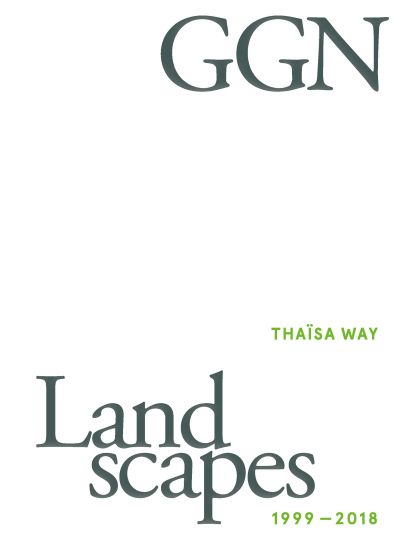
GGN

GGN

Thaïsa Way; Jennifer Guthrie; Kathryn Gustafson; Shannon Nichol; Rodrigo Abela

Timber Press
2018
sidottu
Gustafson Guthrie Nichol (GGN) is a landscape architecture firm based in Seattle, Washington. GGN was founded in 1999 by Jennifer Guthrie, Shannon Nichol, and Kathryn Gustafson, and it is world-renowned for designing high-use landscapes in complex, urban contexts. GGN: Landscapes 1999-2018 is the first book devoted to their ground-breaking work. It surveys some of their most important achievements including the Bill & Melinda Gates Foundation Campus in Seattle, Washington; the National Museum of African American History and Culture in Washington, DC; the Lurie Garden at Millennium Park in Chicago, Illinois; and the Venice Biennale in Italy. Packed with practical design lessons and inspiration, this is a must-have resource for design students and professionals, and fans of beautifully designed public spaces.

Spirited Stone

Spirited Stone

Thaisa Way

Chin Music Press
2020
sidottu
Foreword and short story by National Book Award Winner Charles Johnson Introduction by Thaïsa Way, PhDShort story by New York Times Best Selling Author, Jamie FordAcademics, novelists, poets, and garden enthusiasts examine the legacy of immigrant and nurseryman Fujitaro Kubota, whose unique gardens transformed Seattle's regional landscape in the 20th century. A self-taught gardener, Kubota built a thriving landscape business, eventually assembling 20 acres in south Seattle that he shaped into a beautiful and enduring Japanese garden. Today, this public park serves one of Washington’s most diverse zip codes. An innovator and artist, Kubota created the first “drive-through” garden to capitalize on America’s love for the automobile. While incarcerated at Minidoka prison camp during World War II, Kubota also created a memorable garden in the desert. To Kubota, everything has spirit. Rocks and stones pulsed with life, he said, and that energy is still apparent in his gardens today. Photographs by Gemina Garland-Lewis and Nathan Wirth are interwoven with original poetry by Samuel Green, Claudia Castro-Luna, and others to make this a unique book where every page presents a different view of Kubota’s garden.
The Landscape Architecture of Richard Haag

The Landscape Architecture of Richard Haag

Thaïsa Way; Laurie Olin; Marc Treib

University of Washington Press
2019
pokkari
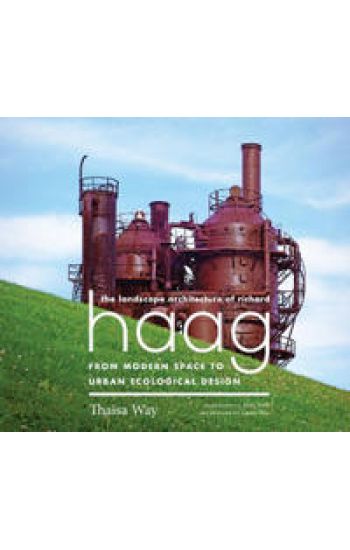
Richard Haag is best known for his rehabilitation of Gas Works Park in Seattle and for a series of remarkable gardens at the Bloedel Reserve on Bainbridge Island. He reshaped the field of landscape architecture as a designer, teacher, and activist. In 1964, Haag founded the landscape architecture department at the University of Washington, and his innovative work contributed to the increasingly significant design approach known as urban ecological design, which encourages thinking beyond the boundaries of gardens and parks to consider the broader roles that landscapes play within urban ecosystems, such as storm water drainage and wildlife habitat. Gas Works Park is studied in every survey of twentieth-century landscape architecture as a modern work that challenged the tenets of modernism by engaging a toxic site and celebrating an industrial past. Haag's work with ecologists and soil scientists in his landscape remediation and reclamation projects opened new areas of inquiry into the adaptive reuse of post-industrial sites. Thaïsa Way places Haag's work within the context of changes in the practice of landscape architecture over the past five decades in the Pacific Northwest and nationally. The book should be of interest to specialists as well as to readers who are interested in the changes in urban landscapes inspired by Haag's work. Watch the book trailer: https://www.youtube.com/watch?v=fUBeOCA8-kQ
The Landscape Architecture of Richard Haag

The Landscape Architecture of Richard Haag

Thaïsa Way; Laurie Olin; Marc Treib

University of Washington Press
2015
sidottu
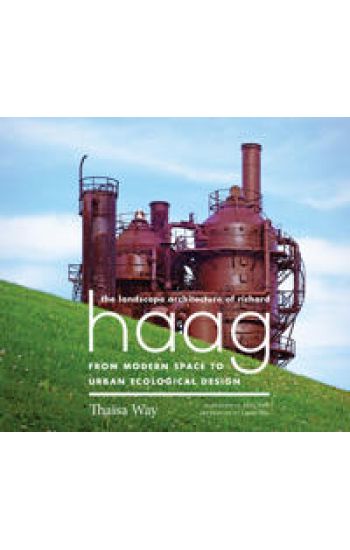
Richard Haag is best known for his rehabilitation of Gas Works Park in Seattle and for a series of remarkable gardens at the Bloedel Reserve on Bainbridge Island. He reshaped the field of landscape architecture as a designer, teacher, and activist. In 1964, Haag founded the landscape architecture department at the University of Washington, and his innovative work contributed to the increasingly significant design approach known as urban ecological design, which encourages thinking beyond the boundaries of gardens and parks to consider the broader roles that landscapes play within urban ecosystems, such as storm water drainage and wildlife habitat. Gas Works Park is studied in every survey of twentieth-century landscape architecture as a modern work that challenged the tenets of modernism by engaging a toxic site and celebrating an industrial past. Haag's work with ecologists and soil scientists in his landscape remediation and reclamation projects opened new areas of inquiry into the adaptive reuse of post-industrial sites. Thaïsa Way places Haag's work within the context of changes in the practice of landscape architecture over the past five decades in the Pacific Northwest and nationally. The book should be of interest to specialists as well as to readers who are interested in the changes in urban landscapes inspired by Haag's work. Watch the book trailer: https://www.youtube.com/watch?v=fUBeOCA8-kQ
Unbounded Practice

Unbounded Practice

Thaïsa Way

University of Virginia Press
2013
nidottu
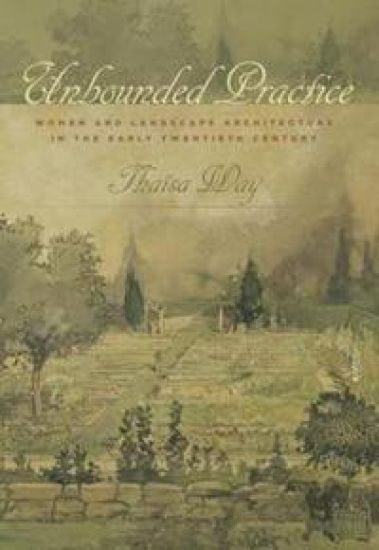
Women have practiced as landscape architects for over a century, since the founding of the practice as a profession in the United States in the 1890s. They came to landscape architecture as gardeners, garden designers, horticulturalists, and fine artists. They simultaneously shaped the profession while reflecting contemporary practice. It is all the more surprising, then, that the history of women in American landscape design has received relatively little attention. Thaïsa Way corrects this oversight in Unbounded Practice: Women and Landscape Architecture in the Early Twentieth Century. Describing design practice in landscape architecture during the first half of the twentieth century, the book serves as a narrative both of women—such as Beatrix Jones Farrand, Marian Cruger Coffin, Annette Hoyt Flanders, Ellen Biddle Shipman, Martha Brookes Hutcheson, and Marjorie Sewell Cautley—and of the practice as it became a profession.
Unbounded Practice

Unbounded Practice

Thaisa Way

University of Virginia Press
2009
sidottu
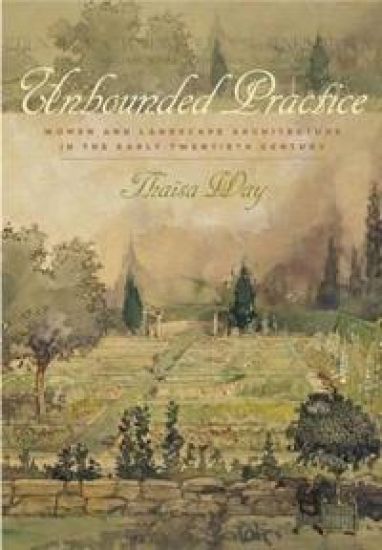
Women have practiced as landscape architects for over a century, since the founding of the practice as a profession in the United States in the 1890s. They came to landscape architecture as gardeners, garden designers, horticulturalists, and fine artists. They simultaneously shaped the profession while reflecting contemporary practice. It is all the more surprising, then, that the history of women in American landscape design has received relatively little attention. Thaisa Way corrects this oversight in ""Unbounded Practice: Women and Landscape Architecture in the Early Twentieth Century"". Describing design practice in landscape architecture during the first half of the twentieth century, the book serves as a narrative both of women - such as Beatrix Jones Farrand, Marian Cruger Coffin, Annette Hoyt Flanders, Ellen Biddle Shipman, Martha Brookes Hutcheson, and Marjorie Sewell Cautley - and of the practice as it became a profession.