Kirjojen hintavertailu – 12 903 724 kirjaa ja 27 kauppaa

Kirjailija

The School of Life

Kirjat ja teokset yhdessä paikassa: 60 kirjaa, julkaisuja vuosilta 2012–2026, suosituimpiin kuuluu Small Pleasures. Vertaile teosten hintoja ja tarkista saatavuus suomalaisista kirjakaupoista.

60 kirjaa

Kirjojen julkaisuvuodet: 2012–2026.

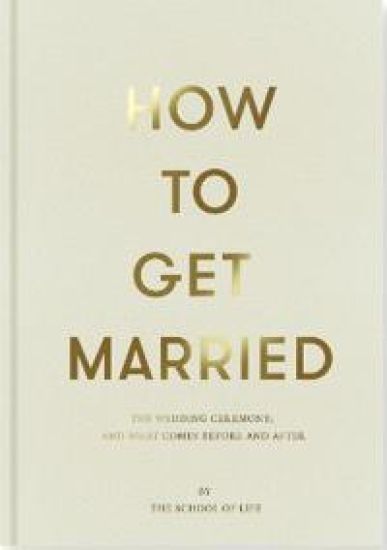
How to Get Married

How to Get Married

The School of Life

The School of Life Press
2018
sidottu
Many of us are attracted to the idea of marriage and yet feel a bit uncomfortable with some of the rituals that are traditionally associated with the big day. Perhaps the old ceremonies place too much emphasis on the supernatural or else seem out of step with some of the complex realities of contemporary relationships. In response to this dilemma, the School of Life has rethought exactly what the ideal wedding day would consist of and redesigned the entire process from scratch for the use of modern couples. The book begins by proposing new ways of getting prepared for a wedding at a psychological level, suggesting how couples should ready themselves for the often tricky journey ahead and how to think through some of the thorniest issues that beset love. The book then presents an entirely practical and thoughtfully redesigned wedding ceremony, from picking out a suitable venue to suggested vows and readings. Finally, the book offers some ideas for how to approach the start of married life. What follows is a bold rethinking of one of humankind's most important and popular rituals.
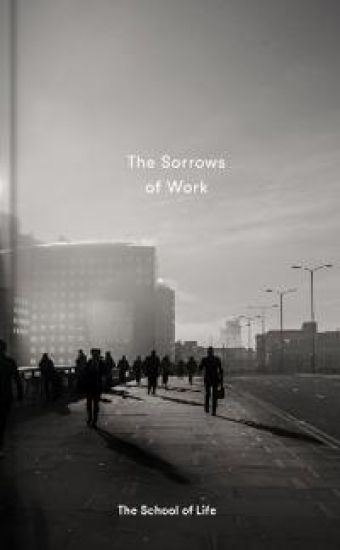
The Sorrows of Work

The Sorrows of Work

The School of Life

The School of Life Press
2018
sidottu
Work can be a route to creativity, excitement and purpose. Nevertheless, many of us end up confused, discouraged and beaten by our working lives. The temptation is often just to blame ourselves, and to feel privately ashamed and guilty. However, as this book lucidly explains, there is a range of well-embedded and intriguing reasons why work proves demoralising, including the evolution of modern work, the role of technology and the mechanics of the economy. This surprisingly cheering book offers us an invigorating perspective over our working lives – and what we might do at times when our work challenges us almost unbearably. Chapters include: SpecialisationStandardisationCommercialisationCompetitionCollaborationEqual OpportunityMeritocracy
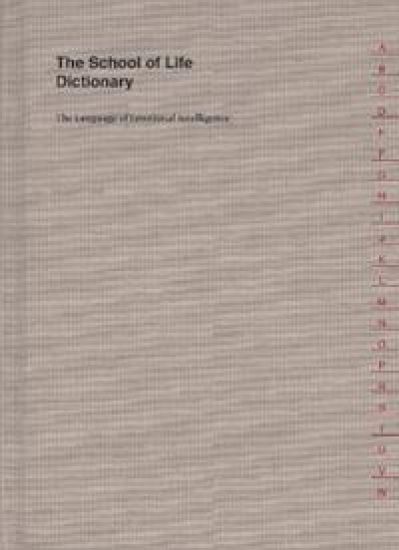
The School of Life Dictionary

The School of Life Dictionary

The School of Life

The School of Life Press
2017
sidottu
A dictionary is a guide to a language. This dictionary is for the distinctive language that The School of Life ‘speaks’: that of emotions. It is an alphabetical selection of some 165 words and phrases that shed light on our feelings about ourselves, other people, and the workings of the modern world. Too often, we struggle to find the right words to explain what we mean; The School of Life’s dictionary is a tool to help us convey our true intentions with economy and precision. Following the 8 central themes of Self-knowledge, Other People, Relationships, Sexuality, Work, Capitalism, Culture and Religion, The School of Life’s dictionary offers us a complete vocabulary with which to understand some of our key emotional states and ideas and to express them succinctly and successfully to the world. Definitions include: AddictionEudaimoniaFOMOInner VoicesMeaningful WorkPhilosophical Meditation Sample entry: Insomnia is seldom a disease: it’s an inarticulate, maddening but ultimately almost logical plea released by our core self, asking us to confront certain issues we’ve put off for too long. Insomnia isn’t really to do with not being able to sleep; it’s about not having given ourselves a chance to think. It is revenge of all the many thoughts we didn’t take seriously enough in the day. See also: Philosophical Meditation, Unprocessed Emotion
Why We Hate Cheap Things

Why We Hate Cheap Things

The School of Life

The School of Life Press
2017
sidottu
We don't think we hate cheap things, of course, but we rather behave as if we do, in the sense that we rarely properly appreciate what is always around us and doesn't appear to cost very much, for example, the night sky, pencils, fried eggs, zips and the holding of hands. This volume explores the way we can easily grow disenchanted with our immediate circumstances and pine for what is exotic, costly and out of reach - and it gently returns us to ourselves, full of new found wonder and gratitude. Combining literature, economics and sheer good sense, Why We Hate Cheap Things reawakens us to the world immediately around us and to the latent beauty and interest of what we have.
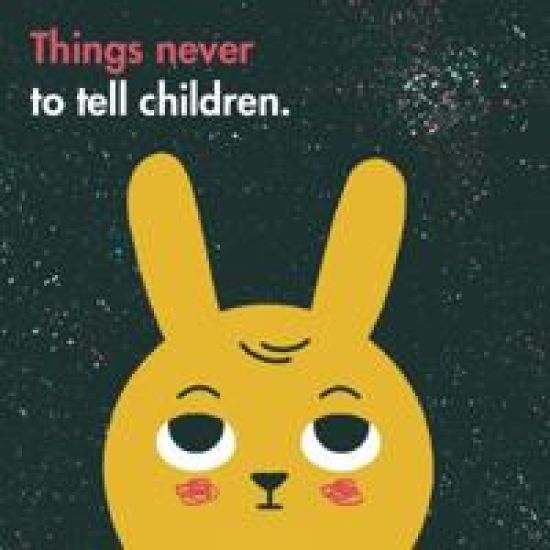
Things Never to Tell Children

Things Never to Tell Children

The School of Life

The School of Life Press
2017
sidottu
This is a book that should never fall into the hands of children – for it is filled with the darkest truths about life that might unbearably depress the young. However, for the older ones among us, this is a book full of solace, humour and relief. In a charming, naively illustrated tale, we follow the adventures of Bunny – a version of all of us – as he encounters a series of obstacles we are in some ways liable to recognise from our own lives. Watching poor Bunny, we end up delighted we’re not alone, and perhaps smiling darkly in sympathy with his sorrows. Children might even have the odd peek inside if they dare.
How to Think Like an Entrepreneur

How to Think Like an Entrepreneur

Philip Delves Broughton; The School of Life

Macmillan
2016
nidottu
Having the drive, ambition and inspiration to start a new business takes a particular mindset - no wonder we regard successful entrepreneurs as modern-day magic-makers. But what if that spirit and drive were applied outside the world of business startups? An entrepreneur seeks to build something from nothing; to take an inspired idea and make it a reality. How to Think Like an Entrepreneur explores what it takes to be a successful entrepreneur - the ability to disrupt the status quo, use design thinking to generate fresh perspectives, build resilience and leap forward from failure - and ultimately lead us to the heart of great entrepreneurial thinking; an understanding of our deepest human needs. By harnessing the passion, verve and creative thinking of an entrepreneur, you can improve your business and your life and relationships beyond it.
How to Make a Home

How to Make a Home

Hollis Edward; The School of Life

Macmillan
2016
nidottu
At a time when work and home life are becoming increasingly blurred, and modern technology brings the realm of the public into what used to be a personal and private space, Ed Hollis looks at what it means to make a home in today's world. Exploring the meaning of private and public space, the importance we place on physical objects and the demands we make of our home environment, How to Make a Home challenges us to re-imagine the concept of home and hearth.
How to Live in the City

How to Live in the City

The School of Life; Hugo Macdonald

Macmillan
2016
nidottu
Building a relationship with a city is a lot like building a relationship with another person - just as cities can be intoxicating, generous and inspiring, so they can also be dangerous, fickle and impenetrable. How to Live in the City is a book for navigating and nurturing this important relationship. Hugo Macdonald believes you need to feel a city to understand it. He won't tell you how wide the perfect pavement should be but he will show you how to walk down a pavement with eyes wide open. This is a book to help you feel human in an inhuman environment.
How to Deal with Adversity

How to Deal with Adversity

Christopher Hamilton; The School of Life

Macmillan
2014
pokkari
No matter how insulated we are by wealth or friends we can all expect to undergo some form of loss, failure or disappointment. The common reaction is to bear it as best we can - some do this better than others - and move on with life. Christopher Hamilton proposes a different response to adversity. Focusing on the arenas of family, love, illness and death, he explores constructive ways to deal with adversity and embrace it to derive unique insight into our condition. Offering examples from history, literature and science, he suggests how we might recognize it as a precious source of enlightenment, shaping our very existence. One in the new series of books from The School of Life, launched January 2014: How to Age by Anne Karpf How to Develop Emotional Health by Oliver James How to Be Alone by Sara Maitland How to Deal with Adversity by Christopher Hamilton How to Think About Exercise by Damon Young How to Connect with Nature by Tristan Gooley
How to Connect with Nature

How to Connect with Nature

Tristan Gooley; The School of Life

Macmillan
2014
pokkari
A deep knowledge of our natural environment is no longer a vital part of everyday survival, certainly for those of us living in cities and working in weatherproof offices. Unless we have an inherent love of the great outdoors, do we really need to connect with nature? Bestselling author Tristan Gooley believes that real connection, no matter how small, can enrich us as individuals, allowing us to see every living thing in its own intricate network. Offering a host of techniques, he helps us awaken our senses and deepen our understanding of nature's cycles, conflicts and relationships. By cultivating the right mindset we can gain a better appreciation of the world, both indoors and outdoors. One in the new series of books from The School of Life, launched January 2014: How to Age by Anne Karpf How to Develop Emotional Health by Oliver James How to Be Alone by Sara Maitland How to Deal with Adversity by Christopher Hamilton How to Think About Exercise by Damon Young How to Connect with Nature by Tristan Gooley
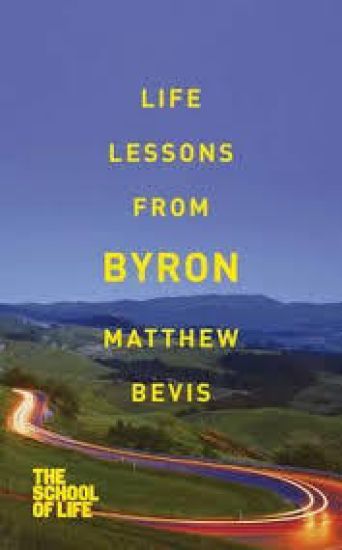
Life Lessons from Byron

Life Lessons from Byron

Matthew Bevis; The School of Life

Macmillan
2013
pokkari
'The School of Life offers radical ways to help us raid the treasure trove of human knowledge' Independent on Sunday Born in 1788, Lord Byron was an English poet and a leading figure of the Romantic movement. A prodigious poetic gift and a scandalous private life made him famous throughout Europe, and his masterpiece, Don Juan, became the biggest-selling work of the period. He remains one of the most provocative, seductive voices of world literature. The Life Lessons series from The School of Life takes a great thinker and highlights those ideas most relevant to ordinary, everyday dilemmas. These books emphasize ways in which wise voices from the past have urgently important and inspiring things to tell us. 'thoroughly welcoming and approachable ... [Life Lessons from Byron is] a ringing affirmation of the power of poetry to reach down tot the essence, or at least the essences, of life ... If the six books in the Life Lessons series can teach even a few readers to pay passionate heed to the world - to notice things - they will have been an unquestionable success' John Banville, Prospect 'there is a good deal to be learned from these little primers' Observer
Life Lessons from Hobbes

Life Lessons from Hobbes

Dawson Hannah; The School of Life

Macmillan
2013
pokkari

Halvin toimitettuna 16,20 €

'The School of Life offers radical ways to help us raid the treasure trove of human knowledge' Independent on Sunday Thomas Hobbes was an English philosopher. Born in Wiltshire in 1588, his masterpiece, Leviathan, established the foundation for Western political thought and inspired both hate and awe. He revealed the darker side of human nature and the value of authority. But he also showed us how to flourish, how to be fearless and free, so that our lives need not be 'nasty, brutish and short'. Here you will find insights from his greatest work. The Life Lessons series from The School of Life takes a great thinker and highlights those ideas most relevant to ordinary, everyday dilemmas. These books emphasize ways in which wise voices from the past have urgently important and inspiring things to tell us. 'thoroughly welcoming and approachable ... [an] invigorating essay on Hobbes ... If the six books in the Life Lessons series can teach even a few readers to pay passionate heed to the world - to notice things - they will have been an unquestionable success' John Banville, Prospect '[Life Lessons From Hobbes is] the best of this bunch ... trenchantly confronting contemporary political problems ... there is a good deal to be learned from these little primers' Observer 'Hannah Dawson is especially good on why Hobbes's theories on the meaning of freedom are so relevant' Evening Standard
Life Lessons from Bergson

Life Lessons from Bergson

Michael Foley; The School of Life

Macmillan
2013
pokkari
The School of Life offers radical ways to help us raid the treasure trove of human knowledge' Independent on Sunday Henri Bergson was a French professor and philosopher. Born in Paris in 1859 to a Polish composer and Yorkshire woman of Irish descent, his revelatory ideas of life as ceaseless becoming and the importance of attention, learning, humour and joy brought him incredible fame and media celebrity. Here you will find insights from his greatest works. The Life Lessons series from The School of Life takes a great thinker and highlights those ideas most relevant to ordinary everyday dilemmas. These books emphasize ways in which wise voices from the past have urgently important and inspiring things to tell us. 'thoroughly welcoming and approachable ... Perhaps the finest, certainly the most exuberant, of the volumes is Michael Foley's Life Lessons from Bergson ... If the six books in the Life Lessons series can teach even a few readers to pay passionate heed to the world - to notice things - they will have been an unquestionable success' John Banville, Prospect 'there is a good deal to be learned from these little primers' Observer
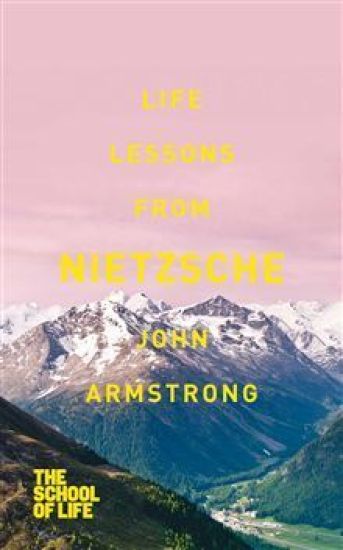
Life Lessons from Nietzsche

Life Lessons from Nietzsche

Armstrong John; The School of Life

Macmillan
2013
pokkari
'The School of Life offers radical ways to help us raid the treasure trove of human knowledge' Independent on Sunday Friedrich Nietzsche was a German philosopher, poet and cultural critic. He is best known for his controversial idea of 'life affirmation' that challenged traditional morality and all doctrines. Born in 1844 outside Leipzig, Germany, his teachings inspired people in all walks of life, from dancers and poets to psychologists and social revolutionaries. Here you will find insights from his greatest works. The Life Lessons series from The School of Life takes a great thinker and highlights those ideas most relevant to ordinary, everyday dilemmas. These books emphasize ways in which wise voices from the past have urgently important and inspiring things to tell us. 'thoroughly welcoming and approachable ... If the six books in the Life Lessons series can teach even a few readers to pay passionate heed to the world - to notice things - they will have been an unquestionable success' John Banville, Prospect 'there is a good deal to be learned from these little primers' Observer
Life Lessons from Freud

Life Lessons from Freud

Brett Kahr; The School of Life

Macmillan
2013
pokkari
The School of Life offers radical ways to help us raid the treasure trove of human knowledge' Independent on Sunday Sigmund Freud is best known as the father of psychoanalysis. Born in 1856, he was a physiologist, medical doctor and psychologist who spent most of his life in Vienna, Austria. He developed revolutionary ideas about the unconscious mind, repression and the meaning of dreams and the clinical method of treatment through dialogue. Here you will find insights from his greatest works. The Life Lessons series from The School of Life takes a great thinker and highlights those ideas most relevant to ordinary, everyday dilemmas. These books emphasize ways in which wise voices from the past have urgently important and inspiring things to tell us. 'thoroughly welcoming and approachable ... If the six books in the Life Lessons series can teach even a few readers to pay passionate heed to the world - to notice things - they will have been an unquestionable success' John Banville, Prospect 'there is a good deal to be learned from these little primers' Observer
The School of Life

The School of Life

The School of Life

Macmillan
2013
nidottu
You can learn how to thrive in the digital age, worry less about money and think more intelligently about sex with these three books from "The School of Life". This intelligent compilation from "The School of Life" is designed to help you navigate some of modern life's big issues. "How to Think More about Sex" - examining the dilemmas of modern sexuality, Alain de Botton offers insights to help us think more deeply and wisely about the sex we are, or aren't, having. "How to Worry Less about Money" - offering surprising and helpful ideas, John Armstrong will encourage you to redefine your feelings about money, and discover what is really important to you in life. "How to Thrive in the Digital Age" - Tom Chatfield examines what our wired life is really doing to our minds, and offers innovative and practical research to help us prosper in a digital century.
How to Change the World

How to Change the World

Flintoff John-Paul; The School of Life

Macmillan
2012
nidottu
We all want to live in a better world, but sometimes it feels that we lack the ability or influence to make a difference. John-Paul Flintoff offers a powerful reminder that through the generations, society has been transformed by the actions of individuals who understood that if they didn’t like something, they could change it. Combining fresh new insights from history, politics and modern culture, this book will give you a sense of what might just be possible, as well as the inspiration and the courage you need to go about improving and changing the world we live in. One in the new series of books from The School of Life, launched May 2012: How to Stay Sane by Philippa Perry How to Find Fulfilling Work by Roman Krznaric How to Worry Less About Money by John Armstrong How to Change the World by John-Paul Flintoff How to Thrive in the Digital Age by Tom Chatfield How to Think More About Sex by Alain de Botton
How to Thrive in the Digital Age

How to Thrive in the Digital Age

Tom Chatfield; The School of Life

Macmillan
2012
nidottu
Our world is, increasingly, a digital one. Over half of the planet’s adult population now spend more of their waking hours ‘plugged in’ than not, whether to the internet, mobile telephony, or other digital media. To email, text, tweet and blog our way through our careers, relationships and even our family lives is now the status quo. But what effect is this need for constant connection really having? For the first time, Tom Chatfield examines what our wired life is really doing to our minds and our culture - and offers practical advice on how we can hope to prosper in a digital century. One in the new series of books from The School of Life, launched May 2012: How to Stay Sane by Philippa Perry How to Find Fulfilling Work by Roman Krznaric How to Worry Less About Money by John Armstrong How to Change the World by John-Paul Flintoff How to Thrive in the Digital Age by Tom Chatfield How to Think More About Sex by Alain de Botton
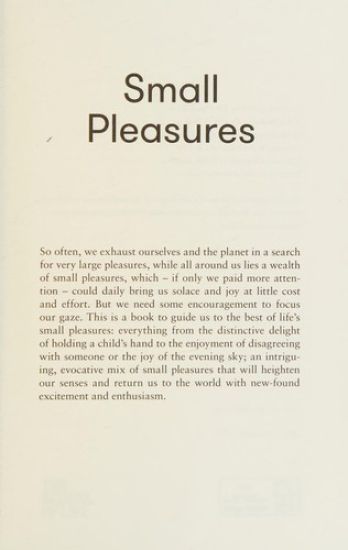
Small Pleasures

Small Pleasures

The School of Life

School of Life
Kovakantinen
So often, we exhaust ourselves and the planet in a search for very large pleasures - while all around us lies a wealth of small pleasures, which - if only we paid more attention - could daily bring us solace and joy at little cost and effort. But we need some encouragement to focus our gaze. This is a book to guide us to the best of life’s small pleasures: everything from the distinctive delight of holding a child’s hand to the enjoyment of disagreeing with someone, to the joy of the evening sky; an intriguing, evocative mix of small pleasures that will heighten our senses and return us to the world with new-found excitement and enthusiasm.
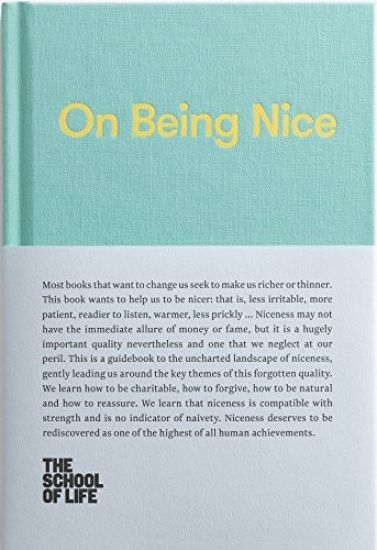
On being nice

On being nice

The School of Life

School of Life
Kovakantinen
Exploring a much forgotten quality. Most books that want to change us seek to make us richer or thinner. This book wants to help us to be nicer: that is, less irritable, more patient, readier to listen, warmer, less prickly. Niceness may not have the immediate allure of money or fame, but it is a hugely important quality nevertheless and one that we neglect at our peril. This is a guidebook to the uncharted landscape of niceness, gently leading us around the key themes of this forgotten quality. We learn how to be charitable, how to forgive, how to be natural, and how to reassure. We learn that niceness is compatible with strength and is no indicator of naivety. Niceness deserves to be rediscovered as one of the highest of all human achievements.