Kirjojen hintavertailu – 12 903 725 kirjaa ja 27 kauppaa
Kirjailija
The Three Initiates
Kirjat ja teokset yhdessä paikassa: 15 kirjaa, julkaisuja vuosilta 2008–2025, suosituimpiin kuuluu Kybalion Modern English - Edition 1. Vertaile teosten hintoja ja tarkista saatavuus suomalaisista kirjakaupoista.
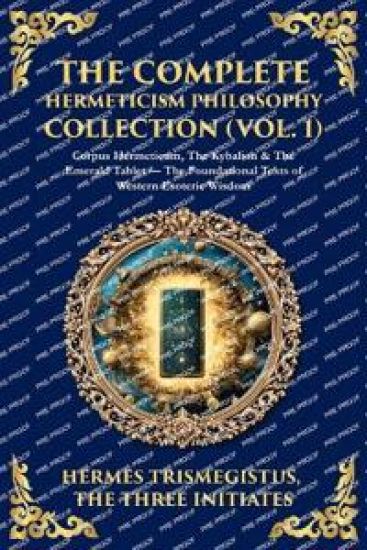
What if the hidden teachings of the universe had been preserved for thousands of years-just waiting for you to understand them? The Ultimate Esoteric Wisdom Collection presents a carefully curated selection of foundational texts on Hermeticism, alchemy, mysticism, and occult science. Modernized for today's readers, these works unveil universal principles that have guided spiritual traditions from ancient Egypt to Renaissance Europe. What You'll Discover in This Modern Translation: The Kybalion by The Three Initiates - Learn the 7 Hermetic Principles that govern all creation. Corpus Hermeticum by Hermes Trismegistus - Dialogue-based teachings on the divine, the cosmos, and the mind. The Emerald Tablet (Thoth the Atlantean) - The legendary text behind the phrase "as above, so below." The Divine Pymander (Poimandres) - Revelatory visions of cosmic origin and spiritual rebirth. The Virgin of the World - Sacred myths and teachings attributed to ancient Egypt's god of wisdom. The Chaldean Oracles by Julian the Theurgist - Cryptic verses on divine hierarchy and spiritual ascent. The Life and Teachings of Thoth Hermes Trismegistus - An interpretive biography of the Father of Occultism. The Hermetic and Alchemical Writings of Paracelsus - The pioneering physician-mystic on healing and transformation. Coelum Philosophorum by Paracelsus - A guide to creating the Philosopher's Stone. The Book Concerning the Tincture of the Philosophers by Paracelsus - Alchemical wisdom on the purification of the soul. Whether you're a spiritual seeker, student of mysticism, or lover of hidden knowledge, this collection is your portal to the ancient wisdom that still resonates with truth.
Kybalion is a book originally published in 1908 by "Three Initiates" (often identified as the New Thought pioneer William Walker Atkinson, ) that purports to convey the teachings of Hermes Trismegistus. While it shares with ancient and medieval Hermetic texts several traits such as philosophical mentalism, the concept of 'as above, so below', and the idea that everything consists of gendered opposites, as a whole it is more indebted to the ideas of modern occultist authors, especially those of the New Thought movement to which Atkinson belonged. A modern hermetic tract, it has been widely influential in New Age circles since the twentieth century. Nicholas E. Chapel notes that while several aspects such as philosophical mentalism, the concept of "as above, so below" as derived from the Emerald Tablet, and the idea that everything exists as pairs of gendered opposites, do have a background in ancient and medieval Hermetic texts, other aspects such as the principle of vibration (which originates in the philosophy of David Hartley, 1705-1757) are not related to Hermeticism.
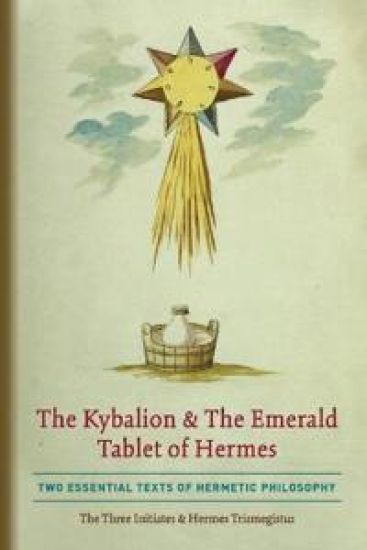
The Kybalion & The Emerald Tablet of Hermes compose two pillars of Hermetic thought. Combined here in one volume, these two works share true wisdom with those ready to receive it. "When the ears of the student are ready to hear, then cometh the lips to fill them with wisdom." The Kybalion was first published anonymously in 1908 by "The Three Initiates." The true authorship of the work is unknown, although theories suggest it was written entirely or in part by William Walker Atkinson. Atkinson was a prolific writer and supported the New Thought movement of the 19th and early 20th centuries. New Thought included the belief that our realities can be manifested by mental effort, which is also suggested in Hermetic principles. Scholars point to similarities in style and content between The Kybalion and Atkinson's own The Arcane Teachings as evidence that he was one (or all) of "The Three Initiates." The Kybalion provides an introduction to the teachings of Hermes Trismegistus--Hermes "the Thrice-Greatest." This "Master of Masters" is said in The Kybalion to have lived 300 years on Earth, and believed by some to be the founder of both astrology and alchemy (precursors to astronomy and chemistry, respectively). Hermes Trismegistus was deified after his death as Toth by the ancient Egyptians, and Hermes by the Greeks. In both pantheons, this man-turned-god was considered a symbol of great wisdom. The Kybalion's explanation of Hermetic teachings are claimed to have been passed down orally for centuries, eventually reaching "The Three Initiates." The fundamental Hermetic traditions presented in The Kybalion consist of seven "working principles" Mentalism, Correspondence, Vibration, Polarity, Rhythm, Cause and Effect, and Gender. Within these seven principles is true wisdom, tied to no particular place and no particular religion. It is the "sacred flame" kept lit by a chosen few used to "re-light the lesser lamps of the outside world when the light of truth grew dim..." In short, these are the truths of the universe, regardless of era or creed. The Emerald Tablet of Hermes is a short, ancient text attributed to Hermes Trismegistus himself. Unlike The Kybalion, which aims to provide some explanation and instruction, the brief Emerald Tablet has been puzzling and fascinating scholars for over 1,000 years. Consisting of a mere 14 stanzas, the Emerald Tablet is said to contain the secrets of prima materia--the foundational material of the universe. The Emerald Tablet and its teaching influenced freemasonry and philosophy throughout history. The text of the tablet has been translated and commented on by a variety of scholars, including Sir Isaac Newton who was inspired by its teachings throughout his life and work. The earliest known version of the text comes from an Arabic work written between the 6th and 8th centuries by Balinas. He claimed to have found the tablet hidden in a vault beneath a statue of Hermes. Another story claims the tablet was written by Seth, the third son of Adam and Eve. And yet another says the tablet was uncovered and then reburied by Alexander the Great. The source and material of the physical tablet is unknown. It was reported to be a rectangular green stone, with text in raised bas-relief rather than engraved. Some even claim there never was a physical tablet at all, although several accounts claim it was on display in Egypt in 330 BCE. Whatever its origins and history, the work was first introduced to the West in the 12th century through Latin translations. Since then, this cryptic text has been translated and re-translated, pored-over and analyzed by philosophers, historians, and theologians alike.
The The Emerald Tablet of Hermes & Kybalion compose two pillars of Hermetic thought. Combined here in one volume, these two works share true wisdom with those ready to receive it. "When the ears of the student are ready to hear, then cometh the lips to fill them with wisdom." The Kybalion was first published anonymously in 1908 by "The Three Initiates." The true authorship of the work is unknown, although theories suggest it was written entirely or in part by William Walker Atkinson. Atkinson was a prolific writer and supported the New Thought movement of the 19th and early 20th centuries. New Thought included the belief that our realities can be manifested by mental effort, which is also suggested in Hermetic principles. Scholars point to similarities in style and content between The Kybalion and Atkinson's own The Arcane Teachings as evidence that he was one (or all) of "The Three Initiates." The Kybalion provides an introduction to the teachings of Hermes Trismegistus--Hermes "the Thrice-Greatest." This "Master of Masters" is said in The Kybalion to have lived 300 years on Earth, and believed by some to be the founder of both astrology and alchemy (precursors to astronomy and chemistry, respectively). Hermes Trismegistus was deified after his death as Toth by the ancient Egyptians, and Hermes by the Greeks. In both pantheons, this man-turned-god was considered a symbol of great wisdom. The Kybalion's explanation of Hermetic teachings are claimed to have been passed down orally for centuries, eventually reaching "The Three Initiates." The fundamental Hermetic traditions presented in The Kybalion consist of seven "working principles" Mentalism, Correspondence, Vibration, Polarity, Rhythm, Cause and Effect, and Gender. Within these seven principles is true wisdom, tied to no particular place and no particular religion. It is the "sacred flame" kept lit by a chosen few used to "re-light the lesser lamps of the outside world when the light of truth grew dim..." In short, these are the truths of the universe, regardless of era or creed. The Emerald Tablet of Hermes is a short, ancient text attributed to Hermes Trismegistus himself. Unlike The Kybalion, which aims to provide some explanation and instruction, the brief Emerald Tablet has been puzzling and fascinating scholars for over 1,000 years. Consisting of a mere 14 stanzas, the Emerald Tablet is said to contain the secrets of prima materia--the foundational material of the universe. The Emerald Tablet and its teaching influenced freemasonry and philosophy throughout history. The text of the tablet has been translated and commented on by a variety of scholars, including Sir Isaac Newton who was inspired by its teachings throughout his life and work. The earliest known version of the text comes from an Arabic work written between the 6th and 8th centuries by Balinas. He claimed to have found the tablet hidden in a vault beneath a statue of Hermes. Another story claims the tablet was written by Seth, the third son of Adam and Eve. And yet another says the tablet was uncovered and then reburied by Alexander the Great. The source and material of the physical tablet is unknown. It was reported to be a rectangular green stone, with text in raised bas-relief rather than engraved. Some even claim there never was a physical tablet at all, although several accounts claim it was on display in Egypt in 330 BCE. Whatever its origins and history, the work was first introduced to the West in the 12th century through Latin translations. Since then, this cryptic text has been translated and re-translated, pored-over and analyzed by philosophers, historians, and theologians alike.
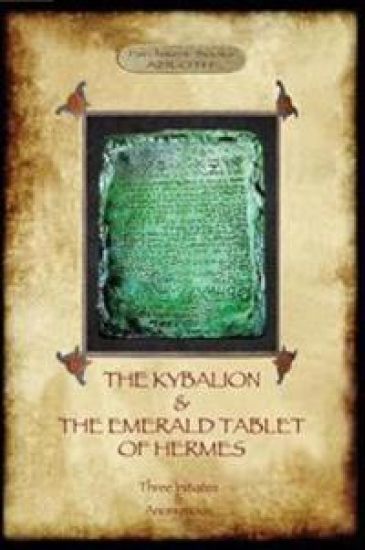
The Kybalion & The Emerald Tablet of Hermes compose two pillars of Hermetic thought. Combined here in one volume, these two works share true wisdom with those ready to receive it. "When the ears of the student are ready to hear, then cometh the lips to fill them with wisdom." The Kybalion was first published anonymously in 1908 by "The Three Initiates." The true authorship of the work is unknown, although theories suggest it was written entirely or in part by William Walker Atkinson. Atkinson was a prolific writer and supported the New Thought movement of the 19th and early 20th centuries. New Thought included the belief that our realities can be manifested by mental effort, which is also suggested in Hermetic principles. Scholars point to similarities in style and content between The Kybalion and Atkinson's own The Arcane Teachings as evidence that he was one (or all) of "The Three Initiates." The Kybalion provides an introduction to the teachings of Hermes Trismegistus--Hermes "the Thrice-Greatest." This "Master of Masters" is said in The Kybalion to have lived 300 years on Earth, and believed by some to be the founder of both astrology and alchemy (precursors to astronomy and chemistry, respectively). Hermes Trismegistus was deified after his death as Toth by the ancient Egyptians, and Hermes by the Greeks. In both pantheons, this man-turned-god was considered a symbol of great wisdom. The Kybalion's explanation of Hermetic teachings are claimed to have been passed down orally for centuries, eventually reaching "The Three Initiates." The fundamental Hermetic traditions presented in The Kybalion consist of seven "working principles" Mentalism, Correspondence, Vibration, Polarity, Rhythm, Cause and Effect, and Gender. Within these seven principles is true wisdom, tied to no particular place and no particular religion. It is the "sacred flame" kept lit by a chosen few used to "re-light the lesser lamps of the outside world when the light of truth grew dim..." In short, these are the truths of the universe, regardless of era or creed. The Emerald Tablet of Hermes is a short, ancient text attributed to Hermes Trismegistus himself. Unlike The Kybalion, which aims to provide some explanation and instruction, the brief Emerald Tablet has been puzzling and fascinating scholars for over 1,000 years. Consisting of a mere 14 stanzas, the Emerald Tablet is said to contain the secrets of prima materia--the foundational material of the universe. The Emerald Tablet and its teaching influenced freemasonry and philosophy throughout history. The text of the tablet has been translated and commented on by a variety of scholars, including Sir Isaac Newton who was inspired by its teachings throughout his life and work. The earliest known version of the text comes from an Arabic work written between the 6th and 8th centuries by Balinas. He claimed to have found the tablet hidden in a vault beneath a statue of Hermes. Another story claims the tablet was written by Seth, the third son of Adam and Eve. And yet another says the tablet was uncovered and then reburied by Alexander the Great. The source and material of the physical tablet is unknown. It was reported to be a rectangular green stone, with text in raised bas-relief rather than engraved. Some even claim there never was a physical tablet at all, although several accounts claim it was on display in Egypt in 330 BCE. Whatever its origins and history, the work was first introduced to the West in the 12th century through Latin translations. Since then, this cryptic text has been translated and re-translated, pored-over and analyzed by philosophers, historians, and theologians alike.
The Kybalion has been the subject of intrigue and speculation for over 100 years. It claims to present the most ancient and fundamental principles of Egyptian philosophy, pulled from the Hermetic lore of the god Djehuti himself. Its authors are unknown, its sources impossible to verify, and even its publication is cloaked in mystery. Yet the seven principles of The Kybalion are not only startlingly parallel to our most recent understandings of ancient Egyptian philosophy, they are also undeniable, meaningful and relevant to everyday life. The Kybalion repeatedly references how its seven principles (Mentalism, Correspondence, Vibration, Polarity, Rhythm, Cause and Effect, and Gender) can be seen in the workings of modern science. Although this book was composed in 1908, these statements appear even more accurate today. The latest revelations from the world of scientific inquiry suggest that The Kybalion's seven laws may very well describe the nature of our visible Universe. If they do, indeed, describe the fundamental workings of our material world and nature, it follows that these same laws can be used to be better understand our own lives and the way things work around us.