Kirjojen hintavertailu – 12 903 725 kirjaa ja 27 kauppaa

Kirjailija

Thea Pitman

Kirjat ja teokset yhdessä paikassa: 4 kirjaa, julkaisuja vuosilta 2008–2021, suosituimpiin kuuluu Decolonising the Museum. Vertaile teosten hintoja ja tarkista saatavuus suomalaisista kirjakaupoista.

4 kirjaa

Kirjojen julkaisuvuodet: 2008–2021.

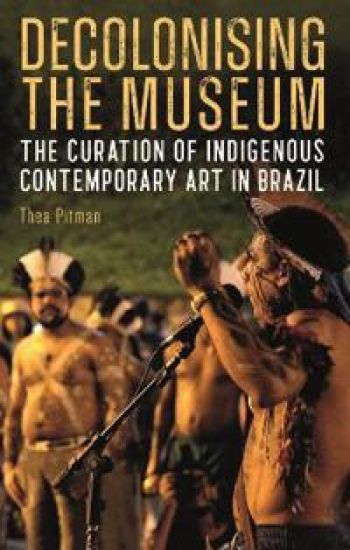
Decolonising the Museum

Decolonising the Museum

Thea Pitman

Tamesis Books
2021
sidottu
Explores the scope that there is for Indigenous curatorial agency in the relationship of Indigenous contemporary art with the 'art world'. This monograph focuses on the current boom in Indigenous contemporary art in Brazil, exploring in particular the way that this work interfaces with the art world through exhibitions, and the scope that there is for Indigenous curatorial agency in this relationship. After a brief introduction to Indigenous art, it gives an overview of the evolving relationship between Indigenous art and the art world, exploring in particular the nature of decolonial and/or Indigenous curatorial practice both in Brazil and elsewhere in the world. It then hones in on a recent exhibition: 'Arte Eletrônica Indígena' [Indigenous Electronic Art], held at the Museum of Modern Art of Bahia in Salvador in August 2018. Based on participant observation and interviews, it provides an ethnographic reading of the opening weekend of the exhibition, looking at the alternative modalities of Indigenous curatorial agency that were exercised by the Indigenous people present. The conclusion explores the legacy of the 'Arte Eletrônica Indígena' exhibition, particularly for the Indigenous communities involved, and looks to the evidence provided by the exhibition for lessons to be learned for future exhibitions.
Latin American Identity in Online Cultural Production

Latin American Identity in Online Cultural Production

Claire Taylor; Thea Pitman

Routledge
2016
nidottu
This volume provides an innovative and timely approach to a fast growing, yet still under-studied field in Latin American cultural production: digital online culture. It focuses on the transformations or continuations that cultural products and practices such as hypermedia fictions, net.art and online performance art, as well as blogs, films, databases and other genre-defying web-based projects, perform with respect to Latin American(ist) discourses, as well as their often contestatory positioning with respect to Western hegemonic discourses as they circulate online. The intellectual rationale for the volume is located at the crossroads of two, equally important, theoretical strands: theories of digital culture, in their majority the product of the anglophone academy; and contemporary debates on Latin American identity and culture.
Latin American Identity in Online Cultural Production

Latin American Identity in Online Cultural Production

Claire Taylor; Thea Pitman

Routledge
2012
sidottu
This volume provides an innovative and timely approach to a fast growing, yet still under-studied field in Latin American cultural production: digital online culture. It focuses on the transformations or continuations that cultural products and practices such as hypermedia fictions, net.art and online performance art, as well as blogs, films, databases and other genre-defying web-based projects, perform with respect to Latin American(ist) discourses, as well as their often contestatory positioning with respect to Western hegemonic discourses as they circulate online. The intellectual rationale for the volume is located at the crossroads of two, equally important, theoretical strands: theories of digital culture, in their majority the product of the anglophone academy; and contemporary debates on Latin American identity and culture.
Mexican Travel Writing

Mexican Travel Writing

Thea Pitman

Verlag Peter Lang
2008
nidottu
This book is a detailed study of salient examples of Mexican travel writing from the nineteenth and twentieth centuries. While scholars have often explored the close relationship between European or North American travel writing and the discourse of imperialism, little has been written on how postcolonial subjects might relate to the genre. This study first traces the development of a travel-writing tradition based closely on European imperialist models in mid-nineteenth-century Mexico. It then goes on to analyse how the narrative techniques of postmodernism and the political agenda of postcolonialism might combine to help challenge the genre’s imperialist tendencies in late twentieth-century works of travel writing, focusing in particular on works by writers Juan Villoro, Héctor Perea and Fernando Solana Olivares.