
Kirjailija
Thea Von Harbou
Kirjat ja teokset yhdessä paikassa: 56 kirjaa, julkaisuja vuosilta 2001–2026, suosituimpiin kuuluu Das indische Grabmal (Großdruck). Vertaile teosten hintoja ja tarkista saatavuus suomalaisista kirjakaupoista.
56 kirjaa
Kirjojen julkaisuvuodet: 2001–2026.


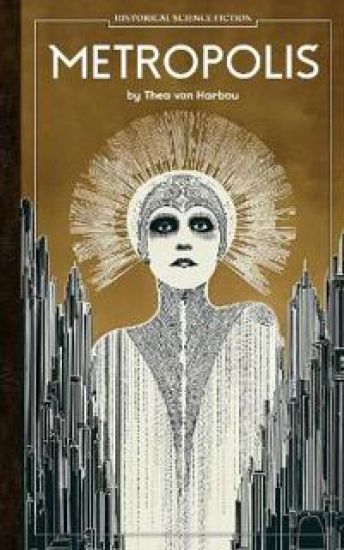
In the future, wealthy industrialists and their top employees reign over the city of Metropolis from colossal skyscrapers, while underground-dwelling workers toil to operate the great machines that power it. Joh Fredersen is the city's master. His son, Freder, idles away his time at sports and in a pleasure garden, but is interrupted by the arrival of a young woman named Maria, who has brought a group of workers' children to witness the lifestyle of their rich "brothers".
Step into the dazzling, dystopian world of "Metropolis," where the future is a battleground of heart and machine. Once lost to time, this visionary masterpiece by Thea von Harbou is now reborn, meticulously restored and republished by Alpha Editions. For decades, "Metropolis" was out of print, but today it stands as a collector's item and a cultural treasure, ready to captivate a new generation of readers. In a city divided by wealth and power, where the elite live in luxury above and the workers toil below, one man's journey to bridge the chasm between these worlds unfolds. This timeless tale of love, rebellion, and redemption explores the eternal struggle between human emotion and technological advancement. With its hauntingly prophetic themes and vivid storytelling, "Metropolis" remains as relevant today as when it first captured imaginations. Whether you're a casual reader or a classic literature aficionado, this edition offers a unique opportunity to own a piece of literary history. Immerse yourself in a narrative that challenges the boundaries of society and the human spirit. Rediscover "Metropolis" a story that continues to inspire and provoke thought across generations.

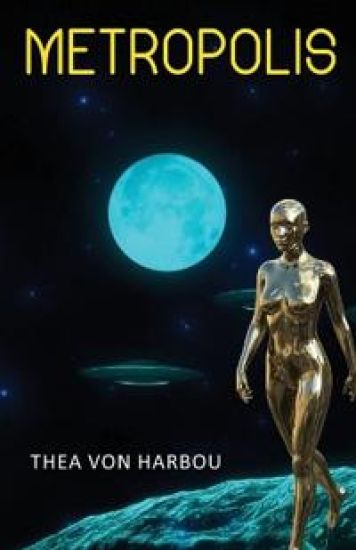
This is Metropolis, the novel that the film's screenwriter-Thea von Harbou, who was director Fritz Lang's wife, and a collaborator in the creation of the film-this is the novel that Harbou wrote from her own notes. It contains bits of the story that got lost on the cutting-room floor; in a very real way it is the only way to understand the film.
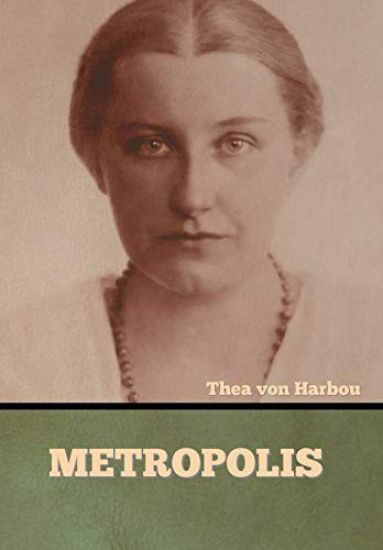
Metropolis is a 1925 science fiction novel by the German writer Thea von Harbou. The novel was the basis for and written in tandem with Fritz Lang's 1927 film Metropolis. The story is set in 2026 in a technologically-advanced city, which is sustained by the existence of an exploited class of labourers who live underground, far away from the gleaming surface world. Freder, the son of Joh Fredersen, one of the city's founders, falls in love with Maria, a girl from the underground. The two classes begin to clash for lack of a unifying force. (wikipedia.org)
Metropolis is a 1925 science fiction novel by the German writer Thea von Harbou. The novel was the basis for and written in tandem with Fritz Lang's 1927 film Metropolis. The story is set in 2026 in a technologically-advanced city, which is sustained by the existence of an exploited class of labourers who live underground, far away from the gleaming surface world. Freder, the son of Joh Fredersen, one of the city's founders, falls in love with Maria, a girl from the underground. The two classes begin to clash for lack of a unifying force. (wikipedia.org)
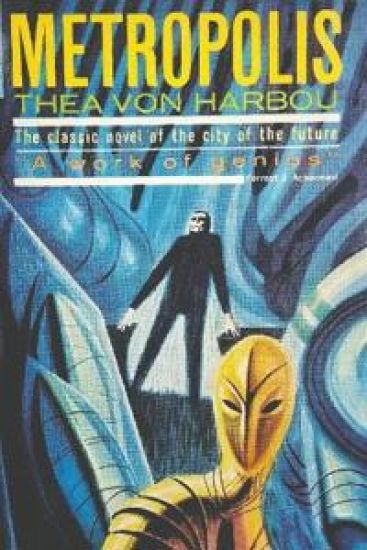
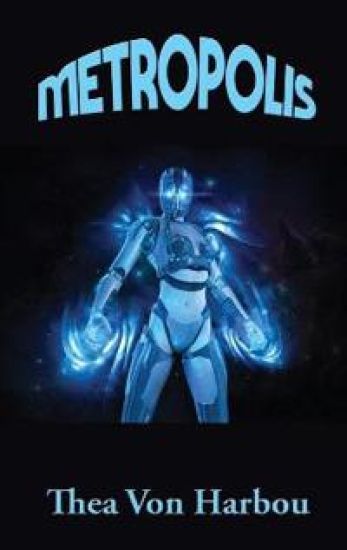
Metropolis is set in 2026 in a technologically-advanced city, which is sustained by the existence of an exploited class of laborers who live underground, far away from the gleaming surface world. Freder, the son of one of the city's founders, falls in love with Maria, a girl from the underground. The two worlds are destined to clash and upheaval is inevitable. Can the two lovers survive the coming turmoil. Metropolis the novel was written along side the script for the movie. The two works intertwine to give a complete experience, much like the film and book versions of 2001: A Space Odyssey, one supports the other by bringing clarity and understanding to what the visual virtuosity of the other was meant to convey. This book is not of today or of the future. It tells of no place. It serves no cause, party or class. It has a moral which grows on the pillar of understanding: "The mediator between brain and muscle must be the Heart. --Thea Von Harbou
Metropolis is set in 2026 in a technologically-advanced city, which is sustained by the existence of an exploited class of laborers who live underground, far away from the gleaming surface world. Freder, the son of one of the city's founders, falls in love with Maria, a girl from the underground. The two worlds are destined to clash and upheaval is inevitable. Can the two lovers survive the coming turmoil. Metropolis the novel was written along side the script for the movie. The two works intertwine to give a complete experience, much like the film and book versions of 2001: A Space Odyssey, one supports the other by bringing clarity and understanding to what the visual virtuosity of the other was meant to convey. This book is not of today or of the future. It tells of no place. It serves no cause, party or class. It has a moral which grows on the pillar of understanding: "The mediator between brain and muscle must be the Heart. --Thea Von Harbou


This is Metropolis, the novel that the film's screenwriter -- Thea von Harbou, who was director Fritz Lang's wife, and a collaborator in the creation of the film -- this is the novel that Harbou wrote from her own notes. It contains bits of the story that got lost on the cutting-room floor; in a very real way it is the only way to understand the film.

This is Metropolis, the novel that the film's screenwriter -- Thea von Harbou, who was director Fritz Lang's wife, and a collaborator in the creation of the film -- this is the novel that Harbou wrote from her own notes. It contains bits of the story that got lost on the cutting-room floor; in a very real way it is the only way to understand the film.