Kirjojen hintavertailu – 12 859 819 kirjaa ja 27 kauppaa

Kirjailija

Theo Verbeek

Kirjat ja teokset yhdessä paikassa: 5 kirjaa, julkaisuja vuosilta 2003–2024, suosituimpiin kuuluu Spinoza's Theologico-Political Treatise. Vertaile teosten hintoja ja tarkista saatavuus suomalaisista kirjakaupoista.

5 kirjaa

Kirjojen julkaisuvuodet: 2003–2024.

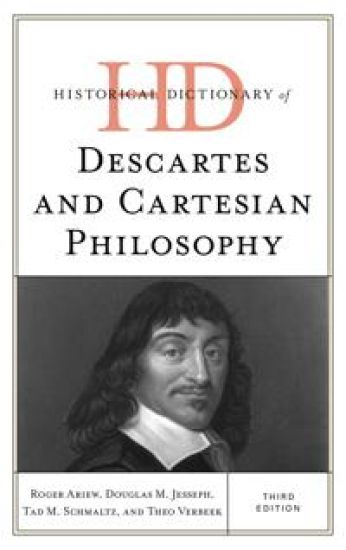
Historical Dictionary of Descartes and Cartesian Philosophy

Historical Dictionary of Descartes and Cartesian Philosophy

Roger Ariew; Douglas M. Jesseph; Tad M. Schmaltz; Theo Verbeek

BLOOMSBURY PUBLISHING PLC
2024
sidottu
The Historical Dictionary of Descartes and Cartesian Philosophy, Third Edition, centers on Descartes’ philosophy (considered broadly to include his science and mathematics) in the context of 17th-century thought, with attention being paid to its reception. This is done through a chronology, an introduction, and an extensive bibliography. The dictionary section has more than 400 cross-referenced entries on various concepts in Descartes’ philosophy, science, and mathematics, as well as biographical entries about the intellectual setting for Descartes’ philosophy and its reception, both with Cartesians and anti-Cartesians. This book is an excellent resource for students, researchers, and anyone wanting to know more about Descartes philosophy.
Spinoza's Theologico-Political Treatise
This book presents the first accessible analysis of Spinoza's Tractatus Theologico-politicus, situating the work in the context of Spinoza’s general philosophy and its 17th-century historical background. According to Spinoza it is impossible for a being to be infinitely perfect and to have a legislative will. This idea, demonstrated in the Ethics, is presupposed and further elaborated in the Tractatus Theologico-politicus. It implies not only that on the level of truth all revealed religion is false, but also that all authority is of human origin and that all obedience is rooted in a political structure. The consequences for authority as it is used in a religious context are explored: the authority of Scripture, the authority of particular interpretations of Scripture, and the authority of the Church. Verbeek also explores the work of two other philosophers of the period - Hobbes and Descartes - to highlight certain peculiarities of Spinoza's position, and to show the contrasts between their theories.
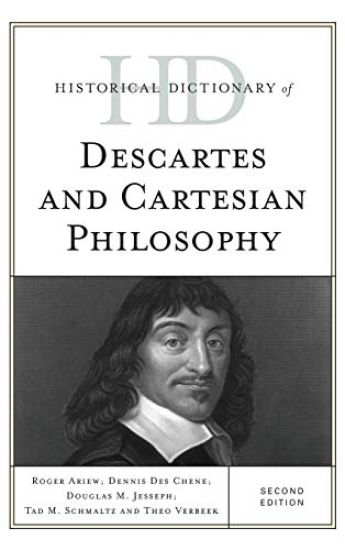
Historical Dictionary of Descartes and Cartesian Philosophy

Historical Dictionary of Descartes and Cartesian Philosophy

Roger Ariew; Dennis Des Chene; Douglas M. Jesseph; Tad M. Schmaltz; Theo Verbeek

Rowman Littlefield
2015
sidottu
Descartes is perhaps most closely associated with the title, “the Father of Modern Philosophy.” Generations of students have been introduced to the study of philosophy through a consideration of his Meditations on First Philosophy. His contributions to natural science is shown by the fact that his physics, as promulgated by the Cartesians, played a central role in the debates after his death over Isaac Newton’s theory of gravitation. Descartes also made major contributions to the field of analytic geometry; we still speak today of “Cartesian coordinates” and the “Cartesian product.” This second edition of Historical Dictionary of Descartes and Cartesian Philosophy covers the history through a chronology, an introductory essay, and an extensive bibliography. The dictionary section has over 300 cross-referenced entries on various concepts in Descartes’ philosophy, science, and mathematics, as well as biographical entries about the intellectual setting for Descartes’ philosophy and its reception, both with Cartesians and anti-Cartesians. This book is an excellent access point for students, researchers, and anyone wanting to know more about Descartes.
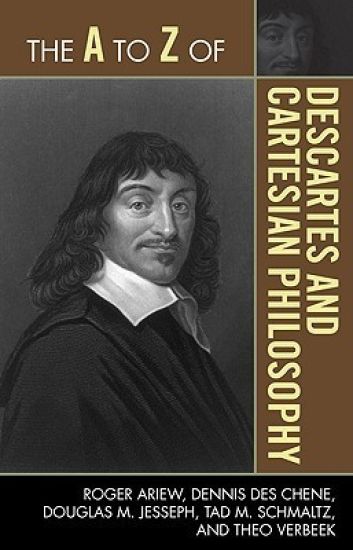
The A to Z of Descartes and Cartesian Philosophy

The A to Z of Descartes and Cartesian Philosophy

Roger Ariew; Dennis Des Chene; Douglas M. Jesseph; Tad M. Schmaltz; Theo Verbeek

Scarecrow Press
2010
nidottu
The A to Z of Descartes and Cartesian Philosophy includes many entries on Descartes's writings, concepts, and findings. Since it is historical, there are other entries on those who supported him, those who criticized him, those who corrected him, and those who together formed one of the major movements in philosophy, Cartesianism. To better understand the period, the authors drew up a brief chronology, and to see how Descartes and Cartesianism fit into the general picture, they have written an introduction and a biography. Since everything cannot be summed up in one volume, a bibliography directs readers to numerous other sources on issues of particular interest.
Spinoza's Theologico-Political Treatise

Spinoza's Theologico-Political Treatise

Theo Verbeek

Ashgate Publishing Limited
2003
sidottu
This book presents the first accessible analysis of Spinoza's Tractatus Theologico-politicus, situating the work in the context of Spinoza’s general philosophy and its 17th-century historical background. According to Spinoza it is impossible for a being to be infinitely perfect and to have a legislative will. This idea, demonstrated in the Ethics, is presupposed and further elaborated in the Tractatus Theologico-politicus. It implies not only that on the level of truth all revealed religion is false, but also that all authority is of human origin and that all obedience is rooted in a political structure. The consequences for authority as it is used in a religious context are explored: the authority of Scripture, the authority of particular interpretations of Scripture, and the authority of the Church. Verbeek also explores the work of two other philosophers of the period - Hobbes and Descartes - to highlight certain peculiarities of Spinoza's position, and to show the contrasts between their theories.