Kirjojen hintavertailu – 12 859 828 kirjaa ja 27 kauppaa

Kirjailija

Theodor Mommsen

Kirjat ja teokset yhdessä paikassa: 367 kirjaa, julkaisuja vuosilta 1876–2026, suosituimpiin kuuluu The History of Rome ... Translated with ... additions, by W. P. Dickson. With a preface by L. Schmitz. (Index, etc.).. Vertaile teosten hintoja ja tarkista saatavuus suomalaisista kirjakaupoista.

Nimi esiintyy myös muodoissa: Théodor Mommsen

367 kirjaa

Kirjojen julkaisuvuodet: 1876–2026.

The History of Rome

The History of Rome

Theodor Mommsen

Cambridge University Press
2010
pokkari
The classical historian Theodor Mommsen (1817–1903) published his History of Rome between 1854 and 1856. His work was received with widespread acclaim by the scholarly community and the reading public. In 1902, in recognition of this monumental work, Mommsen was awarded the Nobel Prize for Literature and acclaimed as 'the greatest living master of the art of historical writing'. Mommsen rejected traditional Enlightenment accounts, which glorified ancient Rome; instead, guided by a new and rigorous criticism of sources, he began the demythologisation of Roman history. In a vivacious and engaging style, using modern terms to express classical ideas, Mommsen drew bold parallels between the nineteenth century and classical Rome. Volume 2 covers the period from the unification of Italy to the subjugation of Carthage and the Greek States. This English translation, first published in 1862, is based on the German third edition (1861).
The History of Rome

The History of Rome

Theodor Mommsen

Cambridge University Press
2010
pokkari
The classical historian Theodor Mommsen (1817–1903) published his History of Rome between 1854 and 1856. His work was received with widespread acclaim by the scholarly community and the reading public. In 1902, in recognition of this monumental work, Mommsen was awarded the Nobel Prize for Literature and acclaimed as 'the greatest living master of the art of historical writing'. Mommsen rejected traditional Enlightenment accounts, which glorified ancient Rome; instead, guided by a new and rigorous criticism of sources, he began the demythologisation of Roman history. In a vivacious and engaging style, using modern terms to express classical ideas, Mommsen drew bold parallels between the nineteenth century and classical Rome. Volume 1 begins with Rome's earliest origins and ends with the unification of Italy; it contains separate chapters on religion, law and justice, art, and writing. This 1862 translation is based on the German third edition (1861).
The History of Rome

The History of Rome

Theodor Mommsen

Cambridge University Press
2010
pokkari
The classical historian Theodor Mommsen (1817–1903) published his monumental History of Rome between 1854 and 1856. His work was received with widespread acclaim by the scholarly community and the reading public. In 1902 Mommsen was awarded the Nobel Prize for Literature and acclaimed as 'the greatest living master of the art of historical writing'. Mommsen rejected traditional Enlightenment accounts, which glorified ancient Rome; instead, guided by a new and rigorous criticism of sources, Mommsen began the demythologisation of Roman history. In a vivacious and engaging style, Mommsen drew bold parallels between the nineteenth century and classical Rome. Volume 3 covers the turbulent period from the reforms of Tiberius Gracchus to the death of Sulla, with separate chapters on nationality, religion and education, and the Roman economy. This English translation, first published in 1863, is based on the German third edition (1861).
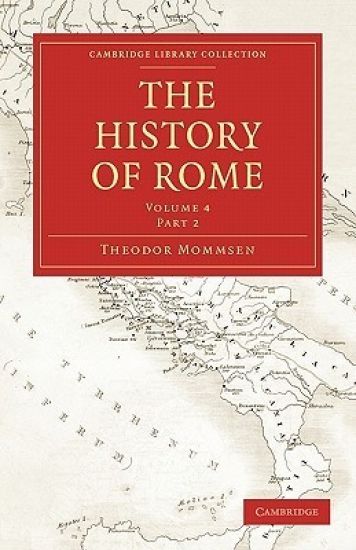
The History of Rome

The History of Rome

Theodor Mommsen

Cambridge University Press
2010
pokkari
The classical historian Theodor Mommsen (1817–1903) published his monumental History of Rome between 1854 and 1856. His work was received with widespread acclaim by the scholarly community and the reading public. In 1902 Mommsen was awarded the Nobel Prize for Literature and acclaimed as 'the greatest living master of the art of historical writing'. Mommsen rejected traditional Enlightenment accounts, which glorified ancient Rome; instead, guided by a new and rigorous criticism of sources, he began the demythologisation of Roman history. In a vivacious and engaging style, Mommsen drew bold parallels between the nineteenth century and classical Rome. Volume 4 covers the establishment of the military monarchy; this English translation, first published in 1866, corresponds to the fourth edition of the German third volume. Part 1 begins with the death of Sulla and ends with the subjugation of the West.
Römisches Staatsrecht

Römisches Staatsrecht

Theodor Mommsen

Cambridge University Press
2010
pokkari
Theodor Mommsen's influential multi-volume work, first published between 1871 and 1888, is a systematic treatment of the intricate workings of the Roman state. The renowned German scholar proposed an original and sometimes controversial understanding of Roman institutions, based around the categories of nineteenth-century constitutional law. The Romans themselves never actually codified their complicated body of law, but by applying a historical approach to describe the development of Roman law Mommsen succeeds in making it more accessible to the reader. He systematises the many diverse legal elements upon which the Roman constitution was based and offers a coherent reading of it. In Volume 1 Mommsen focuses on the system of local government and describes in detail how it functioned. He explains the protection offered by the Pontifex maximus and the authority held by the civil and criminal courts, as well as the civil rights given to each community.
Römisches Staatsrecht

Römisches Staatsrecht

Theodor Mommsen

Cambridge University Press
2010
pokkari
Theodor Mommsen's influential multi-volume work, first published between 1871 and 1888, is a systematic treatment of the intricate workings of the Roman state. The renowned German scholar proposed an original and sometimes controversial understanding of Roman institutions, based around the categories of nineteenth-century constitutional law. The Romans themselves never actually codified their complicated body of law, but by applying a historical approach to describe the development of Roman law Mommsen succeeds in making it more accessible to the reader. He systematises the many diverse legal elements upon which the Roman constitution was based and offers a coherent reading of it. In Volume 2, Part 1 the author focuses on individual roles and appointments within the legislature, from the pontifex and the consuls to the tribune and the questors, as well as legates and other officials.
Römisches Staatsrecht

Römisches Staatsrecht

Theodor Mommsen

Cambridge University Press
2010
pokkari
Theodor Mommsen's influential multi-volume work, first published between 1871 and 1888, is a systematic treatment of the intricate workings of the Roman state. The renowned German scholar proposed an original and sometimes controversial understanding of Roman institutions, based around the categories of nineteenth-century constitutional law. The Romans themselves never actually codified their complicated body of law, but by applying a historical approach to describe the development of Roman law Mommsen succeeds in making it more accessible to the reader. He systematises the many diverse legal elements upon which the Roman constitution was based and offers a coherent reading of it. In Volume 2, Part 2 Mommsen explains the origins and development of the Principate (the office of the Roman emperor), and describes the role of the imperial household. He also covers the tribunal court and the institutions responsible for governing Rome and Italy.