Kirjojen hintavertailu – 12 859 824 kirjaa ja 27 kauppaa
Kirjailija
Theodore Winthrop
Kirjat ja teokset yhdessä paikassa: 60 kirjaa, julkaisuja vuosilta 1970–2026, suosituimpiin kuuluu The Canoe and the Saddle, By: Theodore Winthrop: This work is subtitled "Adventures Among the Northwestern Rivers and Forests". It is an account of. Vertaile teosten hintoja ja tarkista saatavuus suomalaisista kirjakaupoista.
This is a work of fiction. The plot of the novel takes place chiefly in New York during the American Revolutionary War. This work was published posthumously in 1862..................... Major Theodore Woolsey Winthrop (September 22, 1828 - June 10, 1861) was a writer, lawyer, and world traveller. He was one of the first Union officers killed in the American Civil War. Biography: Winthrop was born in New Haven, Connecticut. He was descended through his father from Governor John Winthrop and through his mother from George (Joris) Woolsey, one of the earliest settlers of New Amsterdam, Thomas Cornell (settler) and Jonathan Edwards. He graduated in 1848 from Yale University, where his uncle Theodore Dwight Woolsey was President and he was a member of the Phi Chapter of the Delta Kappa Epsilon Fraternity, he travelled for a year in Great Britain and Europe and then through the United States. After contributing to periodicals, short sketches, and stories, which attracted little attention, Winthrop enlisted in the 7th Regiment, New York State Militia, an early volunteer unit of the Federal Army that answered President Abraham Lincoln's call for troops in 1861. He wrote a popular essay about the experience titled "Our March to Washington." He was appointed Major and soon became an aide-de-camp to Maj. Gen. Benjamin Butler, commander of the Department of Virginia headquartered at Fort Monroe. Battle of Big Bethel: At the Battle of Big Bethel on June 10, 1861, he volunteered for General Ebenezer W. Peirce's staff and drew up a crude plan of battle. After a Federal attack to the enemy right flank was foiled, Winthrop led an ill-fated assault on the Confederate left held by four companies of the 1st Regiment North Carolina Infantry, under the command of Colonel (later Lieutenant General) Daniel Harvey Hill. In the heat of battle, Major Winthrop leapt onto the trunk of a fallen tree and reportedly yelled, "One more charge boys, and the day is ours." Soon thereafter, he was killed by a musket ball to the heart and became the first casualty of rank for the Northern side in what history regards as the first pitched land battle of the Civil War. Ironically, ardent abolitionist Winthrop may have been shot by the African-American slave of a Confederate officer in the 1st North Carolina Infantry. (Three different soldiers, as well as this slave, referred to in the records only as "Sam," claimed to have killed him.)..........................
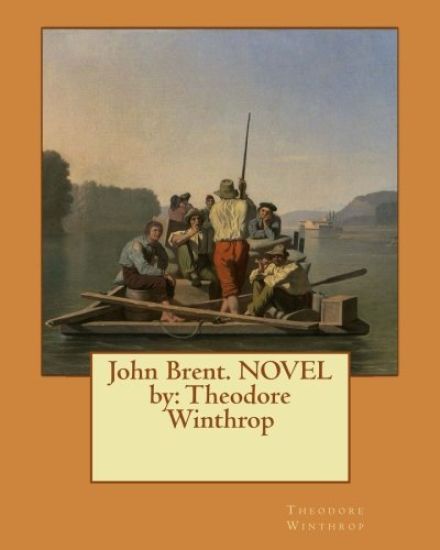
This work is a work of fiction. The plot of the novel takes place in the United States in the middle of the 19th century. The scenes range from gold-rush era California, across the American West, and across the Atlantic to London. The work was published posthumously in 1865................... Major Theodore Woolsey Winthrop (September 22, 1828 - June 10, 1861) was a writer, lawyer, and world traveller. He was one of the first Union officers killed in the American Civil War. Biography: Winthrop was born in New Haven, Connecticut. He was descended through his father from Governor John Winthrop and through his mother from George (Joris) Woolsey, one of the earliest settlers of New Amsterdam, Thomas Cornell (settler) and Jonathan Edwards. He graduated in 1848 from Yale University, where his uncle Theodore Dwight Woolsey was President and he was a member of the Phi Chapter of the Delta Kappa Epsilon Fraternity, he travelled for a year in Great Britain and Europe and then through the United States. After contributing to periodicals, short sketches, and stories, which attracted little attention, Winthrop enlisted in the 7th Regiment, New York State Militia, an early volunteer unit of the Federal Army that answered President Abraham Lincoln's call for troops in 1861. He wrote a popular essay about the experience titled "Our March to Washington." He was appointed Major and soon became an aide-de-camp to Maj. Gen. Benjamin Butler, commander of the Department of Virginia headquartered at Fort Monroe. Battle of Big Bethel: At the Battle of Big Bethel on June 10, 1861, he volunteered for General Ebenezer W. Peirce's staff and drew up a crude plan of battle. After a Federal attack to the enemy right flank was foiled, Winthrop led an ill-fated assault on the Confederate left held by four companies of the 1st Regiment North Carolina Infantry, under the command of Colonel (later Lieutenant General) Daniel Harvey Hill. In the heat of battle, Major Winthrop leapt onto the trunk of a fallen tree and reportedly yelled, "One more charge boys, and the day is ours." Soon thereafter, he was killed by a musket ball to the heart and became the first casualty of rank for the Northern side in what history regards as the first pitched land battle of the Civil War. Ironically, ardent abolitionist Winthrop may have been shot by the African-American slave of a Confederate officer in the 1st North Carolina Infantry. (Three different soldiers, as well as this slave, referred to in the records only as "Sam," claimed to have killed him.).....................
This work is a work of fiction. The scene of the novel is New York City in the mid-19th century. The work was published posthumously in 1862......... Major Theodore Woolsey Winthrop (September 22, 1828 - June 10, 1861) was a writer, lawyer, and world traveller. He was one of the first Union officers killed in the American Civil War. Biography: Winthrop was born in New Haven, Connecticut. He was descended through his father from Governor John Winthrop and through his mother from George (Joris) Woolsey, one of the earliest settlers of New Amsterdam, Thomas Cornell (settler) and Jonathan Edwards. He graduated in 1848 from Yale University, where his uncle Theodore Dwight Woolsey was President and he was a member of the Phi Chapter of the Delta Kappa Epsilon Fraternity, he travelled for a year in Great Britain and Europe and then through the United States. After contributing to periodicals, short sketches, and stories, which attracted little attention, Winthrop enlisted in the 7th Regiment, New York State Militia, an early volunteer unit of the Federal Army that answered President Abraham Lincoln's call for troops in 1861. He wrote a popular essay about the experience titled "Our March to Washington." He was appointed Major and soon became an aide-de-camp to Maj. Gen. Benjamin Butler, commander of the Department of Virginia headquartered at Fort Monroe. Battle of Big Bethel: At the Battle of Big Bethel on June 10, 1861, he volunteered for General Ebenezer W. Peirce's staff and drew up a crude plan of battle. After a Federal attack to the enemy right flank was foiled, Winthrop led an ill-fated assault on the Confederate left held by four companies of the 1st Regiment North Carolina Infantry, under the command of Colonel (later Lieutenant General) Daniel Harvey Hill. In the heat of battle, Major Winthrop leapt onto the trunk of a fallen tree and reportedly yelled, "One more charge boys, and the day is ours." Soon thereafter, he was killed by a musket ball to the heart and became the first casualty of rank for the Northern side in what history regards as the first pitched land battle of the Civil War. Ironically, ardent abolitionist Winthrop may have been shot by the African-American slave of a Confederate officer in the 1st North Carolina Infantry. (Three different soldiers, as well as this slave, referred to in the records only as "Sam," claimed to have killed him.)
John Brent is an unchanged, high-quality reprint of the original edition of 1862. Hansebooks is editor of the literature on different topic areas such as research and science, travel and expeditions, cooking and nutrition, medicine, and other genres. As a publisher we focus on the preservation of historical literature. Many works of historical writers and scientists are available today as antiques only. Hansebooks newly publishes these books and contributes to the preservation of literature which has become rare and historical knowledge for the future.
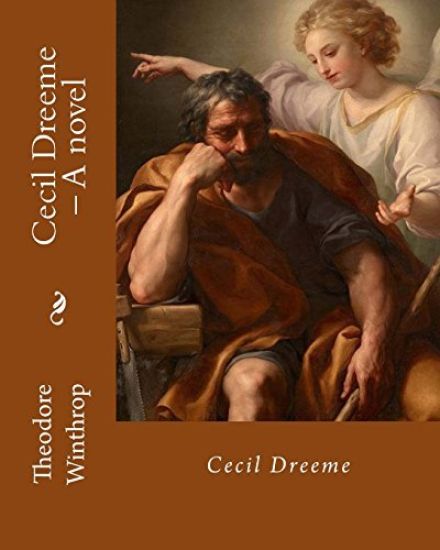
"Heterosexuality, this novel forthrightly claims, is a poor substitute for passionate love between men-and heterosexuality's historical emergence in the nineteenth century is consequently, Cecil Dreeme laments, a grave misfortune."-Christopher Looby, from the Introduction Freshly returned to New York City from his studies abroad, unmoored by news of the apparent suicide of his accomplished childhood friend Clara Denman, and drawn in spite of himself toward the sinister man-about-town Densdeth, Robert Byng is unsettlingly adrift in the city of his birth. Things take an even stranger turn once he finds lodgings in the Gothic halls of Chrysalis College in lower Manhattan. There he meets the mysteriously reclusive Cecil Dreeme, brilliant artist and creature of the night. In Dreeme, Byng finds a friend unlike any he has known before. But is Cecil the man he claims to be, and can their friendship survive the dangers they will soon face together? Issued posthumously in 1861, Cecil Dreeme was the first published novel of Theodore Winthrop, who has the unfortunate distinction of being one of the first Union officers killed in the line of duty during the Civil War. Newly edited by Christopher Looby, it is a very queer book indeed.