Kirjojen hintavertailu – 12 903 725 kirjaa ja 27 kauppaa

Kirjailija

Theresa M. Collins

Kirjat ja teokset yhdessä paikassa: 3 kirjaa, julkaisuja vuosilta 2007–2016, suosituimpiin kuuluu Otto Kahn. Vertaile teosten hintoja ja tarkista saatavuus suomalaisista kirjakaupoista.

3 kirjaa

Kirjojen julkaisuvuodet: 2007–2016.

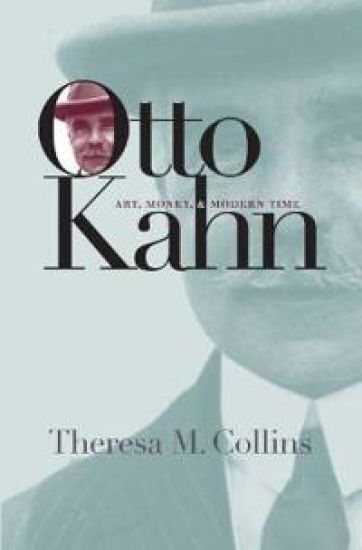
Otto Kahn

Otto Kahn

Theresa M. Collins

The University of North Carolina Press
2014
nidottu

Halvin toimitettuna 47,90 €

In the early decades of the twentieth century, almost everyone in modern theater, literature, or film knew of Otto Kahn (1867-1934), and those who read the financial press or followed the news from Wall Street could scarcely have missed his name. A partner at one of America's premier private banks, he played a leading role in reorganizing the U. S. railroad system and supporting the Allied war effort in World War I. The German-Jewish Kahn was also perhaps the most influential patron of the arts the nation has ever seen: he helped finance the Metropolitan Opera, brought the Ballets Russes to America, and bankrolled such promising young talent as poet Hart Crane, the Provincetown Players, and the editors of the Little Review. This book is the full-scale biography Kahn has long deserved. Theresa Collins chronicles Kahn's life and times and reveals his singular place at the intersection of capitalism and modernity. Drawing on research in private correspondence, congressional testimony, and other sources, she paints a fascinating portrait of the figure whose seemingly incongruous identities as benefactor and banker inspired the New York Times to dub him the ""Man of Velvet and Steel.""
The Papers of Thomas A. Edison

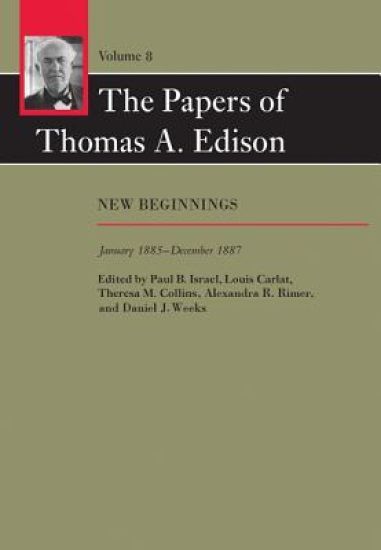
The Papers of Thomas A. Edison

Thomas A. Edison; Louis Carlat; Theresa M. Collins; Alexandra R. Rimer; Daniel J. Weeks

Johns Hopkins University Press
2016
sidottu
Two decades after the American Civil War, no name was more closely associated with the nation's inventive and entrepreneurial spirit than that of Thomas Edison. The restless changes of those years were reflected in the life of America's foremost inventor. Having cemented his reputation with his electric lighting system, Edison had decided to withdraw partially from that field. At the start of 1885, newly widowed at mid-life with three young children, he launched into a series of personal and professional migrations, setting in motion chains of events that would influence his work and fundamentally reshape his life. Edison's inventive activities took off in new directions, flowing between practical projects (such as wireless and high-capacity telegraph systems) and futuristic ones (exploring forms of electromagnetic energy and the convertibility of one to another). Inside of two years, he would travel widely, marry the daughter of a prominent industrialist and religious educator, leave New York City for a grand home in a sylvan suburb, and construct a winter laboratory and second home in Florida. Edison's family and interior life are remarkably visible at this moment; his papers include the only known diary in which he recorded personal thoughts and events. By 1887, the familiar rhythms of his life began to reassert themselves in his new settings; the family faded from view as he planned, built, and occupied a New Jersey laboratory complex befitting his status. The eighth volume of the series, New Beginnings includes 358 documents (chosen from among thousands) that are the most revealing and representative of Edison's work, life, and place in American culture in these years. Illustrated with hundreds of Edison's drawings, these documents are further illuminated by meticulous research on a wide range of sources, including the most recently digitized newspapers and journals of the day.
Angels in the American Theater

Angels in the American Theater

Stephen D. Berwind; Melanie Blood; Theresa M. Collins; David A. Crespy; Dan Friedman; Alexis Greene; Jeffrey Eric Jenkins; Bruce Kirle; Sheila McNerney Anderson

Southern Illinois University Press
2007
nidottu
Angels in the American Theater: Patrons, Patronage, and Philanthropy examines the significant roles that theater patrons have played in shaping and developing theater in the United States. Because box office income rarely covers the cost of production, other sources are vital. Angels - financial investors and backers - have a tremendous impact on what happens on stage, often determining with the power and influence of their money what is conceived, produced, and performed. But in spite of their influence, very little has been written about these philanthropists. Composed of sixteen essays and fifteen illustrations, ""Angels in the American Theater"" explores not only how donors became angels, but also their backgrounds, motivations, policies, limitations, support, and successes and failures. Subjects range from millionaires Otto Kahn and the Lewisohn sisters to foundation giants Ford, Rockefeller, Disney, and Clear Channel. The first book to focus on theater philanthropy, ""Angels in the American Theater"" employs both a historical and a chronological format and focuses on individual patrons, foundations, and corporations.