Kirjojen hintavertailu – 12 859 818 kirjaa ja 27 kauppaa

Kirjailija

Theresa M. Towner

Kirjat ja teokset yhdessä paikassa: 5 kirjaa, julkaisuja vuosilta 2006–2023, suosituimpiin kuuluu The Cambridge Introduction to William Faulkner. Vertaile teosten hintoja ja tarkista saatavuus suomalaisista kirjakaupoista.

5 kirjaa

Kirjojen julkaisuvuodet: 2006–2023.

The Cambridge Introduction to William Faulkner

The Cambridge Introduction to William Faulkner

Theresa M. Towner

Cambridge University Press
2008
sidottu
Nobel laureate William Faulkner is one of the most distinctive voices in American literature. Known for his opaque prose style and his evocative depictions of life in the American South, he is recognised as one of the most important authors of the twentieth century. This introductory book provides students and readers of Faulkner with a clear overview of the life and work of one of America's most prolific writers of fiction. His nineteen novels, including The Sound and the Fury, As I Lay Dying, Go Down, Moses and Absalom, Absalom! are discussed in detail, as are his major short stories and nonfiction. Focused on the works themselves, but also providing useful information about their critical reception, this introduction is an accessible guide to Faulkner's challenging and complex oeuvre.
The Cambridge Introduction to William Faulkner

The Cambridge Introduction to William Faulkner

Theresa M. Towner

Cambridge University Press
2008
pokkari
Nobel laureate William Faulkner is one of the most distinctive voices in American literature. Known for his opaque prose style and his evocative depictions of life in the American South, he is recognised as one of the most important authors of the twentieth century. This introductory book provides students and readers of Faulkner with a clear overview of the life and work of one of America's most prolific writers of fiction. His nineteen novels, including The Sound and the Fury, As I Lay Dying, Go Down, Moses and Absalom, Absalom! are discussed in detail, as are his major short stories and nonfiction. Focused on the works themselves, but also providing useful information about their critical reception, this introduction is an accessible guide to Faulkner's challenging and complex oeuvre.
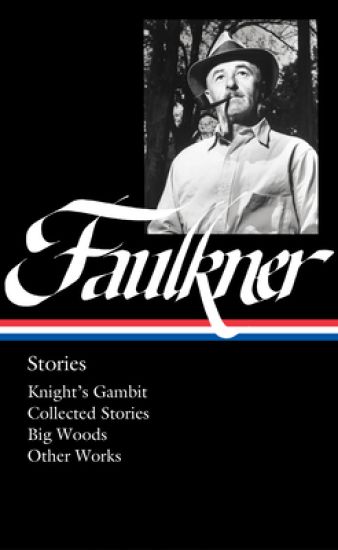
William Faulkner: Stories (loa #375)

William Faulkner: Stories (loa #375)

William Faulkner; Theresa M. Towner

THE LIBRARY OF AMERICA
2023
sidottu
Library of America caps its six-volume edition of William Faulkner's works with a volume gathering of all the stories he collected in his lifetime, in corrected texts Faulkner called the short story "the most demanding form after poetry" and wrote to an editor that "even to a collection of short stories, form, integration, is as important as to a novel--an entity of its own, single, set for one pitch, contrapuntal in integration, toward one end, one finale." Faulkner was a major practitioner of the short story form and keenly sensitive to its aesthetic demands. The Library of America edition of the collected writings of William Faulkner culminates with this volume presenting all the stories the author gathered for his book collections, in newly edited and authoritative texts. This is Faulkner as he was meant to be read. Faulkner's monumental Collected Stories (1950) presented the author's first two collections, These Thirteen (1931) and Doctor Martino (1934), along with seventeen new stories, all carefully selected and arranged by the author; Knight's Gambit (1949) collected six stories about attorney Gavin Stevens' detective work; and in Big Woods (1955) Faulkner gathered four hunting stories connected with interstitial material. This volume presents these three collections as carefully arranged by Faulkner, with new authoritative and corrected texts that best represent Faulkner's intentions for the stories. Here are such well-known stories as "A Rose for Emily," "Barn Burning," and "A Bear Hunt," as well as some of his most poetic--"Carcassone"--and less known, such as "The Tall Men," "Elly," and "Uncle Willy." Also included are Faulkner's stories "The Hound" (collected in Doctor Martino but omitted by the author from Collected Stories), "Spotted Horses," Faulkner's fictionalized autobiographical essay "Mississippi," as well as his Nobel Prize acceptance speech and helpful explanatory notes by Faulkner scholar Theresa M. Towner.
Faulkner on the Color Line

Faulkner on the Color Line

Theresa M. Towner

University Press of Mississippi
2007
nidottu
This study argues that Faulkner's writings about racial matters interrogated rather than validated his racial beliefs and that, in the process of questioning his own ideology, his fictional forms extended his reach as an artist. After winning the Nobel Prize in 1950, Faulkner wrote what critics term ""his later novels."" These have been almost uniformly dismissed, with the prevailing view being that as he became a more public figure, his fiction became a platform rather than a canvas. Within this context Faulkner on the Color Line redeems the novels in the final phase of his career by interpreting them as Faulkner's way of addressing the problem of race in America. They are seen as a series of formal experiments Faulkner deliberately attempted as he examined the various cultural functions of narrative, most particularly those narratives that enforce American racial ideology. The first chapters look at the ways in which the ability to assert oneself verbally informs matters of individual and cultural identity in both the widely studied works of Faulkner's major phase and those in his later career. Later chapters focus on the last works, providing detailed readings of Intruder in the Dust, Requiem for a Nun, the Snopes trilogy, A Fable, and The Reivers. The book examines Faulkner as he confronted the vexing questions of race in these novels and assesses the identity of Faulkner as the Nobel Prize winner who claimed on many occasions that he was ""tired,"" maybe ""written out."" In his decision not to speak in the identity of the black people represented in his fiction, in his decision to write instead about the complexities of all racial constructions, he produced a host of characters suffering within the rigid protocols on race that had been enforced in America for centuries. As a private, white individual, he could never be other than what he was. Rather than attempt to reconcile Faulkner the public man with the private one, however, this study concludes that through his fiction Faulkner the artist questioned himself and came to understand others across the color line.
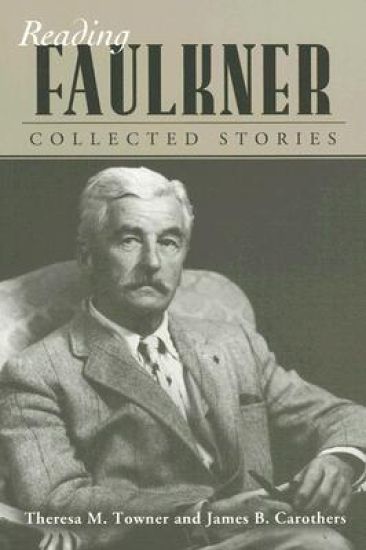
Reading Faulkner

Reading Faulkner

Theresa M. Towner; James B. Carothers

University Press of Mississippi
2006
nidottu
William Faulkner once called the short story ""the most demanding form after poetry."" In that form, he achieved splendid success. He wrote over a hundred short stories, published nearly all of them during his lifetime, and has become one of the most frequently anthologized writers in the genre. Countless readers of Faulkner have first entered his world through one of the forty-two doors in Collected Stories. Reading Faulkner: Collected Stories attempts to make the process of reading America's major modern writer less daunting. It is a useful guide to Faulkner's allusions, distinctly southern phrases, difficult words, and historical contexts, as well as to the intricacies of the prose. Arranged according to the Vintage edition's table of contents, the annotations provide information about the material, political, and literary cultures that found their way into Faulkner's greatest short fiction, including commentary on such classics as ""A Rose for Emily"" and ""Barn Burning."" Information ranges from descriptions of 1930s farm implements and Great War airplanes to analyses of real estate deals and racial protocols. The authors offer explications of Faulkner's allusions to other artists and thinkers from Christopher Marlowe to Voltaire to T. S. Eliot. An excellent companion volume to Collected Stories for beginning and experienced readers of Faulkner, Reading Faulkner: Collected Stories allows a fascinating glimpse of Faulkner's mind at work on the materials of the world around him. Theresa M. Towner is associate professor of literary studies at the University of Texas at Dallas and the author of Faulkner on the Color Line: The Later Novels (University Press of Mississippi). James B. Carothers, professor of English at the University of Kansas, is the author of William Faulkner's Short Stories and was a founding editor of the Faulkner Journal.