Kirjojen hintavertailu – 12 859 828 kirjaa ja 27 kauppaa

Kirjailija

Thich Nhat Hanh

Kirjat ja teokset yhdessä paikassa: 308 kirjaa, julkaisuja vuosilta 1987–2027, suosituimpiin kuuluu Wonder. Vertaile teosten hintoja ja tarkista saatavuus suomalaisista kirjakaupoista.

Nimi esiintyy myös muodoissa: Thich Nhất Hạnh

308 kirjaa

Kirjojen julkaisuvuodet: 1987–2027.

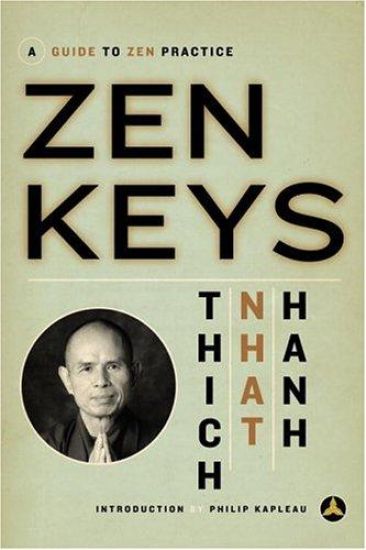
Zen Keys: A Guide to Zen Practice

Zen Keys: A Guide to Zen Practice

Thich Nhat Hanh

Harmony/Rodale/Convergent
1994
nidottu

Halvin toimitettuna 20,20 €

Thich Nhat Hanh brings his warmth and clarity to this unique explication of Zen Buddhism. Beginning with a discussion of daily life in a Zen monastery, Nhat Hanh illustrates the character of Zen as practiced in Vietnam, and gives the reader clear explanations of the central elements of Zen practice and philosophy. Thorough attention is given to concepts such as Awareness and Impermanence, and to contemporary issues such as the conflicts between modern technology and spirituality. The final section includes a set of 43 koans from the 13th century Vietnamese master, Tran Thai Tong, which are translated here for the first time into English. Originally published in 1974, Zen Keys has been unavailable for several years but is now reissued by popular demand. Readers will find it as fresh today as when it was first written, and will be struck by the timelessness of its insights. What makes this work particularly compelling is that Nhat Hanh is able to invigorate what in other presentations may seem like empty abstract principles. The example he has set in his own life as a relentless advocate for peace brings strength and a realistic understanding to idealistic Buddhist goals. In Zen Keys, Thich Nhat Hanh presents the philosophy which has enabled him to be mindful of peace in every moment. An excellent introduction from Philip Kapleau (author of the classic Three Pillars Of Zen ) provides background on the emerging American Zen tradition.

Transformation And Healing

Transformation And Healing

Thich Nhat Hanh

Ebury Press
1993
pokkari

Halvin toimitettuna 31,60 €

Transformation and Healing present the ancient teaching of the Buddha on how to maintain mindfulness. The Four Methods are Mindfulness of the body, Mindfulnesss of the feelings, Mindfulness of the mind and Mindfulness of the objects of the mind.
Sun My Heart

Sun My Heart

Thich Nhat Hanh

Ebury Press
1992
pokkari
Peace activist, poet, scholar and Zen master Thich Nhat Hanh invites us to welcome The Sun My Heart into our lives like a friend. Written as the sequel to The Miracle of Mindfulness, this simple, compassionate book offers warmth and wisdom drawn from everyday anecdotes, Buddhist psychology and even contemporary physics.
Breathe! You Are Alive

Breathe! You Are Alive

Thich Nhat Hanh

Ebury Press
1992
pokkari

Halvin toimitettuna 16,20 €

He explains the methods of conscious breathing that are presented in the sutra and offers exercises for practising those methods today. Moreover, his engaging commentary shows the profound nourishment that can be available to us when we slow down and get in touch with our breathing.
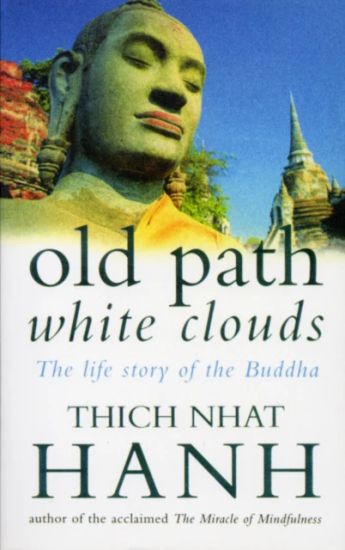
Old Path White Clouds

Old Path White Clouds

Thich Nhat Hanh

Ebury Press
1992
pokkari

Halvin toimitettuna 24,40 €

Seen partly through the eyes of the Buddha himself and partly through those of Svasti, the buffalo boy, Old Path White Clouds brings the Buddha closer to us as we journey with him on his path to enlightenment and nirvana.
Being Peace

Being Peace

Thich Nhat Hanh

Ebury Publishing
1992
pokkari
In this classic collection of lectures, Buddhist monk, scholar, poet and peace activist Thich Nhat Hanh shows us that suffering is not enough; for in order to achieve peace, we must be peace. We must learn to smile at the wonders that surround us every day, for if we cannot smile, the world will not have peace.
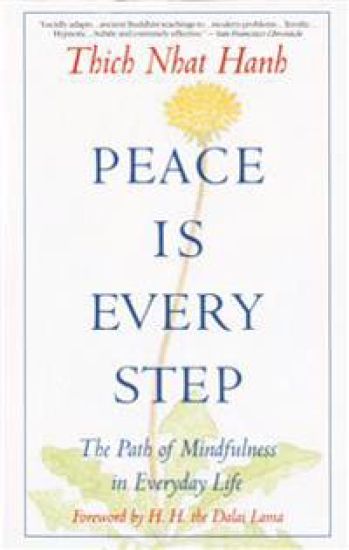
Peace is Every Step: The Path of Mindfulness in Everyday Life

Peace is Every Step: The Path of Mindfulness in Everyday Life

Thich Nhat Hanh

BANTAM
1992
nidottu

Halvin toimitettuna 20,30 €

World-renowned Zen master, spiritual leader, and author Thich Nhat Hanh shows us how to make positive use of the very situations that usually pressure and antagonize us. For him a ringing telephone can be a signal to call us back to our true selves. Dirty dishes, red lights, and traffic jams are spiritual friends on the path to “mindfulness”—the process of keeping our consciousness alive to our present experience and reality. The most profound satisfactions, the deepest feelings of joy and completeness lie as close at hand as our next aware breath and the smile we can form right now. Lucidly and beautifully written, Peace Is Every Step contains commentaries and meditations, personal anecdotes and stories from Nhat Hanh’s experiences as a peace activist, teacher, and community leader. It begins where the reader already is—in the kitchen, office, driving a car, walking a part—and shows how deep meditative presence is available now. Nhat Hanh provides exercises to increase our awareness of our own body and mind through conscious breathing, which can bring immediate joy and peace. Nhat Hanh also shows how to be aware of relationships with others and of the world around us, its beauty and also its pollution and injustices. The deceptively simple practices of Peace Is Every Stepencourage the reader to work for peace in the world as he or she continues to work on sustaining inner peace by turning the “mindless” into the mindFUL.
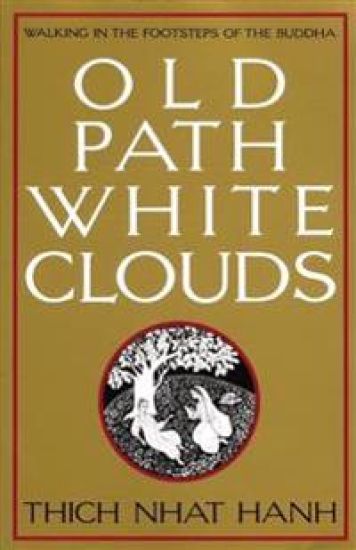
Old Path White Clouds: Walking in the Footsteps of the Buddha
Zen master Thich Nhat Hanh presents the life and teachings of Gautama Buddha, drawn directly from 24 Pali, Sanskrit, and Chinese sources. Retold in Thich Nhat Hanh's inimitably beautiful style, this book traces the Buddha's life over the course of 80 years--partly through the eyes of Svasti, the buffalo boy, and partly through the eyes of the Buddha himself. Old Path White Clouds is a classic of religious literature. "I have not avoided including the various difficulties the Buddha encountered, both from his own disciples and in relation to the wider society. If the Buddha appears in this book as a man close to us, it is partly due to recounting such difficulties." --Thich Nhat Hanh, from the Afterword