Kirjojen hintavertailu – 12 859 819 kirjaa ja 27 kauppaa

Kirjailija

Thijs Van de Graaf

Kirjat ja teokset yhdessä paikassa: 5 kirjaa, julkaisuja vuosilta 2010–2020, suosituimpiin kuuluu Global Energy Politics. Vertaile teosten hintoja ja tarkista saatavuus suomalaisista kirjakaupoista.

5 kirjaa

Kirjojen julkaisuvuodet: 2010–2020.

Global Energy Politics

Global Energy Politics

Thijs Van de Graaf; Benjamin K. Sovacool

Polity Press
2020
nidottu

Halvin toimitettuna 30,80 €

Ever since the Industrial Revolution energy has been a key driver of world politics. From the oil crises of the 1970s to today’s rapid expansion of renewable energy sources, every shift in global energy patterns has important repercussions for international relations. In this new book, Thijs Van de Graaf and Benjamin Sovacool uncover the intricate ways in which our energy systems have shaped global outcomes in four key areas of world politics: security, the economy, the environment and global justice. Moving beyond the narrow geopolitical focus that has dominated much of the discussion on global energy politics, they also deftly trace the connections between energy, environmental politics, and community activism. The authors argue that we are on the cusp of a global energy shift that promises to be no less transformative for the pursuit of wealth and power in world politics than the historical shifts from wood to coal and from coal to oil. This ongoing energy transformation will not only upend the global balance of power; it could also fundamentally transfer political authority away from the nation state, empowering citizens, regions and local communities. Global Energy Politics will be an essential resource for students of the social sciences grappling with the major energy issues of our times.
Global Energy Politics

Global Energy Politics

Thijs Van de Graaf; Benjamin K. Sovacool

Polity Press
2020
sidottu
Ever since the Industrial Revolution energy has been a key driver of world politics. From the oil crises of the 1970s to today’s rapid expansion of renewable energy sources, every shift in global energy patterns has important repercussions for international relations. In this new book, Thijs Van de Graaf and Benjamin Sovacool uncover the intricate ways in which our energy systems have shaped global outcomes in four key areas of world politics: security, the economy, the environment and global justice. Moving beyond the narrow geopolitical focus that has dominated much of the discussion on global energy politics, they also deftly trace the connections between energy, environmental politics, and community activism. The authors argue that we are on the cusp of a global energy shift that promises to be no less transformative for the pursuit of wealth and power in world politics than the historical shifts from wood to coal and from coal to oil. This ongoing energy transformation will not only upend the global balance of power; it could also fundamentally transfer political authority away from the nation state, empowering citizens, regions and local communities. Global Energy Politics will be an essential resource for students of the social sciences grappling with the major energy issues of our times.
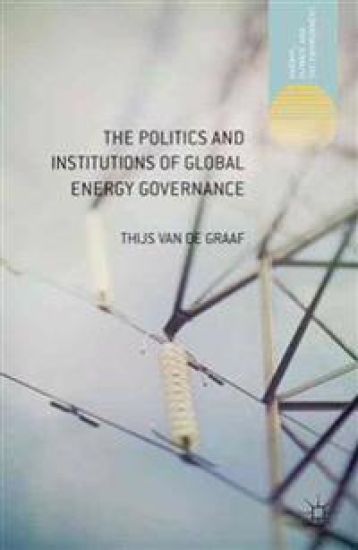
The Politics and Institutions of Global Energy Governance
From climate change over shale gas to the race for the Arctic, energy makes headlines in international politics almost daily. Thijs Van de Graaf argues that energy is in dire need of global governance. He traces the history of international energy cooperation from the notorious 'Seven Sisters' oil-companies cartel to the recent creation of the International Renewable Energy Agency (IRENA). He analyses how international institutions have been created for securing oil rents, coordinating consumer-countries' energy security policies, promoting producer-consumer dialogue, managing regional gas markets, and dealing with energy-related environmental externalities. Drawing on the emerging regime complexity literature, he constructs a novel analytical framework to explain the fragmented architecture of global energy governance, and studies prospects for institutional reform at the International Energy Agency (IEA) and the G8/G20.
Global Energy Governance in a Multipolar World

Global Energy Governance in a Multipolar World

ies Lesage; Thijs Van de Graaf

Ashgate Publishing Limited
2010
sidottu
Multipolar governance permits a number of important states to have significantly more economic and political clout than others, but among them there is hardly any hierarchy. The new energy challenge, with its intricate socio-economic, ecological and international-political considerations, is a multi-dimensional, multi-level and multi-actor issue that requires a minimum of 'central' political steering, because neither the invisible hand of the market, nor unilateral or bilateral power politics are capable to bring about sustainable solutions. Global Energy Governance in a Multipolar World investigates the relationship between the emergence of a multipolar world order and the enormous challenges of global energy governance that the world is facing in the 21st century. It reflects on fundamental questions such as how the main consuming countries can avoid conflict over scarce resources, how they will cooperate to bring about open energy markets, energy conservation and efficiency, and how they can promote renewable energy sources.