Kirjojen hintavertailu – 12 859 828 kirjaa ja 27 kauppaa

Kirjailija

Thomas A. DuBois

Kirjat ja teokset yhdessä paikassa: 10 kirjaa, julkaisuja vuosilta 1995–2025, suosituimpiin kuuluu Sámi Media and Indigenous Agency in the Arctic North. Vertaile teosten hintoja ja tarkista saatavuus suomalaisista kirjakaupoista.

10 kirjaa

Kirjojen julkaisuvuodet: 1995–2025.

Sámi Media and Indigenous Agency in the Arctic North

Sámi Media and Indigenous Agency in the Arctic North

Coppélie Cocq Gelfgren; Thomas A. DuBois

University of Washington Press
2020
sidottu
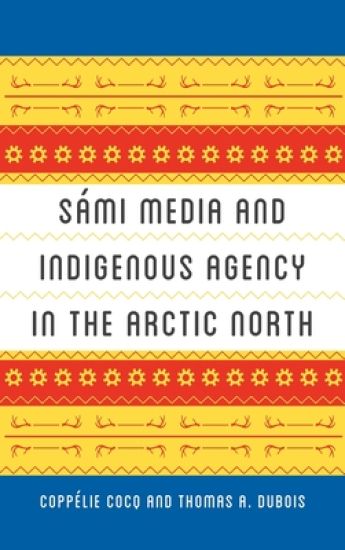
Digital media–GIFs, films, TED Talks, tweets, and more–have become integral to daily life and, unsurprisingly, to Indigenous people's strategies for addressing the historical and ongoing effects of colonization. In Sámi Media and Indigenous Agency in the Arctic North, Thomas DuBois and Coppélie Cocq examine how Sámi people of Norway, Finland, and Sweden use media to advance a social, cultural, and political agenda anchored in notions of cultural continuity and self-determination. Beginning in the 1970s, Sámi have used Sámi-language media—including commercially produced musical recordings, feature and documentary films, books of literature and poetry, and magazines—to communicate a sense of identity both within the Sámi community and within broader Nordic and international arenas. In more contemporary contexts—from YouTube music videos that combine rock and joik (a traditional Sámi musical genre) to Twitter hashtags that publicize protests against mining projects in Sámi lands—Sámi activists, artists, and cultural workers have used the media to undo layers of ignorance surrounding Sámi livelihoods and rights to self-determination. Downloadable songs, music festivals, films, videos, social media posts, images, and tweets are just some of the diverse media through which Sámi activists transform how Nordic majority populations view and understand Sámi minority communities and, more globally, how modern states regard and treat Indigenous populations.
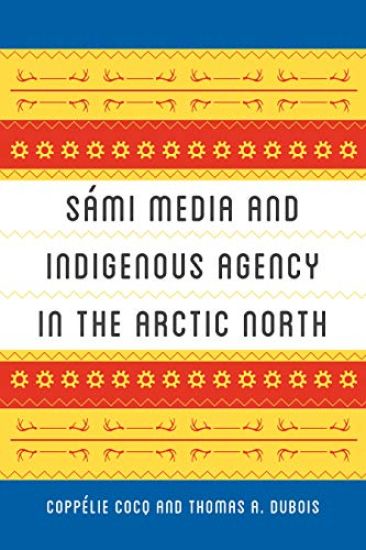
Sámi Media and Indigenous Agency in the Arctic North

Sámi Media and Indigenous Agency in the Arctic North

Coppélie Cocq Gelfgren; Thomas A. DuBois

University of Washington Press
2020
pokkari
Digital media–GIFs, films, TED Talks, tweets, and more–have become integral to daily life and, unsurprisingly, to Indigenous people's strategies for addressing the historical and ongoing effects of colonization. In Sámi Media and Indigenous Agency in the Arctic North, Thomas DuBois and Coppélie Cocq examine how Sámi people of Norway, Finland, and Sweden use media to advance a social, cultural, and political agenda anchored in notions of cultural continuity and self-determination. Beginning in the 1970s, Sámi have used Sámi-language media—including commercially produced musical recordings, feature and documentary films, books of literature and poetry, and magazines—to communicate a sense of identity both within the Sámi community and within broader Nordic and international arenas. In more contemporary contexts—from YouTube music videos that combine rock and joik (a traditional Sámi musical genre) to Twitter hashtags that publicize protests against mining projects in Sámi lands—Sámi activists, artists, and cultural workers have used the media to undo layers of ignorance surrounding Sámi livelihoods and rights to self-determination. Downloadable songs, music festivals, films, videos, social media posts, images, and tweets are just some of the diverse media through which Sámi activists transform how Nordic majority populations view and understand Sámi minority communities and, more globally, how modern states regard and treat Indigenous populations.
Folklore in the Nordic World

Folklore in the Nordic World

Thomas A. DuBois

UNIVERSITY OF WISCONSIN PRESS
2025
nidottu
In seven concise chapters that document both the history of Nordic folkloristics and the ongoing vivacity of Nordic folklore today, Thomas A. DuBois demonstrates how the informal, traditional elements of a culture or subculture are an integral and vibrant part of the Nordic world. From methods of preparing suovabiergu (smoked reindeer meat) in SÁpmi, to celebrating graduation by “running the falls” at Uppsala University in Sweden, to massive folk music festivals in Finland and tales of supernatural visitors bestowing baby names in Iceland, folklore offers unique insights into the everyday life of Nordic society. The study of Nordic folklore began in the nineteenth century, when early folklorists imagined that the true character of a nation could be found among the tales of the peasantry. Today, the theories, tools, and institutions developed by influential folklorists in the Nordic region continue to lead the way in documentation, preservation, and analysis of folklore.
Kulturarv i förändring

Kulturarv i förändring

Marcus Cederström; Thomas A. DuBois; Mattias Frihammar; Britta Zetterström Geschwind; Lars Kaijser; Maja Lagerqvist; Anna Rue

Studentlitteratur AB
2020
nidottu
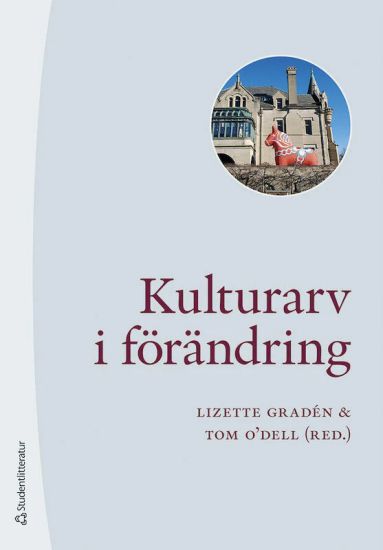
Denna bok undersöker hur kulturarv skapas, i naturlandskap och i stora och små museer i Norden och Nordamerika. Nio forskare inom etnologi, skandinavistik och folkminnesforskning visar utifrån sitt etnografiska fältarbete hur kulturarv formas och omformas i dynamiska processer över tid. Kulturarv formas i nuet, men bygger på det förflutna och besitter kraften att både göra motstånd och staka ut förändringar för framtiden. Författarna visar att kulturarv är något som människor och institutioner skapar, men också något som förändrar kulturskaparnas självuppfattning när de tar ställning till nya former av kulturarv: Vad ska betraktas som ett kulturarv? Av vem? För vem? Och för vilka syften? Kulturarv i förändring vänder sig till studenter i etnologi och kulturvetenskap, till verksamma inom museer och kulturminnesvård, samt till övriga som intresserar sig för frågor om vad kulturarv är och hur det förändras.
Sacred to the Touch

Sacred to the Touch

Thomas A. DuBois

University of Washington Press
2018
pokkari
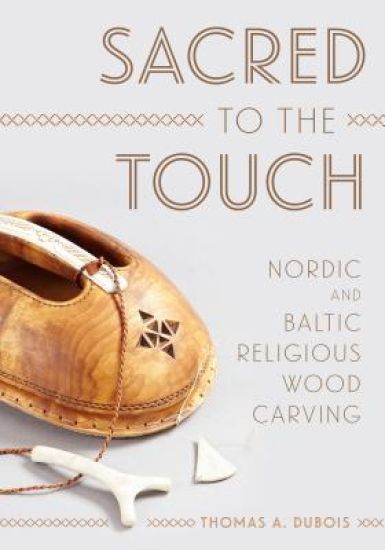
With near-mythical forests of birch and pine, the Nordic and Baltic countries boast a rich tradition of religious wood carving that is in many ways emblematic of their cultures. Sacred to the Touch examines the spiritual and intellectual projects of six twentieth- and twenty-first-century artists who have adapted and revitalized this tradition. Through interviews and analyses, folklorist Thomas A. DuBois explores the notions of continuity with the past that these artists seek to express through their art, examining the forest church of late Finnish artist Eva Ryynänen, the carvings of Norwegian Americans Phillip Odden and Else Bigton that decorate a planned replica of a stave church in Southern California, the medieval Catholic-rooted work of Lutheran Sister Lydia Mariadotter (Swedish), the grave markers and roadside figures of Algimantas Sakalauskas (Lithuanian), and the merging of Lutheran and pre-Christian traditions by Lars Levi Sunna (Sámi). With color photographs and detailed descriptions, Sacred to the Touch reveals the interplay of tradition with personal and communal identity that characterize modern religious carving in Northern Europe.
Sacred to the Touch

Sacred to the Touch

Thomas A. DuBois

University of Washington Press
2018
sidottu
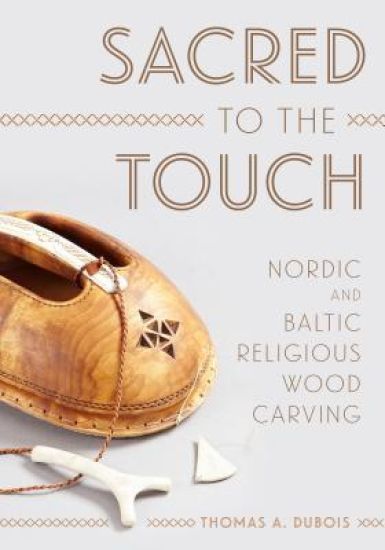
With near-mythical forests of birch and pine, the Nordic and Baltic countries boast a rich tradition of religious wood carving that is in many ways emblematic of their cultures. Sacred to the Touch examines the spiritual and intellectual projects of six twentieth- and twenty-first-century artists who have adapted and revitalized this tradition. Through interviews and analyses, folklorist Thomas A. DuBois explores the notions of continuity with the past that these artists seek to express through their art, examining the forest church of late Finnish artist Eva Ryynänen, the carvings of Norwegian Americans Phillip Odden and Else Bigton that decorate a planned replica of a stave church in Southern California, the medieval Catholic-rooted work of Lutheran Sister Lydia Mariadotter (Swedish), the grave markers and roadside figures of Algimantas Sakalauskas (Lithuanian), and the merging of Lutheran and pre-Christian traditions by Lars Levi Sunna (Sámi). With color photographs and detailed descriptions, Sacred to the Touch reveals the interplay of tradition with personal and communal identity that characterize modern religious carving in Northern Europe.
An Introduction to Shamanism

An Introduction to Shamanism

Thomas A. DuBois

Cambridge University Press
2009
pokkari
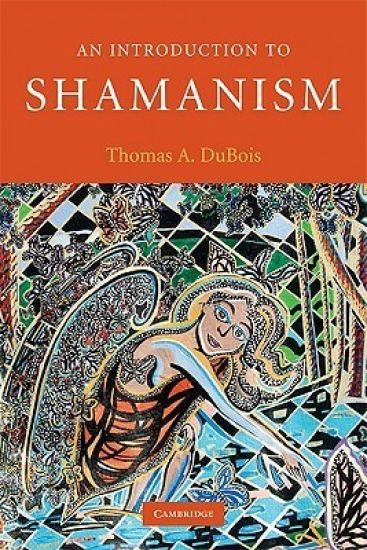
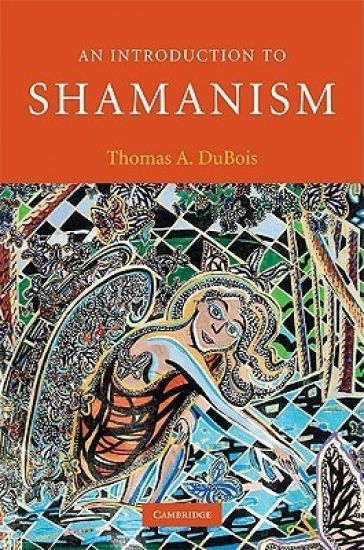
Shamans are an integral part of communal religious traditions, professionals who make use of personal supernatural experiences, especially trance, as a resource for the wider community's physical and spiritual well-being. This Introduction surveys research on the topic of shamanism around the world, detailing the archaeology and earliest development of shamanic traditions as well as their scientific 'discovery' in the context of eighteenth and nineteenth century colonization in Siberia, the Americas, and Asia. It explores the beliefs and rituals typical of shamanic traditions, as well as the roles of shamans within their communities. It also surveys the variety of techniques used by shamans cross-culturally, including music, entheogens, material culture and verbal performance. The final chapters examine attempts to suppress or eradicate shamanic traditions, the revitalization of shamanism in postcolonial situations, and the development of new forms of shamanism within new cultural and social contexts.
An Introduction to Shamanism

An Introduction to Shamanism

Thomas A. DuBois

Cambridge University Press
2009
sidottu
Shamans are an integral part of communal religious traditions, professionals who make use of personal supernatural experiences, especially trance, as a resource for the wider community's physical and spiritual well-being. This Introduction surveys research on the topic of shamanism around the world, detailing the archaeology and earliest development of shamanic traditions as well as their scientific 'discovery' in the context of eighteenth and nineteenth century colonization in Siberia, the Americas, and Asia. It explores the beliefs and rituals typical of shamanic traditions, as well as the roles of shamans within their communities. It also surveys the variety of techniques used by shamans cross-culturally, including music, entheogens, material culture and verbal performance. The final chapters examine attempts to suppress or eradicate shamanic traditions, the revitalization of shamanism in postcolonial situations, and the development of new forms of shamanism within new cultural and social contexts.
Lyric, Meaning, and Audience in the Oral Tradition of Northern Europe

Lyric, Meaning, and Audience in the Oral Tradition of Northern Europe

Thomas A. DuBois

University of Notre Dame Press
2006
nidottu
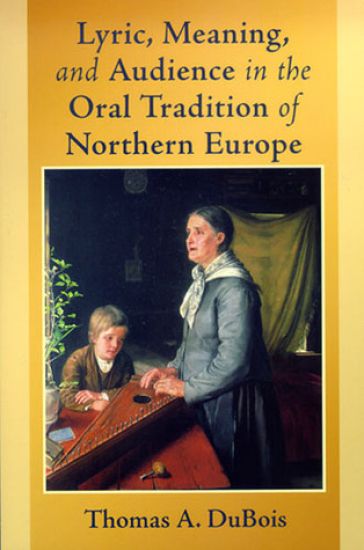
Focusing on particular characters, situations, or emotions—usually with little or no explicit plot—lyric song poses interpretive challenges to the listening audience. Without an overt plot, how does one understand what a song is about? Are there rules or norms for how to interpret them? Do these rules remain the same from culture to culture, or do they vary? By looking at the ways in which cultures in Northern Europe interpret lyric songs, Thomas A. DuBois illuminates both commonalities of interpretive practice and unique features of their musical traditions. DuBois draws on sets of lyric songs from England, Wales, Scotland, Ireland, Norway, Sweden, and Finland to explore the question of meaning in folklore, especially the role of traditional audiences in appraising and understanding nonnarrative songs. DuBois's examples range from the medieval and early modern periods to the late twentieth century. His nuanced study explicates folk practices of interpretation—a "native hermeneutics" existing alongside folk songs in North European oral tradition. He examines lyric songs—particularly formal laments—embedded with prose or poetic narratives; the ritual use of lyric as charms and laments in premodern Europe; the development of personalized meanings within hymns and devotional prayers of the high Middle Ages; Shakespeare's lyric songs and their demands on the audience; and the ways in which professional lyric singers encourage certain interpretations of their songs. The only study to examine a range of northern European lyric traditions as a unified group, Lyric, Meaning, and Audience in the Oral Tradition of Northern Europe will be of interest to scholars in medieval studies, literary studies, and folklore.
Finnish Folk Poetry and the Kalevala

Finnish Folk Poetry and the Kalevala

Thomas A. DuBois

CRC Press Inc
1995
sidottu
Since its initial publication in the early nineteenth century, Elias Lonnrot’s Finnish epic Kalevala has attracted international interest and scholarship. However, the author comments that the distorting lenses of translation, cultural difference and historical distance, have rendered the work a cryptic and often misinterpreted text outside of its country of origin. Even within Finland, scholars have found it difficult at times to judge the relation of the Kalevala to its oral sources. Lonnrot’s meticulous notes and discussions of intent and accomplishment make clear what he changed and how he went about it, but give us less inkling of why. This study's view is that the key to understanding Lonnrot’s changes lies in Romantic aesthetics and in the intellectual and socio-political agendas which they encode. Lonnrot created a Romantic epic out of Baltic-Finnic folk poetry, an epic complete with the narrative, generic, gendered and political characteristics of literary epics in nineteenth century’ Europe.