Kirjojen hintavertailu – 12 859 829 kirjaa ja 27 kauppaa

Kirjailija

Thomas Anderson

Kirjat ja teokset yhdessä paikassa: 53 kirjaa, julkaisuja vuosilta 1999–2026, suosituimpiin kuuluu The Case of Enola Holmes 3 Freedom, Family and Finding Your Own Name. Vertaile teosten hintoja ja tarkista saatavuus suomalaisista kirjakaupoista.

53 kirjaa

Kirjojen julkaisuvuodet: 1999–2026.

The History of the Panzerwaffe

The History of the Panzerwaffe

Thomas Anderson

Osprey Publishing
2015
sidottu
This technical and operational history is the definitive guide to the legendary Panzerwaffe, from its very infancy to the days when it made Europe its garden path at the height of Nazi German power. The Germans transformed armoured warfare from a lumbering and ponderous experiment in World War I into something that could decide the outcome of conflicts. With rare and revealing combat reports, along with photographs sourced from previously unseen private and archival collections, it uncovers the technical and operational stories of the formidable armoured beasts that formed the backbone of the German war machine – tanks such as the Panzer I, II and 38(t).
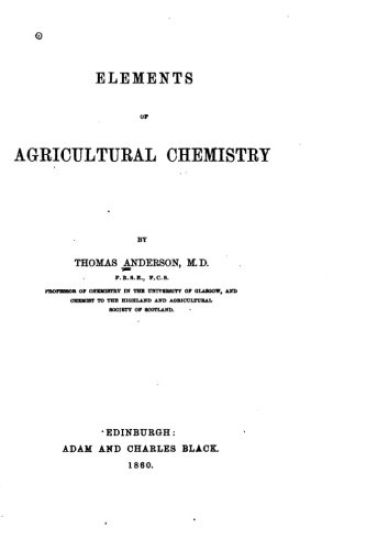
Elements of Agricultural Chemistry

Elements of Agricultural Chemistry

Thomas Anderson

Createspace Independent Publishing Platform
2015
nidottu
The object of Elements of Agricultural Chemistry is to offer to the farmer a concise outline of the general principles of Agricultural Chemistry. It has no pretensions to be considered a complete treatise on the subject. On the contrary, its aim is strictly elementary, and with this view I have endeavoured, as far as possible, to avoid unnecessary technicalities so as to make it intelligible to those who are unacquainted with the details of chemical science, although I have not hesitated to discuss such points as appeared essential to the proper understanding of any particular subject.
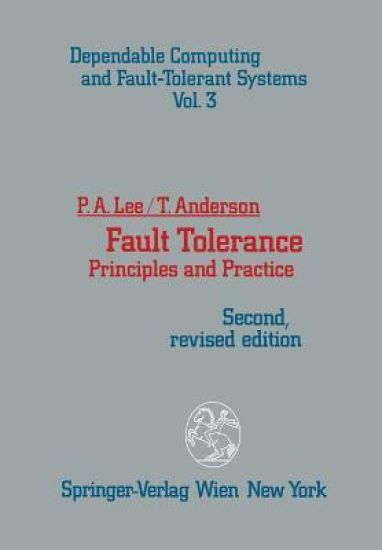
Fault Tolerance

Fault Tolerance

Peter A. Lee; Thomas Anderson

Springer Verlag GmbH
2012
nidottu
The production of a new version of any book is a daunting task, as many authors will recognise. In the field of computer science, the task is made even more daunting by the speed with which the subject and its supporting technology move forward. Since the publication of the first edition of this book in 1981 much research has been conducted, and many papers have been written, on the subject of fault tolerance. Our aim then was to present for the first time the principles of fault tolerance together with current practice to illustrate those principles. We believe that the principles have (so far) stood the test of time and are as appropriate today as they were in 1981. Much work on the practical applications of fault tolerance has been undertaken, and techniques have been developed for ever more complex situations, such as those required for distributed systems. Nevertheless, the basic principles remain the same.
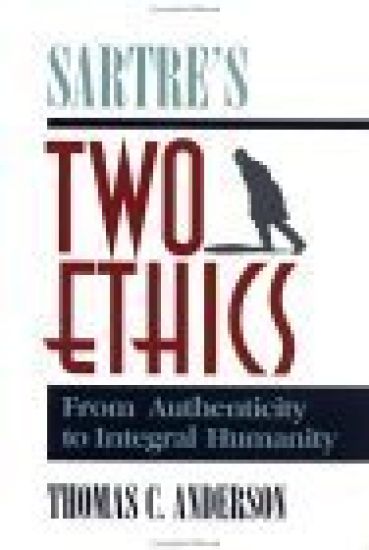
Sartre's Two Ethics

Sartre's Two Ethics

Thomas Anderson

Open Court Publishing Co ,U.S.
1999
sidottu
It is well-known that Sartre's thought developed from an incomplete, abstract, and individualistic concept of human reality, human freedom, and their relation to the world, to a more concrete and richer understanding of the human being, its freedom, the power of circumstances, and the social-political nature of human existence. It is less widely recognised that there is a parallel progression in Sartre's moral thinking, from an abstract, idealistic ethics of authenticity to a more concrete, realistic and materialistic morality. Anderson's book, contains a thorough study of the two most important ethical works of Sartre to have become available since 1980, the "Notebooks for an Ethics", written in the late 1940s but published in 1983, and the unpublished manuscript of a lecture on ethics delivered in 1964, containing his most complete discussion of his "second morality". In drawing upon these and other sources, Anderson's book is a study of Sartre's first and second ethics. Anderson evaluates Sartre's arguments for his ethical positions, and concludes that his second ethics constitutes a significant advance over his first. Anderson is author of "The Foundation and Sructure of Sartrean Ethics" (1979).

Sartre's Two Ethics

Sartre's Two Ethics

Thomas Anderson

Open Court Publishing Co U.S.
1999
Nidottu
It is well-known that Sartre's thought developed from an incomplete, abstract, and individualistic concept of human reality, human freedom, and their relation to the world, to a more concrete and richer understanding of the human being, its freedom, the power of circumstances, and the social-political nature of human existence. It is less widely recognised that there is a parallel progression in Sartre's moral thinking, from an abstract, idealistic ethics of authenticity to a more concrete, realistic and materialistic morality. Anderson's book, contains a thorough study of the two most important ethical works of Sartre to have become available since 1980, the "Notebooks for an Ethics", written in the late 1940s but published in 1983, and the unpublished manuscript of a lecture on ethics delivered in 1964, containing his most complete discussion of his "second morality". In drawing upon these and other sources, Anderson's book is a study of Sartre's first and second ethics. Anderson evaluates Sartre's arguments for his ethical positions, and concludes that his second ethics constitutes a significant advance over his first. Anderson is author of "The Foundation and Structure of Sartrean Ethics" (1979).