Kirjojen hintavertailu – 12 903 725 kirjaa ja 27 kauppaa

Kirjailija

Thomas Bender

Kirjat ja teokset yhdessä paikassa: 12 kirjaa, julkaisuja vuosilta 1982–2018, suosituimpiin kuuluu Revolution!. Vertaile teosten hintoja ja tarkista saatavuus suomalaisista kirjakaupoista.

12 kirjaa

Kirjojen julkaisuvuodet: 1982–2018.

City and Nation

City and Nation

Michael Peter Smith; Thomas Bender

Routledge
2018
sidottu
This compendium offers a textured historical and comparative examination of the significance of locality or "place," and the role of urban representations and spatial practices in defining national identities. Drawing upon a wide range of disciplines - from literature to architecture and planning, sociology, and history - these essays problematize the dynamic between the local and the national, the cultural and the material, revealing the complex interplay of social forces by which place is constituted and contributes to the social construction of national identity in Asia, Latin America, and the United States. These essays explore the dialogue between past and present, local and national identities in the making of "modern" places. Contributions range from an assessment of historical discourses on the relationship between modernity and heritage in turn-of-the-century Suzhou to the social construction of San Antonio's Market Square as a contested presencing of the city's Mexican past. Case studies of the socio-spatial restructuring of Penang and Jakarta show how place-making from above by modernizing states is articulated with a claims-making politics of class and ethnic difference from below. An examination of nineteenth-century Central America reveals a case of local grassroots formation not only of national identity but national institutions. Finally, a close examination of Latin American literature at the end of the nineteenth century reveals the importance of a fantastic reversal of Balzac's dystopian vision of Parisian cosmo-politanism in defining the place of Latin America and the possibilities of importing urban modernity.
Revolution!

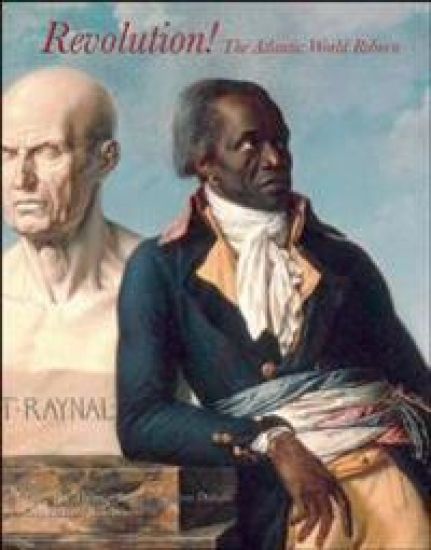
Revolution!

Thomas Bender; Laurent Dubois

D Giles Ltd
2011
sidottu
'Revolution! The Atlantic World Reborn' is an original illustrated volume which accompanies the landmark international travelling exhibition opening at the New York Historical Society in November 2011. This fascinating book brings together three globally influential revolutions - in America, France, and Haiti - to explore the enormous transformations in the world's politics and culture between Britain's victory in the Seven Years War in 1763 and the end of the Napoleonic Wars fifty-two years later. While most histories of these revolutions have been told exclusively as chapters within national histories, 'Revolution! The Atlantic World Reborn' presents, for the first time, the story of the 18th-century Atlantic revolutions as a part of wider, intertwined, global narrative. Vivid text and images provide a context for our understanding of these major social upheavals and their lasting influence on contemporary society.
The Unfinished City

The Unfinished City

Thomas Bender

New York University Press
2007
pokkari
Throughout American history, cities have been a powerful source of inspiration and energy, nourishing the spirit of invention and the world of intellect, and fueling movements for innovation and reform. In The Unfinished City, nationally renowned urban scholar Thomas Bender examines the source of Manhattan's influence over American life. The Unfinished City traces the history of New York from its humble regional beginnings to its present global eminence. Bender contends that the city took shape not only according to the grand designs of urban planners and business tycoons, but also in response to a welter of artistic visions, intellectual projects, and everyday demands of the millions of people who made the city home. Bender's story of urban development ranges from the streets of Times Square to the workshops of Thomas Edison, from the paintings of Georgia O'Keeffe to the construction of the Brooklyn Bridge. In a tour that spans neighborhoods and centuries, The Unfinished City makes a powerful case for the enduring importance of cities in American life. For anyone who loves New York or values the limitless possibilities intrinsic in all cities, this book is an unparalleled guide to Manhattan's past and present.
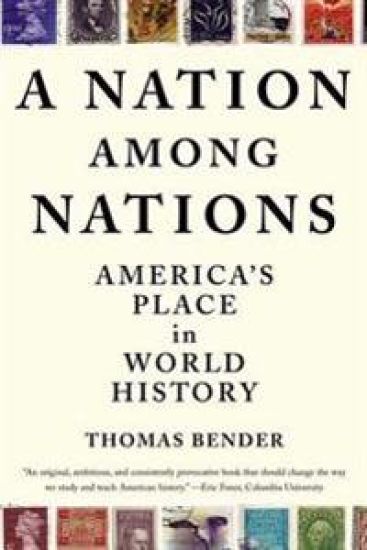
A Nation Among Nations

A Nation Among Nations

Thomas Bender

Hill Wang
2006
nidottu
A provocative new book that shows us why we must put American history firmly in a global context--from 1492 to today Americans like to tell their country's story as if the United States were naturally autonomous and self-sufficient, with characters, ideas, and situations unique to itself. Thomas Bender asks us to rethink this "exceptionalism" and to reconsider the conventional narrative. He proposes that America has grappled with circumstances, doctrines, new developments, and events that other nations, too, have faced, and that we can only benefit from recognizing this. Bender's exciting argument begins with the discovery of the Americas at a time when peoples everywhere first felt the transforming effects of oceanic travel and trade. He then reconsiders our founding Revolution, occurring in an age of rebellion on many continents; the Civil War, happening when many countries were redefining their core beliefs about the nature of freedom and the meaning of nationhood; and the later imperialism that pitted the United States against Germany, Spain, France, and England. Industrialism and urbanization, laissez-faire economics, capitalism and socialism, and new technologies are other factors that Bender views in the light of global developments. A Nation Among Nations is a passionate, persuasive book that makes clear what damage is done when we let the old view of America alone in the world falsify our history. Bender boldly challenges us to think beyond our borders.
The Education of Historians for Twenty-first Century

The Education of Historians for Twenty-first Century

Thomas Bender; Philip F. Katz; Colin A. Palmer

University of Illinois Press
2003
nidottu
An examination and analysis of history education in American colleges and universities In 1958, the American Historical Association began a study to determine the status and condition of history education in U. S. colleges and universities. Published in 1962 and addressing such issues as the supply and demand for teachers, student recruitment, and training for advanced degrees, that report set a lasting benchmark against which to judge the study of history thereafter. Now, more than forty years later, the AHA has commissioned a new report. The Education of Historians for the Twenty-first Century documents this important new study's remarkable conclusions. Both the American academy and the study of history have been dramatically transformed since the original study, but doctoral programs in history have barely changed. This report from the AHA explains why and offers concrete, practical recommendations for improving the state of graduate education. The Education of Historians for the Twenty-first Century stands as the first investigation of graduate training for historians in more than four decades and the best available study of doctoral education in any major academic discipline. Prepared for the AHA by the Committee on Graduate Education, the report represents the combined efforts of a cross-section of the entire historical profession. It draws upon a detailed review of the existing studies and data on graduate education and builds upon this foundation with an exhaustive survey of history doctoral programs. This included actual visits to history departments across the country and consultations with scores of individual historians, graduate students, deans, academic and non-academic employers of historians, as well as other stakeholders in graduate education. As the ethnic and gender composition of both graduate students and faculty has changed, methodologies have been refined and the domains of historical inquiry expanded. By addressing these revolutionary intellectual and demographic changes in the historical profession, The Education of Historians for the Twenty-first Century breaks important new ground. Combining a detailed historical snapshot of the profession with a rigorous analysis of these intellectual changes, this volume is ideally positioned as the definitive guide to strategic planning for history departments. It includes practical recommendations for handling institutional challenges as well as advice for everyone involved in the advanced training of historians, from department chairs to their students, and from university administrators to the AHA itself. Although focused on history, there are lessons here for any department. The Education of Historians for the Twenty-first Century is a model for in-depth analysis of doctoral education, with recommendations and analyses that have implications for the entire academy. This volume is required reading for historians, graduate students, university administrators, or anyone interested in the future of higher education.
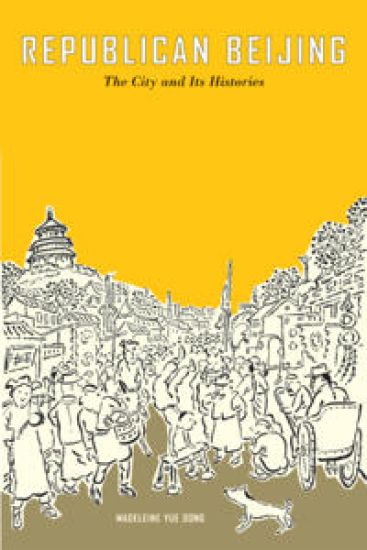
Republican Beijing

Republican Beijing

Madeleine Yue Dong; Thomas Bender

University of California Press
2003
sidottu
Old Beijing has become a subject of growing fascination in contemporary China since the 1980s. While physical remnants from the past are being bulldozed every day to make space for glass-walled skyscrapers and towering apartment buildings, nostalgia for the old city is booming. Madeleine Yue Dong offers the first comprehensive history of Republican Beijing, examining how the capital acquired its identity as a consummately "traditional" Chinese city. For residents of Beijing, the heart of the city lay in the labor-intensive activities of "recycling," a primary mode of material and cultural production and circulation that came to characterize Republican Beijing. An omnipresent process of recycling and re-use unified Beijing's fragmented and stratified markets into one circulation system. These material practices evoked an air of nostalgia that permeated daily life. Paradoxically, the "old Beijing" toward which this nostalgia was directed was not the imperial capital of the past, but the living Republican city. Such nostalgia toward the present, the author argues, was not an empty sentiment, but an essential characteristic of Chinese modernity.
City and Nation

City and Nation

Michael Peter Smith; Thomas Bender

Transaction Publishers
2001
nidottu
This compendium offers a textured historical and comparative examination of the significance of locality or "place," and the role of urban representations and spatial practices in defining national identities. Drawing upon a wide range of disciplines - from literature to architecture and planning, sociology, and history - these essays problematize the dynamic between the local and the national, the cultural and the material, revealing the complex interplay of social forces by which place is constituted and contributes to the social construction of national identity in Asia, Latin America, and the United States. These essays explore the dialogue between past and present, local and national identities in the making of "modern" places. Contributions range from an assessment of historical discourses on the relationship between modernity and heritage in turn-of-the-century Suzhou to the social construction of San Antonio's Market Square as a contested presencing of the city's Mexican past. Case studies of the socio-spatial restructuring of Penang and Jakarta show how place-making from above by modernizing states is articulated with a claims-making politics of class and ethnic difference from below. An examination of nineteenth-century Central America reveals a case of local grassroots formation not only of national identity but national institutions. Finally, a close examination of Latin American literature at the end of the nineteenth century reveals the importance of a fantastic reversal of Balzac's dystopian vision of Parisian cosmo-politanism in defining the place of Latin America and the possibilities of importing urban modernity.
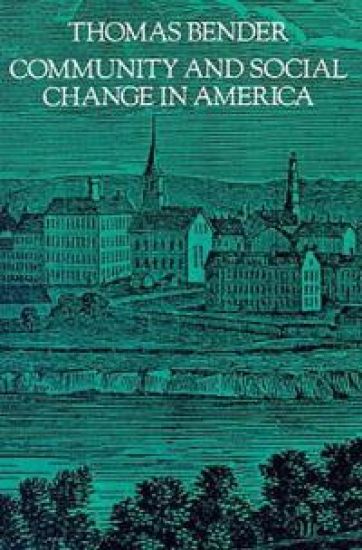
Community and Social Change in America

Community and Social Change in America

Thomas Bender

Johns Hopkins University Press
2000
pokkari
Did urbanization kill communities in the 19th century, or even earlier? Many historians proclaim that it did, but author Bender says otherwise. Here he argues that community survived the trials of industrialization and urbanization and remains a fundamental element of American society.
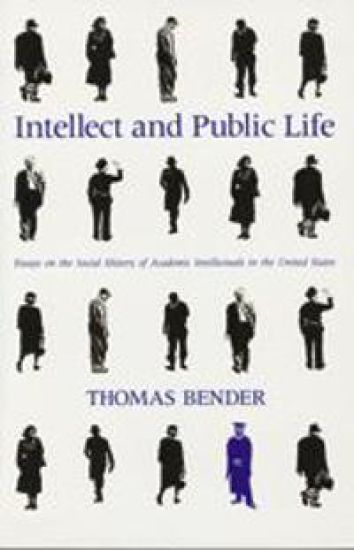
Intellect and Public Life

Intellect and Public Life

Thomas Bender

Johns Hopkins University Press
1997
pokkari
Periodic "crises" in our academic culture remind us that the organization of our intellectual life is a product of history-neither fixed by the logic of social development nor inherent in the nature of knowledge itself. At a time of much unease in academia and among the general public about the relation of intellect to public life, Thomas Bender explores both the nineteenth-century origins and the twentieth-century configurations of academic intellect in the United States. Intellect and Public Life pays special attention to the changing relationship of academic to urban culture. Examining the historical tensions faced by intellectuals who aspired to be at once academics and citizens, Bender traces the growing commitment of intellectuals to professional expertise and autonomy. He finds, as well, a historical pattern of academic withdrawal from the public discussion of matters of general concern. Yet the volume concludes on a hopeful note. With the demise of the classical republican notion of the public, Bender contends, there has emerged a more pluralistic notion of the public that-combined with the revival of interest in pragmatic theories of truth-may offer the possibility of a richer collaboration of democracy and intellect.
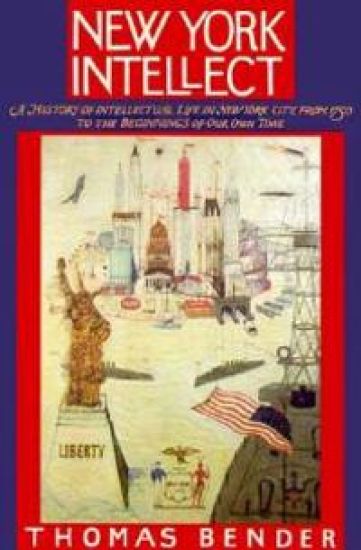
New York Intellect

New York Intellect

Thomas Bender

Johns Hopkins University Press
1988
pokkari
New York Intellect is Thomas Bender's remarkable look at the connections between the life of a city and the life of the mind. New York has never been comfortable or convenient as a milieu for art and intellect, Bender notes. Yet New Yorkers have always struggled to create institutions and styles of thought and writing that reflect the special character of the city, its boundless energies and deep divisions.