Kirjojen hintavertailu – 12 903 725 kirjaa ja 27 kauppaa
Kirjailija
Thomas C. Oden
Kirjat ja teokset yhdessä paikassa: 77 kirjaa, julkaisuja vuosilta 1989–2022, suosituimpiin kuuluu After Modernity . . . What?. Vertaile teosten hintoja ja tarkista saatavuus suomalaisista kirjakaupoista.
Often considered one of the sparks that ignited the Reformation, the place of "works" in the Christian life is still debated. In this volume distinguished theologian Thomas Oden draws together Christian teaching from across the centuries to provide a comprehensive witness on this essential topic. Oden listens to the timeless teaching of the patristic writers, the theologians who defined orthodoxy in the first five centuries after Christ. His listening extends not only to well-known fathers such as Augustine, Irenaeus, and Eusebius, but also to lesser-known yet no less important fathers such as Oecumenius, Pseudo-Basil, and Peter Chrysologus. Oden's masterly compendium of classic Christian teaching covers treatment of the poor, the outcast, the imprisoned, and "the least of these." Anyone involved in any ministry of compassion will find stunning spiritual resources here.
Among the Wisdom literature of the Old Testament, Proverbs, Ecclesiastes, and the Song of Solomon were all thought by the early church fathers to have derived from the hand of Solomon. To their minds the finest wisdom about the deeper issues of life prior to the time of God's taking human form in Jesus Christ was to be found in these books. As in all the Old Testament, they were quick to find types and intimations of Christ and his church that would make the ancient Word relevant to the Christians of their day. Of extant commentaries on Ecclesiastes none are so profound as the eight homilies of Gregory of Nyssa, even though they cover only the first three chapters of the book. Joining Gregory among those most frequently excerpted in this volume are Augustine, Ambrose, Gregory the Great, Origen, John Cassian, John Chrysostom, Athanasius, Bede the Venerable, and Jerome. Gregory of Nazianzus, Basil the Great, and Cyril of Jerusalem lead a cast of other less frequently cited fathers, and then there remains a large cast of supporting players, some of whose work is translated here into English for the first time. This Ancient Christian Commentary on Scripture volume offers a rich trove of wisdom on Wisdom for the enrichment of the church today.
For to us a child is born, to us a son is given; and the government will be upon his shoulder and his name shall be called "Wonderful Counselor, Mighty God, Everlasting Father, Prince of Peace." For the early church fathers the prophecy of Isaiah was not a compendium of Jewish history or theology but an announcement of the coming Messiah fulfilled in the life and ministry of Jesus of Nazareth. As such, the prophet's words were a rich source of theological reflection concerning their Lord and a vital aid in their defense against the objections of the Jews that Jesus was the promised Messiah. The interpretation of Jesus' ministry in light of Isaiah's prophecy was not a theological innovation on their part but rather a following of the path blazed by the New Testament writers and Jesus himself. Among passage-by-passage commentaries cited here are those by Eusebius of Caesarea, Jerome, Cyril of Alexandria, and Theodoret of Cyr, as well as one attributed to Basil of Caesarea. John Chrysostom preached a series of homilies on Isaiah of which most of those extant concern the first eight chapters, though Chrysostom frequently cites Isaiah in numerous homilies on other books. Augustine of Hippo, Gregory the Great, and Bede the Venerable frequently cite passages from Isaiah 1–39, as did many other fathers in defending the Christian faith from Jewish critics. In this Ancient Christian Commentary on Scripture volume, readers will find materials ranging from East to West and from the first through the eighth centuries, some appearing here in English translation for the first time. Within this treasure house are riches to illumine the mind and fire the heart.
"And beginning with Moses and all the prophets, [the risen Jesus] interpreted to them in all the scriptures the things concerning himself" (Lk 24:27). The church fathers mined the Old Testament throughout for prophetic utterances regarding the Messiah, but few books yielded as much messianic ore as the Twelve Prophets, sometimes known as the Minor Prophets because of the relative brevity of their writings. Encouraged by the example of the New Testament writers, the church fathers found numerous parallels between the Gospels and the prophetic books. Among the events foretold, they found not only the flight into Egypt after the nativity, the passion, and resurrection of Christ, and the outpouring of the Spirit at Pentecost, but also Judas's act of betrayal, the earthquake at Jesus' death and the rending of the temple veil. Detail upon detail brimmed with significance for Christian doctrine, including baptism and the Eucharist as well as the relation between the covenants. In this rich and vital resource you will find excerpts, some translated here into English for the first time, from more than thirty church fathers, ranging in time from Clement of Rome, Justin Martyr, and Irenaeus (late first and early second centuries) to Gregory the Great, Braulio of Saragossa, and Bede the Venerable (late sixth to early eighth centuries). Geographically the sources range from the great Cappadocians—Basil the Great, Gregory of Nazianzus, Gregory of Nyssa—John Chrysostom, Ephrem the Syrian, and Hippolytus in the East, to Ambrose, Augustine, Cyprian, and Tertullian in the West, and Origen, Cyril, and Pachomius in Egypt. This Ancient Christian Commentary on Scripture volume is a treasure trove out of which Christians may bring riches both old and new in their understanding of these ancient texts.
For the church fathers the Gospels did not serve as resources for individual analysis and academic study. They were read and heard and interpreted within the worshiping community. They served as sources for pastoral counsel and admonition for those who were committed to the Way. Although Matthew and John were generally the preferred Gospels, Luke, because of his particular interests and unique contributions, took pride of place during the Christmas season as well as during Easter and other major feasts. During the early patristic period, the tradition of continuous reading (lectio continua) through the Gospels developed, such that over a course of time a complete Gospel was read in sections, and sermons were preached on the readings either at weekly or midweek worship and Communion liturgies or during morning and evening prayer services. Among such sermons that have survived, this commentary includes selections from Origen and Cyril of Alexandria. Aside from sermons, we find that the fathers addressed exegetical issues in theological treatises, pastoral letters and catechetical lectures. Among these, as in other ACCS volumes, readers will find materials ranging from East to West and from the first to the eighth centuries. Among well-known fathers cited are Ambrose, Athanasius, Augustine, the Cappadocians, John Chrysostom, John of Damascus and Bede the Venerable. Among lesser-known fathers are John Cassian, Philoxenus of Mabbug and Theophylact. This volume, edited by Arthur A. Just, opens up a treasure house of ancient wisdom that allows these faithful witnesses, some appearing here in English translation for the first time, to speak with eloquence and intellectual acumen to the church today.
The Gospel of Matthew stands out as a favorite biblical text among patristic commentators. The patristic commentary tradition on Matthew begins with Origen's pioneering twenty-five-volume commentary on the First Gospel in the mid-third century. In the Latin-speaking West, where commentaries did not appear until about a century later, the first commentary on Matthew was written by Hilary of Poitiers in the mid-fourth century. From that point the First Gospel became one of the texts most frequently commented on in patristic exegesis. Outstanding examples are Jerome's four-volume commentary and the valuable but anonymous and incomplete Opus imperfectum in Matthaeum. Then there are the Greek catena fragments derived from commentaries by Theodore of Heraclea, Apollinaris of Laodicea, Theodore of Mopsuestia and Cyril of Alexandria. The ancient homilies also provide ample comment, including John Chrysostom's ninety homilies and Chromatius of Aquileia's fifty-nine homilies on the Gospel of Matthew. In addition, there are various Sunday and feast-day homilies from towering figures such as Augustine and Gregory the Great, as well as other fathers. This rich abundance of patristic comment, much of it presented here in English translation for the first time by editor Manlio Simonetti, provides a bountiful and varied feast of ancient interpretation of the First Gospel.
The Gospel of Matthew stands out as a favorite biblical text among patristic commentators. The patristic commentary tradition on Matthew begins with Origen's pioneering twenty-five-volume commentary on the First Gospel in the mid-third century. In the Latin-speaking West, where commentaries did not appear until about a century later, the first commentary on Matthew was written by Hillary of Poitiers in the mid-fourth century. From that point the First Gospel became one of the most frequently commented texts in patristic exegesis. Outstanding examples are Jerome's four-volume commentary and the valuable but anonymous and incomplete Opus imperfectum in Matthaeum. Then there are the Greek catena fragments derived from commentaries by Theodore of Heraclea, Apollinaris of Laodicea, Theodore of Mopsuestia and Cyril of Alexandria. The ancient homilies also provide ample comment, including John Chrysostom's ninety homilies and Chromatius's fifty-nine homilies on the Gospel of Matthew. In addition there are various Sunday and feast-day homilies from towering figures such as Augustine and Gregory the Great as well as other fathers. This abundance of patristic comment, much of it presented here in English translation for the first time, provides a rich and varied feast of ancient interpretation of the First Gospel.
From its inception the church has always had a Bible—the Jewish Scriptures. But Christians have not read these Scriptures in the same way the Jews did. They have read them in the light of what God did in Jesus the Christ. Thus the Jewish Scriptures became for Christian readers the Old Testament. This Ancient Christian Commentary on Scripture volume on Exodus through Deuteronomy bears ample witness to this new way of reading these ancient texts. Among the earliest interpreters whose works remain extant is Origen, who virtually single-handedly assured the Old Testament a permanent place within the Christian church through his extensive commentary and reflection. His twenty-seventh homily on Numbers is particularly noteworthy for his interpretation of the forty-two stopping places in the desert wanderings as the forty-two stages of growth in the spiritual life. Among Greek-speaking interpreters, this current volume draws widely on John Chrysostom, Clement of Alexandria, Basil the Great, Gregory of Nazianzus, Gregory of Nyssa, Cyril of Alexandria, Theodoret of Cyr, and John of Damascus. Among Latin-speaking interpreters, quotations from Augustine, Ambrose, Jerome, Paterius, Caesarius of Arles, Cassiodorus, and Isidore are found in abundance. Ephrem and Aphrahat are represented among Syriac speakers. Numerous other interpreters are present from each grouping. Varied in texture and nuance, the interpretations included in this volume display a treasure house of ancient wisdom, some appearing here in English translation for the first time, speaking with eloquence and intellectual acumen to the church today.
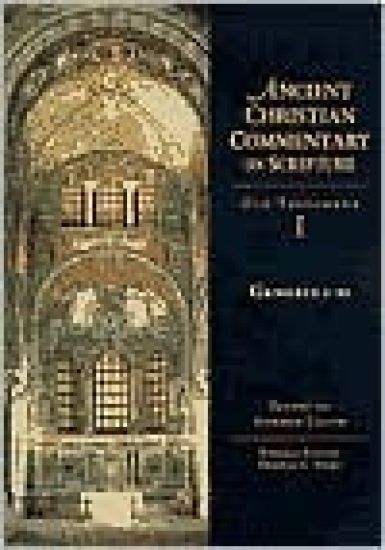
The Ancient Christian Commentary on Scripture is a unique twenty-seven-volume series encompassing all of Scripture and offering contemporary readers the opportunity to study for themselves the key writings of the early church fathers. Arranged by the books of the Bible, each portion of commentary allows the living voices of the church in its formative centuries to speak as they engage the sacred pages of Scripture. This Ancient Christian Commentary on Genesis 1-11 opens a whole new way of reading these Old Testament texts. The pastoral and theological interpretation of the church fathers offers spiritual and intellectual sustenance to those who would read these texts again with open minds and hearts.
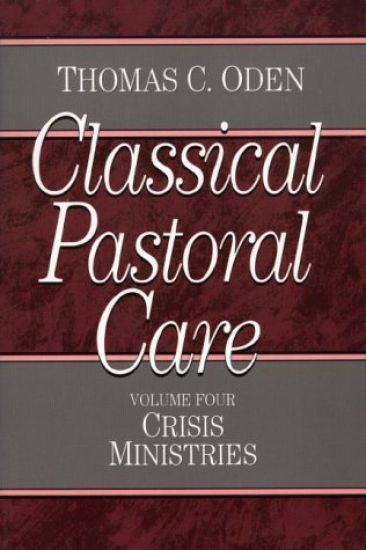
Classic Pastoral Care provides a topical arrangement of passages from classic Christian writings offering guidance on all major topics of pastoral theology. The four-volume set features writings from more than two hundred notable Christian authors--from Abelard and Ambrose to Isaac Watts and Zwingli--arranged in thirty topical sections. Volume four, Crisis Ministries, deals with crucial situations in which pastors are often called to respond to urgent and specific challenges: care of the sick, the management of pain, the struggle with the meaning of suffering, pastoral visitation of families, interpersonal crises, conflict resolution, care of the emotionally ill, alcoholism, vocational counseling, suicide counseling, premarital, marital and family counseling, care of the poor, care for the terminally ill, and care for the dying and the grieving.
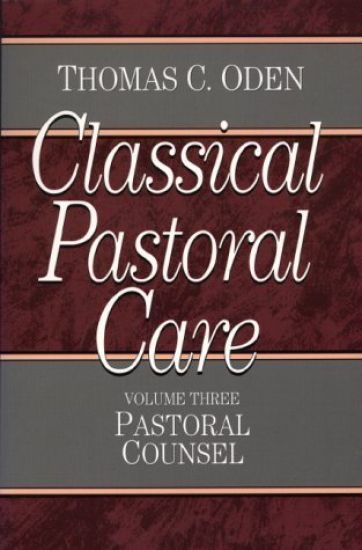
Classic Pastoral Care provides a topical arrangement of passages from classic Christian writings offering guidance on all major topics of pastoral theology. The four-volume set features writings from more than two hundred notable Christian authors--from Abelard and Ambrose to Isaac Watts and Zwingli--arranged in thirty topical sections. Volume three, Pastoral Counsel, deals directly with the nature of the counseling relationship, the metaphors of soul care (from medicine, guidance, and education), the elements of a therapeutic relationship, the timing of good counsel, pastoral discernment, language and silence in counsel, truth-telling and deception, admonition and discipline, care of the conscience, anticipations of modern psychotherapy by classical writers, and dynamics of the self-alienating will.
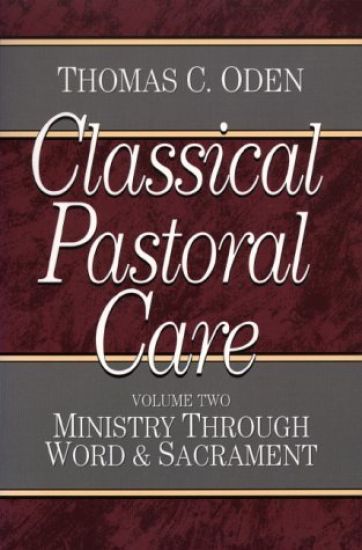
Classic Pastoral Care provides a topical arrangement of passages from classic Christian writings offering guidance on all major topics of pastoral theology. The four-volume set features writings from more than two hundred notable Christian authors--from Abelard and Ambrose to Isaac Watts and Zwingli--arranged in thirty topical sections. Volume two, Ministry through Word and Sacrament, reviews the range of pastoral tasks: pastoral care through preaching and worship, pastoral care through the ministries of baptism and Eucharist, the pastor as educator of the soul, the teaching office, the office of administry (i.e., of that which moves toward ministry), and the nurturing of Christian community in mission to the world.
This four-volume set provides a topical arrangement of passages from classic Christian writings offering guidance on all major topics of pastoral theology. Writings from more than two hundred notable Christian authors--from Abelard and Ambrose to Isaac Watts and Zwingli--are arranged in thirty topical sections. Volumes are available individually in addition to the four-volume set. Volume one, Becoming a Minister, is concerned with the person and self-understanding of the pastoral caregiver. Volume two, Ministry through Word and Sacrament, guides pastors in caring for other's health, their own health, and the life of the soul. Volume three, Pastoral Counsel, brings new perspective to the counseling ministry as pastors seek to help those who are hurting. Volume four, Crisis Ministries, addresses crucial situations in which pastors are often called to respond to urgent and specific challenges as they comfort those who suffer.
Christianity Today Award of Merit winner Because the Catholic Epistles focus on orthodox faith and morals, the Fathers drew on them as a means of defense against the rising challenge of heretics. Many of the Fathers saw in these letters anticipatory attacks on Marcion and strong defenses against the Arians. They did so quite naturally because in their view truth was eternal and deviations from it had existed from the beginning. Above all, the Fathers found in the Catholic Epistles a manual for spiritual warfare, counsel for the faithful in the cosmic struggle between good and evil. In them was sound instruction in the ways of self-sacrifice, generosity, and humility, through which the cosmic forces could be defeated. Allusions to these letters go back as far as Justin Martyr, Irenaeus, and Tertullian, but the first commentary derives from Clement of Alexandria. Didymus the Blind was the next significant Greek-speaking commentator, though his commentary is fully extant only in Latin translation. Many of the comments from the early centuries have been passed on to us through Latin catenae, or chain commentaries, in which a later commentator collected comments from a variety of sources and chained them together in a fashion much like that of the Ancient Christian Commentary on Scripture in English. Among Latin commentators on these letters, pride of place must be given to Bede the Venerable. This volume opens up a treasure house of ancient wisdom that allows these faithful witnesses, some appearing here in English translation for the first time, to speak with eloquence and intellectual acumen to the church today.
The first presentation of John Wesley's doctrinal teachings in a systematic form that is also faithful to Wesley's own writings. Wesley was a prolific writer and commentator on Scripture, yet it is commonly held that he was not systematic or internally consistent in his theology and doctrinal teachings. On the contrary, Thomas C. Oden intends to demonstrate here that Wesley displayed a remarkable degree of consistency over sixty years of preaching and ministry. The book helps readers to grasp Wesley's essential teachings in an accessible form so that the person desiring to go directly to Wesley's own writings (which fill eighteen volumes) will know exactly where to turn. This volume focuses on the main doctrinal teachings of Wesley. Subsequent volumes in this series will deal with his pastoral and ethical teachings.
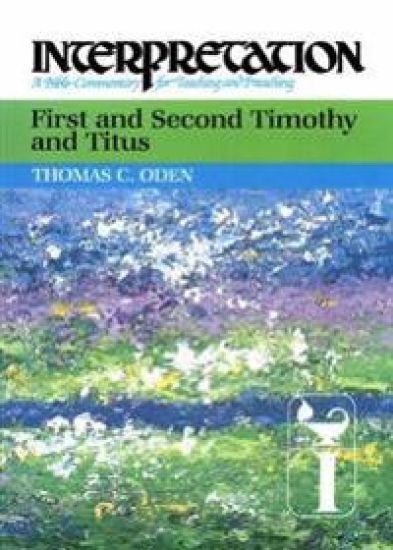
Thomas Oden provides a modern commentary on the pastoral letters grounded in the classical, consensual tradition of interpretation. Oden utilizes the best and most accurate research concerning the historical, literary, and philological aspects of the pastoral letters. He addresses tough issues: the role of women in worship, problems of the rich and poor, the relation between servants and masters, policies concerning support of elderly widows, and how to handle church disruptions. Interpretation: A Bible Commentary for Teaching and Preaching is a distinctive resource for those who interpret the Bible in the church. Planned and written specifically for teaching and preaching needs, this critically acclaimed biblical commentary is a major contribution to scholarship and ministry.