Kirjojen hintavertailu – 12 859 819 kirjaa ja 27 kauppaa
Kirjailija
Thomas Carlyle
Kirjat ja teokset yhdessä paikassa: 1 353 kirjaa, julkaisuja vuosilta 1850–2026, suosituimpiin kuuluu The Carlyle anthology. Vertaile teosten hintoja ja tarkista saatavuus suomalaisista kirjakaupoista.
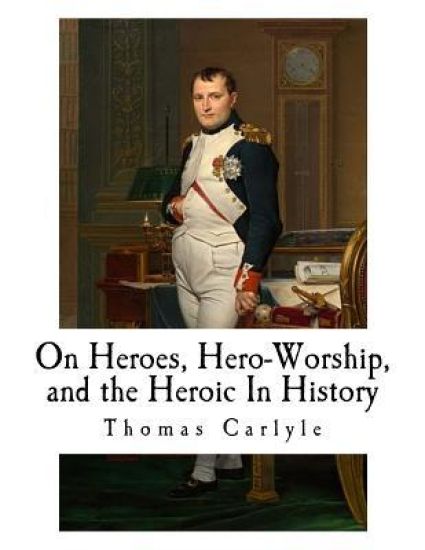
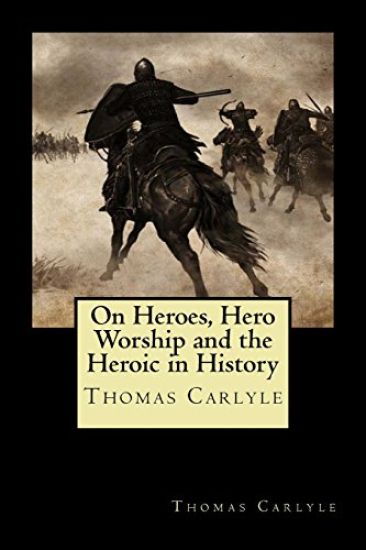
On Heroes, Hero-Worship, and the Heroic in History by Thomas Carlyle. On Heroes, Hero-Worship, and The Heroic in History is a book by Thomas Carlyle, published by James Fraser, London, in 1841. It is a collection of six lectures given in May 1840. 1. (5 May) The Hero as Divinity. Odin. Paganism: Scandinavian Mythology 2. (8 May) The Hero as Prophet. Muhammad: Islam 3. (12 May) The Hero as Poet. Dante; Shakespeare 4. (15 May) The Hero as Priest. Luther; Reformation: Knox; Puritanism 5. (19 May) The Hero as Man of Letters. Johnson, Rousseau, Burns 6. (22 May) The Hero as King. Cromwell. Napoleon: Modern Revolutionism
Thomas Carlyle (4 December 1795 - 5 February 1881) was a Scottish philosopher, satirical writer, essayist, translator, historian, mathematician, and teacher. Considered one of the most important social commentators of his time, he presented many lectures during his lifetime with certain acclaim in the Victorian era. One of those conferences resulted in his famous work On Heroes, Hero-Worship, and The Heroic in History where he explains that the key role in history lies in the actions of the "Great Man", claiming that "the history of the world is but the biography of great men". A respected historian, his 1837 book The French Revolution: A History was the inspiration for Charles Dickens' 1859 novel A Tale of Two Cities, and remains popular today. Carlyle's 1836 Sartor Resartus is a notable philosophical novel. A great polemicist, Carlyle coined the term "the dismal science" for economics. He also wrote articles for the Edinburgh Encyclop dia, and his Occasional Discourse on the Negro Question (1849) remains controversial. Once a Christian, Carlyle lost his faith while attending the University of Edinburgh, later adopting a form of deism. In mathematics, he is known for the Carlyle circle, a method used in quadratic equations and for developing ruler-and-compass constructions of regular polygons.
Thomas Carlyle (4 December 1795 - 5 February 1881) was a Scottish philosopher, satirical writer, essayist, translator, historian, mathematician, and teacher. Considered one of the most important social commentators of his time, he presented many lectures during his lifetime with certain acclaim in the Victorian era. One of those conferences resulted in his famous work On Heroes, Hero-Worship, and The Heroic in History where he explains that the key role in history lies in the actions of the "Great Man", claiming that "the history of the world is but the biography of great men". A respected historian, his 1837 book The French Revolution: A History was the inspiration for Charles Dickens' 1859 novel A Tale of Two Cities, and remains popular today. Carlyle's 1836 Sartor Resartus is a notable philosophical novel. A great polemicist, Carlyle coined the term "the dismal science" for economics. He also wrote articles for the Edinburgh Encyclop dia, and his Occasional Discourse on the Negro Question (1849) remains controversial. Once a Christian, Carlyle lost his faith while attending the University of Edinburgh, later adopting a form of deism. In mathematics, he is known for the Carlyle circle, a method used in quadratic equations and for developing ruler-and-compass constructions of regular polygons. Early writings: By 1821, Carlyle abandoned the clergy as a career and focused on making a life as a writer. His first fiction was "Cruthers and Jonson", one of several abortive attempts at writing a novel. Following his work on a translation of Goethe's Wilhelm Meister's Apprenticeship, 5] he came to distrust the form of the realistic novel and so worked on developing a new form of fiction. In addition to his essays on German literature, he branched out into wider ranging commentary on modern culture in his influential essays Signs of the Times and Characteristics. 14] In the latter, he laid down his abiding preference for the natural over the artificial: "Thus, as we have an artificial Poetry, and prize only the natural; so likewise we have an artificial Morality, an artificial Wisdom, an artificial Society". Moreover, at this time he penned articles appraising the life and works of various poets and men of letters, including Goethe, Voltaire and Diderot. Last works: Later writings were generally short essays, notably the (unsuccessful) The Early Kings of Norway, a series on early-medieval Norwegian warlords. Also An Essay on the Portraits of John Knox appeared in 1875, attempting to prove that the best-known portrait of John Knox did not depict the Scottish prelate. This was linked to Carlyle's long interest in historical portraiture, which had earlier fuelled his project to found a gallery of national portraits, fulfilled by the creation of the National Portrait Gallery, London and the Scottish National Portrait Gallery. He was elected a Foreign Honorary Member of the American Academy of Arts and Sciences in 1878.........................................
Thomas Carlyle (4 December 1795 - 5 February 1881) was a Scottish philosopher, satirical writer, essayist, translator, historian, mathematician, and teacher. Considered one of the most important social commentators of his time, he presented many lectures during his lifetime with certain acclaim in the Victorian era. One of those conferences resulted in his famous work On Heroes, Hero-Worship, and The Heroic in History where he explains that the key role in history lies in the actions of the "Great Man", claiming that "the history of the world is but the biography of great men". A respected historian, his 1837 book The French Revolution: A History was the inspiration for Charles Dickens' 1859 novel A Tale of Two Cities, and remains popular today. Carlyle's 1836 Sartor Resartus is a notable philosophical novel. A great polemicist, Carlyle coined the term "the dismal science" for economics. He also wrote articles for the Edinburgh Encyclop dia, and his Occasional Discourse on the Negro Question (1849) remains controversial. Once a Christian, Carlyle lost his faith while attending the University of Edinburgh, later adopting a form of deism. In mathematics, he is known for the Carlyle circle, a method used in quadratic equations and for developing ruler-and-compass constructions of regular polygons. Early writings: By 1821, Carlyle abandoned the clergy as a career and focused on making a life as a writer. His first fiction was "Cruthers and Jonson", one of several abortive attempts at writing a novel. Following his work on a translation of Goethe's Wilhelm Meister's Apprenticeship, 5] he came to distrust the form of the realistic novel and so worked on developing a new form of fiction. In addition to his essays on German literature, he branched out into wider ranging commentary on modern culture in his influential essays Signs of the Times and Characteristics. 14] In the latter, he laid down his abiding preference for the natural over the artificial: "Thus, as we have an artificial Poetry, and prize only the natural; so likewise we have an artificial Morality, an artificial Wisdom, an artificial Society". Moreover, at this time he penned articles appraising the life and works of various poets and men of letters, including Goethe, Voltaire and Diderot. Last works: Later writings were generally short essays, notably the (unsuccessful) The Early Kings of Norway, a series on early-medieval Norwegian warlords. Also An Essay on the Portraits of John Knox appeared in 1875, attempting to prove that the best-known portrait of John Knox did not depict the Scottish prelate. This was linked to Carlyle's long interest in historical portraiture, which had earlier fuelled his project to found a gallery of national portraits, fulfilled by the creation of the National Portrait Gallery, London and the Scottish National Portrait Gallery. He was elected a Foreign Honorary Member of the American Academy of Arts and Sciences in 1878........................
Past and Present is a book by Thomas Carlyle. It was published in April 1843 in England and the following month in the United States. It combines medieval history with criticism of 19th-century British society. Carlyle wrote it in seven weeks as a respite from the harassing labor of writing Cromwell. He was inspired by the recently published Chronicles of the Abbey of Saint Edmund's Bury, which had been written by Jocelin of Brakelond at the close of the 12th century. This account of a medieval monastery had taken Carlyle's fancy, and he drew upon it in order to contrast the monks' reverence for work and heroism with the sham leadership of his own day.
From its first pages the book recognizes the intimate connections between heroism and myth. Beginning with the legends of Odin, lord of the Nordic gods, Carlyle describes major forms that heroism can take: in god, poet, warrior, priest, prophet, and king.