Kirjojen hintavertailu – 12 903 725 kirjaa ja 27 kauppaa

Kirjailija

Thomas Dittrich

Kirjat ja teokset yhdessä paikassa: 12 kirjaa, julkaisuja vuosilta 2012–2023, suosituimpiin kuuluu Surface Photovoltage Analysis Of Photoactive Materials. Vertaile teosten hintoja ja tarkista saatavuus suomalaisista kirjakaupoista.

12 kirjaa

Kirjojen julkaisuvuodet: 2012–2023.

Information Dynamics

Information Dynamics

Thomas Dittrich

Springer Nature Switzerland AG
2023
nidottu
This wide-ranging book introduces information as a key concept not only in physics, from quantum mechanics to thermodynamics, but also in the neighboring sciences and in the humanities. The central part analyzes dynamical processes as manifestations of information flows between microscopic and macroscopic scales and between systems and their environment. Quantum mechanics is interpreted as a reconstruction of mechanics based on fundamental limitations of information processing on the smallest scales. These become particularly manifest in quantum chaos and in quantum computing. Covering subjects such as causality, prediction, undecidability, chaos, and quantum randomness, the book also provides an information-theoretical view of predictability. More than 180 illustrations visualize the concepts and arguments. The book takes inspiration from the author's graduate-level topical lecture but is also well suited for undergraduate studies and is a valuableresource for researchers and professionals.

Information Dynamics

Information Dynamics

Thomas Dittrich

Springer Nature Switzerland AG
2022
sidottu
This wide-ranging book introduces information as a key concept not only in physics, from quantum mechanics to thermodynamics, but also in the neighboring sciences and in the humanities. The central part analyzes dynamical processes as manifestations of information flows between microscopic and macroscopic scales and between systems and their environment. Quantum mechanics is interpreted as a reconstruction of mechanics based on fundamental limitations of information processing on the smallest scales. These become particularly manifest in quantum chaos and in quantum computing. Covering subjects such as causality, prediction, undecidability, chaos, and quantum randomness, the book also provides an information-theoretical view of predictability. More than 180 illustrations visualize the concepts and arguments. The book takes inspiration from the author's graduate-level topical lecture but is also well suited for undergraduate studies and is a valuableresource for researchers and professionals.
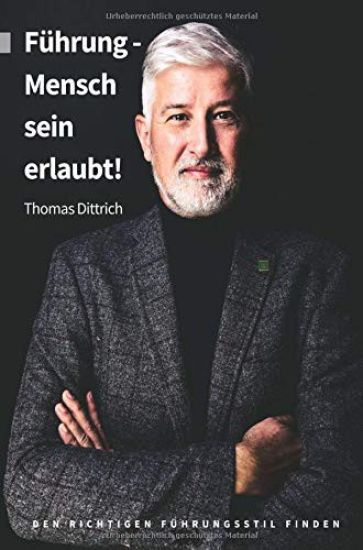
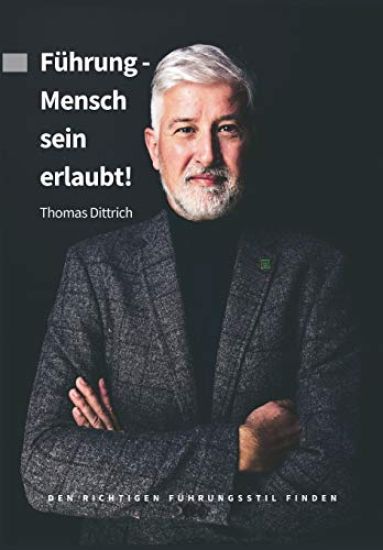
Führung - Mensch sein erlaubt!: Den richtigen Führungsstil finden
F hrung richtig eingesetzt und angewendet macht richtig Spa und f hrt schnell zu tollen Erfolgen. Hier steht der pragmatische Ansatz im Mittelpunkt neben der unvermeidbaren Theorie. Dieses Buch beschreibt die erforderlichen Skills zu F hrung, die eine F hrungskraft schnell und praktisch umsetzen kann, und dadurch einen positiven Schub f r sich, f r sein Team und f r das Unternehmen erzeugt. F r den Autor Thomas Dittrich, der fast 30 Jahre durchgehend Leitungsfunktionen in Produktions- und Administrationsbereichen eingenommen hatte, ist F hrung zu seiner Passion geworden. Er hat ein Faible f r Herausforderungen und schwierige Themen. Mit seinem umfassenden Fachwissen, der charmanten und dennoch professionellen Art und vor allem dem praxisbezogenen Hintergrund hat Herr Thomas Dittrich sich schnell einen hervorragenden Ruf erarbeitet und in den Unternehmen viele Erfolge erzielt. Das Buch beschreibt das Thema F hrung anschaulich und soll andere Menschen f r die faszinierende Welt einer F hrungskraft begeistern und ihnen den Einstieg erleichtern. Das Buch enth lt einen klar strukturierten Aufbau und leicht verst ndliche Informationen aus Theorie und langj hriger Praxis. Viele authentische Erlebnisberichte und bungen machen die Lekt re zu einem spannenden Lesevergn gen. Das Buch ist f r jeden interessant, der sich mit F hrung ernsthaft und intensiv besch ftigen m chte. Es richtet sich insbesondere an junge F hrungskr fte.
Führung - Mensch sein erlaubt!: Den richtigen Führungsstil finden
F hrung richtig eingesetzt und angewendet macht richtig Spa und f hrt schnell zu tollen Erfolgen. Hier steht der pragmatische Ansatz im Mittelpunkt neben der unvermeidbaren Theorie. Dieses Buch beschreibt die erforderlichen Skills zu F hrung, die eine F hrungskraft schnell und praktisch umsetzen kann, und dadurch einen positiven Schub f r sich, f r sein Team und f r das Unternehmen erzeugt. F r den Autor Thomas Dittrich, der fast 30 Jahre durchgehend Leitungsfunktionen in Produktions- und Administrationsbereichen eingenommen hatte, ist F hrung zu seiner Passion geworden. Er hat ein Faible f r Herausforderungen und schwierige Themen. Mit seinem umfassenden Fachwissen, der charmanten und dennoch professionellen Art und vor allem dem praxisbezogenen Hintergrund hat Herr Thomas Dittrich sich schnell einen hervorragenden Ruf erarbeitet und in den Unternehmen viele Erfolge erzielt. Das Buch beschreibt das Thema F hrung anschaulich und soll andere Menschen f r die faszinierende Welt einer F hrungskraft begeistern und ihnen den Einstieg erleichtern. Das Buch enth lt einen klar strukturierten Aufbau und leicht verst ndliche Informationen aus Theorie und langj hriger Praxis. Viele authentische Erlebnisberichte und bungen machen die Lekt re zu einem spannenden Lesevergn gen. Das Buch ist f r jeden interessant, der sich mit F hrung ernsthaft und intensiv besch ftigen m chte. Es richtet sich insbesondere an junge F hrungskr fte.
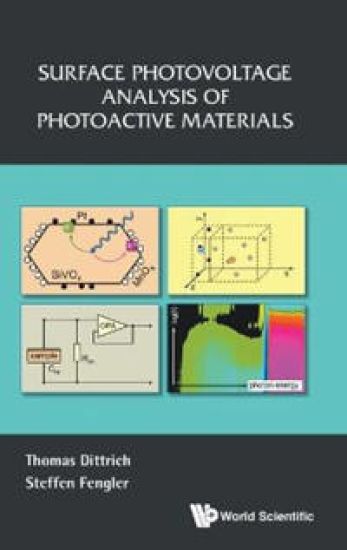
Surface Photovoltage Analysis Of Photoactive Materials

Surface Photovoltage Analysis Of Photoactive Materials

Thomas Dittrich; Steffen Fengler

World Scientific Europe Ltd
2020
sidottu
Surface photovoltage (SPV) techniques provide information about photoactive materials with respect to charge separation in space. This book aims to share experience in measuring and analyzing SPV signals and addresses researchers and developers interested in learning more about and in applying SPV methods. For this purpose, basics about processes in photoactive materials and principles of SPV measurements are combined with examples from research and development over the last two decades. SPV measurements with Kelvin probes, fixed capacitors, electron beams and photoelectrons are explained. Details are given for continuous, modulated and transient SPV spectroscopy. Simulation principles of SPV signals by random walks are introduced and applied for small systems. Application examples are selected for the characterization of silicon surfaces, gallium arsenide layers, electronic states in colloidal quantum dots, transport phenomena in metal oxides and local charge separation across photocatalytic active crystallites.
Archean Rare-Metal Pegmatites in Zimbabwe and Western Australia

Archean Rare-Metal Pegmatites in Zimbabwe and Western Australia

Thomas Dittrich; Thomas Seifert; Bernhard Schulz; Steffen Hagemann; Axel Gerdes; Jörg Pfänder

Springer Nature Switzerland AG
2019
nidottu
Lithium-cesium-tantalum (LCT) pegmatites are important resources for rare metals. For Cs, only the LCT pegmatites with the zeolite group mineral pollucite at Bikita (Zimbabwe Craton) and Tanco (Superior Province Craton) are of commercial importance. Common characteristics of world-class LCT pegmatite deposits include their Meso- to Neoarchean age and geological setting within greenstone belt lithologies on Archean Cratons. This study presents the first coherent and comparative scientific investigation of five major LCT pegmatite systems from the Yilgarn, Pilbara and Zimbabwe Craton. For the evaluation of their Cs potential and of the genetic concepts of pollucite formation, the pegmatites from Wodgina, Londonderry, Mount Deans and Cattlin Creek were compared to the Bikita pollucite mineralization. The integration of the new data (e.g., geochronological and radiogenic isotope data) into the complex geological framework: 1) enhances our knowledge of the formation ofLCT pegmatite systems, and 2) will contribute to the further exploration of additional world-class LCT pegmatite deposits, which 3) may host massive pollucite mineralisations.
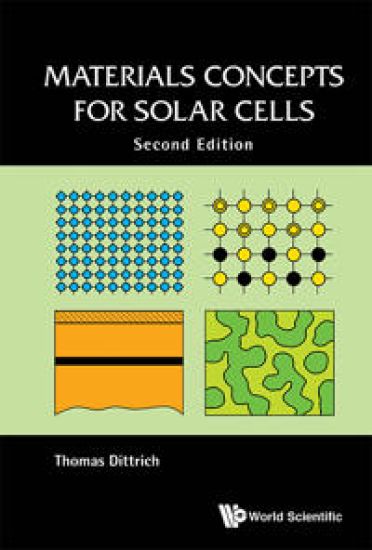
Materials Concepts For Solar Cells

Materials Concepts For Solar Cells

Thomas Dittrich

World Scientific Europe Ltd
2018
sidottu
A modern challenge is for solar cell materials to enable the highest solar energy conversion efficiencies, at costs as low as possible, and at an energy balance as sustainable as necessary in the future. This textbook explains the principles, concepts and materials used in solar cells. It combines basic knowledge about solar cells and the demanded criteria for the materials with a comprehensive introduction into each of the four classes of materials for solar cells, i.e. solar cells based on crystalline silicon, epitaxial layer systems of III-V semiconductors, thin-film absorbers on foreign substrates, and nano-composite absorbers. In this sense, it bridges a gap between basic literature on the physics of solar cells and books specialized on certain types of solar cells. The last five years had several breakthroughs in photovoltaics and in the research on solar cells and solar cell materials. We consider them in this second edition. For example, the high potential of crystalline silicon with charge-selective hetero-junctions and alkaline treatments of thin-film absorbers, based on chalcopyrite, enabled new records. Research activities were boosted by the class of hybrid organic-inorganic metal halide perovskites, a promising newcomer in the field. This is essential reading for students interested in solar cells and materials for solar cells. It encourages students to solve tasks at the end of each chapter. It has been well applied for postgraduate students with background in materials science, engineering, chemistry or physics.
Materials Concepts For Solar Cells

Materials Concepts For Solar Cells

Thomas Dittrich

World Scientific Europe Ltd
2018
nidottu
A modern challenge is for solar cell materials to enable the highest solar energy conversion efficiencies, at costs as low as possible, and at an energy balance as sustainable as necessary in the future. This textbook explains the principles, concepts and materials used in solar cells. It combines basic knowledge about solar cells and the demanded criteria for the materials with a comprehensive introduction into each of the four classes of materials for solar cells, i.e. solar cells based on crystalline silicon, epitaxial layer systems of III-V semiconductors, thin-film absorbers on foreign substrates, and nano-composite absorbers. In this sense, it bridges a gap between basic literature on the physics of solar cells and books specialized on certain types of solar cells. The last five years had several breakthroughs in photovoltaics and in the research on solar cells and solar cell materials. We consider them in this second edition. For example, the high potential of crystalline silicon with charge-selective hetero-junctions and alkaline treatments of thin-film absorbers, based on chalcopyrite, enabled new records. Research activities were boosted by the class of hybrid organic-inorganic metal halide perovskites, a promising newcomer in the field. This is essential reading for students interested in solar cells and materials for solar cells. It encourages students to solve tasks at the end of each chapter. It has been well applied for postgraduate students with background in materials science, engineering, chemistry or physics.
Materials Concepts For Solar Cells

Materials Concepts For Solar Cells

Thomas Dittrich

Imperial College Press
2014
sidottu
This textbook bridges the gap between basic literature on the physics of solar cells and highly specialized books about photovoltaic solar energy conversion. It is intended to give students with a background in engineering, materials science, chemistry or physics a comprehensive introduction to materials concepts for solar cells. To this end, general principles of solar cells and materials demands are explained in the first part of this book. The second part is devoted to the four classes of materials concepts for solar cells: solar cells based on crystals of silicon, epitaxial layer systems of III-V semiconductors, thin-film absorbers on foreign substrates, and nano-composite absorbers.