

Kirjailija
Thomas Dunlap
Kirjat ja teokset yhdessä paikassa: 9 kirjaa, julkaisuja vuosilta 1999–2017, suosituimpiin kuuluu Faith in Nature. Vertaile teosten hintoja ja tarkista saatavuus suomalaisista kirjakaupoista.
9 kirjaa
Kirjojen julkaisuvuodet: 1999–2017.

DDT, Silent Spring, and the Rise of Environmentalism
Thomas Dunlap; William Cronon
University of Washington Press
2015
sidottu
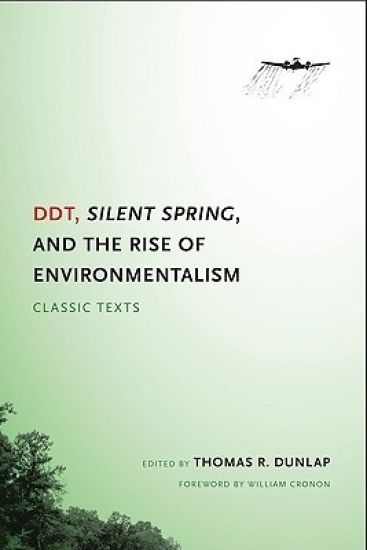
No single event played a greater role in the birth of modern environmentalism than the publication of Rachel Carson's Silent Spring and its assault on insecticides. The documents collected by Thomas Dunlap trace shifting attitudes toward DDT and pesticides in general through a variety of sources: excerpts from scientific studies and government reports, advertisements from industry journals, articles from popular magazines, and the famous "Fable for Tomorrow" from Silent Spring. Beginning with attitudes toward nature at the turn of the twentieth century, the book moves through the use and early regulation of pesticides; the introduction and early success of DDT; the discovery of its environmental effects; and the uproar over Silent Spring. It ends with recent debates about DDT as a potential solution to malaria in Africa.

The human impulse to religion--the drive to explain the world, humans, and humans’ place in the universe – can be seen to encompass environmentalism as an offshoot of the secular, material faith in human reason and power that dominates modern society. Faith in Nature traces the history of environmentalism--and its moral thrust--from its roots in the Enlightenment and Romanticism through the Progressive Era to the present. Drawing astonishing parallels between religion and environmentalism, the book examines the passion of the movement’s adherents and enemies alike, its concern with the moral conduct of daily life, and its attempt to answer fundamental questions about the underlying order of the world and of humanity’s place within it. Thomas Dunlap is among the leading environmental historians and historians of science in the United States. Originally trained as a chemist, he has a rigorous understanding of science and appreciates its vital importance to environmental thought. But he is also a devout Catholic who believes that the insights of religious revelation need not necessarily be at odds with the insights of scientific investigation. This book grew from his own religious journey and his attempts to understand human ethical obligations and spiritual debts to the natural world. CHOICE Outstanding Academic Title 2005


DDT, Silent Spring, and the Rise of Environmentalism
Thomas Dunlap; William Cronon
University of Washington Press
2008
pokkari
No single event played a greater role in the birth of modern environmentalism than the publication of Rachel Carson's Silent Spring and its assault on insecticides. The documents collected by Thomas Dunlap trace shifting attitudes toward DDT and pesticides in general through a variety of sources: excerpts from scientific studies and government reports, advertisements from industry journals, articles from popular magazines, and the famous "Fable for Tomorrow" from Silent Spring. Beginning with attitudes toward nature at the turn of the twentieth century, the book moves through the use and early regulation of pesticides; the introduction and early success of DDT; the discovery of its environmental effects; and the uproar over Silent Spring. It ends with recent debates about DDT as a potential solution to malaria in Africa.
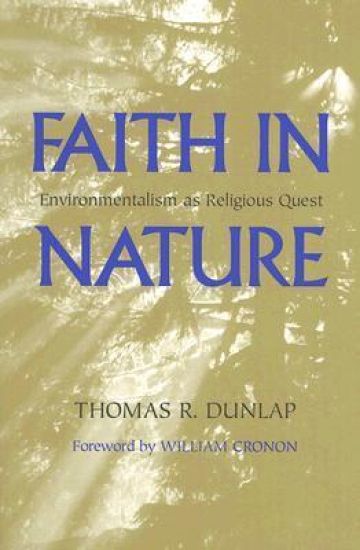
The human impulse to religion--the drive to explain the world, humans, and humans' place in the universe – can be seen to encompass environmentalism as an offshoot of the secular, material faith in human reason and power that dominates modern society. Faith in Nature traces the history of environmentalism--and its moral thrust--from its roots in the Enlightenment and Romanticism through the Progressive Era to the present. Drawing astonishing parallels between religion and environmentalism, the book examines the passion of the movement's adherents and enemies alike, its concern with the moral conduct of daily life, and its attempt to answer fundamental questions about the underlying order of the world and of humanity's place within it. Thomas Dunlap is among the leading environmental historians and historians of science in the United States. Originally trained as a chemist, he has a rigorous understanding of science and appreciates its vital importance to environmental thought. But he is also a devout Catholic who believes that the insights of religious revelation need not necessarily be at odds with the insights of scientific investigation. This book grew from his own religious journey and his attempts to understand human ethical obligations and spiritual debts to the natural world. CHOICE Outstanding Academic Title 2005
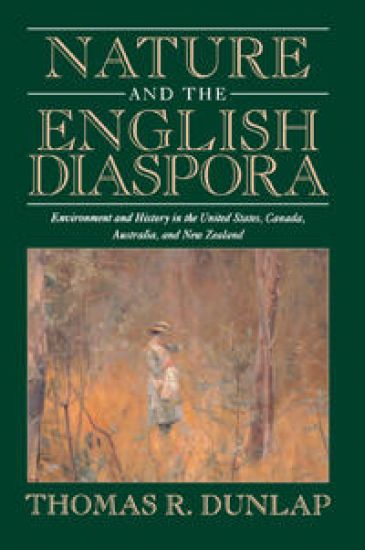
First published in 1999, this book is a comparative history of the development of ideas about nature, particularly of the importance of native nature as a part of the culture in the Anglo settler countries of the United States, Canada, Australia, and New Zealand. It examines the development of natural history in the great nineteenth-century expansion of settlement. It explores settlers' adaptations to the end of expansion and scientists' shift from natural history to ecology. Finally it analyzes the diffusion of ecology through the Anglo world and to the general population as well as the rise of environmentalism. Addressing not only scientific knowledge, but also popular issues such as hunting, common names for plants and animals, landscape painting, and nature stories, this book explores the ways in which English-speaking settlers looked at nature in their new lands and at the place they gave it in their societies.
First published in 1999, this book is a comparative history of the development of ideas about nature, particularly of the importance of native nature as a part of the culture in the Anglo settler countries of the United States, Canada, Australia, and New Zealand. It examines the development of natural history in the great nineteenth-century expansion of settlement. It explores settlers' adaptations to the end of expansion and scientists' shift from natural history to ecology. Finally it analyzes the diffusion of ecology through the Anglo world and to the general population as well as the rise of environmentalism. Addressing not only scientific knowledge, but also popular issues such as hunting, common names for plants and animals, landscape painting, and nature stories, this book explores the ways in which English-speaking settlers looked at nature in their new lands and at the place they gave it in their societies.