Kirjojen hintavertailu – 12 903 729 kirjaa ja 27 kauppaa

Kirjailija

Thomas E. Lovejoy

Kirjat ja teokset yhdessä paikassa: 7 kirjaa, julkaisuja vuosilta 2011–2023, suosituimpiin kuuluu The Art of Ecology. Vertaile teosten hintoja ja tarkista saatavuus suomalaisista kirjakaupoista.

7 kirjaa

Kirjojen julkaisuvuodet: 2011–2023.

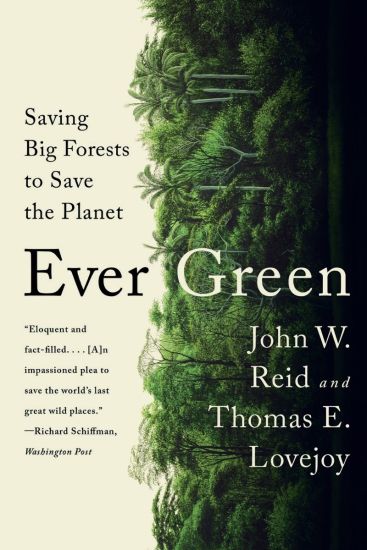
Ever Green

Ever Green

John W. Reid; Thomas E. Lovejoy

WW NORTON CO
2023
nidottu
Five stunningly large forests remain on Earth: the Taiga, extending from the Pacific Ocean across all of Russia and far-northern Europe; the North American boreal, ranging from Alaska’s Bering seacoast to Canada’s Atlantic shore; the Amazon, covering almost the entirety of South America’s bulge; the Congo, occupying parts of six nations in Africa’s wet equatorial middle; and the island forest of New Guinea, twice the size of California. These mega forests are vital to preserving global biodiversity, thousands of cultures and a stable climate, as economist John W. Reid and celebrated biologist Thomas E. Lovejoy argue convincingly in Ever Green. Mega forests serve an essential role in decarbonising the atmosphere—the boreal alone holds 1.8 trillion metric tons of carbon in its deep soils and peat layers, 190 years’ worth of global emissions at 2019 levels—and saving them is the most immediate and affordable large-scale solution to our planet’s most formidable ongoing crisis. Reid and Lovejoy offer practical solutions to address the biggest challenges these forests face, from vastly expanding protected areas, to supporting Indigenous forest stewards, to planning smarter road networks. In gorgeous prose that evokes the majesty of these ancient forests along with the people and animals who inhabit them, Reid and Lovejoy take us on an exhilarating global journey.
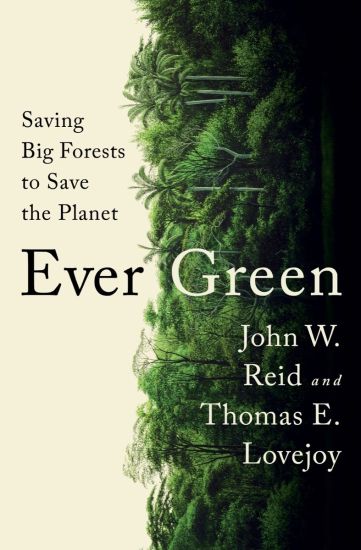
Ever Green

Ever Green

John W. Reid; Thomas E. Lovejoy

WW NORTON CO
2022
sidottu
Five stunningly large forests remain on Earth: the Taiga, extending from the Pacific Ocean across all of Russia and far-northern Europe; the North American boreal, ranging from Alaska’s Bering seacoast to Canada’s Atlantic shore; the Amazon, covering almost the entirety of South America’s bulge; the Congo, occupying parts of six nations in Africa’s wet equatorial middle; and the island forest of New Guinea, twice the size of California. These megaforests are vital to preserving global biodiversity, thousands of cultures, and a stable climate, as economist John W. Reid and celebrated biologist Thomas E. Lovejoy argue convincingly in Ever Green. Megaforests serve an essential role in decarbonizing the atmosphere—the boreal alone holds 1.8 trillion metric tons of carbon in its deep soils and peat layers, 190 years’ worth of global emissions at 2019 levels—and saving them is the most immediate and affordable large-scale solution to our planet’s most formidable ongoing crisis. Reid and Lovejoy offer practical solutions to address the biggest challenges these forests face, from vastly expanding protected areas, to supporting Indigenous forest stewards, to planning smarter road networks. In gorgeous prose that evokes the majesty of these ancient forests along with the people and animals who inhabit them, Reid and Lovejoy take us on an exhilarating global journey.
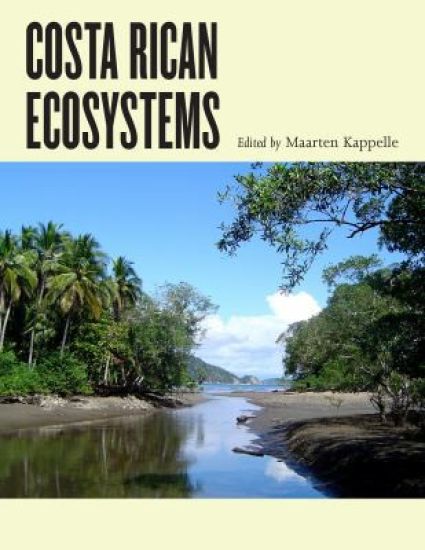
Costa Rican Ecosystems

Costa Rican Ecosystems

Thomas E. Lovejoy

University of Chicago Press
2016
sidottu
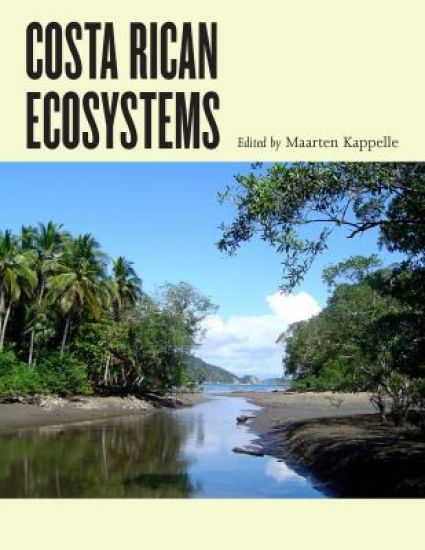
In the more than thirty years since the publication of Daniel H. Janzen's classic Costa Rican Natural History, research in this small but astonishingly biodiverse, well-preserved, and well-studied Latin-American nation has evolved from a species-level approach to the study of entire ecosystems. And from the lowland dry forests of Guanacaste to the montane cloud forests of Monteverde, from the seasonal forests of the Central Valley to the coastal species assemblages of Tortuguero, Costa Rica has proven to be as richly diverse in ecosystems as it is in species. In Costa Rican Ecosystems, Maarten Kappelle brings together a collection of the world's foremost experts on Costa Rican ecology-outstanding scientists such as Daniel H. Janzen, Jorge Cortes, Jorge A. Jimenez, Sally P. Horn, R. O. Lawton, Quirico Jimenez M., Carlos Manuel Rodriguez, Catherine M. Pringle, and Eduardo Carrillo J., among others-to offer the first comprehensive account of the diversity, structure, function, uses, and conservation of Costa Rica's ecosystems. Featuring a foreword and introductory remarks by two renowned leaders in biodiversity science and ecological conservation, Thomas E. Lovejoy and Rodrigo Gamez, chapters highlighting the geology, soils, and climate of Costa Rica, as well as the ecosystems of its terrestrial, freshwater, and marine habitats, and including previously unpublished information on Isla del Coco, this beautiful color-illustrated book will be an essential reference for academic scientists, students, natural history guides, conservationists, educators, park guards, and visitors alike.
Costa Rican Ecosystems

Costa Rican Ecosystems

Thomas E. Lovejoy

University of Chicago Press
2016
nidottu
In the more than thirty years since the publication of Daniel H. Janzen's classic Costa Rican Natural History, research in this small but astonishingly biodiverse, well-preserved, and well-studied Latin-American nation has evolved from a species-level approach to the study of entire ecosystems. And from the lowland dry forests of Guanacaste to the montane cloud forests of Monteverde, from the seasonal forests of the Central Valley to the coastal species assemblages of Tortuguero, Costa Rica has proven to be as richly diverse in ecosystems as it is in species. In Costa Rican Ecosystems, Maarten Kappelle brings together a collection of the world's foremost experts on Costa Rican ecology-outstanding scientists such as Daniel H. Janzen, Jorge Cortes, Jorge A. Jimenez, Sally P. Horn, R. O. Lawton, Quirico Jimenez M., Carlos Manuel Rodriguez, Catherine M. Pringle, and Eduardo Carrillo J., among others-to offer the first comprehensive account of the diversity, structure, function, uses, and conservation of Costa Rica's ecosystems. Featuring a foreword and introductory remarks by two renowned leaders in biodiversity science and ecological conservation, Thomas E. Lovejoy and Rodrigo Gamez, chapters highlighting the geology, soils, and climate of Costa Rica, as well as the ecosystems of its terrestrial, freshwater, and marine habitats, and including previously unpublished information on Isla del Coco, this beautiful color-illustrated book will be an essential reference for academic scientists, students, natural history guides, conservationists, educators, park guards, and visitors alike.
On the Edge

On the Edge

Claude Martin; Thomas E. Lovejoy

Greystone Books,Canada
2015
sidottu
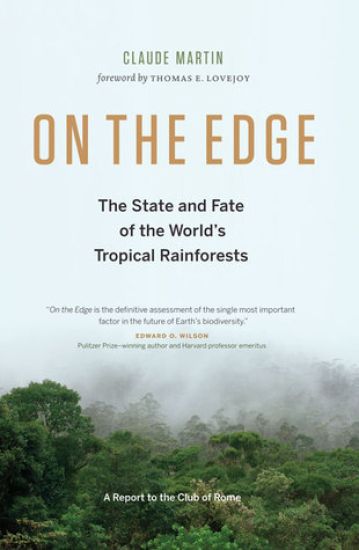
In 1972, The Limits to Growth introduced the idea that world resources are limited. Soon after, people became aware of the threats to the world's rainforests, the biggest terrestrial repositories of biodiversity and essential regulators of global air and water cycles. Since that time, new research and technological advances have greatly increased our knowledge of how rainforests are being affected by changing patterns of resource use. Increasing concern about climate change has made it more important than ever to understand the state of the world's tropical forests. This book provides an up-to-date picture of the health of the world's tropical forests. Claude Martin, an eminent scientist and conservationist, integrates information from remote imaging, ecology, and economics to explain deforestation and forest health throughout the world. He explains how urbanization, an increasingly global economy, and a worldwide demand for biofuels put new pressure on rainforest land. He examines the policies and market forces that have successfully preserved forests in some areas and discusses the economic benefits of protected areas. Using evidence from ice core records and past forest cover patterns, he predicts the most likely effects of climate change.
The Lomborg Deception

The Lomborg Deception

Howard Friel; Thomas E. Lovejoy

Yale University Press
2011
pokkari
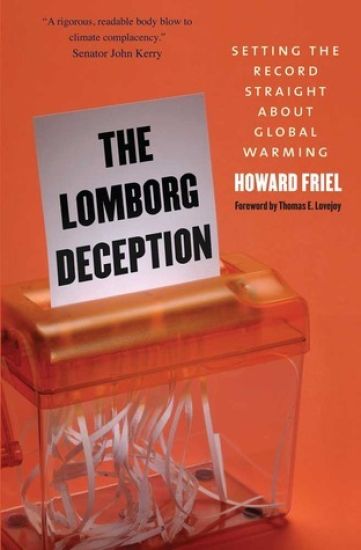
A compelling exposé of the highly problematic scholarship of Bjørn Lomborg, the world’s leading global warming skeptic In this major assessment of leading climate-change skeptic Bjørn Lomborg, Howard Friel meticulously deconstructs the Danish statistician’s claim that global warming is “no catastrophe” by exposing the systematic misrepresentations and partial accounting that are at the core of climate skepticism. His detailed analysis serves not only as a guide to reading the global warming skeptics, but also as a model for assessing the state of climate science. With attention to the complexities of climate-related phenomena across a range of areas—from Arctic sea ice to the Antarctic ice sheet—The Lomborg Deception also offers readers an enlightening review of some of today’s most urgent climate concerns. Friel’s book is the first to respond directly to Lomborg’s controversial research as published in The Skeptical Environmentalist (2001) and Cool It: The Skeptical Environmentalist’s Guide to Global Warming (2007). His close reading of Lomborg’s textual claims and supporting footnotes reveals a lengthy list of findings that will rock climate skeptics and their allies in the government and news media, demonstrating that the published peer-reviewed climate science, as assessed mainly by the U. N.’s Intergovernmental Panel on Climate Change, has had it mostly right—even if somewhat conservatively right—all along. Friel’s able defense of Al Gore’s An Inconvenient Truth against Lomborg’s repeated attacks is by itself worth an attentive reading.
The Art of Ecology

The Art of Ecology

Thomas E. Lovejoy; G. Evelyn Hutchinson

Yale University Press
2011
pokkari
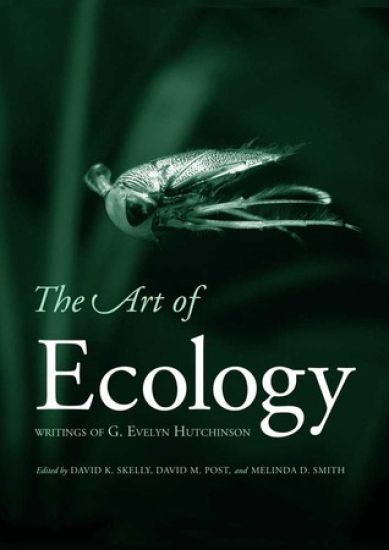
During the twentieth century, ecology evolved from a collection of natural history facts to a rigorous, analytical discipline with a rich body of theory. No single person is more responsible for this change than G. Evelyn Hutchinson. This collection of selected writings showcases Hutchinson’s dynamic and wide-ranging mind as well as his keen wit. Original essays by scientists and historians underscore the continuing relevance of Hutchinson’s ideas.