
Kirjojen hintavertailu – 12 903 725 kirjaa ja 27 kauppaa

Kirjailija

Thomas Earl Porter

Kirjat ja teokset yhdessä paikassa: 3 kirjaa, julkaisuja vuosilta 2017–2026, suosituimpiin kuuluu Genocide: A Thematic Approach. Vertaile teosten hintoja ja tarkista saatavuus suomalaisista kirjakaupoista.

3 kirjaa

Kirjojen julkaisuvuodet: 2017–2026.

Genocide: A Thematic Approach

Genocide: A Thematic Approach

Thomas Earl Porter; John Cox

ANTHEM PRESS
2026
nidottu
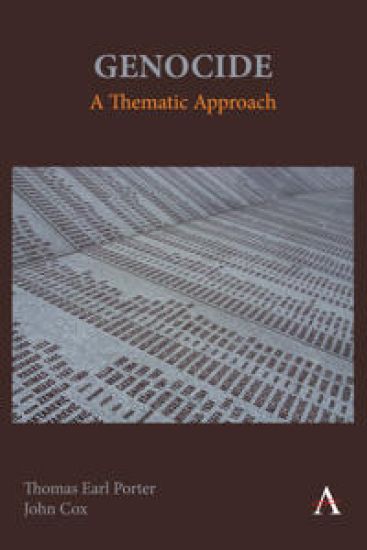
The purpose of this volume is not simply to compile yet another wearying chronicle of the horrors that have been committed by our fellow human beings. Most students who register for a course on Genocide assume that it will focus, perhaps exclusively, on the Holocaust—the case with which they are most familiar. Many of them have read Elie Wiesel’s eloquent masterpiece Night in secondary school, and some may have read The Diary of Anne Frank. A few students might even know that a genocide occurred in Rwanda or Darfur. Like most people, however, they equate genocide simply with mass killing, and assume that genocide must by definition entail millions of deaths. Raphael Lemkin, who coined the word “genocide”—meaning literally “to kill a people”— originally defined it “a colonial crime of destroying the national patterns of the oppressed and imposing the national patterns of the oppressors.” This was a process, Lemkin said, deliberately intending to destroy a people’s culture that could sometimes but not necessarily always result in mass murder. Students need to know that after World War II the great powers undermined and co-opted the process of writing the1948 Genocide Convention at the UN—because these nations did not want their own colonial crimes, oppression of minorities, and destructions of cultures to be included in the definition. Instead, they simply used the Holocaust as a template and succeeded in distorting what Lemkin originally meant by “genocide”—the murder of a people by destroying their social and cultural connections.
Genocide: A Thematic Approach

Genocide: A Thematic Approach

Thomas Earl Porter; John Cox

ANTHEM PRESS
2025
sidottu
The purpose of this volume is not simply to compile yet another wearying chronicle of the horrors that have been committed by our fellow human beings. Most students who register for a course on Genocide assume that it will focus, perhaps exclusively, on the Holocaust—the case with which they are most familiar. Many of them have read Elie Wiesel’s eloquent masterpiece Night in secondary school, and some may have read The Diary of Anne Frank. A few students might even know that a genocide occurred in Rwanda or Darfur. Like most people, however, they equate genocide simply with mass killing, and assume that genocide must by definition entail millions of deaths. Raphael Lemkin, who coined the word “genocide”—meaning literally “to kill a people”— originally defined it “a colonial crime of destroying the national patterns of the oppressed and imposing the national patterns of the oppressors.” This was a process, Lemkin said, deliberately intending to destroy a people’s culture that could sometimes but not necessarily always result in mass murder. Students need to know that after World War II the great powers undermined and co-opted the process of writing the1948 Genocide Convention at the UN—because these nations did not want their own colonial crimes, oppression of minorities, and destructions of cultures to be included in the definition. Instead, they simply used the Holocaust as a template and succeeded in distorting what Lemkin originally meant by “genocide”—the murder of a people by destroying their social and cultural connections.
Prince George E. L'vov

Prince George E. L'vov

Thomas Earl Porter

Lexington Books
2017
sidottu
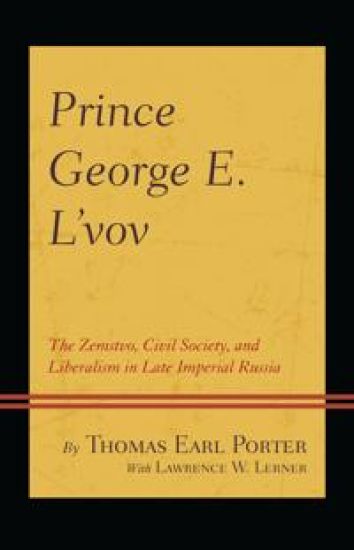
Prince George E. Lvov was born in Dresden in 1861, the same year Tsar Alexander II emancipated the serfs and Russia began to move away from its static society of orders toward a more modern polity. He died in exile in Paris in 1925 with Russia once again in thralldom. Prince L’vov dedicated his life to the improvement of the peasantry’s condition and, like many other liberals, hoped to acculturate them to the norms and values of a civil society to attempt to overcome the backwardness of provincial life and ultimately to integrate them as ‘citizens” into a modern, vibrant “nation.” L’vov played an important role in Russia’s first experiment with local self-government, oversaw the “Great Migration” of thousands of peasants to settle the wilderness of Siberia free from anyone’s tutelage, organized aid to the tsar’s peasant soldiers in the Russo-Japanese and First World Wars and helped to marshal the resources of the nation and coordinate industrial production during the latter conflict. It was precisely because of this lifetime of dedicated public service that he was chosen as liberal Russia’s standard bearer upon the collapse of the Romanov dynasty. But the few references in the scholarly literature concerning Prince George L’vov are invariably negative ones which fault him for his weak and ineffectual performance as the first head of the Russia Provisional Government in 1917. That the Provisional Government failed is, of course, incontrovertible, though much of the blame rightly should be, and generally is, laid at the feet of his successor. Of course, it must also be allowed that the social revolution developed and then deepened during L’vov’s stewardship of Russia. Equally unassailable is the conclusion that it was largely that government’s temporizing, whether deliberate or not, which led to its demise. What then accounted for this paralysis and complete failure of Russia’s liberal movement? This book attempts to answer that question by presenting a more balanced appraisal of L’vov’s place in Russian history through an examination of his career as a dedicated public servant.