Kirjojen hintavertailu – 12 859 829 kirjaa ja 27 kauppaa

Kirjailija

Thomas Fisher

Kirjat ja teokset yhdessä paikassa: 34 kirjaa, julkaisuja vuosilta 1997–2026, suosituimpiin kuuluu Variability in Human Performance. Vertaile teosten hintoja ja tarkista saatavuus suomalaisista kirjakaupoista.

34 kirjaa

Kirjojen julkaisuvuodet: 1997–2026.

Designing Our Way to a Better World

Designing Our Way to a Better World

Thomas Fisher

University of Minnesota Press
2016
nidottu
Envisioning what we need, when it doesn’t yet exist: this, Thomas Fisher tells us, is what design does. And if what we need now is a better world-functioning schools, working infrastructure, thriving cities-why not design one? Fisher shows how the principles of design apply to services and systems that seem to evolve naturally, systems whose failures sometimes seem as arbitrary and inevitable as the weather. But the “invisible” systems we depend on for our daily lives (in education, politics, economics, and public health) are designed every bit as much as the products we buy and the environments we inhabit-and are just as susceptible to creative reimagining. Designing Our Way to a Better World challenges the assumptions that have led to so much poor performance in the public and private realms: that our schools cannot teach creativity, that our governments cannot predict the disasters that befall us, that our health system will protect us from pandemics, that our politics will remain polarized, that our economy cannot avoid inequality, and that our industry cannot help but pollute the environment. Targeting these assumptions, Fisher's approach reveals the power of design to synthesize our knowledge about the world into greater wholes. In doing so, this book opens up possible futures-and better futures-than the unsustainable and inequitable one we now face.

The Planner Handbook

The Planner Handbook

Thomas Fisher

Lulu.com
2014
nidottu
A handbook designed for the military planner. This handbook provides all of the reference material needed to conduct planning of any type (military, business, government) and at any level. While focused on the aspects of operational art and military science at the operational level, it includes discussion of strategy and policy as it pertains to the creation of plans. Forward by GEN Gary Luck. For those interested in a version with a coil binder that lays open during planning sessions, see 'The Planner Handbook - OPT Edition'.
Ralph Johnson of Perkins + Will

Ralph Johnson of Perkins + Will

Friedman Daniel S.; El-Khoury Rodolphe; Thomas Fisher

Oscar Riera Ojeda Publishers Limited
2013
nidottu
The work of Chicago architect Ralph Johnson explores the use of restrained modernism to enrich and clarify complex programmatic buildings with intriguing assemblies that reveal their functions and hierarchical relationships. Mr. Johnson’s goal is to form, through the social art of architecture, an urban environment of buildings that are good civic neighbours as well as distinguished citizens. The projects in this book, both built and unbuilt, represent his concern for humanistic values and emphasis on process rather than preconceived product, allowing the work to respond to diverse cultures and urban conditions. Mr. Johnson is a Principal and the Design Director at Perkins+Will. The book includes essays by Rodolphe el- Khoury, Daniel Friedman and Thomas Fisher.
Berlin 1933-45

Berlin 1933-45

Thomas Fisher

Editions Heimdal
2013
nidottu
The author, a Berliner himself, offers us a chronicle where we follow Wilhelm Mohnke in 1933 Berlin, followed by his first fight, his injury, the Battle of the Bulge at the head of the HJ, and especially the recent fighting in Berlin where he became the military commander of the Chancellery.
Ralph Johnson of Perkins + Will (With clamshell box)

Ralph Johnson of Perkins + Will (With clamshell box)

Daniel S. Friedman; Rodolphe El-Khoury; Thomas Fisher

Oscar Riera Ojeda Publishers Limited
2012
sidottu
The work of Chicago architect Ralph Johnson explores the use of restrained modernism to enrich and clarify complex programmatic buildings with intriguing assemblies that reveal their functions and hierarchical relationships. Mr. Johnson’s goal is to form, through the social art of architecture, an urban environment of buildings that are good civic neighbours as well as distinguished citizens. The projects in this book, both built and unbuilt, represent his concern for humanistic values and emphasis on process rather than preconceived product, allowing the work to respond to diverse cultures and urban conditions. Mr. Johnson is a Principal and the Design Director at Perkins+Will. The book includes essays by Rodolphe el- Khoury, Daniel Friedman and Thomas Fisher.
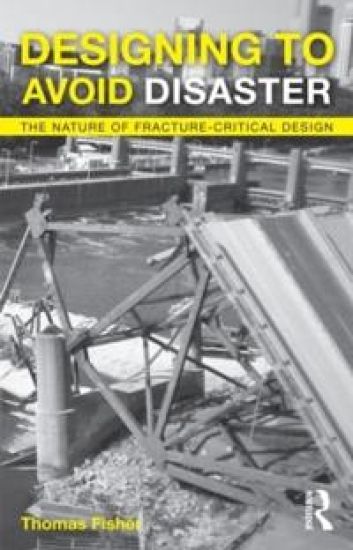
Designing To Avoid Disaster

Designing To Avoid Disaster

Thomas Fisher

Routledge
2012
nidottu
Recent catastrophic events, such as the I-35W bridge collapse, New Orleans flooding, the BP oil spill, Port au Prince's destruction by earthquake, Fukushima nuclear plant's devastation by tsunami, the Wall Street investment bank failures, and the housing foreclosure epidemic and the collapse of housing prices, all stem from what author Thomas Fisher calls fracture-critical design. This is design in which structures and systems have so little redundancy and so much interconnectedness and misguided efficiency that they fail completely if any one part does not perform as intended. If we, as architects, planners, engineers, and citizens are to predict and prepare for the next disaster, we need to recognize this error in our thinking and to understand how design thinking provides us with a way to anticipate unintended failures and increase the resiliency of the world in which we live. In Designing to Avoid Disaster, the author discusses the context and cultural assumptions that have led to a number of disasters worldwide, describing the nature of fracture-critical design and why it has become so prevalent. He traces the impact of fracture-critical thinking on everything from our economy and politics to our educational and infrastructure systems to the communities, buildings, and products we inhabit and use everyday. And he shows how the natural environment and human population itself have both begun to move on a path toward a fracture-critical collapse that we need to do everything possible to avoid. We designed our way to such disasters and we can design our way out of them, with a number of possible solutions that Fisher provides.
Designing To Avoid Disaster

Designing To Avoid Disaster

Thomas Fisher

Routledge
2012
sidottu
Recent catastrophic events, such as the I-35W bridge collapse, New Orleans flooding, the BP oil spill, Port au Prince's destruction by earthquake, Fukushima nuclear plant's devastation by tsunami, the Wall Street investment bank failures, and the housing foreclosure epidemic and the collapse of housing prices, all stem from what author Thomas Fisher calls fracture-critical design. This is design in which structures and systems have so little redundancy and so much interconnectedness and misguided efficiency that they fail completely if any one part does not perform as intended. If we, as architects, planners, engineers, and citizens are to predict and prepare for the next disaster, we need to recognize this error in our thinking and to understand how design thinking provides us with a way to anticipate unintended failures and increase the resiliency of the world in which we live. In Designing to Avoid Disaster, the author discusses the context and cultural assumptions that have led to a number of disasters worldwide, describing the nature of fracture-critical design and why it has become so prevalent. He traces the impact of fracture-critical thinking on everything from our economy and politics to our educational and infrastructure systems to the communities, buildings, and products we inhabit and use everyday. And he shows how the natural environment and human population itself have both begun to move on a path toward a fracture-critical collapse that we need to do everything possible to avoid. We designed our way to such disasters and we can design our way out of them, with a number of possible solutions that Fisher provides.
The Invisible Element of Place

The Invisible Element of Place

Thomas Fisher

University of Minnesota Press
2011
nidottu
“Even though it’s bold, it doesn’t shout at you,” David Salmela says of the silvery house he designed for a woodsy setting in Deephaven, Minnesota. “It’s not a barking dog. It’s a resting, very gentle animal.” The American Institute of Architects, conferring its 2008 Housing Award, was more direct: the house was, in the words of the jury, “brilliantly designed.” The Streeter house is just one of fifty-one notable projects by Minnesota architect Salmela featured in The Invisible Element of Place. Thomas Fisher explores both the beauty and the practicality of Salmela’s award-winning designs-and offers insight into how an architectural firm as small and remote as Salmela’s has been able to produce such consistently remarkable and internationally recognized results. Profiling such building projects as Jackson Meadow, a conservation community that has become a nationwide model; the Hawks Boot Factory, Zamzow house, and Bagley Nature Pavilion, which emphasize green building, solar power, and the use of natural light; and the Chrismer, Koch, Fiore, Roland, Ramberg, and Grams cabins, meshing clients’ particular needs and the land’s peculiar constraints, this book provides a rare vision of architectural design. Gorgeous images from one of the nation’s most unique architectural photographers showcase how Salmela’s designs work in concert with individual wishes, environmental concerns, and artistic understanding, and his breathtaking buildings reflect the Midwest’s culture, history, and, ideally, its future.
Architectural Design and Ethics

Architectural Design and Ethics

Thomas Fisher

Architectural Press
2008
nidottu
Architectural Design and Ethics offers both professional architects and architecture students a theoretical base and numerous suggestions as to how we might rethink our responsibilities to the natural world and design a more sustainable future for ourselves. As we find ourselves on the steep slope of several exponential growth curves – in global population, in heat-trapping atmospheric gases, in the gap between the rich and poor, and in the demand for finite resources, Fisher lays down a theory of architecture based on ethics and explores how buildings can and do provide both social and moral dimensions. The book also has practical goals, demonstrating how architects can make better and more beautiful buildings whilst nurturing more responsible, sustainable development. Architectural Design and Ethics will prove an invaluable text not only to those in the architecture field, but to anyone simply interested in the ethical issues surrounding our built environment.
Salmela Architect

Salmela Architect

Thomas Fisher

University of Minnesota Press
2005
nidottu
Salmela Architect provides an in-depth look at one of America's leading "critical regionalist" architects. Salmela's buildings resolve a central question of our time: how to balance the various extreme positions that characterize contemporary architecture and culture. Salmela accomplishes this by juxtaposing opposites: modernist and traditional forms, open and cellular plans, large and small scales, familiar elements used in unfamiliar ways. His projects range from a small stand-alone sauna to commercial spaces visited by thousands of people, and his buildings, mostly situated in the upper Midwest, have become nationally and internationally known. Salmela Architect showcases twenty-six completed buildings and sixteen current projects in lavish color photographs and architectural drawings, enabling readers to get a full sense of the practicality, ethnicity, and playfulness apparent in David Salmela's work. Architecture critic Thomas Fisher explores Salmela's propensity to draw from regional roots as he creates designs particular to individual places and cultures yet with universal appeal. Fisher illuminates this synchronicity with projects as prominent as the Gooseberry Falls Visitors Center and Wild Rice Restaurant as well as residential projects including the acclaimed Jackson Meadow community and photographer Jim Brandenburg's Ravenwood Studio.
Beyond Micro-Credit

Beyond Micro-Credit

Thomas Fisher; M S Sriram

Oxfam
2002
nidottu
Micro-finance is one of the fastest growing development strategies, in many ways it is already outgrowing development with several micro-finance institutions becoming banks. But it is becoming clear that the provision of credit for enterprise development is not on its own leading to development. Beyond Micro-Credit sets out how Indian Micro-Finance Initiatives are combining micro-finance with a wide range of development goals, these include not only poverty alleviation through providing savings, credit and insurance services but also promoting livelihoods, empowering women, building people's organizations and changing institutions. It illustrates each of these from actual microfinance practice and explores the organizational challenges of combining such development goals with financial service provision. It includes detailed analysis of "self-help groups"; comparisons with microfinance practice in Bangladesh and contemporary methods of assessing performance and impact.
Forgotten Sector

Forgotten Sector

Thomas Fisher

Practical Action Publishing
1997
nidottu
This book provides the most comprehensive analysis of the rural non-farm sector in India available for any developing country, and puts forward a coherent and wide-ranging strategy for promoting the sector to meet national goals of full employment, economic growth and poverty alleviation.