
Kirjojen hintavertailu – 12 903 725 kirjaa ja 27 kauppaa

Kirjailija

Thomas G.C. Griffin

Kirjat ja teokset yhdessä paikassa: 2 kirjaa, julkaisuja vuosilta 2015–2024, suosituimpiin kuuluu Human Factors Models for Aviation Accident Analysis and Prevention. Vertaile teosten hintoja ja tarkista saatavuus suomalaisista kirjakaupoista.

2 kirjaa

Kirjojen julkaisuvuodet: 2015–2024.

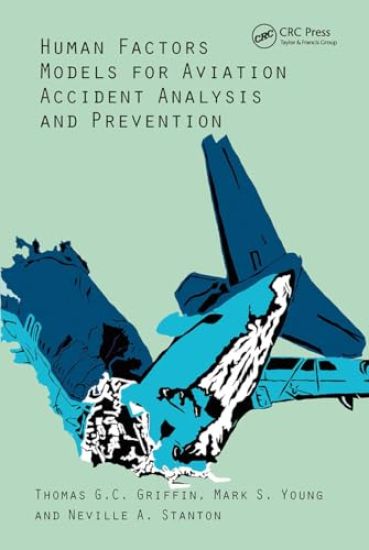
Human Factors Models for Aviation Accident Analysis and Prevention

Human Factors Models for Aviation Accident Analysis and Prevention

Thomas G.C. Griffin; Mark S. Young; Neville A. Stanton

TAYLOR FRANCIS LTD
2024
nidottu
The investigation and modelling of aviation accident causation is dominated by linear models. Aviation is, however, a complex system and as such suffers from being artificially manipulated into non-complex models and methods. This book addresses this issue by developing a new approach to investigating aviation accident causation through information networks. These networks centralise communication and the flow of information as key indicators of a system’s health and risk. This holistic approach focuses on the system environment, the activity that takes place within it, the strategies used to conduct this activity, the way in which the constituent parts of the system (both human and non-human) interact and the behaviour required. Each stage of this book identifies and expands upon the potential of the information network approach, maintaining firm focus on the overall health of a system. The book’s new model offers many potential developments and some key areas are studied in this research. Through the centralisation of barriers and information nodes the method can be applied to almost any situation. The application of Bayesian mathematics to historical data populations provides scope for studying error migration and barrier manipulation. The book also provides application of these predictions to a flight simulator study for the purposes of validation. Beyond this it also discusses the applicability of the approach to industry. Through working with a legacy airline the methods discussed are used as the basis for a new and prospective safety management system.
Human Factors Models for Aviation Accident Analysis and Prevention

Human Factors Models for Aviation Accident Analysis and Prevention

Thomas G.C. Griffin; Mark S. Young; Neville A. Stanton

CRC Press
2015
sidottu
The investigation and modelling of aviation accident causation is dominated by linear models. Aviation is, however, a complex system and as such suffers from being artificially manipulated into non-complex models and methods. This book addresses this issue by developing a new approach to investigating aviation accident causation through information networks. These networks centralise communication and the flow of information as key indicators of a system’s health and risk. This holistic approach focuses on the system environment, the activity that takes place within it, the strategies used to conduct this activity, the way in which the constituent parts of the system (both human and non-human) interact and the behaviour required. Each stage of this book identifies and expands upon the potential of the information network approach, maintaining firm focus on the overall health of a system. The book’s new model offers many potential developments and some key areas are studied in this research. Through the centralisation of barriers and information nodes the method can be applied to almost any situation. The application of Bayesian mathematics to historical data populations provides scope for studying error migration and barrier manipulation. The book also provides application of these predictions to a flight simulator study for the purposes of validation. Beyond this it also discusses the applicability of the approach to industry. Through working with a legacy airline the methods discussed are used as the basis for a new and prospective safety management system.