Kirjojen hintavertailu – 12 903 724 kirjaa ja 27 kauppaa

Kirjailija

Thomas G. Gutheil

Kirjat ja teokset yhdessä paikassa: 8 kirjaa, julkaisuja vuosilta 1987–2019, suosituimpiin kuuluu Clinical Handbook of Psychiatry and the Law. Vertaile teosten hintoja ja tarkista saatavuus suomalaisista kirjakaupoista.

8 kirjaa

Kirjojen julkaisuvuodet: 1987–2019.

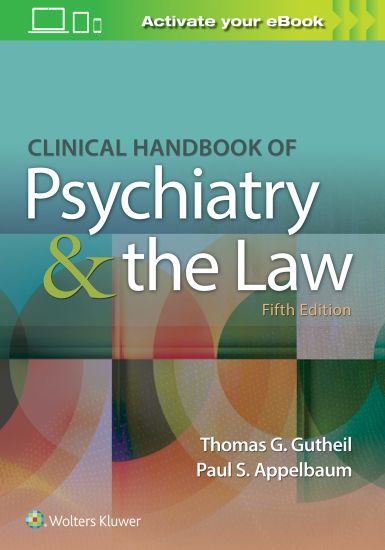
Clinical Handbook of Psychiatry and the Law

Clinical Handbook of Psychiatry and the Law

Thomas G. Gutheil; Paul S. Appelbaum

Lippincott Williams and Wilkins
2019
sidottu
Selected as a Doody's Core Title for 2025! Written by two renowned leaders in the field, the much-anticipated fifth edition of Clinical Handbook of Psychiatry and the Law offers mental health professionals authoritative guidance on how today’s law affects clinical practice. Each chapter in this award-winning reference presents case examples of legal issues often seen in day-to-day practice; clearly explains the governing legal rules, their rationale, and their clinical impact; and offers concrete action guides to navigating clinicolegal dilemmas. It’s a must-have resource for anyone in the mental health field who needs an easy-to-read, practical handbook addressing both longstanding legal/ethical issues and crucial recent developments in the field. Addresses recent developments including the impact of electronic health records on privacy and liability risks, new technologies, prescription drug monitoring programs, risk management in integrated care, the practitioner’s role in assessing suitability for gun ownership, and more. Reflects timely issues such as changing attitudes toward seclusion and restraint, new medications for psychiatric disorders and the role of informed consent, and increased liability and scrutiny of expert witnesses. Presents real-world case examples using an engaging, easy-to-read writing style, and includes unique action guides in each chapter that specify practical approaches to clinicolegal dilemmas. A useful study aid to help prepare for the forensic psychiatry sections of specialty board examinations. Enrich Your eBook Reading ExperienceRead directly on your preferred device(s), such as computer, tablet, or smartphone. Easily convert to audiobook, powering your content with natural language text-to-speech.
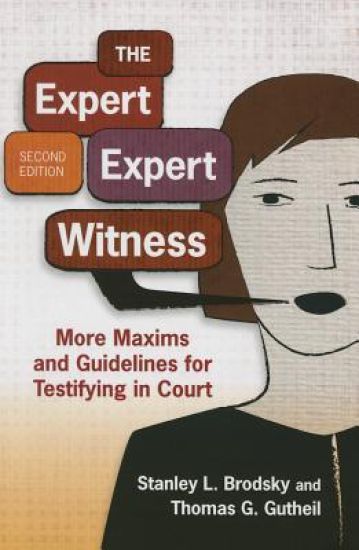
The Expert Expert Witness

The Expert Expert Witness

Stanley L. Brodsky; Thomas G. Gutheil

American Psychological Association
2015
pokkari
Psychologists, psychiatrists, and other mental health professionals may be experts in their respective fields, but this expertise does not easily translate to effective courtroom testimony. Even veteran expert witnesses can encounter new challenges in these high-pressure situations, especially during a cross-examination where every statement and gesture can be scrutinized by an attorney searching for ways to dispute the expert's credibility and opinions. For more than two decades, Stanley L. Brodsky has taught expert witnesses simple and practical strategies they can use to negotiate challenges in the courtroom and give strong, effective testimony. In this thorough update to his classic guide, Brodsky and his equally prolific coauthor, Thomas G. Gutheil, continue to provide sage, humorous advice that will put expert witnesses at ease and allow them to comport themselves with poise and confidence throughout direct and cross-examination. Short chapters punctuated by memorable maxims draw from the authors' expansive personal experiences, as well as research and stories from other expert expert witnesses, to create this must-have resource that will inform and entertain expert witnesses for many years.
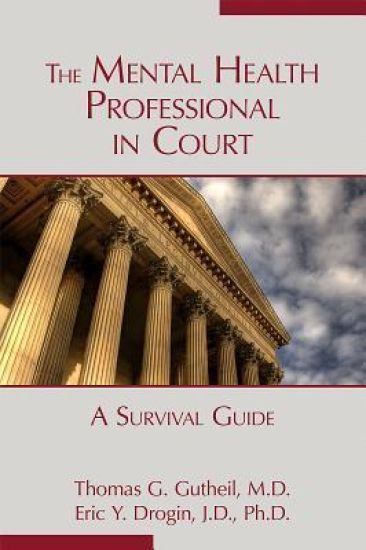
The Mental Health Professional in Court

The Mental Health Professional in Court

Thomas G. Gutheil; Eric Y. Drogin

American Psychiatric Association Publishing
2012
pokkari
A successor to the popular The Psychiatrist in Court: A Survival Guide, The Mental Health Professional in Court has expanded the scope of the earlier book to include other professionals in the field. The authors have thoroughly updated the text, and provided a comprehensive coverage of legal processes. This book equips the mental health professional with a hands-on, practical working knowledge of what to expect—and how to survive—in the courtroom and the legal system. The book includes many helpful features: • An informal, user-friendly writing style that is accessible, reassuring, and empowering, and a succinct presentation that helps the reader achieve mastery of the material quickly and efficiently—a boon when prepping for a court appearance• A practical, rather than theoretical, approach to issues, with examples from literally hundreds of actual cases and countless consultations with peers and colleagues on how to deal with the legal system• A thorough understanding of the book's audience. Because the authors understand that most mental health professionals' knowledge about going to court comes from television and movies, the book addresses the many deeply embedded misperceptions and distortions perpetuated by the media, taking the reader from rudimentary information about the legal system to more sophisticated topics, such as the different approaches to testifying.• An indispensable legal glossary keyed to the text, which enhances understanding of courtroom terminology• Other beneficial features, such as key points at the end of each chapter, which provide easy-to-locate summaries, and additional appendices, which outline the legal system and provide suggested readings. No one wants to appear in court, but in some cases it may be unavoidable. Brief enough to assimilate quickly, yet comprehensive in scope, The Mental Health Professional in Court: A Survival Guide is a reassuring and eminently useful guide designed to help the witness navigate the legal system.
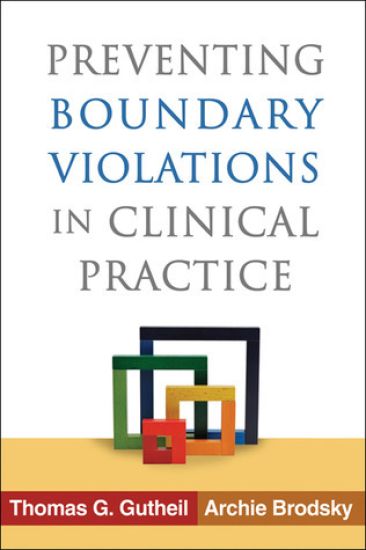
Preventing Boundary Violations in Clinical Practice

Preventing Boundary Violations in Clinical Practice

Thomas G. Gutheil; Archie Brodsky

Guilford Press
2011
nidottu
What do you do when you run into a patient in a public place? How do you respond when a patient suddenly hugs you at the end of a session? Do you accept a gift that a patient brings to make up for causing you some inconvenience? Questions like these—which virtually all clinicians face at one time or another—have serious clinical, ethical, and legal implications. This authoritative, practical book uses compelling case vignettes to show how a wide range of boundary questions arise and can be responsibly resolved as part of the process of therapy. Coverage includes role reversal, gifts, self-disclosure, out-of-office encounters, physical contact, and sexual misconduct. Strategies for preventing boundary violations and managing associated legal risks are highlighted.
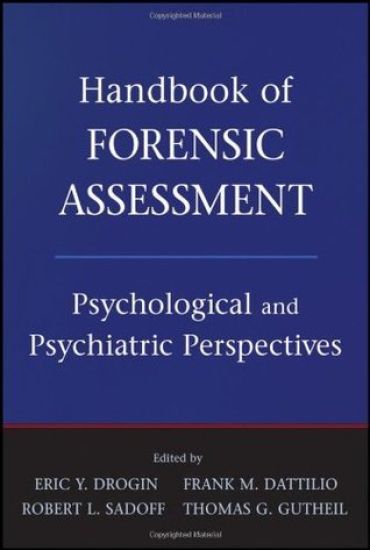
Handbook of Forensic Assessment

Handbook of Forensic Assessment

Eric Y. Drogin; Frank M. Dattilio; Robert L. Sadoff; Thomas G. Gutheil

John Wiley Sons Inc
2011
sidottu
The first handbook to explore forensic assessment from psychiatric and psychological perspectives "The editors have assembled a magnificent collaboration between psychiatrists and psychologists to bring forth critical knowledge and insight to the core competency of forensic assessment. This handbook is essential reading and a comprehensive resource for both newly minted and seasoned forensic practitioners." —Robert I. Simon, MD, Director, Program in Psychiatry and Law, Georgetown University School of Medicine "This long-awaited resource blows the dust off traditional standards, shakes the cobwebs out of our old ways of thinking, and shows the practical steps in producing work that will make sense to juries and withstand the most skillful cross-examination. . . . [T]here is no better resource." —Kenneth S. Pope, PhD, ABPP, Diplomate in Clinical Psychology; coauthor, Ethics in Psychotherapy and Counseling, Fourth Edition "From preparation to collection to interpretation to communication of the results, this excellent, comprehensive treasure shows how to conduct forensic assessments. Each splendid evidence-based chapter is presented from the collaboration between psychologists and psychiatrists. It is a must-have resource for forensic experts as well as general practitioners or anyone wishing to understand standard of care in forensic assessment." —Melba Vasquez, PhD, ABPP, 2011 American Psychological Association President The practitioner-oriented coverage in the Handbook of Forensic Assessment examines: The current state of psychology and psychiatry—including requisite clinical competencies, ethical guidelines, and considerations of multidisciplinary collaboration Various approaches to assessments in criminal and civil matters The principles of effective preparation, data collection, and interpretation, as well as communication for each special situation Topics including competence to stand trial, sexual offender evaluations, addictions, child abuse, and education Overarching practice issues, such as practice development, retention, compensation, consultation, and forensic treatment Includes sample reports that demonstrate the integrative potential of both psychology and psychiatry Incorporating a wealth of current and multidisciplinary research, the Handbook of Forensic Assessment is destined to become every mental health professional's most valuable one-stop reference for their forensic work.
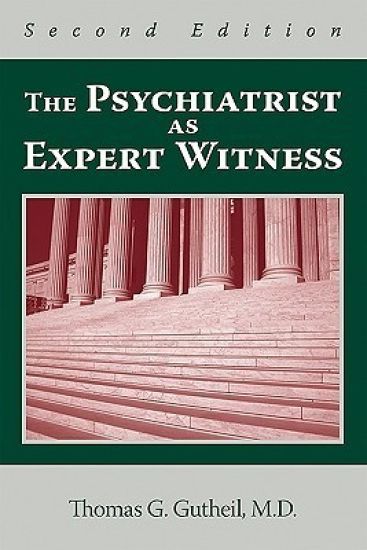
The Psychiatrist as Expert Witness

The Psychiatrist as Expert Witness

Thomas G. Gutheil

American Psychiatric Association Publishing
2009
pokkari
Forensic psychiatry is growing in popularity, and many a practitioner feels the urge to explore this fascinating realm of endeavor. The second edition of The Psychiatrist as Expert Witness, by Thomas G. Gutheil, M. D., is a highly readable and practical guidebook for those interested in entering the field while navigating the dangers inherent in courtroom testimony. This volume is a thoroughly revised and updated edition of his highly successful first edition. The earlier edition has been used in nearly all forensic psychiatric training programs in the U. S. and Canada since its publication in 1998. A professor of psychiatry at the Beth Israel-Deaconess Medical Center-Harvard Medical School, Gutheil draws on his decades of experience in the courtroom and countless beginner's mistakes to help readers avoid the pitfalls of serving as an expert witness. While of great value to newcomers to the field, the book offers insight and guidance to early-career and seasoned expert witnesses as well. As in the first edition, this volume explores the role of the expert witness, moral issues, basic principles, depositions and trials, writing for the court, and ethical marketing. Besides the requisite updating of references and suggested readings, this latest volume features expansions and additions of particular benefit to prospective expert witnesses: • A glossary of useful terms • Expanded definitions of key concepts• A lengthened discussion of bias in testimony• Additional illustrative examples• A model forensic consent form for examination• Cases and principles that have arisen since the first edition The Psychiatrist as Expert Witness provides the practical, hands-on mentoring and guidance that were not readily available in the past. Concrete advice replaces abstract theorizing, and informal discussion in a user-friendly tone replaces scholarly discourse. These attributes combine to make this a book that is highly accessible and usable in real world courtroom settings. While some in society decry the expert witness function, the courts will continue, from all evidence, to require expert witness testimony in increasing numbers. The author seeks to help his colleagues meet the courts' needs with ethical, effective and helpful testimony through the publication of this revised volume. At the same time, Gutheil strives to make the often complex arena of forensic psychiatry more understandable to those who wish to enter the field and to seasoned experts eager to keep up with contemporary changes in forensic psychiatry.
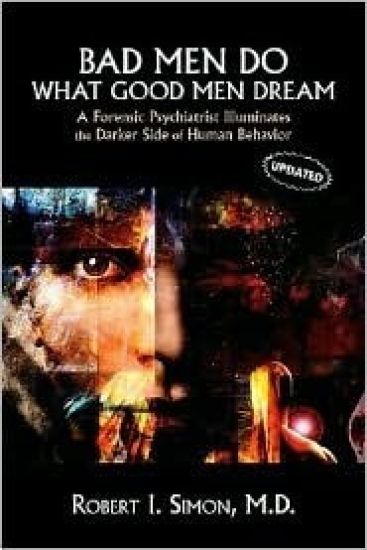
Bad Men Do What Good Men Dream

Bad Men Do What Good Men Dream

Robert I. Simon; Thomas G. Gutheil

American Psychiatric Association Publishing
2008
pokkari
Robert Simon's Bad Men Do What Good Men Dream: A Forensic Psychiatrist Illuminates the Darker Side of Human Behavior is that rare title that is both essential reading for the mental health professional and accessible in style and content to the fascinated lay reader. In twelve powerful and provocative chapters, the author introduces readers to a psychological perspective on evil, character and destiny, as well as the making of good men and women. Simon also illuminates the psychology of psychopaths, serial killers, rapists and all manner of evil characters who appall and challenge us by their very existence. He rejects the common belief that his subjects are "monsters" with nothing in common with the more "normal" among us. Simon posits that if we deny our dark side, it can only obscure our understanding of violent offenders and impede our ability to both know ourselves and control our own, at times, unacceptable impulses. The author is among the foremost experts in forensic psychiatry. He is Director of the Program in Psychiatry and Law at Georgetown University School of Medicine. Author or co-author of more than two dozen books and editions, including the foundational Textbook of Forensic Psychiatry, Simon has made important contributions to the field of forensic psychiatry for more than 30 years. He is also an eloquent writer with a dramatic, yet nuanced, narrative style that takes the reader inside the mind of the evildoer. The first edition of this groundbreaking work garnered uniformly superlative reviews and was translated into several languages. This updated version retains Simon's engrossing portrayals and keen insight, while offering a number of key enhancements. The highlights include: • Explorations of the Internet and violence, "corporate" psychopaths, cyberstalkers, perpetrators of school violence, and a new cast of serial killers, terrorists, and other evildoers.• A psychological perspective on evil, serial killers, and us.• Updates on the neuroscience and genetics of deviant behaviors.• Reflections on empathy, character, and destiny: the making of good men and women.• A new foreword by Thomas G. Gutheil, M. D., Professor of Psychiatry and Co-Founder, Program in Psychiatry and the Law at Harvard Medical School, that illuminates Simon's thesis and grounds it in historical context. Graphic but never sensational, unsparing but never cold, Simon's writing transcends the theoretical and achieves that most difficult of aims: leading readers to discover, contain, and transform the darkness within us all, to the betterment of our human condition.
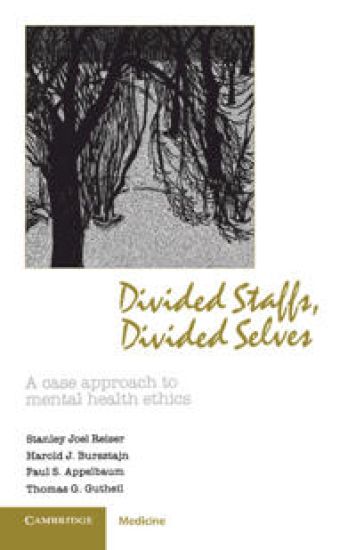
Divided Staffs, Divided Selves

Divided Staffs, Divided Selves

Stanley Joel Reiser; Harold J. Bursztajn; Paul S. Appelbaum; Thomas G. Gutheil

Cambridge University Press
1987
pokkari
Ethical decision making in the context of conflicting values takes on a fresh immediacy when the self itself is in conflict. Divided Staffs, Divided Selves: A Case Approach to Mental Health Ethics brings the immediacy of a clinical case conference to a wide range of students and clinicians. The book provides both clinical case material and a method for engaging in a dialogue choices in the mental health care field. The essays that introduce the volume place the ethical problems of treating mentally ill people in the context of the health care ethics movement and traditions of ethical decision making. The individual cases arise from clinical and consultative experiences. This case material will serve as the basis for learning and reflection by clinicians in interaction with their colleagues, and it also will be especially valuable to students studying ethical concepts who do not have access to real-life cases or problems.