Kirjojen hintavertailu – 12 859 828 kirjaa ja 27 kauppaa

Kirjailija

Thomas G. Walker

Kirjat ja teokset yhdessä paikassa: 3 kirjaa, julkaisuja vuosilta 2006–2023, suosituimpiin kuuluu Constitutional Law for a Changing America: A Short Course. Vertaile teosten hintoja ja tarkista saatavuus suomalaisista kirjakaupoista.

3 kirjaa

Kirjojen julkaisuvuodet: 2006–2023.

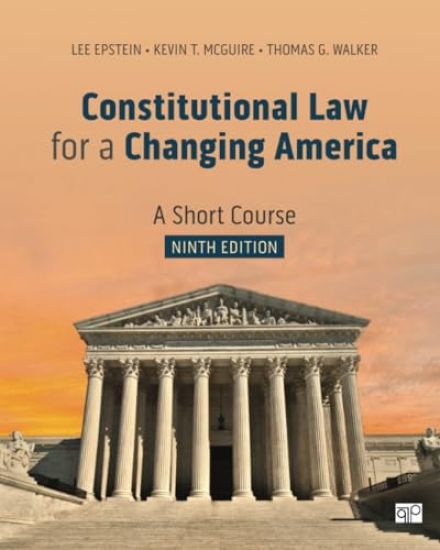
Constitutional Law for a Changing America: A Short Course

Constitutional Law for a Changing America: A Short Course

Lee J. Epstein; Kevin T. McGuire; Thomas G. Walker

CQ PRESS
2023
nidottu
Excellent balance of case excerpts and author explanation, highly appropriate for undergraduate students. --Dr. Wendy Brame, Briar Cliff University Political factors influence judicial decisions. Arguments and input from lawyers and interest groups, the ebb and flow of public opinion, and especially the ideological and behavioral inclinations of the justices all combine to shape the development of constitutional doctrine. Drawing from political science as much as from legal studies, Constitutional Law for a Changing America: A Short Course helps students realize that Supreme Court cases are more than just legal names and citations. With meticulous revising, the authors streamline material while accounting for recent landmark cases and new scholarship. Ideal for a one semester course, the Ninth Edition of A Short Course offers all the hallmarks of the Rights and Powers volumes (also included in the Constitutional Law for a Changing America series) in a more condensed format. Included with this title: LMS Cartridge: Import this title's instructor resources into your school's learning management system (LMS) and save time. Don't use an LMS? You can still access all of the same online resources for this title via the password-protected Instructor Resource Site.
Supreme Court Compendium

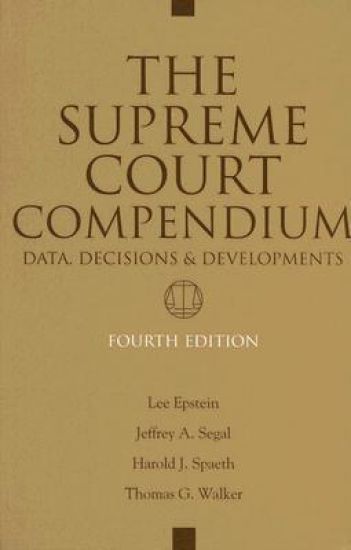
Supreme Court Compendium

Thomas G. Walker; Jeffrey A. Segal; Harold J. Spaeth; Lee Epstein

CQ Press
2006
sidottu
The Supreme Court Compendium is the only reference that presents historical and statistical information on every important aspect of the U. S. Supreme Court, including its history, development as an institution, the justices backgrounds, nominations, and confirmations, and the Court's relationship with the public and other governmental and judicial bodies. The newest edition of this comprehensive reference includes important new perspective on the legacy of the Rehnquist court. Readers will also find: An institutional overview of the Court's history including a chronology of important events from 1787-2006, important Congressional legislation relating to the Supreme Court, internet sites relating to law and courts, and much more Background information on all the justices such as family backgrounds, childhood environments, marital status, educational and employment histories, political experiences and trends in voting agreement The political and legal environment of the Court is presented including the success rate of the United States as a party before the Supreme Court, the rates of success of various administrative agencies, and state participation in court litigation with success rates This new edition includes more than 180 tables and charts and is updated to cover Supreme Court events through the 2005-2006 term. This reference is an invaluable resource to judicial scholars, students, and those interested in the history of the Supreme Court.
Eligible for Execution

Eligible for Execution

Thomas G. Walker

CQ Press
2008
nidottu
This riveting and enlightening narrative unfolds on the night of August 16, 1996, with the brutal and senseless murder of Eric Nesbitt, a young man stationed at Langley Air Force Base, at the hands of 18-year-old Daryl Atkins. Over the course of more than a decade, Atkins’s case has bounced between the lowest and the highest levels of the judicial system. Found guilty and then sentenced to death in 1998 for Nesbitt’s murder, the Atkins case was then taken up in 2002 by the U. S. Supreme Court. The issue before the justices: given Daryl Atkins’s mental retardation, would his execution constitute cruel and unusual punishment, in violation of the Eighth Amendment? A 6–3 vote said yes. Daryl Atkins’s situation was far from being resolved though. Prosecutors claimed that Atkins failed to meet the statutory definition of mental retardation and reinstituted procedures to carry out his death sentence. Back in circuit court, the jury returned its verdict: Daryl Atkins was not retarded. Atkins’s attorneys promptly filed a notice of appeal, and the case continues today. Drawing on interviews with key participants; direct observation of the hearings; and close examination of court documents, transcripts, and press accounts, Thomas G. Walker provides readers with a rare view of the entire judicial process. Never losing sight of the stakes in a death penalty case, he explains each step in Atkins’s legal journey from the interactions of local law enforcement, to the decision-making process of the state prosecutor, to the Supreme Court’s ruling, and beyond. Walker sheds light on how legal institutions and procedures work in real life—and how they are all interrelated—to help students better understand constitutional issues, the courts, and the criminal justice system. Throughout, Walker also addresses how disability, race, and other key demographic and social issues affect the case and society’s views on the death penalty.