
Kirjailija
Thomas Hardy
Kirjat ja teokset yhdessä paikassa: 1 546 kirjaa, julkaisuja vuosilta 1832–2027, suosituimpiin kuuluu Kaukana maailman melskeestä. Vertaile teosten hintoja ja tarkista saatavuus suomalaisista kirjakaupoista.
1 546 kirjaa
Kirjojen julkaisuvuodet: 1832–2027.

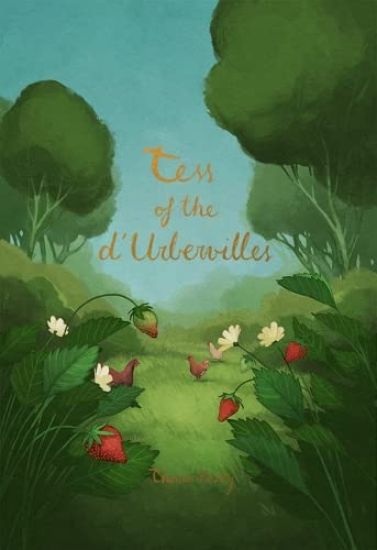
Tess of the d'Urbervilles
Thomas Hardy
WORDSWORTH EDITIONS LTD
2022
sidottu
Halvin toimitettuna 14,70 €
Set in Hardy's Wessex, Tess is a moving novel of hypocrisy and double standards. Its challenging sub-title, A Pure Woman, infuriated critics when the book was first published in 1891, and it was condemned as immoral and pessimistic. It tells of Tess Durbeyfield, the daughter of a poor and dissipated villager, who learns that she may be descended from the ancient family of d'Urbeville. In her search for respectability her fortunes fluctuate wildly, and the story assumes the proportions of a Greek tragedy. It explores Tess's relationships with two very different men, her struggle against the social mores of the rural Victorian world which she inhabits and the hypocrisy of the age. In addressing the double standards of the time, Hardy’s masterly evocation of a world which we have lost, provides one of the most compelling stories in the canon of English literature, whose appeal today defies the judgement of Hardy’s contemporary critics.
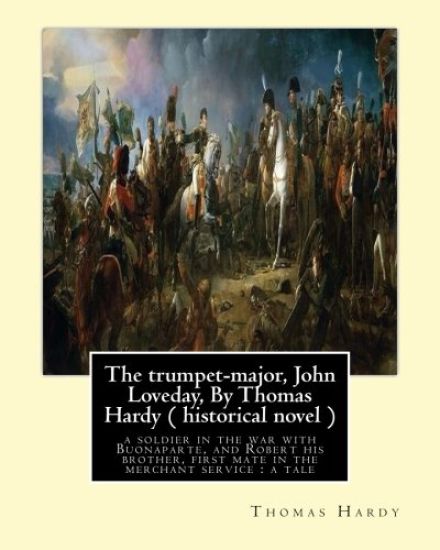
The trumpet-major, John Loveday, By Thomas Hardy ( historical novel ): The trumpet-major, John Loveday: a soldier in the war with Buonaparte, and Robe
Thomas Hardy
Createspace Independent Publishing Platform
2016
nidottu
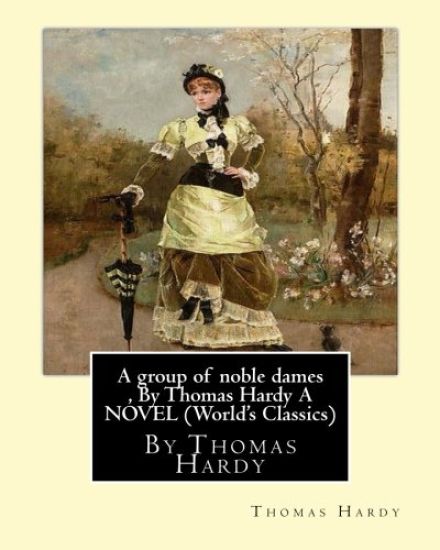
A group of noble dames, By Thomas Hardy A NOVEL (World's Classics)
Thomas Hardy
Createspace Independent Publishing Platform
2016
nidottu

The Trumpet-Major John Loveday A Tale
Thomas Hardy
Createspace Independent Publishing Platform
2016
nidottu
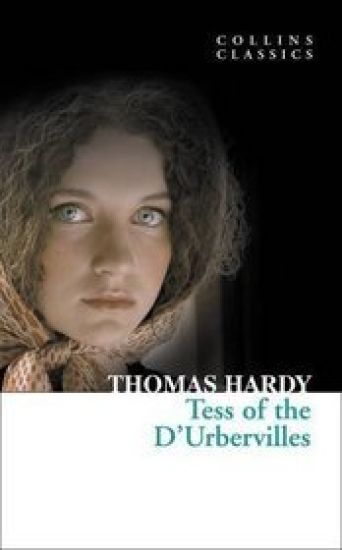
Tess of the D'Urbervilles
Thomas Hardy
Harpercollins Publishers
2010
pokkari
Halvin toimitettuna 10,90 €
HarperCollins is pround to present its new range of best-loved, essential classics.

The Trumpet-Major John Loveday, a Soldier in the War With Buonaparte and Robert His Brother, First Mate in the Merchant Service
Thomas Hardy; H. (ILT) Macbeth-raeburn
Kessinger Pub
2007
pokkari
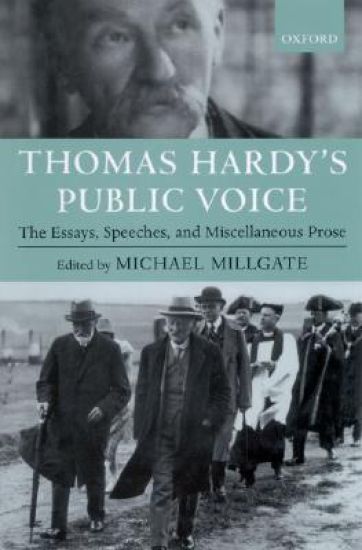
Thomas Hardy has generally been viewed as an intensely private figure, shy of publicity and even of people, self-isolated in his Dorsetshire home, and much more cautious and conservative in his personal outlook than might be expected of the author of Tess of the D'Ubervilles and Jude the Obscure. What the present volume reveals is that Hardy's public utterances, addressed to a wide range of literary, social, and political issues, were far more numerous and various than has previously been imagined. His essays, speeches, and other acknowledged pieces, both formal and informal, are here fully described, edited, and annotated, together with the letters he wrote to newspapers and the many unsigned items, from obituaries to clandestine contributions to literary gossip-columns, that have now been securely or tentatively identified. Also described, although not necessarily reproduced, are his designs for tombstones and memorials, and some of the more striking instances of his lending his (immensely famous) name to causes and organizations of which he approved and to public letters initiated by others. The edition as a whole is thus a major work of textual scholarship and a rich source of fresh and often surprising information about a little understood aspect of Hardy's life and work.
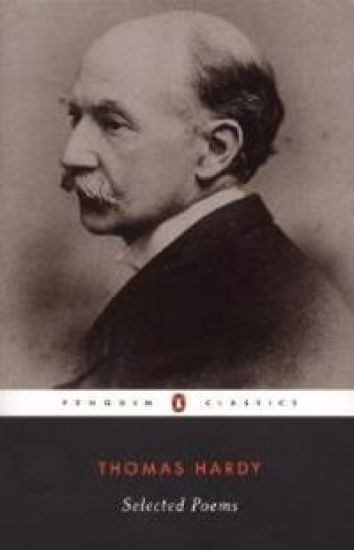
Thomas Hardy abandoned the novel form at the turn of the century, probably after public reaction to Jude the Obscure, but continued to write verse displaying a wide variety of metrical styles and stanza forms and a broad scope of tone and attitude. This definitive volume contains selections from his numerous collections published between 1898 and 1928. For more than seventy years, Penguin has been the leading publisher of classic literature in the English-speaking world. With more than 1,700 titles, Penguin Classics represents a global bookshelf of the best works throughout history and across genres and disciplines. Readers trust the series to provide authoritative texts enhanced by introductions and notes by distinguished scholars and contemporary authors, as well as up-to-date translations by award-winning translators.
The Complete Poetical Works of Thomas Hardy: Volume V: The Dynasts, Part Third; The Famous Tragedy of the Queen of Cornwall; The Play of 'Saint George'; 'O Jan, O Jan, O Jan'
Thomas Hardy
Clarendon Press
1995
sidottu
Volumes IV and V of the Complete Poetical Works of Thomas Hardy, which complete the edition, contain all of his dramatic writing in verse. Hardy was Hardy was interested in dramatic verse all his adult life; before he wrote his first novel he considered writing plays in blank verse, and during the thirty years of his novel-writing career he entered in his notebooks many schemes for a vast poetic drama of England's wars with Napoleon. But it was not until after he had turned from fiction to poetry, in the 1890s, that he actually began to work on a poetic drama. The Dynasts was written between 1902 and 1907; the Famous Tragedy of the Queen of Cornwall was began in 1916 and completed in 1923. In addition to the two major dramas this volume includes Hardy's versions of two folk-pieces: the Mummers'Play of 'Saint George'and the rustic operetta O'Jan. O'Jan, O'Jan'(here published for the first time). Textual annotations, together with a full account of the rough draft of Part Third of The Dynasts, make it possible for the reader to follow the history of the composition of Hardy's epic drama in unusual detail. Explantory notes to each of the dramatic works describe its composition and publication, and provide supporting material from Hardy's letters and notebooks. Appendices add further information on the production and performance of these works.
The Complete Poetical Works of Thomas Hardy: Volume IV: The Dynasts, Parts First and Second
Thomas Hardy
Clarendon Press
1995
sidottu
Volumes IV and V of the Complete Poetical Works of Thomas Hardy, which complete the edition, contain all of his dramatic writing in verse. Hardy was interested in dramatic verse all his adult life; before he wrote his first novel he considered writing plays in blank verse, and during the thirty years of his novel-writing career he entered in his notebooks many schemes for a vast poetic drama of England's wars with Napoleon. But is was not until after he had turned from fiction to poetry, in the 1890s, that he actually began to work on a poetic drama. The Dynasts was written between 1902 and 1907; The Famous Tragedy of the Queen of Cornwall was begun in 1916 and completed in 1923. In addition to the two major dramas this volume includes Hardy's versions of two folk-pieces: the Mummers' Play of 'Saint George' and the rustic operetta O'Jan, O'Jan, O'Jan' (here published for the first time). Textual annotations, together with a full account of the rough draft of Part third of The Dynasts, make it possible for the reader to follow the history of the composition of Hardy's epic drama in unusual detail. Explanatory notes to each of the dramatic works describe its composition and publication, and provide supporting material from Hardy's letters and notebooks. Appendices add further information on the production and performance of these works.
Thomas Hardy's Studies, Specimens &c. notebook stands almost alone as a witness to his exertions and aspirations of the 1860s, when he was already in his middle twenties but still working in London as an architectual assistant and only tentatively feeling his way towards as yet dimly glimpsed possibilities of literary expression and employment. Because so little documentation of any kind has survived for this early period of his life and work, the notebook is of extraordinary interest as containing detailed evidence of the untutored deliberateness with which Hardy was seeking to provide himself with a poetic background, educate himself in poetic techniques, and initiate a process from which he could perhaps emerge as a practising, even a publishing, poet. In private hands until very recently, and seen by only a very few scholars, Studies, Specimens &c.' dates from 1865-68, is entirely in Hardy's own hand, and consists of eighty-eight closely written pages of working memoranda, and quotations from other poets - mostly extracts a few words long in which underlining has been used to highlight individual images and word-usages. Although no drafts of actual poems are present, there are numerous instances of Hardy's seeking to generate a poetic, and sometimes erotic, language and imagery out of materials (e.g., an architectual textbook) apparently chosen precisley for their recalcitrance to such treatment. The edition itself seeks to reproduce typographically all essential features of the original document. The introductory material describes the notebook bibliographically, sets it in its biographical context, and discusses some of its more important technical features. Included in the extensive apparatus are textual notes, explications of Hardy's occasional quotations - indicating, in most instances, the editions or actual volumes he certainly or probably used. Explanatory notes are provided for - among other things - some erased but now partly recoved memoranda of Hardy's that appear to have significant biographical implications.
The Collected Letters of Thomas Hardy: Volume 7: 1926-1927
Thomas Hardy
Clarendon Press
1988
sidottu
The opening section of this seventh and final volume of the definitive edition of Thomas Hardy's letters covers the period from January 1926 to December 1927: his last letter, to Edmund Gosse, was written on Christmas Day 1927 and he died seventeen days later, on 11 January 1928. Although few of his long-standing personal correspondences were actively kept up during these last two years of his life, Hardy maintained (especially when writing to Sir Frederick Macmillan) a lively and practical interest in all aspects of his work and career; he also responded, usually with a courteous refusal, to the many requests and enquiries that his fame inevitably attracted. The second section is devoted to letters which became available too late for publication in their correct chronological sequence in earlier volumes of the edition; those now added date mostly from the nineteenth century, and include a series of letters to officials of the Duchy of Cornwall about the purchase of land on which Max Gate was built, as well as numerous individual letters of considerable interest and importance. This volume contains more than 350 letters, the great majority of them previously unpublished, which are supplemented, as before, by scrupulous annotation and extensive cross-referencing; by a chronology covering the whole of Hardy's career; and by an index of recipients of the letters included. As the concluding volume, however, it also incorporates an extensive General Index covering the texts and annotations of the entire edition.
The Collected Letters of Thomas Hardy: Volume 6: 1920-1925
Thomas Hardy
Clarendon Press
1987
sidottu
Winner of the Thomas Hardy Society Book Prize. From reviews of earlier volumes: 'Has the qualities that a great edition should have: it is meticulously thorough and accurate, and its aids to the reader are clear and comprehensive, but unobtrusively so.' Times Literary Supplement
The Complete Poetical Works of Thomas Hardy: Volume 3: Human Shows, Winter Words, and Uncollected Poems
Thomas Hardy
Oxford University Press, USA
1985
sidottu
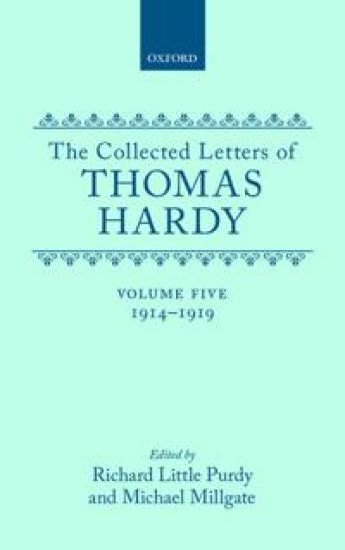
The Collected Letters of Thomas Hardy: Volume 5: 1914-1919
Thomas Hardy
Oxford University Press
1985
sidottu
Winner of the Thomas Hardy Society Book Prize.