
Kirjailija
Thomas Hardy
Kirjat ja teokset yhdessä paikassa: 1 546 kirjaa, julkaisuja vuosilta 1832–2027, suosituimpiin kuuluu Kaukana maailman melskeestä. Vertaile teosten hintoja ja tarkista saatavuus suomalaisista kirjakaupoista.
1 546 kirjaa
Kirjojen julkaisuvuodet: 1832–2027.
Selected English Short Stories (I)
Thomas Hardy; George Robert Gissing; Katherine Mansfield
Createspace Independent Publishing Platform
2016
nidottu
Halvin toimitettuna 22,60 €
The title collects fourteen short stories written by famous English writers, including David Herbert Lawrence, Katherine Mansfield, George Robert Gissing and Thomas Hardy among them, they are highly worth reading.

A Laodicean: a Story of To-day
Thomas Hardy
Createspace Independent Publishing Platform
2016
nidottu
The Romantic Adventures of a Milkmaid
Thomas Hardy
Createspace Independent Publishing Platform
2016
nidottu
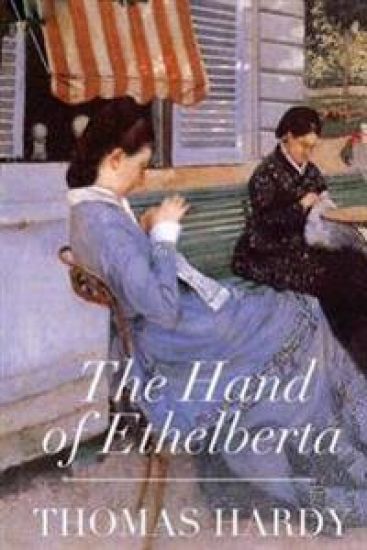
The hand of Ethelberta.NOVEL By: Thomas Hardy (Original Version)
Thomas Hardy
Createspace Independent Publishing Platform
2016
nidottu
A Laodicean. NOVEL By: Thomas Hardy (Classics)
Thomas Hardy
Createspace Independent Publishing Platform
2016
nidottu
The text of the novel is again based on Hardy’s final revision for the 1912 Wessex Edition. The Norton Critical Edition includes: expanded footnotes, further drawing out Hardy’s web of allusions and comprehensively indicating the material culture in which he embeds this narrative; a selection of Hardy’s poems—four of them new to this edition—that emphasises the biographical contexts from which parts of Jude the Obscure arose; nineteen critical responses, including twelve modern essays—eight of them new to the third edition. Simon Gatrell, Michael Hollington, Elaine Showalter, Victor Luftig and Mary Jacobus are among the new voices. Included are a chronology, and revised and expanded selected bibliography.

Oxford Bookworms Library: Level 6:: Tess of the d'Ubervilles audio pack
Thomas Hardy
Oxford University Press
2016
muu
The most consistent of all series in terms of language control, length, and quality of story. David R. Hill, Director of the Edinburgh Project on Extensive Reading.

Oxford Bookworms Library: Level 6:: Tess of the d'Urbervilles
Thomas Hardy
Oxford University Press
2016
nidottu
Halvin toimitettuna 24,90 €
The most consistent of all series in terms of language control, length, and quality of story. David R. Hill, Director of the Edinburgh Project on Extensive Reading.
Wessex Tales, by Thomas Hardy A NOVEL (World's Classics): Wessex tales: that is to say: An imaginative woman, The three strangers, The withered arm, F
Thomas Hardy
Createspace Independent Publishing Platform
2016
nidottu
Wessex Tales is an 1888 collection of tales written by English novelist and poet Thomas Hardy. In the various short stories, Hardy writes of the true nature of nineteenth century marriage and its inherent restrictions, the use grammar as a diluted form of thought, the disparities created by the role of class status in determining societal rank, the stance of women in society and the severity of even minor diseases causing the rapid onset of fatal symptoms prior to the introduction of sufficient medicinal practices. A focal point of all the short stories is that of social constraints acting to diminish one's contentment in life, necessitating unwanted marriages, repression of true emotion and succumbing to melancholia due to constriction within the confines of 19th century perceived normalcy. Published in 1888, Wessex Tales contained five stories ("The Three Strangers", "The Withered Arm", "Fellow-Townsmen", "Interlopers at the Knap", and "The Distracted Preacher") all published first in periodicals. For the 1896 reprinting, Hardy added "An Imaginative Woman," but in 1912 moved this to another collection, Life's Little Ironies, while at the same time transferring two stories-"A Tradition of Eighteen Hundred and Four" and "The Melancholy Hussar of the German Legion"-from Life's Little Ironies to Wessex Tales Thomas Hardy, OM (2 June 1840 - 11 January 1928) was an English novelist and poet. A Victorian realist in the tradition of George Eliot, he was influenced both in his novels and in his poetry by Romanticism, especially William Wordsworth. 1] Charles Dickens was another important influence. 2] page needed] Like Dickens, he was highly critical of much in Victorian society, though Hardy focused more on a declining rural society. While Hardy wrote poetry throughout his life and regarded himself primarily as a poet, his first collection was not published until 1898. Initially, therefore, he gained fame as the author of novels, including Far from the Madding Crowd (1874), The Mayor of Casterbridge (1886), Tess of the d'Urbervilles (1891), and Jude the Obscure (1895). Hardy's poetry, though prolific, was not as well received during his lifetime. It was rediscovered in the 1950s, when Hardy's poetry had a significant influence on the Movement poets of the 1950s and 1960s, including Philip Larkin. Hardy's first novel, The Poor Man and the Lady, finished by 1867, failed to find a publisher. He then showed it to his mentor and friend, the Victorian poet and novelist, George Meredith, who felt that The Poor Man and the Lady would be too politically controversial and might damage Hardy's ability to publish in the future. So Hardy followed his advice and he did not try further to publish it. Later, he destroyed the manuscript. After he abandoned his first novel, Hardy wrote two new ones that he hoped would have more commercial appeal, Desperate Remedies (1871) and Under the Greenwood Tree (1872), both of which were published anonymously. In 1873 A Pair of Blue Eyes, a novel drawing on Hardy's courtship of his first wife, was published under his own name. The term "cliffhanger" is considered to have originated with the serialised version of this story (which was published in Tinsley's Magazine between September 1872 and July 1873) in which Henry Knight, one of the protagonists, is left literally hanging off a cliff....
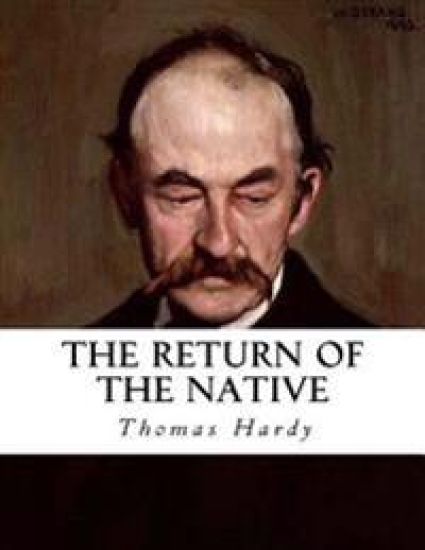
The Return of the Native by Thomas Hardy..... The novel takes place entirely in the environs of Egdon Heath, and, with the exception of the epilogue, Aftercourses, covers exactly a year and a day. The narrative begins on the evening of Guy Fawkes Night as Diggory Venn is slowly crossing the heath with his van, which is being drawn by ponies. In his van is a passenger. When darkness falls, the country folk light bonfires on the surrounding hills, emphasising
The Mayor of Casterbridge: The Life and Death of a Man of Character (1886) NOVEL
Thomas Hardy
Createspace Independent Publishing Platform
2016
nidottu
The Mayor of Casterbridge (1886), subtitled "The Life and Death of a Man of Character", is a novel by British author Thomas Hardy. It is set in the fictional town of Casterbridge (based on the town of Dorchester in Dorset). The book is one of Hardy's Wessex novels, all set in a fictional rural England. Hardy began writing the book in 1884 and wrote the last page on 17 April 1885. Within the book, he writes that the events took place "before the nineteenth century had reached one-third of its span". Literary critic Dale Kramer sees it as being set somewhat later-in the late 1840s, corresponding to Hardy's youth in Dorcheste At a country fair near Casterbridge, Wessex, a young hay-trusser named Michael Henchard gets drunk on rum-laced furmity and argues with his wife, Susan. He decides to auction off his wife and baby daughter, Elizabeth-Jane, to a sailor, Mr. Newson, for five guineas. Sober the next day, he is too late to recover his family. When he realises that his wife and daughter are gone, he swears not to touch liquor again for as many years as he has lived so far (21)Eighteen years later, Henchard is now a successful grain merchant and Mayor of Casterbridge, known for his staunch sobriety. Henchard has avoided explaining the circumstances of the "loss" of his wife, allowing people to assume he is a widower.