

Kirjailija
Thomas Hartmann
Kirjat ja teokset yhdessä paikassa: 22 kirjaa, julkaisuja vuosilta 1995–2025, suosituimpiin kuuluu Arbeitsheft Fachrechnen in der Lehrküche. Vertaile teosten hintoja ja tarkista saatavuus suomalaisista kirjakaupoista.
22 kirjaa
Kirjojen julkaisuvuodet: 1995–2025.
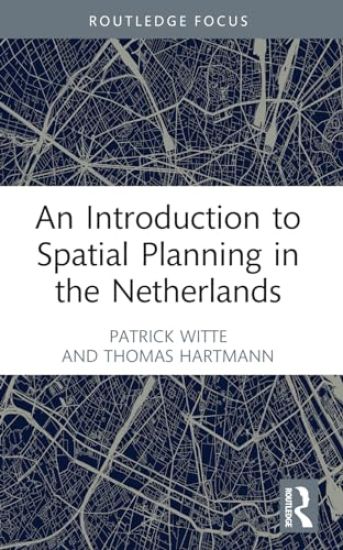
An Introduction to Spatial Planning in the Netherlands
Patrick Witte; Thomas Hartmann
TAYLOR FRANCIS LTD
2024
nidottu
This book provides an introduction to spatial planning in the Netherlands. It explores the academic underpinnings of the discipline and its practical implications, making use of insights on planning practices from the Netherlands. As an academic book with relevance for spatial planning teaching and practice, the relation between planning practice and planning as an academic discipline are discussed. A key analytical concept is introduced to discuss the different dimensions of planning: the planning triangle. This framework helps to bridge the strategic and conceptual elements of planning with its realization. The object, process, and context of planning and its relations are discussed. The core of the academic discipline and profession of spatial planning entails looking (far) into the future, stimulating discussion, formulating a desired future direction through an informal and collective planning process, and then formalizing and placing current action into that future perspective. In that sense, spatial planning can be understood as the strategic organization of hopes and expectations. As a study book it is suitable for students of planning at various universities, but also for students in higher professional education. For those involved in the professional field of spatial planning, this book offers a sound foundation.



An Introduction to Spatial Planning in the Netherlands
Patrick Witte; Thomas Hartmann
TAYLOR FRANCIS LTD
2022
sidottu
This book provides an introduction to spatial planning in the Netherlands. It explores the academic underpinnings of the discipline and its practical implications, making use of insights on planning practices from the Netherlands. As an academic book with relevance for spatial planning teaching and practice, the relation between planning practice and planning as an academic discipline are discussed. A key analytical concept is introduced to discuss the different dimensions of planning: the planning triangle. This framework helps to bridge the strategic and conceptual elements of planning with its realization. The object, process, and context of planning and its relations are discussed. The core of the academic discipline and profession of spatial planning entails looking (far) into the future, stimulating discussion, formulating a desired future direction through an informal and collective planning process, and then formalizing and placing current action into that future perspective. In that sense, spatial planning can be understood as the strategic organization of hopes and expectations. As a study book it is suitable for students of planning at various universities, but also for students in higher professional education. For those involved in the professional field of spatial planning, this book offers a sound foundation.


Nature-Based Flood Risk Management on Private Land
Simon McCarthy; Lenka Slavíková; Thomas Hartmann
Saint Philip Street Press
2020
sidottu
This open access book addresses the various disciplinary aspects of nature-based solutions in flood risk management on private land. In recent decades, water management has been moving towards nature-based solutions. These are assumed to be much more multi-purpose than traditional "grey infrastructures" and seem to be regarded as a panacea for many environmental issues. At the same time, such measures require more - and mostly privately owned - land and more diverse stakeholder involvement than traditional (grey) engineering approaches. They also present challenges related to different disciplines. Nature-based solutions for flood risk management not only require technical expertise, but also call for interdisciplinary insights from land-use planning, economics, property rights, sociology, landscape planning, ecology, hydrology, agriculture and other disciplines to address the challenges of implementing them. Ultimately, nature-based flood risk management is a multi-disciplinary endeavor. Featuring numerous case studies of nature-based flood risk management accompanied by commentaries, this book presents brief academic reflections from two different disciplinary perspectives that critically highlight which specific aspects are of significance, and as such, underscore the multi-disciplinary nature of the challenges faced.; This work was published by Saint Philip Street Press pursuant to a Creative Commons license permitting commercial use. All rights not granted by the work's license are retained by the author or authors.
Nature-Based Flood Risk Management on Private Land
Simon McCarthy; Lenka Slavíková; Thomas Hartmann
Saint Philip Street Press
2020
pokkari
This open access book addresses the various disciplinary aspects of nature-based solutions in flood risk management on private land. In recent decades, water management has been moving towards nature-based solutions. These are assumed to be much more multi-purpose than traditional "grey infrastructures" and seem to be regarded as a panacea for many environmental issues. At the same time, such measures require more - and mostly privately owned - land and more diverse stakeholder involvement than traditional (grey) engineering approaches. They also present challenges related to different disciplines. Nature-based solutions for flood risk management not only require technical expertise, but also call for interdisciplinary insights from land-use planning, economics, property rights, sociology, landscape planning, ecology, hydrology, agriculture and other disciplines to address the challenges of implementing them. Ultimately, nature-based flood risk management is a multi-disciplinary endeavor. Featuring numerous case studies of nature-based flood risk management accompanied by commentaries, this book presents brief academic reflections from two different disciplinary perspectives that critically highlight which specific aspects are of significance, and as such, underscore the multi-disciplinary nature of the challenges faced.; This work was published by Saint Philip Street Press pursuant to a Creative Commons license permitting commercial use. All rights not granted by the work's license are retained by the author or authors.

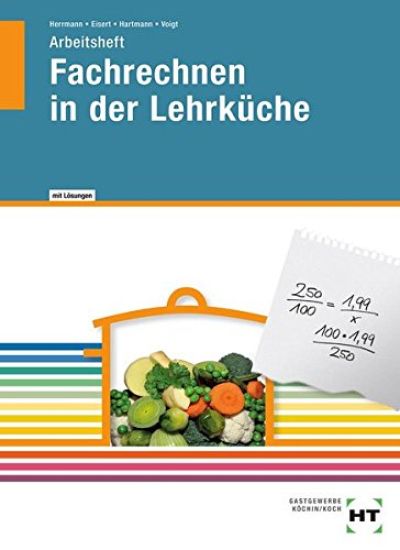
Arbeitsheft Fachrechnen in der Lehrküche
F. Jürgen Herrmann; Sigrid Eisert; Thomas Hartmann
Pfanneberg Fachbuchverlag
2019
nidottu
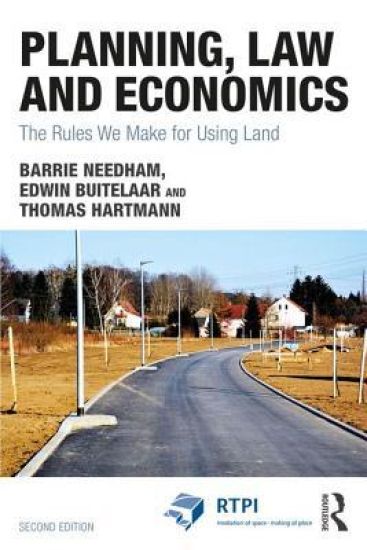
Planning, Law and Economics sets out a new framework for applying a legal approach to spatial planning, showing how to improve the practice and help achieve its aims. The book covers planning laws, citizens' rights and property rights, asking ‘What rules do we want to make and, where necessary, enforce? And how do we want to apply them in planning practice?’ This book sets out, in general and illustrated with concrete examples, how the three types of law mentioned above are unavoidably involved in all types of spatial planning. The book also makes clear that these laws can be combined in different ways, each way a particular approach to the practice of spatial planning (regulative planning, structuring markets, pro-active planning, collaborative planning, etc.). Throughout, the book shows what legal approaches can be taken to spatial planning, and uses a four-part framework to evaluate the effects of choosing such an approach. The spatial planning should be effective, legitimate, morally just and economically sound. In particular the book details why the economic effects for society are important and how spatial planning affects how the economic resources of land and buildings are used. The book will be invaluable to students and planners to understand the relationship between their actions and the basic principles of the rule of law in a democratic, liberal society.
Planning, Law and Economics sets out a new framework for applying a legal approach to spatial planning, showing how to improve the practice and help achieve its aims. The book covers planning laws, citizens' rights and property rights, asking ‘What rules do we want to make and, where necessary, enforce? And how do we want to apply them in planning practice?’ This book sets out, in general and illustrated with concrete examples, how the three types of law mentioned above are unavoidably involved in all types of spatial planning. The book also makes clear that these laws can be combined in different ways, each way a particular approach to the practice of spatial planning (regulative planning, structuring markets, pro-active planning, collaborative planning, etc.). Throughout, the book shows what legal approaches can be taken to spatial planning, and uses a four-part framework to evaluate the effects of choosing such an approach. The spatial planning should be effective, legitimate, morally just and economically sound. In particular the book details why the economic effects for society are important and how spatial planning affects how the economic resources of land and buildings are used. The book will be invaluable to students and planners to understand the relationship between their actions and the basic principles of the rule of law in a democratic, liberal society.
Fachrechnen Lehrküche Arb. mit Lösungen
F. Jürgen Herrmann; Sigrid Eisert; Thomas Hartmann
Handwerk + Technik GmbH
2017
nidottu

In einer ganz normalen Kleinstadt erscheint pl tzlich dieser seltsame Junge in der Schule, mit Glatze und merkw rdig angezogen. Und was hat es mit dem mysteri sen Metallstift auf sich, der ber unglaubliche M glichkeiten verf gt? Jan, Jennifer und ihre Freunde tun alles, um hinter das Geheimnis dieses Jungen zu kommen. Ist er vielleicht ein Alien von einem fernen Planeten? Oder kommt der eigenartige Junge, den sie "Mister Cool X" nennen, aus einer fremden Dimension? Doch die Wahrheit ist noch viel verbl ffender. Als sie schlie lich herausfinden, was mit diesem Jungen tats chlich los ist, beginnt f r sie ein aufregendes und gef hrliches Abenteuer... Das spannende Buch ist besonders geeignet f r Kinder und Jugendliche ab 10 Jahre.

Urkunden ist ein unver nderter, hochwertiger Nachdruck der Originalausgabe aus dem Jahr 1784. Hansebooks ist Herausgeber von Literatur zu unterschiedlichen Themengebieten wie Forschung und Wissenschaft, Reisen und Expeditionen, Kochen und Ern hrung, Medizin und weiteren Genres. Der Schwerpunkt des Verlages liegt auf dem Erhalt historischer Literatur. Viele Werke historischer Schriftsteller und Wissenschaftler sind heute nur noch als Antiquit ten erh ltlich. Hansebooks verlegt diese B cher neu und tr gt damit zum Erhalt selten gewordener Literatur und historischem Wissen auch f r die Zukunft bei.
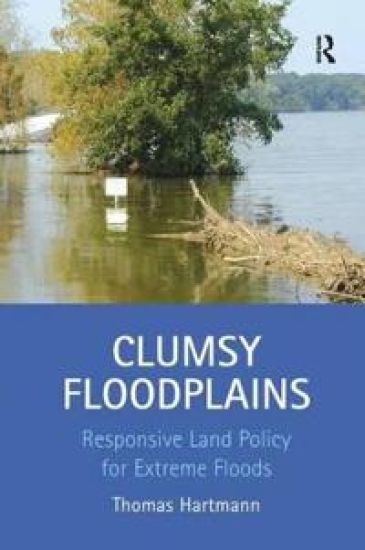
Extreme floods cause enormous damage in floodplains, which levees cannot prevent. Therefore, it is vital for spatial planning to provide space for water retention in these areas. Land use planners, water management agencies, landowners, and policymakers all agree on this challenge, but attempts to make the space for rivers to provide retention are generally not very successful. Adopting an innovative interdisciplinary approach, this book examines how society can manage the use of the floodplains along rivers in the face of extreme floods, focusing in particular on the relation between social arrangements and the elemental forces of floods. The book firstly analyses why contemporary floodplain management is so often clumsy and ineffective by looking at various real-life situations in Germany, using Cultural Theory to provide a much-needed, but previously neglected social perspective. These analyses show a pattern of activity resulting from different rationalities which dominate the floodplains in different phases. During extreme floods, it is rational to manage floodplains as dangerous areas; sandbags and disaster management dominate the scene. After some time, the rationality of control takes over the floodplain management; policymakers discuss flood risk and water managers build levees. When public attention diminishes, floodplains become inconspicuous until more and more stakeholders regard floodplains as profitable land. The current system of planning, law, and property rights even encourages stakeholders to act out their plural rationalities. A permanent dynamic imbalance of different rationalities leads to a robust social construction of the floodplains which results in viable but clumsy floodplains. In the course of time, however, the patterns of activity in the floodplains lead to an increase in intensity and frequency of extreme floods, and to more vulnerable potential damages in the floodplains. Risk increases. Coping with this situation needs another kind of floodplain management. This book proposes an innovative concept - Large Areas for Temporary Emergency Retention (LATER) - in "Clumsy Floodplains" as an alternative to levee-based flood protection. The concept aims at reducing damage by extreme floods in a catchment area by inundating less valuable areas to protect places that are more valuable. It finally examines how this LATER concept might be implemented in areas where there is currently a clumsy style of floodplain management, what interventions are required and how these might come about effectively. Again, using Cultural Theory, the book puts forward a valuable land policy solution which aims at implementing LATER in clumsy floodplains and which develops an obligatory insurance against natural hazards as a responsive land policy for LATER. The book represents the author's PhD research, which he conducted as research assistant at the department for Land Policy, Land Management and Municipal Geoinformation at the School of Spatial Planning, TU Dortmund University, Germany.
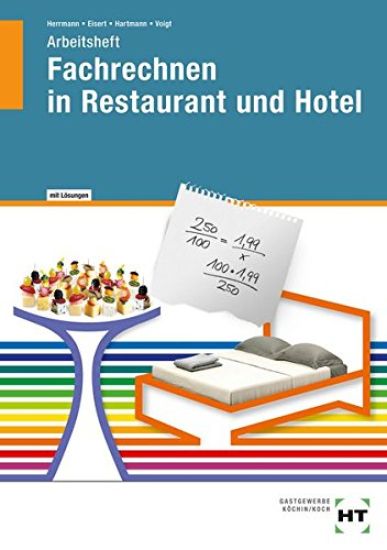
Fachrechnen in Restaurant und Hotel. Arbeitsheft mit eingetragenen Lösungen
F. Jürgen Herrmann; Sigrid Eisert; Thomas Hartmann
Handwerk + Technik GmbH
2014
nidottu
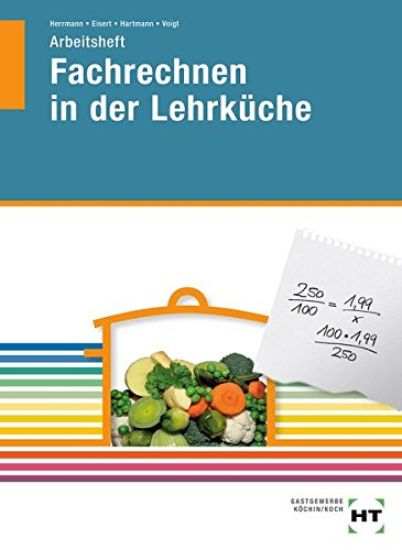
Fachrechnen in der Lehrküche. Arbeitsheft
F. Jürgen Herrmann; Sigrid Eisert; Thomas Hartmann
Handwerk + Technik GmbH
2014
nidottu
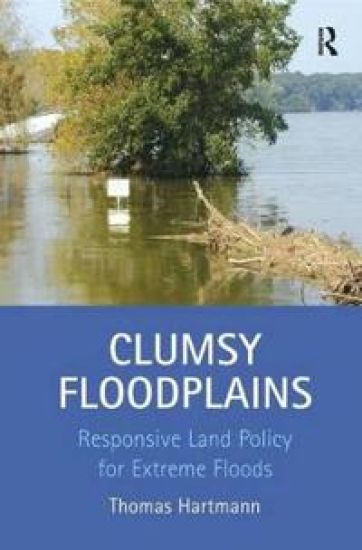
Extreme floods cause enormous damage in floodplains, which levees cannot prevent. Therefore, it is vital for spatial planning to provide space for water retention in these areas. Land use planners, water management agencies, landowners, and policymakers all agree on this challenge, but attempts to make the space for rivers to provide retention are generally not very successful. Adopting an innovative interdisciplinary approach, this book examines how society can manage the use of the floodplains along rivers in the face of extreme floods, focusing in particular on the relation between social arrangements and the elemental forces of floods. The book firstly analyses why contemporary floodplain management is so often clumsy and ineffective by looking at various real-life situations in Germany, using Cultural Theory to provide a much-needed, but previously neglected social perspective. These analyses show a pattern of activity resulting from different rationalities which dominate the floodplains in different phases. During extreme floods, it is rational to manage floodplains as dangerous areas; sandbags and disaster management dominate the scene. After some time, the rationality of control takes over the floodplain management; policymakers discuss flood risk and water managers build levees. When public attention diminishes, floodplains become inconspicuous until more and more stakeholders regard floodplains as profitable land. The current system of planning, law, and property rights even encourages stakeholders to act out their plural rationalities. A permanent dynamic imbalance of different rationalities leads to a robust social construction of the floodplains which results in viable but clumsy floodplains. In the course of time, however, the patterns of activity in the floodplains lead to an increase in intensity and frequency of extreme floods, and to more vulnerable potential damages in the floodplains. Risk increases. Coping with this situation needs another kind of floodplain management. This book proposes an innovative concept - Large Areas for Temporary Emergency Retention (LATER) - in "Clumsy Floodplains" as an alternative to levee-based flood protection. The concept aims at reducing damage by extreme floods in a catchment area by inundating less valuable areas to protect places that are more valuable. It finally examines how this LATER concept might be implemented in areas where there is currently a clumsy style of floodplain management, what interventions are required and how these might come about effectively. Again, using Cultural Theory, the book puts forward a valuable land policy solution which aims at implementing LATER in clumsy floodplains and which develops an obligatory insurance against natural hazards as a responsive land policy for LATER. The book represents the author's PhD research, which he conducted as research assistant at the department for Land Policy, Land Management and Municipal Geoinformation at the School of Spatial Planning, TU Dortmund University, Germany.