

Kirjailija
Thomas Henry Tibbles
Kirjat ja teokset yhdessä paikassa: 9 kirjaa, julkaisuja vuosilta 1969–2025, suosituimpiin kuuluu Hidden Power. A Secret History of the Indian Ring, its Operations, Intrigues, and Machinations Revealing the Manner in which it Controls Three Important Departmens of the United States Government. Vertaile teosten hintoja ja tarkista saatavuus suomalaisista kirjakaupoista.
9 kirjaa
Kirjojen julkaisuvuodet: 1969–2025.

The Ponca Chiefs - An Indian's Attempt to Appeal From the Tomahawk to the Courts is an unchanged, high-quality reprint of the original edition of 1880. Hansebooks is editor of the literature on different topic areas such as research and science, travel and expeditions, cooking and nutrition, medicine, and other genres. As a publisher we focus on the preservation of historical literature. Many works of historical writers and scientists are available today as antiques only. Hansebooks newly publishes these books and contributes to the preservation of literature which has become rare and historical knowledge for the future.
Hidden power - A secret History of the Indian Ring is an unchanged, high-quality reprint of the original edition of 1881. Hansebooks is editor of the literature on different topic areas such as research and science, travel and expeditions, cooking and nutrition, medicine, and other genres. As a publisher we focus on the preservation of historical literature. Many works of historical writers and scientists are available today as antiques only. Hansebooks newly publishes these books and contributes to the preservation of literature which has become rare and historical knowledge for the future.

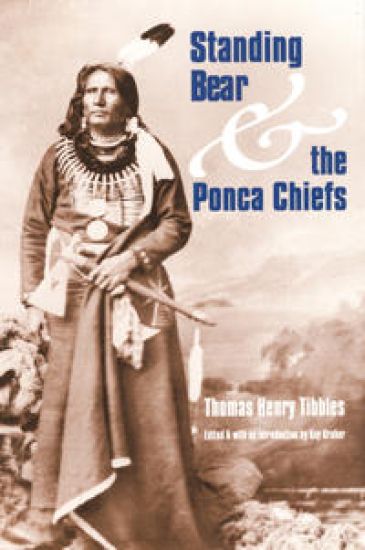
Standing Bear was a chieftain of the Ponca Indian tribe, which farmed and hunted peacefully along the Niobrara River in northeastern Nebraska. In 1878 the Poncas were forced by the federal government to move to Indian Territory. During the year they were driven out, 158 out of 730 died, including Standing Bear's young son, who had begged to be buried on the Niobrara. Early in 1879 the chief, accompanied by a small band, defied the federal government by returning to the ancestral home with the boy's body. At the end of ten weeks of walking through winter cold, they were arrested. However, General George Crook, touched by their "pitiable condition," turned for help to Thomas H. Tibbles, a crusading newspaperman on the Omaha Daily Herald, who rallied public support. Citing the Fourteenth Amendment, Standing Bear brought suit against the federal government. The resulting trial first established Indians as persons within the meaning of the law. At the end of his testimony, Standing Bear held out his hand to the judge and pleaded for recognition of his humanity: "My hand is not the color of yours, but if I pierce it, I shall feel pain. If you pierce your hand, you also feel pain. The blood that will flow from mine will be of the same color as yours. I am a man. The same God made us both.
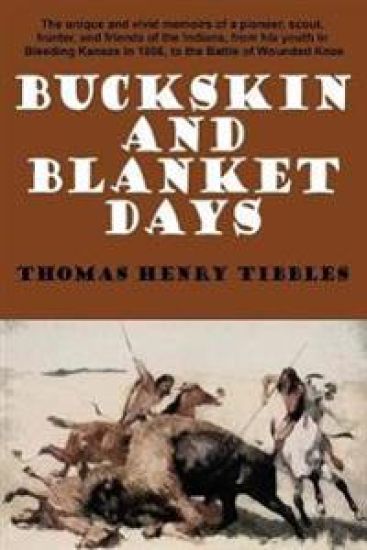
The earliest memories of Thomas Henry Tibbles (1840–1928) were of adventure and danger as his pioneer family followed the frontier west from Ohio to Bleeding Kansas, where young Tibbles volunteered for service with John Brown's abolitionist band. After the end of the border fighting he spent a memorable winter as the guest of a friendly Omaha tribe, going on the warpath with the Omahas against the Sioux, joining with them in buffalo hunts, and gaining the insights that made him a leader in the cause of justice for the American Indian. Although he returned to civilization, Tibbles' later life was far from routine. He led a posse against Jesse James, went to college, farmed, became a gun-toting, circuit-riding preacher, and later an editor on the Omaha Herald. As a correspondent for the Herald he described in unforgettable terms the battle of Wounded Knee and his meeting with the old chieftain Sitting Bull. Tibbles' second wife was his fellow-worker in the Indian relief campaigns, Susette La Flesch (Bright Eyes), daughter of Iron Eye, former head chief of the Omahas. When Longfellow met this beautiful and cultivated Indian princess, he said, "This is Minnehaha!" Tibbles wrote his memoirs in 1905, the year after he ran for Vice President of the United States on the Peoples' party ticket. The volume was first published in 1957, edited by Theodora Bates Cogswell.