Kirjojen hintavertailu – 12 903 742 kirjaa ja 27 kauppaa
Kirjailija
Thomas Hockey
Kirjat ja teokset yhdessä paikassa: 11 kirjaa, julkaisuja vuosilta 2011–2025, suosituimpiin kuuluu Jupiter. Vertaile teosten hintoja ja tarkista saatavuus suomalaisista kirjakaupoista.
In this textbook the author brings back some of the ‘old’ astronomy, but viewed through the imaginary lens of huge telescopes and orbiting observatories. He teaches us what we can see in the sky without any instrument at all - with the only pre-requisite of access to a dark sky. We learn about lunar / solar eclipses and how contemporary cultures and ancient ancestors around the world discovered the sky.
In 2017, over 200 million Americans witnessed the spectacular total eclipse of the Sun, and the 2024 eclipse is expected to draw even larger crowds. In anticipation of this upcoming event, this book takes us back in history over 150 years, telling the story of the nation’s first ever eclipse chasers. Our tale follows the chaotic journeys of scientists and amateur astronomers as they trekked across the western United States to view the rare phenomenon of a total solar eclipse. The fascinating story centers on the expeditions of the 1869 total eclipse, which took place during the turbulent age of the chimerical Planet Vulcan and Civil War Reconstruction. The protagonists—a motley crew featuring astronomical giants like Simon Newcomb and pioneering female astronomers like Maria Mitchell—were met with unanticipated dangers, mission-threatening accidents, and eccentric characters only the West could produce. Theirs is a story of astronomical proportions. Along theway, we will make several stops across the booming US railroad network, traveling from viewing sites as familiar as Des Moines, Iowa, to ones as distant and strange as newly acquired Alaska. From equipment failures and botched preparations to quicksand and apocalyptic ‘comets’, welcome to the wild, western world of solar eclipses.
Now available in paperback, this beautifully illustrated volume ranges across the entire history of Jupiter studies, from the naked-eye observations of the Babylonians and the Greeks, through the telescopic discoveries of Galileo and T. E. R. Phillips, to the explosion of information received from space probes. It brings our understanding of Jupiter right up to date and includes preliminary findings from the Juno space probe, while also providing valuable practical information for those who wish to make their own observations of the planet. Introducing planetary science in an accessible and engaging way, Jupiter will appeal to those who wish to have a better understanding of this magnificent planet and its unique place in the solar system.
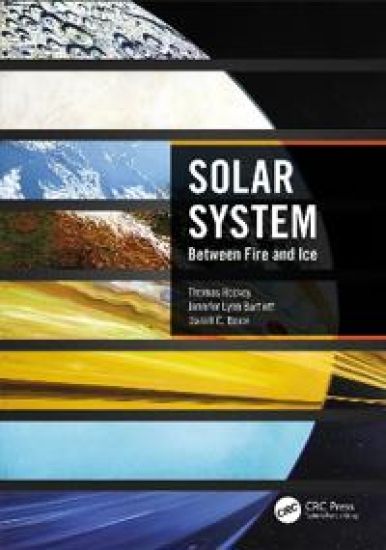
Combining the latest astronomical results with a historical perspective, Solar System: Between Fire and Ice takes you on a fabulous tour of our intriguing Solar System. Not content with a conventional discourse restricted to the major and minor bodies, astronomers Hockey, Bartlett, and Boice venture beyond the limits of our system to look at exoplanets and to consider future trends in space exploration and tourism. They discuss not only what scientists know about planets, asteroids, and comets but how the discoveries were made. With extensive teaching experience, their accessible prose clearly explains essential physical concepts. Lavishly illustrated as well as carefully researched, Solar System: Between Fire and Ice delights the eyes as well as feeding the mind. Detailed appendices provide additional technical data and resources for your own on-line voyage of discovery. Whether you are an educated layperson, student, teacher, amateur astronomer, or merely curious, you will come away having learned the most up-to-date knowledge and enjoyed the process. The authors bring a unique perspective to this subject, combining their years of experience in research, teaching, and history of planetary science. Prof. Thomas Hockey is a professor of astronomy, specializing in planetary science and the history of science. Dr. Jennifer Bartlett is an astronomer with a forte in dynamical motions of asteroids with liberal arts teaching experience. Dr. Daniel Boice is an active research astronomer in planetary science, especially comets, with considerable teaching experience." In the 1980s and 90s the Viking and Voyager missions provided droves of exciting information, generating a new level of public interest. Textbooks were rewritten and scientists worked to understand the data during mission poor period that followed. In recent times, however, we have entered a new era. There has been a multinational effort to expand our knowledge of the Solar System. Data from these missions has been freely shared and has again raised the level of public interest. Within this era of renewed interest, it is appropriate, as is done in this book, to provide the public with an effort to present an integrated view of our Solar System and questions that the discovery of extrasolar planets have raised with regard to the Solar System as a whole." Professor Reta Beebe, recipient of NASA’s Exceptional Public Service Medal"I understand this book to be aimed at a general audience, but I can also see its use as a text in astronomy classes, especially in a community school or situations where students typically resist reading the textbook. The writing is light and entertaining, and will engage students, yet it thoroughly covers all the basic concepts of a typical Astro 101 class." - Dr. Katy Garmany, winner of the American Astronomical Society’s Annie J. Cannon Award.
Combining the latest astronomical results with a historical perspective, Solar System: Between Fire and Ice takes you on a fabulous tour of our intriguing Solar System. Not content with a conventional discourse restricted to the major and minor bodies, astronomers Hockey, Bartlett, and Boice venture beyond the limits of our system to look at exoplanets and to consider future trends in space exploration and tourism. They discuss not only what scientists know about planets, asteroids, and comets but how the discoveries were made. With extensive teaching experience, their accessible prose clearly explains essential physical concepts. Lavishly illustrated as well as carefully researched, Solar System: Between Fire and Ice delights the eyes as well as feeding the mind. Detailed appendices provide additional technical data and resources for your own on-line voyage of discovery. Whether you are an educated layperson, student, teacher, amateur astronomer, or merely curious, you will come away having learned the most up-to-date knowledge and enjoyed the process. The authors bring a unique perspective to this subject, combining their years of experience in research, teaching, and history of planetary science. Prof. Thomas Hockey is a professor of astronomy, specializing in planetary science and the history of science. Dr. Jennifer Bartlett is an astronomer with a forte in dynamical motions of asteroids with liberal arts teaching experience. Dr. Daniel Boice is an active research astronomer in planetary science, especially comets, with considerable teaching experience." In the 1980s and 90s the Viking and Voyager missions provided droves of exciting information, generating a new level of public interest. Textbooks were rewritten and scientists worked to understand the data during mission poor period that followed. In recent times, however, we have entered a new era. There has been a multinational effort to expand our knowledge of the Solar System. Data from these missions has been freely shared and has again raised the level of public interest. Within this era of renewed interest, it is appropriate, as is done in this book, to provide the public with an effort to present an integrated view of our Solar System and questions that the discovery of extrasolar planets have raised with regard to the Solar System as a whole." Professor Reta Beebe, recipient of NASA’s Exceptional Public Service Medal"I understand this book to be aimed at a general audience, but I can also see its use as a text in astronomy classes, especially in a community school or situations where students typically resist reading the textbook. The writing is light and entertaining, and will engage students, yet it thoroughly covers all the basic concepts of a typical Astro 101 class." - Dr. Katy Garmany, winner of the American Astronomical Society’s Annie J. Cannon Award.
Have you ever seen a comet? It is a marvelous experience, one that all humans can share, that spawns a deep yearning to understand the spectacle. Have you ever wondered what comets are and why astronomers spend so much time studying them? Now, a comet expert and an astronomical historian have come together to produce the unique book that you now hold in your hands. Using their several decades of teaching experience, the authors have concisely presented the information you need to comprehend these majestic apparitions that grace our night skies. No mathematical proficiency is needed, in fact, this book doesn't contain a single equation! Comets are cosmic Rosetta stones, bridging our current knowledge by digging back to the earliest days of our Solar Systems. How did life arise on Earth? Did comets play a significant role in bringing water and the necessary organic matter to our early Earth? How about the dinosaurs? Were they driven to extinction by a cometary impact 66 million years ago? Comets may be both the enablers and destroyers of life on Earth as we know it. These are some of the tantalizing questions discussed here. If you so desire, steps are given to join the ranks of amateur comet hunters. Astronomy is one of the last sciences where amateurs play a significant role. Your reward for discovery? A comet officially bearing your name in the history books! The next Great Comet is on its way, we just do not know when it will arrive. Armed with this book, you will be ready to enjoy this unforgettable event.
Have you ever seen a comet? It is a marvelous experience, one that all humans can share, that spawns a deep yearning to understand the spectacle. Have you ever wondered what comets are and why astronomers spend so much time studying them? Now, a comet expert and an astronomical historian have come together to produce the unique book that you now hold in your hands. Using their several decades of teaching experience, the authors have concisely presented the information you need to comprehend these majestic apparitions that grace our night skies. No mathematical proficiency is needed, in fact, this book doesn't contain a single equation! Comets are cosmic Rosetta stones, bridging our current knowledge by digging back to the earliest days of our Solar Systems. How did life arise on Earth? Did comets play a significant role in bringing water and the necessary organic matter to our early Earth? How about the dinosaurs? Were they driven to extinction by a cometary impact 66 million years ago? Comets may be both the enablers and destroyers of life on Earth as we know it. These are some of the tantalizing questions discussed here. If you so desire, steps are given to join the ranks of amateur comet hunters. Astronomy is one of the last sciences where amateurs play a significant role. Your reward for discovery? A comet officially bearing your name in the history books! The next Great Comet is on its way, we just do not know when it will arrive. Armed with this book, you will be ready to enjoy this unforgettable event.
Jupiter is the grandest of all planets. It is by far the largest planet in the solar system and among the brightest objects in the night sky, and its calming presence has inspired humans for centuries. Jupiter was the `beloved star' of the ancient Sumerians and Babylonians, the first serious observers of the planets, and the Pioneer and Voyager spacecraft visited it in the 1970s. Now it is being scrutinized as never before by NASA's Juno spacecraft, as experts begin to have a comprehensive view of the origin, composition and structure of this gas giant world. This beautifully illustrated volume ranges across the entire history of Jupiter studies, from the naked-eye observations of the Babylonians and the Greeks, through the telescopic discoveries of Galileo and T. E. R. Phillips, to the explosion of information received from space probes. It brings our understanding of Jupiter right up to date and includes preliminary findings from the Juno space probe, while also providing valuable practical information for those who wish to make their own observations of the planet. Introducing planetary science in an accessible and engaging way, Jupiter will appeal to those who wish to have a better understanding of this magnificent planet and its unique place in the solar system.
Gazing up at the heavens from our backyards or a nearby field, most of us see an undifferentiated mess of stars - if, that is, we can see anything at all through the glow of light pollution. Today's casual observer knows far less about the sky than did our ancestors, who depended on the sun and the moon to tell them the time and on the stars to guide them through the seas. Nowadays, we don't need the sky, which is good, because we've made it far less accessible, hiding it behind the skyscrapers and excessive artificial light of our cities. "How We See the Sky" gives us back our knowledge of the sky, offering a fascinating overview of what can be seen there without the aid of a telescope. Thomas Hockey begins by scanning the horizon, explaining how the visible universe rotates through this horizon as night turns to day and season to season. Subsequent chapters explore the sun's and moon's respective motions through the celestial globe, as well as the appearance of solstices, eclipses, and planets, and how these are accounted for in different kinds of calendars. In every chapter, Hockey introduces the common vocabulary of today's astronomers, uses examples past and present to explain them, and provides conceptual tools to help newcomers understand the topics he discusses. Packed with illustrations and enlivened by historical anecdotes and literary references, "How We See the Sky" reacquaints us with the wonders to be found in our own backyards.