Kirjojen hintavertailu – 12 903 741 kirjaa ja 27 kauppaa

Kirjailija

Thomas J. Misa

Kirjat ja teokset yhdessä paikassa: 9 kirjaa, julkaisuja vuosilta 1998–2022, suosituimpiin kuuluu Digital State. Vertaile teosten hintoja ja tarkista saatavuus suomalaisista kirjakaupoista.

Nimi esiintyy myös muodoissa: Thomas J Misa

9 kirjaa

Kirjojen julkaisuvuodet: 1998–2022.

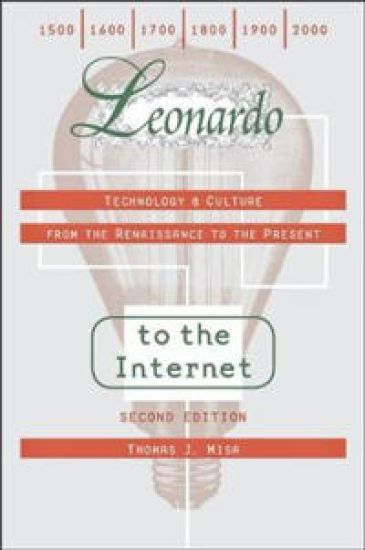
Leonardo to the Internet

Leonardo to the Internet

Thomas J. Misa

Johns Hopkins University Press
2022
pokkari

Halvin toimitettuna 40,40 €

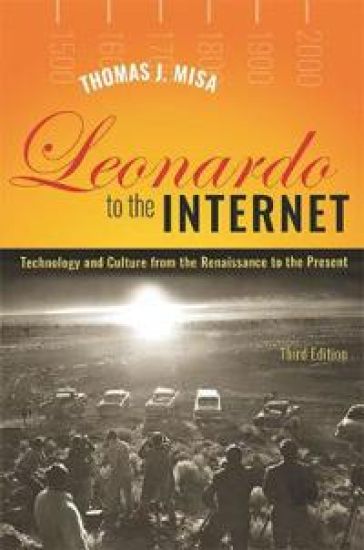
Now updated — A comprehensive, 500-year history of technology in society. Historian Thomas J. Misa's sweeping history of the relationship between technology and society over the past 500 years reveals how technological innovations have shaped—and have been shaped by—the cultures in which they arose. Spanning the preindustrial past, the age of scientific, political, and industrial revolutions, as well as the more recent eras of imperialism, modernism, and global security, this compelling work evaluates what Misa calls "the question of technology." In this edition, Misa brings his acclaimed text up to date by drawing on current scholarship while retaining sharply drawn portraits of individual people, artifacts, and systems. Each chapter has been honed to relate to contemporary concerns. Globalization, Misa argues, looks differently considering today's virulent nationalism, cultural chauvinism, and trade wars. A new chapter focuses on the digital age from 1990 to 2016. The book also examines how today's unsustainable energy systems, insecure information networks, and vulnerable global shipping have helped foster geopolitical risks and instability and takes a look at the coronavirus pandemic from the perspective of Wuhan, China's high-tech district. A masterful analysis of how technology and culture have influenced each other over five centuries, Leonardo to the Internet frames a history that illuminates modern-day problems and prospects faced by our technology-dependent world.
Leonardo to the Internet

Leonardo to the Internet

Thomas J. Misa

Johns Hopkins University Press
2022
sidottu
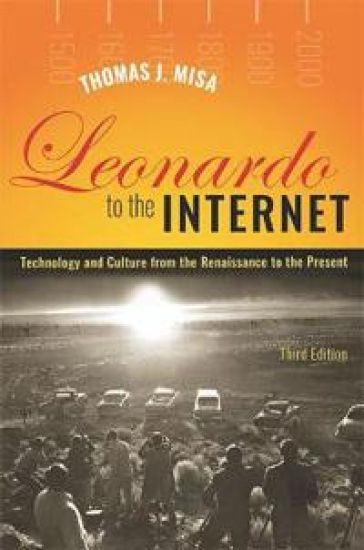
Now updated — A comprehensive, 500-year history of technology in society. Historian Thomas J. Misa's sweeping history of the relationship between technology and society over the past 500 years reveals how technological innovations have shaped—and have been shaped by—the cultures in which they arose. Spanning the preindustrial past, the age of scientific, political, and industrial revolutions, as well as the more recent eras of imperialism, modernism, and global security, this compelling work evaluates what Misa calls "the question of technology." In this edition, Misa brings his acclaimed text up to date by drawing on current scholarship while retaining sharply drawn portraits of individual people, artifacts, and systems. Each chapter has been honed to relate to contemporary concerns. Globalization, Misa argues, looks differently considering today's virulent nationalism, cultural chauvinism, and trade wars. A new chapter focuses on the digital age from 1990 to 2016. The book also examines how today's unsustainable energy systems, insecure information networks, and vulnerable global shipping have helped foster geopolitical risks and instability and takes a look at the coronavirus pandemic from the perspective of Wuhan, China's high-tech district. A masterful analysis of how technology and culture have influenced each other over five centuries, Leonardo to the Internet frames a history that illuminates modern-day problems and prospects faced by our technology-dependent world.
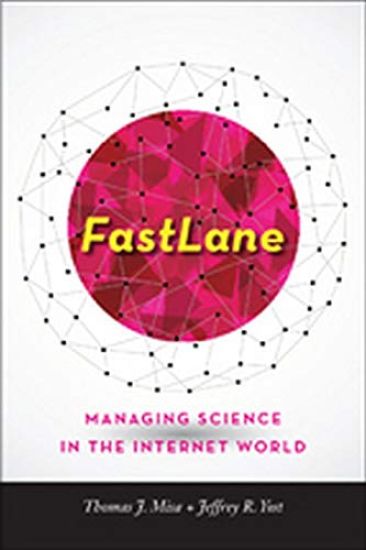
FastLane

FastLane

Thomas J. Misa; Jeffrey R. Yost

Johns Hopkins University Press
2016
sidottu
Since 2000, the National Science Foundation has depended upon its pioneering FastLane e-government system to manage grant applications, peer reviews, and reporting. In this behind-the-scenes account Thomas J. Misa and Jeffrey R. Yost examine how powerful forces of science and computing came together to create this influential grant-management system, assessing its impact on cutting-edge scientific research. Why did the NSF create FastLane, and how did it anticipate the development of web-based e-commerce? What technical challenges did the glitch-prone early system present? Did the switch to electronic grant proposals disadvantage universities with fewer resources? And how did the scientific community help shape FastLane? Foregrounding the experience of computer users, the book draws on hundreds of interviews with scientific researchers, sponsored project administrators, NSF staff, and software designers, developers, and managers.
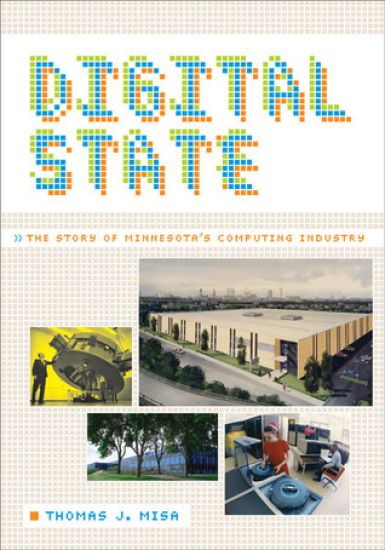
Digital State

Digital State

Thomas J. Misa

University of Minnesota Press
2013
nidottu
Accounts of the early events of the computing industry-the Turing machine, the massive Colossus, the ENIAC computer-are well-told tales, and equally well known is the later emergence of Silicon Valley and the rise of the personal computer. Yet there is an extraordinary untold middle history-with deep roots in Minnesota. From the end of World War II through the 1970s, Minnesota was home to the first computing-centered industrial district in the world. Drawing on rare archival documents, photographs, and a wealth of oral histories, Digital State unveils the remarkable story of computer development in the heartland after World War II. These decades found corporations-concentrated in large part in Minnesota-designing state-of-the-art mainframe technologies, revolutionizing new methods of magnetic data storage, and, for the first time, truly integrating software and hardware into valuable products for the American government and public. Minnesota-based companies such as Engineering Research Associates, Univac, Control Data, Cray Research, Honeywell, and IBM Rochester were major international players and together formed an unrivaled epicenter advancing digital technologies. These companies not only brought vibrant economic growth to Minnesota, they nurtured the state’s present-day medical device and software industries and possibly even tomorrow’s nanotechnology. Thomas J. Misa’s groundbreaking history shows how Minnesota recognized and embraced the coming information age through its leading-edge companies, its workforce, and its prominent institutions. Digital State reveals the inner workings of the birth of the digital age in Minnesota and what we can learn from this era of sustained innovation.
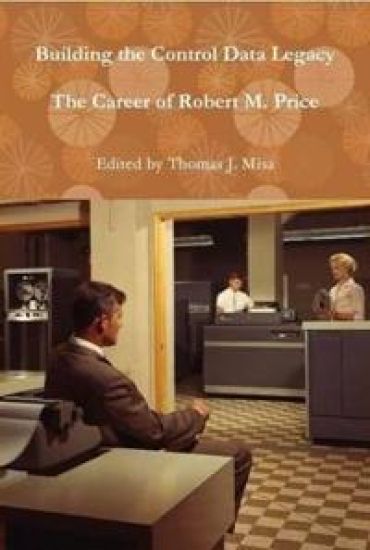
Building the Control Data Legacy

Building the Control Data Legacy

Thomas J Misa

Lulu.com
2012
sidottu
This book presents a unique behind-the-scenes view into the Control Data Corporation during its ascent into the top rank of the computer industry. This detailed 15-part oral history starts with Robert M. Price's work programming the first generation of computers in California. In 1961, he joined Control Data. For the next 29 years, Price was in key positions -- culminating as President, CEO, and Chairman from 1986 to 1990 -- as Control Data grew from a Minneapolis start-up into a multi-billion-dollar global company. Lively anecdotes provide an in-depth assessment of Control Data's founder William C. Norris and his inimitable style. Of special note are Price's incisive observations about corporate social responsibility and the "lessons learned" from a remarkable business career. Profusely illustrated with more than 80 archival photographs.
Leonardo to the Internet

Leonardo to the Internet

Thomas J. Misa

Johns Hopkins University Press
2011
pokkari
Historian Thomas J. Misa's sweeping history of the relationship between technology and society over the past 500 years reveals how technological innovations have shaped-and have been shaped by-the cultures in which they arose. Spanning the preindustrial past, the age of scientific, political, and industrial revolutions, as well as the more recent eras of imperialism, modernism, and global security, this compelling work evaluates what Misa calls "the question of technology." Misa brings his acclaimed text up to date by examining how today's unsustainable energy systems, insecure information networks, and vulnerable global shipping have helped foster geopolitical risks and instability. A masterful analysis of how technology and culture have influenced each other over five centuries, Leonardo to the Internet frames a history that illuminates modern-day problems and prospects faced by our technology-dependent world
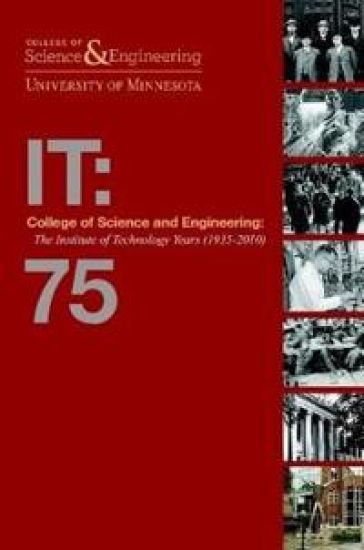
College of Science and Engineering

College of Science and Engineering

Thomas J Misa; Robert W Seidel

Lulu.com
2011
pokkari
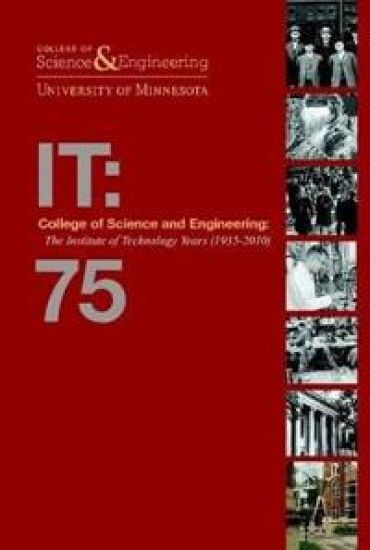
"I was fortunate in having an instructor at the University of Minnesota who was looking after me," recalled one electrical engineering graduate of 1949. "When I said, 'What's next?' he said, 'If I were you, I'd just go down the street here to Engineering Research Associates, and I'd think you'd like what they're doing there'." That was Seymour Cray, and his computer designs helped create a notable computer industry in the Twin Cities. Another Minnesota graduate, Earl Bakken (class of 1948), founded Medtronic and the core of a nationally renowned medical devices industry. For 75 years the Institute of Technology, now the College of Science and Engineering, has pioneered in research, innovation, and technology transfer to Minnesota and the world. The people behind this unique institution are revealed in this concise illustrated history, prepared by its own team of professional historians.
College of Science and Engineering

College of Science and Engineering

Thomas J Misa; Robert W Seidel

Lulu.com
2010
sidottu
"I was fortunate in having an instructor at the University of Minnesota who was looking after me," recalled one electrical engineering graduate of 1949. "When I said, 'What's next?' he said, 'If I were you, I'd just go down the street here to Engineering Research Associates, and I'd think you'd like what they're doing there'." That was Seymour Cray, and his computer designs helped create a notable computer industry in the Twin Cities. Another Minnesota graduate, Earl Bakken (class of 1948), founded Medtronic and the core of a nationally renowned medical devices industry. For 75 years the Institute of Technology, now the College of Science and Engineering, has pioneered in research, innovation, and technology transfer to Minnesota and the world. The people behind this unique institution are revealed in this concise illustrated history, prepared by its own team of professional historians.
A Nation of Steel

A Nation of Steel

Thomas J. Misa

Johns Hopkins University Press
1998
pokkari
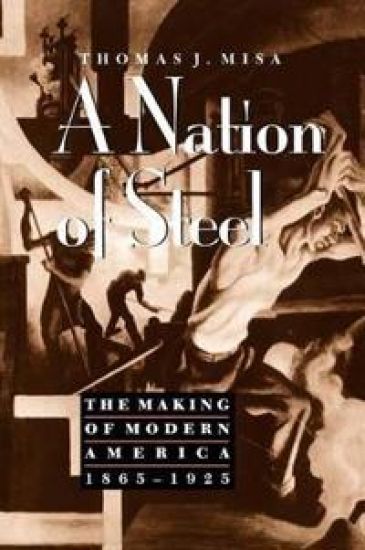
From the age of railroads through the building of the first battleships, from the first skyscrapers to the dawning of the age of the automobile, steelmakers proved central to American industry, building, and transportation. In A Nation of Steel Thomas Misa explores the complex interactions between steelmaking and the rise of the industries that have characterized modern America. A Nation of Steel offers a detailed and fascinating look at an industry that has had a profound impact on American life.