Kirjojen hintavertailu – 12 903 735 kirjaa ja 27 kauppaa

Kirjailija

Thomas Joseph White

Kirjat ja teokset yhdessä paikassa: 11 kirjaa, julkaisuja vuosilta 2017–2026, suosituimpiin kuuluu The Incarnate Lord. Vertaile teosten hintoja ja tarkista saatavuus suomalaisista kirjakaupoista.

11 kirjaa

Kirjojen julkaisuvuodet: 2017–2026.

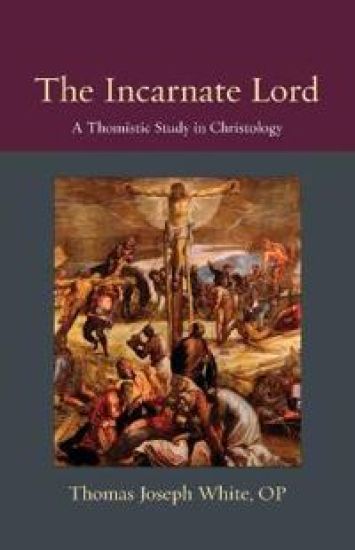
The Incarnate Lord

The Incarnate Lord

Thomas Joseph White

The Catholic University of America Press
2017
nidottu
In recent years, Thomistic thought has seen a noteworthy revival, especially in the domain of systematic and historical theology. This resurgence of interest in Aquinas' thought is beginning to significantly affect the shape of academic theology as well as ecumenical theology. Yet there exists no serious study of Thomistic Christology, especially in dialogue with major themes in modern Christology. The Incarnate Lord, then, considers central themes in Christology from a metaphysical perspective. Particular attention is given to the hypostatic union, the two natures of Christ, the knowledge and obedience of Jesus, the passion and death of Christ, his descent into hell, and resurrection. A central concern of the book is to argue for the perennial importance of ontological principles of Christology inherited from patristic and scholastic authors. However, the book also seeks to advance an interpretation of Thomistic Christology in a modern context. The teaching Aquinas, then, is central to the study, but it is placed in conversation with various modern theologians, such as Karl Barth, Karl Rahner and Hans Urs von Balthasar. Ultimately the goal of the work is to suggest how traditional Catholic theology might thrive under modern conditions, and also develop fruitfully from engaging in contemporary controversies. The first part of the book, then, examines the ontology of the hypostatic union, the grace and human nature of Christ, the analogical similitude of the human and divine natures of Jesus, and the human knowledge and obedience of Christ. The second part of the book considers the obedient self-offering of Christ, his cry of dereliction, suffering and death, as well as his descent into hell, and physical resurrection. The conclusion of the book provides a systematic reflection on the nature of Christology as a theoretical and historical discipline.
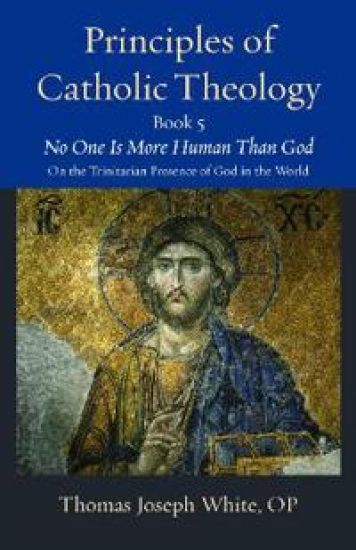
Principles of Catholic Theology, Book 5

Principles of Catholic Theology, Book 5

Thomas Joseph White

THE CATHOLIC UNIVERSITY OF AMERICA PRESS
2026
pokkari
This work explores a Christian understanding of God's presence in the world. As the Creator of all that exists, the Creator-Trinity is mysteriously present to all things, and truly but imperfectly knowable as such. In addition to this creative presence, however, there is also the manifestation of God's presence as a gift of grace. By supernatural faith, the trinitarian life of God is made known to us as an object of the Christian mystical life. This life is centered especially upon God's unique presence by way of Incarnation, human life, death, and resurrection, in the person of Jesus of Nazareth. This work explores these notions in comparison with other religious traditions, in a Catholic as well as ecumenical perspective. Original considerations are offered regarding the nature of scriptural inspiration, the Church as the mystical body of Christ, and the sacraments as instrumental expressions of the Incarnation, all with a view to the notion of mystical experience, and union with God. Principles of Catholic Theology, Book 5 is a continuation of Fr. Thomas Joseph White's collection of essays, extending over a range of fundamental topics in Catholic dogmatic theology.
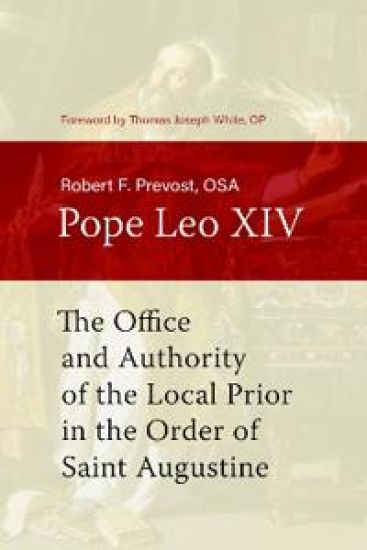
The Office and Authority of the Local Prior in the Order of Saint Augustine

The Office and Authority of the Local Prior in the Order of Saint Augustine

Robert F. Prevost; Thomas Joseph White

THE CATHOLIC UNIVERSITY OF AMERICA PRESS
2025
sidottu
As a young priest, Robert Prevost was sent in 1981 to Rome to study church law at the Pontifical University of Saint Thomas (known as the Angelicum). There he earned a licentiate and composed a doctoral thesis, which made final in 1987. This is that thesis, the first book-length work composed by the man now known as Pope Leo XIV. Specifically, his study - drawing from sources in English, Italian, and Spanish and from medieval history and theology as well as canon law - focused on the role of the prior as the local superior in the Order of St. Augustine. In doing so, he describes a traditional notion of obedience in religious life - one based on love of the truth and growth in one's inner freedom to pursue holiness. At the center of his reflection are key ideas regarding the common good of the Church; the Eucharistic liturgy at the center of the life of the community; the role of hierarchy and consultation; and mutual respect for the diverse contributions of each person. Present in this text, moreover, is a far-reaching conception of the priesthood characterized by the triple munera: the priestly work of teaching, sanctification, and governance. Central to the whole volume is an Augustinian conception of the spiritual life that focuses on the inward work of grace, the primacy of the love of God, and inward conformity to Christ. The book's preface - composed by eminent theologian and present-day rector of the Angelicum, Fr. Thomas Joseph White, OP - helps frame the work for the wider public interested in it as a privileged window into the mind and heart of Prevost as a young priest, showing how its subject matter has implications for how one thinks about the life of the Catholic Church. There are clearly in this early work central themes regarding the life of Church, the apostolic tradition, and ecclesial authority in the service of the common good, that may well indicate directions and themes in the subsequent life and teaching of the author. Canonists will be drawn to Prevost's analysis of the Constitutions of the Augustinians in light of the then-newly promulgated Code of Canon Law. Historians and theologians alike may enjoy considering parallelisms that occur between this Augustinian vision of the prior and the subsequent unfolding of an Augustinian pontificate. Hopefully the publication of this work will lead to constructive debate about and comprehension of the relation of between the two.
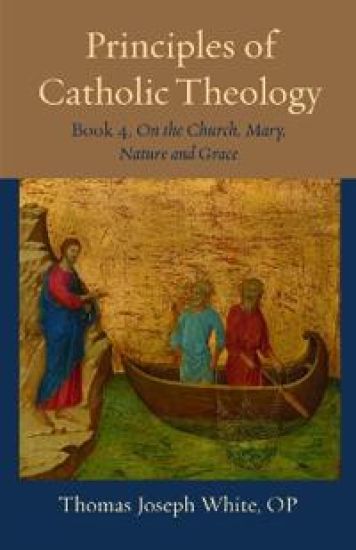
Principles of Catholic Theology, Book 4

Principles of Catholic Theology, Book 4

Thomas Joseph White

THE CATHOLIC UNIVERSITY OF AMERICA PRESS
2025
nidottu
In the Nicene Creed Christians profess belief in the Church, "one, holy, catholic, and apostolic." The Church is also called the mystical body of Christ and the bride of Christ. What is the Church and how can we understand her mystery in light of the mystery of Christ? Principles of Catholic Theology, Book 4 explores Catholic ecclesiology and the theology of the Virgin Mary, as an exemplar of the Church's life. It also considers the people of Israel in light of the Church and Christ. The second half of the book considers human nature in light of the grace of Christ, and ecclesial humanity, so as to consider thematic and universal relations of grace to human nature. Major controversies are addressed such as the natural desire to see God and the Thomistic understanding of election and predestination. Effectively this volume seeks to receive and interpret the teaching of the Second Vatican Council Constitution on the Church, Lumen Gentium, within the Thomistic theological tradition and in light of that tradition. Principles of Catholic Theology, Book 4 is a continuation of Fr. Thomas Joseph White's collection of essays, extending over a range of fundamental topics in Catholic dogmatic theology.
The Fittingness of the Incarnation

The Fittingness of the Incarnation

David Braine; Thomas Joseph White

THE CATHOLIC UNIVERSITY OF AMERICA PRESS
2025
nidottu
The Fittingness of the Incarnation collects David Braine's best unpublished philosophical and theological essays. The essays contained herein are representative of Braine's careful, rich and distinctive work. As one of the more interesting philosophers of his generation, David Braine offered a realist account of the world - God's existence, the human person, and language - through his major works, and these essays help follow through on some of those thoughts, explain underlying metaphysical or epistemological principles, and we see many of these applied in his theological essays. Additionally, the book includes Braine's plans for books on the realism of St. Thomas Aquinas, which helps us see again his vision for a unified philosophical account, and the Incarnation, which shows how Braine's philosophical anthropology informs. Altogether the book contributes the final papers of David Braine to the fields at large.
The Fittingness of the Incarnation

The Fittingness of the Incarnation

David Braine; Thomas Joseph White

THE CATHOLIC UNIVERSITY OF AMERICA PRESS
2025
sidottu
The Fittingness of the Incarnationcollects David Braine's best unpublished philosophical and theological essays. The essays contained herein are representative of Braine's careful, rich and distinctive work. As one of the more interesting philosophers of his generation, David Braine offered a realist account of the world - God's existence, the human person, and language - through his major works, and these essays help follow through on some of those thoughts, explain underlying metaphysical or epistemological principles, and we see many of these applied in his theological essays. Additionally, the book includes Braine's plans for books on the realism of St. Thomas Aquinas, which helps us see again his vision for a unified philosophical account, and the Incarnation, which shows how Braine's philosophical anthropology informs. Altogether the book contributes the final papers of David Braine to the fields at large.
Contemplation and the Cross

Contemplation and the Cross

Thomas Joseph White

THE CATHOLIC UNIVERSITY OF AMERICA PRESS
2025
nidottu
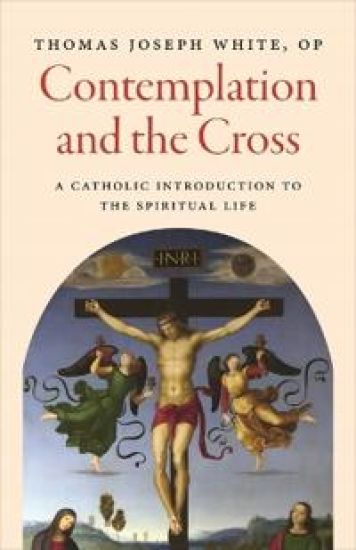
What are the aims of the Christian spiritual life and how can we deepen our life in Christ? What is the Catholic form of the spiritual life and what are its causes? This book serves as an introduction to Catholic spirituality by examining the mystery of Jesus Christ- His Crucifixion and His Resurrection- as the center of our spiritual life. The central argument of the book is that the life, death, and resurrection of Jesus present us with the form or essence of the Christian spiritual life and orient us toward union with the Trinity as the final end or aim of human existence. The means of union with God through sacraments, the interior life of the theological virtues (faith, hope, and charity), and the virtue of religion are considered as vehicles by which we rejoin God in Christ. The effects of the Cross are considered in our life by a study of the spiritual and corporal works of mercy. The Virgin Mary is considered as a model of the spiritual life. What results is a Christ-centered spirituality that is sacramental and Marian, and that depicts the life of the Church living in contemplative charity as the basic expression of Catholic spirituality.
Principles of Catholic Theology, Book 3

Principles of Catholic Theology, Book 3

Thomas Joseph White

THE CATHOLIC UNIVERSITY OF AMERICA PRESS
2024
sidottu
What if anything can human beings know about God, either by way of philosophical reasoning or by divine revelation? How does the mystery of the Incarnation illuminate our understanding of the nature and mystery of God and the nature and destiny of the human person? The essays in this book explore topics pertaining to the nature of God, apophatic theology, divine simplicity and the holy Trinity, divine beauty, and the beauty of creation. The book also contains a series of speculative considerations of Christology: Why did God become human? How ought we understand the two natures of Christ and the topic of the communication of idioms (attribution of both divine and human properties to one person)? There is also a sustained treatment of Jesus' human knowledge and voluntary freedom. Did Jesus understand his own lordship and his unity with the Father and the Holy Spirit, and if so, how? Did Christ's human will always accord with the divine will, and what significance does this idea have for our understanding of the redemption affected by Christ for the whole human race? Through these explorations, principles drawn from Thomas Aquinas and from Thomistic tradition are taken into account as key resources for the adjudication of contemporary theological challenges. Principles of Catholic Theology, Book 3 is a continuation of Fr. Thomas Joseph White, OP, collection of essays, extending over a range of fundamental topics in Catholic dogmatic theology.
Principles of Catholic Theology, Book 3

Principles of Catholic Theology, Book 3

Thomas Joseph White

THE CATHOLIC UNIVERSITY OF AMERICA PRESS
2024
pokkari
What if anything can human beings know about God, either by way of philosophical reasoning or by divine revelation? How does the mystery of the Incarnation illuminate our understanding of the nature and mystery of God and the nature and destiny of the human person? The essays in this book explore topics pertaining to the nature of God, apophatic theology, divine simplicity and the holy Trinity, divine beauty, and the beauty of creation. The book also contains a series of speculative considerations of Christology: Why did God become human? How ought we understand the two natures of Christ and the topic of the communication of idioms (attribution of both divine and human properties to one person)? There is also a sustained treatment of Jesus' human knowledge and voluntary freedom. Did Jesus understand his own lordship and his unity with the Father and the Holy Spirit, and if so, how? Did Christ's human will always accord with the divine will, and what significance does this idea have for our understanding of the redemption affected by Christ for the whole human race? Through these explorations, principles drawn from Thomas Aquinas and from Thomistic tradition are taken into account as key resources for the adjudication of contemporary theological challenges. Principles of Catholic Theology, Book 3 is a continuation of Fr. Thomas Joseph White's collection of essays, extending over a range of fundamental topics in Catholic dogmatic theology.
Principles of Catholic Theology, Book 1

Principles of Catholic Theology, Book 1

Thomas Joseph White

THE CATHOLIC UNIVERSITY OF AMERICA PRESS
2023
nidottu
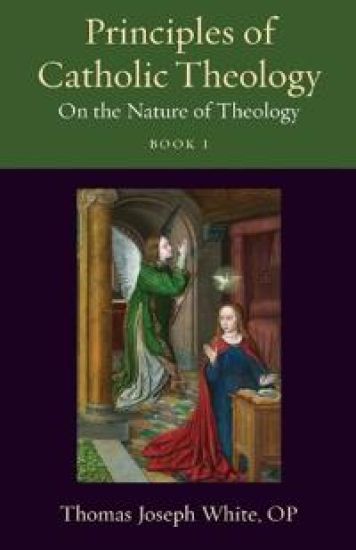
Catholic theology has to face a certain number of fundamental questions: what is the nature and content of Christian revelation, what are the sources of revelation, how are the mysteries of the faith to be understood in relation of one to another, and how do the truths of the Catholic faith relate to the acquisitions of natural reason. In the contemporary context, Catholic theology is marked by a diversity of approaches, many of which are seemingly incompatible or estranged from one another. How might we think about the unity of Catholic theology over and above the diversity of forms? What role, if any, can Aquinas play as a common doctor in facilitating exchanges between theological traditions in the Church? Principles of Catholic Theology seeks to address directly the nature of Catholic theology and the challenge of its contemporary articulation with an eye towards its articulation in its Thomistic key. This book is also the first of a series of collections of essays by Thomas Joseph White, OP, extending over a range of fundamental topics in Catholic dogmatic theology.
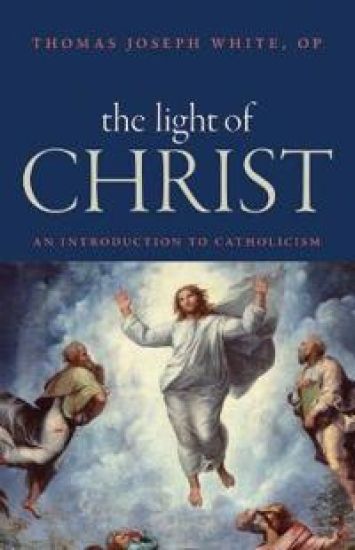
The Light of Christ

The Light of Christ

Thomas Joseph White

The Catholic University of America Press
2017
nidottu

Halvin toimitettuna 22,00 €

The Light of Christ provides an accessible presentation of Catholicism that is grounded in traditional theology, but engaged with a host of contemporary questions or objections. Inspired by the theologies of Irenaeus, Thomas Aquinas and John Henry Newman, and rooted in a post-Vatican II context, Fr. Thomas Joseph White presents major doctrines of the Christian religion in a way that is comprehensible for non-specialists: knowledge of God, the mystery of the Trinity, the Incarnation and the atonement, the sacraments and the moral life, eschatology and prayer. At the same time, The Light of Christ also addresses topics such as evolution, the modern historical study of Jesus and the Bible, and objections to Catholic moral teaching. Touching on the concerns of contemporary readers, Fr. White examines questions such as whether Christianity is compatible with the findings of the modern sciences, do historical Jesus studies disrupt or confirm the teaching of the faith, and does history confirm the antiquity of Catholic claims. This book serves as an excellent introduction for young professionals with no specialized background in theology who are interested in learning more about Catholicism, or as an introduction to Catholic theology. It will also serve as a helpful text for theology courses in a university context. As Fr. White states in the book's introduction: ""This is a book that offers itself as a companion. I do not presume to argue the reader into the truths of the Catholic faith, though I will make arguments. My goal is to make explicit in a few broad strokes the shape of Catholicism. I hope to outline its inherent intelligibility or form as a mystery that is at once visible and invisible, ancient and contemporary, mystical and reasonable.