Kirjojen hintavertailu – 12 903 725 kirjaa ja 27 kauppaa

Kirjailija

Thomas Kazen

Kirjat ja teokset yhdessä paikassa: 12 kirjaa, julkaisuja vuosilta 2010–2024, suosituimpiin kuuluu Jesus and Purity Halakhah. Vertaile teosten hintoja ja tarkista saatavuus suomalaisista kirjakaupoista.

12 kirjaa

Kirjojen julkaisuvuodet: 2010–2024.

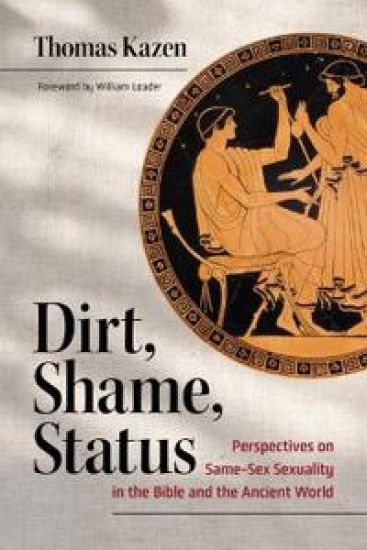
Dirt, Shame, Status

Dirt, Shame, Status

Thomas Kazen; William Loader

WILLIAM B EERDMANS PUBLISHING CO
2024
pokkari
A scholarly examination of same-sex sexuality in the Bible in the context of the ancient world Scriptural prohibitions of same-sex sexual acts (so-called "clobber passages") are often used as prooftexts to support the oppression of LGBT communities in the West today. However, such interpretation of these scant references ignores critical sociohistorical context from the ancient world. Analyzing a wealth of primary sources, Thomas Kazen brings biblical studies into conversation with the sexual norms and practices of the ancient world. Near Eastern, Greek, and Roman texts, including the Old and New Testaments, exhibit ancient concerns about hierarchy in sexual relationships. Examining references to sexuality through the lenses of power and subordination, honor and shame, and purity, Kazen sheds light on homophobic passages in the Bible. Special attention is given to the Levitical laws and the Pauline epistles. Ultimately, Kazen calls us to renegotiate the balance between our ancient heritage and our contemporary values. Carefully researched and accessibly presented, Dirt, Shame, Status lends readers insight into the diverse cultural influences on the Bible. Kazen's work offers an informed and important perspective on a controversial topic of perennial interest. Scholars, students, and all curious readers of Scripture will find this volume to be an indispensable resource for understanding complex ancient texts and contexts.

Revenge, Compensation, and Forgiveness in the Ancient World

Revenge, Compensation, and Forgiveness in the Ancient World

Thomas Kazen; Rikard Roitto

Mohr Siebeck
2024
sidottu
Handling moral infringement is complicated and this was as true in antiquity as it is today. Should one retaliate, demand compensation, be merciful, ignore the infringement, or forgive? Thomas Kazen and Rikard Roitto compare how Greeks, Romans, Jews, and Christians in antiquity navigated different ideas, practices, and rituals for moral repair. How did they think about morality and did this affect ideas about moral repair? What practices of moral repair did they use, within and beyond the court? In what different ways did they involve the gods in interpersonal conflicts through ritual? Insights from contemporary research on human behaviour guide the comparative work, since, as the authors argue, human moral behaviour and cognition is the result of both innate and cultural factors.
Moral Infringement and Repair in Antiquity

Moral Infringement and Repair in Antiquity

Thomas Kazen

Enskilda Hogskolan Stockholm
2022
pokkari
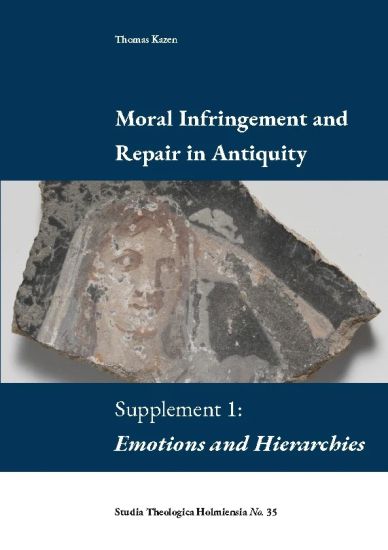
Moral Infringement and Repair in Antiquity, is a series of publications related to a project on Dynamics of Moral Repair in Antiquity, run by Thomas Kazen and Rikard Roitto between 2017 and 2021, and funded by the Swedish Research Council. The volumes contain stand-alone articles and serve as supplements to the main outcome of the project, the volume Interpersonal Infringement and Moral Repair: Revenge, Compensation and Forgiveness in the Ancient World, forthcoming on Mohr Siebeck in 2023. Supplement 1: Emotions and Hierarchies, contains four articles and chapters by Thomas Kazen. Three of them are republished in accordance with the publishers' general conditions for author reuse. The fourth has not been published before. 1. Emotional Ethics in Biblical Texts: Cultural Construction and Biological Bases of Morality. 2. Viewing Oneself through Others' Eyes: Shame between Biology and Culture in Biblical Texts.3. Law and Emotion in Moral Repair: Circumscribing Infringement.4. Retribution and Repair in Voluntary Associations: Comparing Rule Texts from Qumran, Collegia, and Christ Groups.
Issues of Impurity in Early Judaism

Issues of Impurity in Early Judaism

Thomas Kazen

Enskilda Hogskolan Stockholm
2021
pokkari
While Jesus and Purity (2002, corrected reprint 2010, 2021) aimed to present an unfolding argument, this volume does not aspire at such coherence. It consists of articles and papers on various issues of impurity in early Judaism. A few of these have been previously published, the rest not. Some chapters develop and further expand on topics discussed in Jesus and Purity and much focus lies on questions of the impurity of discharges and the practice of hand-washing before meals. Both literary and historical methods are used, as well as approaches based on cognitive science. The analysis covers texts from the Pentateuch, Qumran, the New Testament, and some Jewish Hellenistic authors. By bringing these articles together, they are made available and can be easily found by potential readers. Together with the recently published collection Impurity and Purification in Early Judaism and the Jesus Tradition (SBL Press, 2021), Issues of Impurity represents Kazen's continuous work on purity issues through two decades. The reader of both volumes will see how the author's views have gradually evolved through the years.
Impurity and Purification in Early Judaism and the Jesus Tradition
This collection of twelve essays by Thomas Kazen focuses on issues of purity and purification in early Judaism and the Jesus tradition. During the late Second Temple period, Jewish purity practices became more prominent than before and underwent substantial developments. Kazen advances the ongoing conversation and debate about a number of key issues in the field, such as the relationship between ritual and morality, the role and function of metaphor, and the use of evolutionary and embodied perspectives.
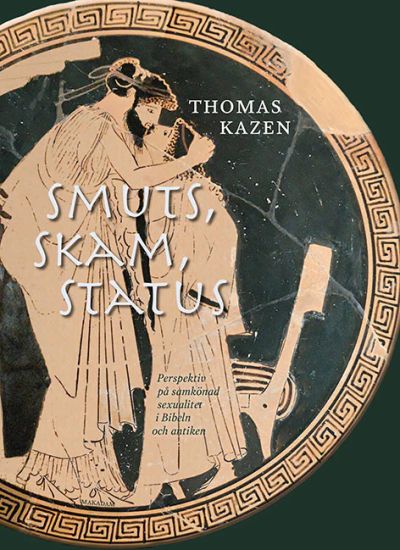
Smuts, skam, status : perspektiv på samkönad sexualitet i Bibeln och antiken
Västerlandet har en historia av förtryck och förtal av homosexuella som bygger på en blandning av religiösa och kulturella föreställningar. Men de bibliska texter som fördömer samkönade sexuella handlingar är få och knappast begripliga utan grundläggande kunskap om antika samhällsmönster och föreställningar. I Smuts, skam, status. Perspektiv på samkönad sexualitet i Bibeln och antiken granskas ett urval texter från Främre Orienten, Grekland och Rom utifrån tre tolkningsparadigm: renhetorenhet, makt och underordning, samt heder och skam. Thomas Kazen, professor i bibelvetenskap vid Teologiska högskolan Stockholm, visar hur en bakomliggande hierarkisk och hedersrelaterad grundsyn kan göra texterna mer begripliga. Han reflekterar också över de stora skillnader och likheter mellan antika och moderna värderingar, som kan anas här.
Scripture, Interpretation, or Authority?
In this study of motives and arguments in Jesus' halakic conflicts, Thomas Kazen suggests a way out of the present methodological impasse in the use of traditional criteria of authenticity in historical Jesus research, at least when it comes to those Jesus traditions that relate to halakic issues. Kazen employs results from recent research on the development of halakah during the Second Temple period, in particular from Aharon Shemesh's discussion of two models (developmental and reflective) for explaining halakic development within and between various Jewish movements, and three areas of tension for analyzing dissenting views (revelation vs. interpretation, Scripture vs. tradition, and nominalism vs. realism). Kazen revisits the Synoptic conflict narratives about Sabbath observance, purity rules and divorce practices, and discusses motives and arguments ascribed to Jesus, whether implicitly or explicitly, by the texts themselves, or by modern interpreters. By combining analyses of halakic development with tradition and redaction criticism, Kazen disentangles theological motives from reasonable historical explanations and suggests relative dates and contexts for motives and arguments often ascribed to Jesus. He questions interpretations which focus on unique individual or halakic authority and suggests that the earliest Jesus tradition appeals to the priority of human need and to creational intent, viewing revelation as based on plain reading and a realistic understanding of Scripture. Jesus' stance is best explained within the framework of prophetic criticism and a traditional Israelite understanding of Torah. With this work the author contributes as much to our understanding of halakic development during the Second Temple and Tannitic periods as he does to our understanding of the historical Jesus and his relationship to contemporary movements.
Jesus and Purity Halakhah

Jesus and Purity Halakhah

Thomas Kazen

Eisenbrauns
2010
pokkari
What did Jesus think about Jewish practice regarding impurity? How did he relate to the inner-Jewish debates of his day concerning ritual purity and impurity? Did he discard the impurity concept altogether, or was it an obvious and natural part of his Jewish faith and life? Did he advocate another or different type of purity? Ritual or cultic purity was paramount in Jewish society and life during the Second Temple period, and differences in purity halakhah were one of the factors that distinguished various movements. Therefore, considering purity is crucial in any attempt to interpret the historical Jesus within his contemporary context. In the latest or “third” phase of historical Jesus study, researchers have given prominence to Jesus’ social and cultural context. In keeping with this goal, Thomas Kazen discusses the historical Jesus alongside what we know of Jewish purity halakhah of his time and explains Jesus’ attitude toward impurity. Kazen balances the work of New Testament scholars on Judaism and legal matters by incorporating the historical Jesus studies of Jewish scholars, seeking to engage students of the historical Jesus with the primary materials relating to legal matters.