
Kirjojen hintavertailu – 12 903 725 kirjaa ja 27 kauppaa

Kirjailija

Thomas L. Griffiths

Kirjat ja teokset yhdessä paikassa: 3 kirjaa, julkaisuja vuosilta 2024–2026, suosituimpiin kuuluu The Rational Use of Cognitive Resources. Vertaile teosten hintoja ja tarkista saatavuus suomalaisista kirjakaupoista.

3 kirjaa

Kirjojen julkaisuvuodet: 2024–2026.

The Rational Use of Cognitive Resources

The Rational Use of Cognitive Resources

Falk Lieder; Frederick Callaway; Thomas L. Griffiths

PRINCETON UNIVERSITY PRESS
2026
sidottu

Halvin toimitettuna 170,60 €

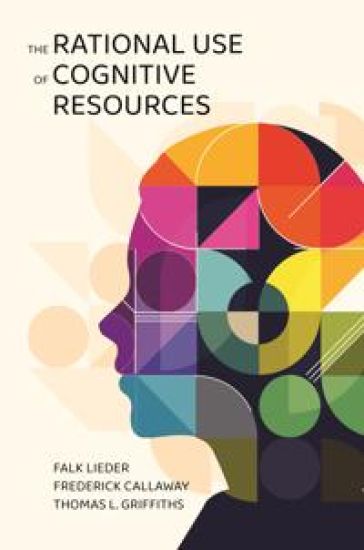
A new approach to understanding irrational behavior that provides a framework for deriving new models of human cognitionWhat does it mean to act rationally? Mathematicians, economists, and statisticians have argued that a rational actor chooses actions that maximize their expected utility. And yet people routinely act in ways that violate this prescription. Our limited time and computational resources mean that it is often unrealistic to consider all options in order to choose the one that has the greatest utility. This book suggests a different approach to understanding irrational behavior: resource-rational analysis. By reframing questions of rational action in terms of how we should make the best use of our limited resources, the book offers a new take on fundamental questions at the heart of cognitive psychology, behavioral economics, and the design of artificial intelligence systems. The book presents a formal framework for applying resource-rational analysis to understand and improve human behavior, a set of tools developed by the authors to make this easier, and examples of how they have used this approach to revisit classic questions about human cognition, pose new ones, and enhance human rationality. The book will be a valuable resource for psychologists, economists, and philosophers as well as neuroscientists studying human brains and minds and computer scientists working to reproduce such systems in machines.
The Rational Use of Cognitive Resources

The Rational Use of Cognitive Resources

Falk Lieder; Frederick Callaway; Thomas L. Griffiths

PRINCETON UNIVERSITY PRESS
2026
pokkari
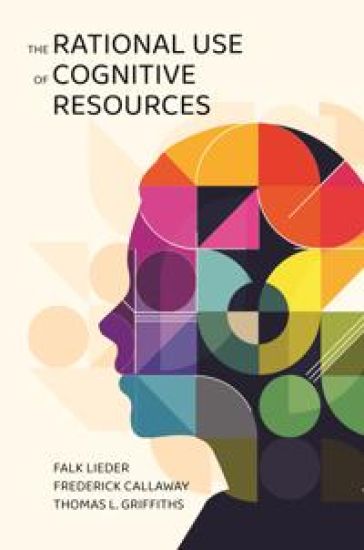
A new approach to understanding irrational behavior that provides a framework for deriving new models of human cognitionWhat does it mean to act rationally? Mathematicians, economists, and statisticians have argued that a rational actor chooses actions that maximize their expected utility. And yet people routinely act in ways that violate this prescription. Our limited time and computational resources mean that it is often unrealistic to consider all options in order to choose the one that has the greatest utility. This book suggests a different approach to understanding irrational behavior: resource-rational analysis. By reframing questions of rational action in terms of how we should make the best use of our limited resources, the book offers a new take on fundamental questions at the heart of cognitive psychology, behavioral economics, and the design of artificial intelligence systems. The book presents a formal framework for applying resource-rational analysis to understand and improve human behavior, a set of tools developed by the authors to make this easier, and examples of how they have used this approach to revisit classic questions about human cognition, pose new ones, and enhance human rationality. The book will be a valuable resource for psychologists, economists, and philosophers as well as neuroscientists studying human brains and minds and computer scientists working to reproduce such systems in machines.
Bayesian Models of Cognition

Bayesian Models of Cognition

Thomas L. Griffiths; Nick Chater

MIT PRESS LTD
2024
sidottu
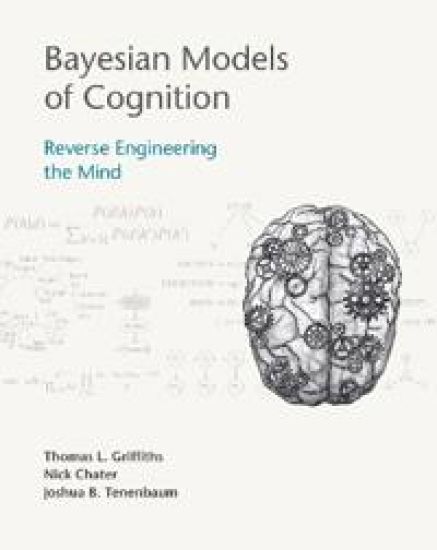
The definitive introduction to Bayesian cognitive science, written by pioneers of the field. How does human intelligence work, in engineering terms? How do our minds get so much from so little? Bayesian models of cognition provide a powerful framework for answering these questions by reverse-engineering the mind. This textbook offers an authoritative introduction to Bayesian cognitive science and a unifying theoretical perspective on how the mind works. Part I provides an introduction to the key mathematical ideas and illustrations with examples from the psychological literature, including detailed derivations of specific models and references that can be used to learn more about the underlying principles. Part II details more advanced topics and their applications before engaging with critiques of the reverse-engineering approach. Written by experts at the forefront of new research, this comprehensive text brings the fields of cognitive science and artificial intelligence back together and establishes a firmly grounded mathematical and computational foundation for the understanding of human intelligence. The only textbook comprehensively introducing the Bayesian approach to cognitionWritten by pioneers in the fieldOffers cutting-edge coverage of Bayesian cognitive science's research frontiers Suitable for advanced undergraduate and graduate students and researchers across the sciences with an interest in the mind, brain, and intelligence Features short tutorials and case studies of specific Bayesian models