Kirjojen hintavertailu – 12 859 829 kirjaa ja 27 kauppaa

Kirjailija

Thomas Lorman

Kirjat ja teokset yhdessä paikassa: 3 kirjaa, julkaisuja vuosilta 2019–2025, suosituimpiin kuuluu Governing Divided Societies. Vertaile teosten hintoja ja tarkista saatavuus suomalaisista kirjakaupoista.

3 kirjaa

Kirjojen julkaisuvuodet: 2019–2025.

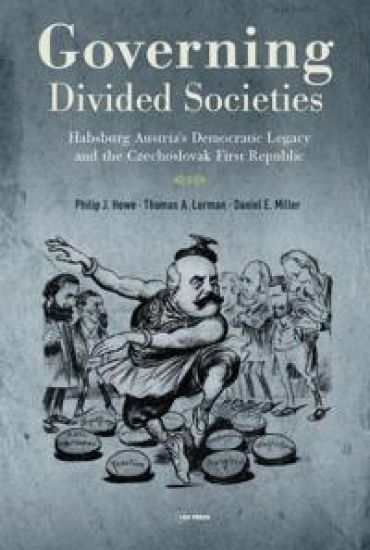
Governing Divided Societies

Governing Divided Societies

Philip Howe; Thomas Lorman; Daniel Miller

CENTRAL EUROPEAN UNIVERSITY PRESS
2025
sidottu
The authors of this volume challenge conventional notions about Habsburg and Czechoslovak politics, arguing that they were more democratic than they often appear. At combining political science and history, the authors’ guiding principle and means of analysis is the consociational model of democracy. This theory, linked best to Arend Lijphart, asserts that consociationalism guarantees minorities a say in government and helps preserve democracy in societies that experience deep ideological, cultural, or ethnic divisions. It enables the main segments to be isolated organizationally from each other, thus avoiding conflict, and affording the leaders to make compromises for the good of the whole. Consociationalism has proven its worth as a model for describing contemporary democracies and diagnosing their ills. By exploring the institutions and practices of the Habsburg Monarchy before 1918 and the Czechoslovak First Republic, Howe, Lorman, and Miller prove the value of the consociational theory at analyzing the past. They hold that a multitude of parties, frequent cabinet changes, and reliance on circles of experts do not necessarily signal flawed democracies, when, in fact, they are features of consociationalism. This book is a call to specialists to view current politics not just in terms of majoritarian democracy but rather by the standard of the consociational democracies.
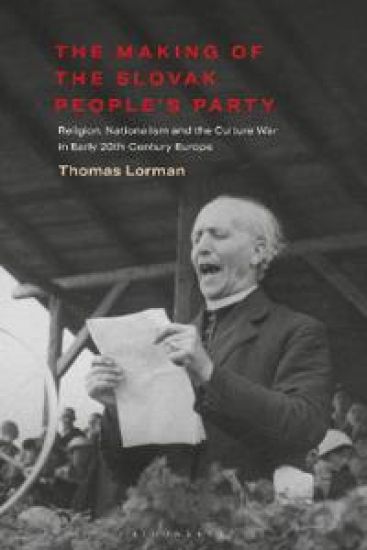
The Making of the Slovak People’s Party

The Making of the Slovak People’s Party

Thomas Lorman

Bloomsbury Academic
2020
nidottu
Winner of the Alec Nove Prize in Russian, Soviet, and Post-Soviet StudiesWinner of the BASEES George Blazyca PrizeIn 1945, just six years after coming to power, the Slovak People's Party (SLS) was disbanded as a 'criminal organisation' and its leader - Jozef Tiso - hanged for treason. What made it possible for the SLS, initially founded in 1905 by priests to represent the Catholic Slovak minority residing in the north of the Kingdom of Hungary, to form an openly pro-Nazi government in 1939? And what put Slovakia on the path to a 'fascism' that would see more than 45,000 Jews deported to their deaths in 1942? To answer these questions, Thomas Lorman draws on more than a decade's research in archives across the region in Hungarian, Slovak and Latin, and studies the party's formative years in depth for the first time in English. Lorman examines the various strands which fused to form the party and its popularity, including a complex and nebulous nationalism, Catholicism and a resounding mistrust of liberalism and 'modernity'. The Making of the Slovak People’s Party is a vital and timely study of the genesis and success of far-right movements that will be essential reading for all scholars working on 20th-century Eastern European history, nationalism and the interplay of religion and politics.
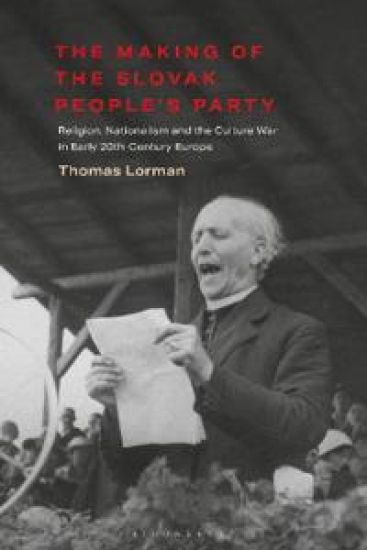
The Making of the Slovak People’s Party

The Making of the Slovak People’s Party

Thomas Lorman

Bloomsbury Academic
2019
sidottu
Winner of the Alec Nove Prize in Russian, Soviet, and Post-Soviet StudiesWinner of the BASEES George Blazyca PrizeIn 1945, just six years after coming to power, the Slovak People's Party (SLS) was disbanded as a 'criminal organisation' and its leader - Jozef Tiso - hanged for treason. What made it possible for the SLS, initially founded in 1905 by priests to represent the Catholic Slovak minority residing in the north of the Kingdom of Hungary, to form an openly pro-Nazi government in 1939? And what put Slovakia on the path to a 'fascism' that would see more than 45,000 Jews deported to their deaths in 1942? To answer these questions, Thomas Lorman draws on more than a decade's research in archives across the region in Hungarian, Slovak and Latin, and studies the party's formative years in depth for the first time in English. Lorman examines the various strands which fused to form the party and its popularity, including a complex and nebulous nationalism, Catholicism and a resounding mistrust of liberalism and 'modernity'. The Making of the Slovak People’s Party is a vital and timely study of the genesis and success of far-right movements that will be essential reading for all scholars working on 20th-century Eastern European history, nationalism and the interplay of religion and politics.