

Kirjailija
Thomas Maissen
Kirjat ja teokset yhdessä paikassa: 8 kirjaa, julkaisuja vuosilta 2008–2025, suosituimpiin kuuluu Die Geburt Der Republic. Vertaile teosten hintoja ja tarkista saatavuus suomalaisista kirjakaupoista.
8 kirjaa
Kirjojen julkaisuvuodet: 2008–2025.

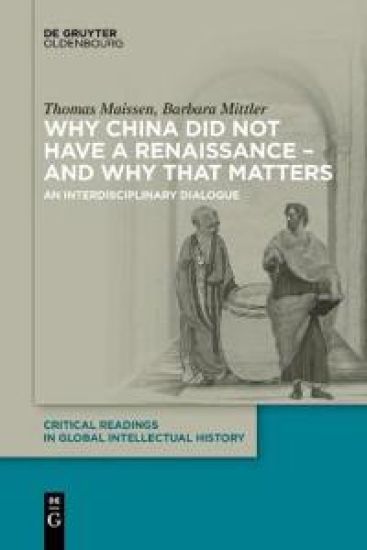
Why China did not have a Renaissance – and why that matters
Thomas Maissen; Barbara Mittler
De Gruyter Oldenbourg
2020
isokokoinen pokkari
Concepts of historical progress or decline and the idea of a cycle of historical movement have existed in many civilizations. In spite of claims that they be transnational or even universal, periodization schemes invariably reveal specific social and cultural predispositions. Our dialogue, which brings together a Sinologist and a scholar of early modern History in Europe, considers periodization as a historical phenomenon, studying the case of the “Renaissance.” Understood in the tradition of J. Burckhardt, who referred back to ideas voiced by the humanists of the 14th and 15th centuries, and focusing on the particularities of humanist dialogue which informed the making of the “Renaissance” in Italy, our discussion highlights elements that distinguish it from other movements that have proclaimed themselves as “r/Renaissances,” studying, in particular, the Chinese Renaissance in the early 20th century. While disagreeing on several fundamental issues, we suggest that interdisciplinary and interregional dialogue is a format useful to addressing some of the more far-reaching questions in global history, e.g. whether and when a periodization scheme such as “Renaissance” can fruitfully be applied to describe non-European experiences.
Why China did not have a Renaissance – and why that matters
Thomas Maissen; Barbara Mittler
De Gruyter Oldenbourg
2018
sidottu
Concepts of historical progress or decline and the idea of a cycle of historical movement have existed in many civilizations. In spite of claims that they be transnational or even universal, periodization schemes invariably reveal specific social and cultural predispositions. Our dialogue, which brings together a Sinologist and a scholar of early modern History in Europe, considers periodization as a historical phenomenon, studying the case of the “Renaissance.” Understood in the tradition of J. Burckhardt, who referred back to ideas voiced by the humanists of the 14th and 15th centuries, and focusing on the particularities of humanist dialogue which informed the making of the “Renaissance” in Italy, our discussion highlights elements that distinguish it from other movements that have proclaimed themselves as “r/Renaissances,” studying, in particular, the Chinese Renaissance in the early 20th century. While disagreeing on several fundamental issues, we suggest that interdisciplinary and interregional dialogue is a format useful to addressing some of the more far-reaching questions in global history, e.g. whether and when a periodization scheme such as “Renaissance” can fruitfully be applied to describe non-European experiences.

Schweizer Heldengeschichten - und was dahintersteckt
Thomas Maissen
Hier und Jetzt Verlag
2015
sidottu


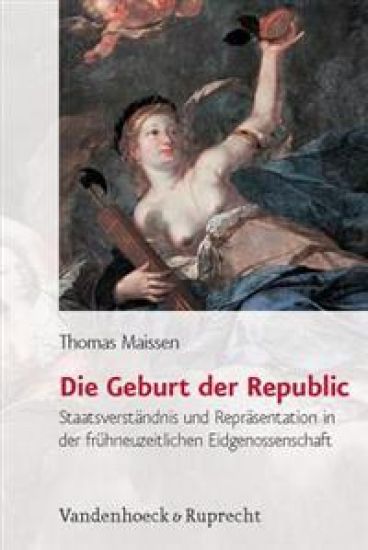
Wann wurde die schweizerische Eidgenossenschaft eine Republik? Die modische Suche nach republikanischen Traditionen erwartet diese automatisch dort, wo sich keine fürstliche Territorialherrschaft etablierte. Thomas Maissen stellt dagegen die Frage, wann und in welchen semantischen Zusammenhängen das Wort "Republic" im eidgenössischen Umfeld auftauchte. Der Autor analysiert systematisch die obrigkeitliche Darstellung der gesamten Eidgenossenschaft in Ikonographie, Architektur, Zeremoniell und Literatur. Diese Studie präsentiert am schweizerischen Beispiel, aber in einem gesamteuropäischen Kontext, erstmals den Übergang vom Reichsverständnis und Reichsrecht zum westlichen Staats- und Völkerrecht und stellt die gesellschaftlichen Träger des Prozesses vor, der den souveränen Staat schuf.